

Nobody enjoys talking about money in a dental office, but avoiding the conversation is what leads to abandoned treatment and bigger problems later. At Cleburne Dental we would rather you see the full picture up front: what the treatment involves, what it costs, what your insurance is likely to pay, and what the options are if the total is more than you can manage at once.
The starting point is always a treatment plan from an exam. Until Dr. Zohdi has looked at your teeth and X-rays, any number is a guess, and guesses are usually wrong in the direction that hurts. Once the plan exists, the financial discussion becomes concrete.
What a complete estimate should include
For routine care, an estimate is simple: the fee, the expected insurance portion, and your portion. For larger treatment, the estimate should answer a longer list. Before you compare any two plans or two offices, check that each one covers:
- Diagnostic records: X-rays, 3D imaging if used, photographs, impressions or scans.
- Preliminary work: extractions, gum treatment or bone grafting that has to happen first.
- Temporary teeth you will wear while something heals.
- The final restorations themselves: the crown, bridge, denture or implant teeth.
- Follow-up visits, adjustments and any protective appliance such as a night guard.
A quote for "an implant" that covers only the surgical post is not the same as a quote that includes the abutment and crown. The guides on implant costs, full-arch costs and complex treatment costs list the specific questions for those plans.
Estimates can change if treatment reveals something new, for example decay deeper than it looked, or a tooth that cannot be saved after all. Ask how that would be communicated to you and whether you would be asked before anything beyond the plan is done.
Ways to pay
We accept the usual payment methods, and payment is normally expected at the time of service for your portion. If you have insurance, the insurance page explains how your estimated portion is worked out and why the final figure can differ.
For larger treatment, many patients use third-party healthcare financing. The practice has worked with CareCredit and Wells Fargo Health Advantage; ask our team which programs are currently available. These are credit products offered by a lender, not by the dental office. Approval, interest rates and terms are set by the lender, and we cannot promise approval or a particular monthly payment.
Before you sign any financing agreement, read it closely and understand:
- The total you will repay over the full term, not just the monthly amount.
- The interest rate, and whether a "no interest" promotion charges deferred interest on the whole balance if it is not paid off by the deadline.
- Any fees for late payments or for paying early.
- Whether the amount financed matches your written estimate, including follow-up care.
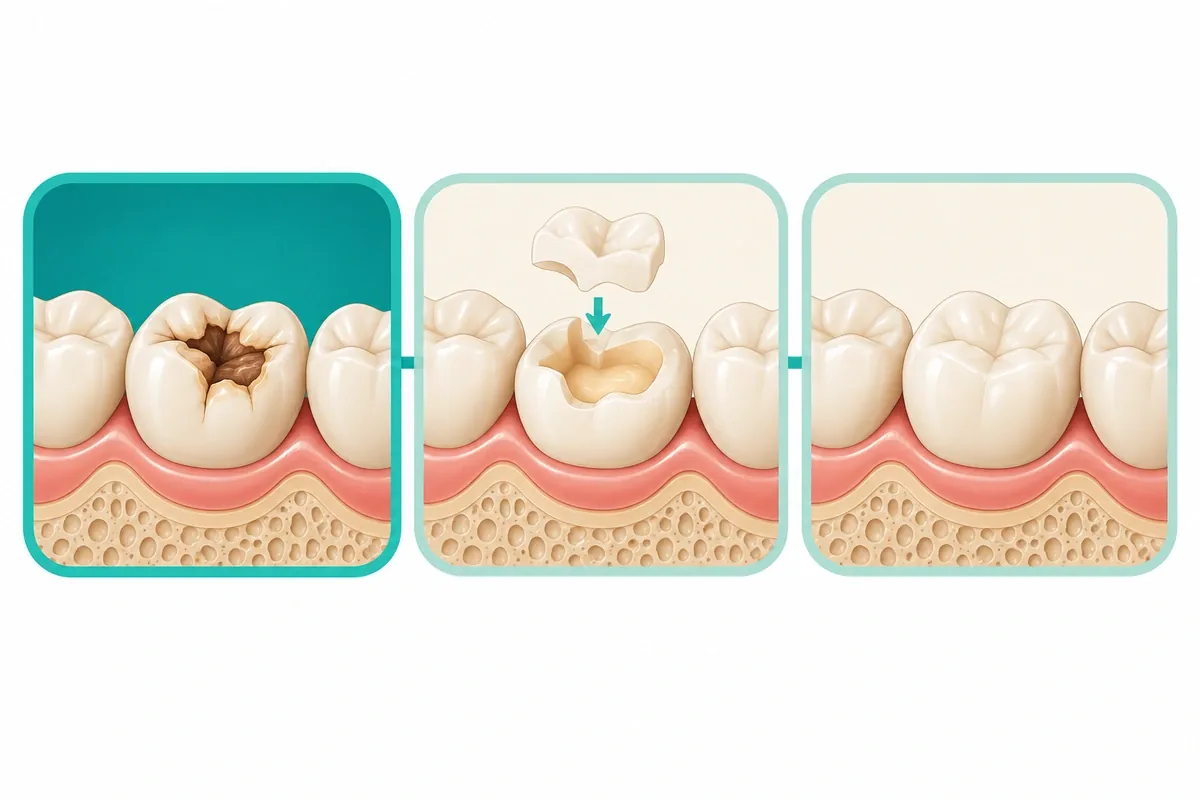
Staging treatment when the total is too much at once
Many larger plans can be broken into stages. A common sequence is to deal with infection and pain first, protect vulnerable teeth second, and then move on to replacement and appearance. Spreading care across months, or across two insurance benefit years, can make it affordable without compromising the result.
Staging has limits. An abscessed tooth, a cracked tooth that is still in function or active gum disease generally should not wait for a budget cycle; delay tends to turn a smaller problem into a larger and more expensive one. Ask Dr. Zohdi which stages can safely wait, what interim care (a temporary filling, a provisional crown, a partial denture) protects you in the meantime, and whether a cheaper first step might limit options later. The guide to planning complex care one decision at a time walks through this reasoning in detail.
Sources and further reading
General information, not a diagnosis. Read how we create and review our dental guides.