Full-Arch Dental Implants in Cleburne: All-on-4 and All-on-X
When most or all of the teeth in a jaw are failing, a full-arch implant bridge can replace them with teeth that stay in. This overview explains what the terms mean, who it suits, and the decisions ahead.
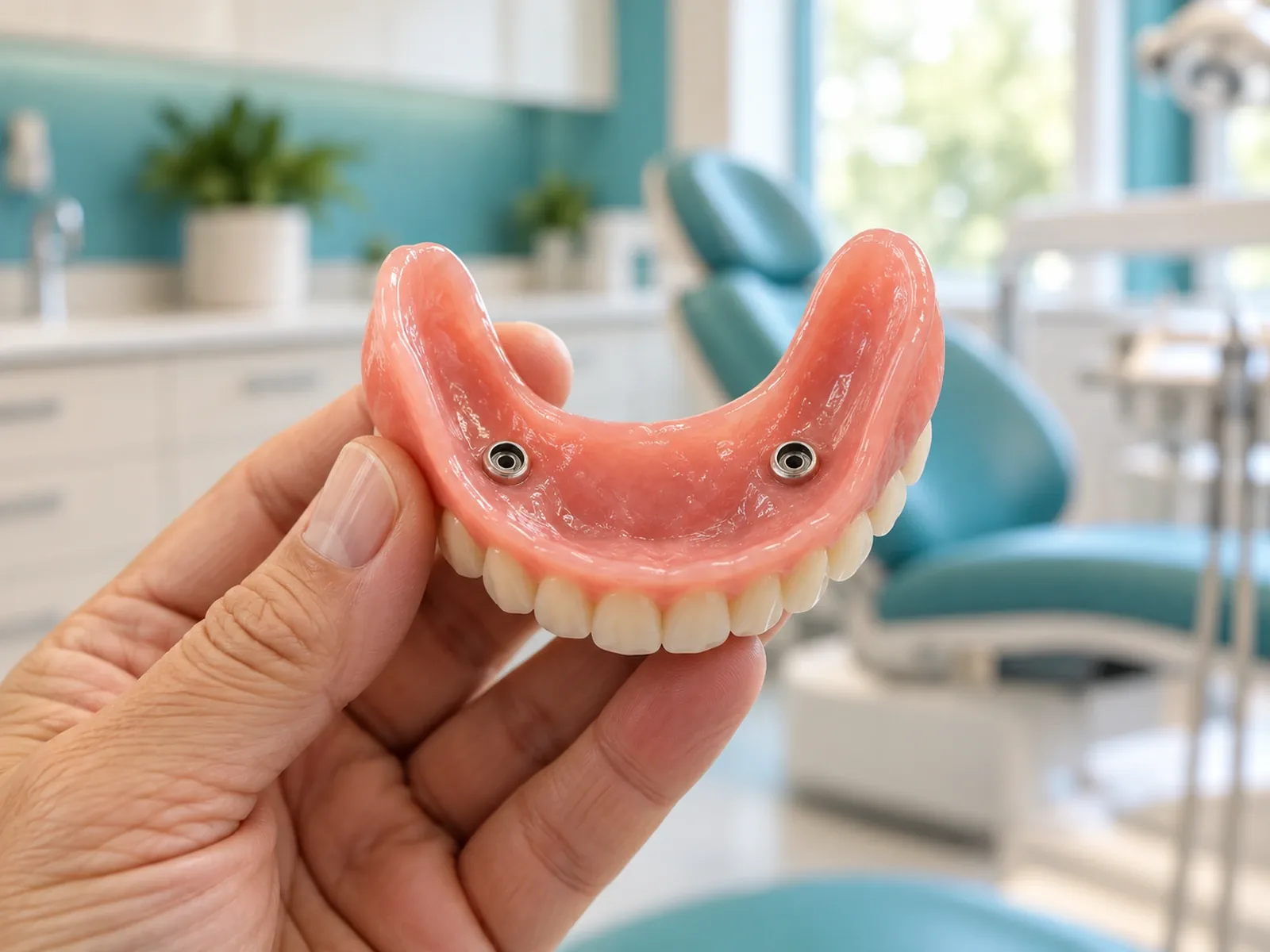
Full-arch dental implants replace every tooth in an upper or lower jaw with a single bridge fixed to a small number of implants, usually four to six. Unlike a conventional denture, the bridge does not rest on your gums and does not come out. For someone whose teeth are failing one by one, or who has struggled with a loose denture for years, it is often the treatment that gives back confident eating and speaking.
You will see the names All-on-4 and All-on-X attached to this treatment. They are useful shorthand, but they describe a concept, not a package. Neither name tells you how many implants you need, what your teeth will be made of, whether you can have teeth the day of surgery, or whether you are a candidate at all. This page walks through each of those decisions, with a detailed guide for every step.
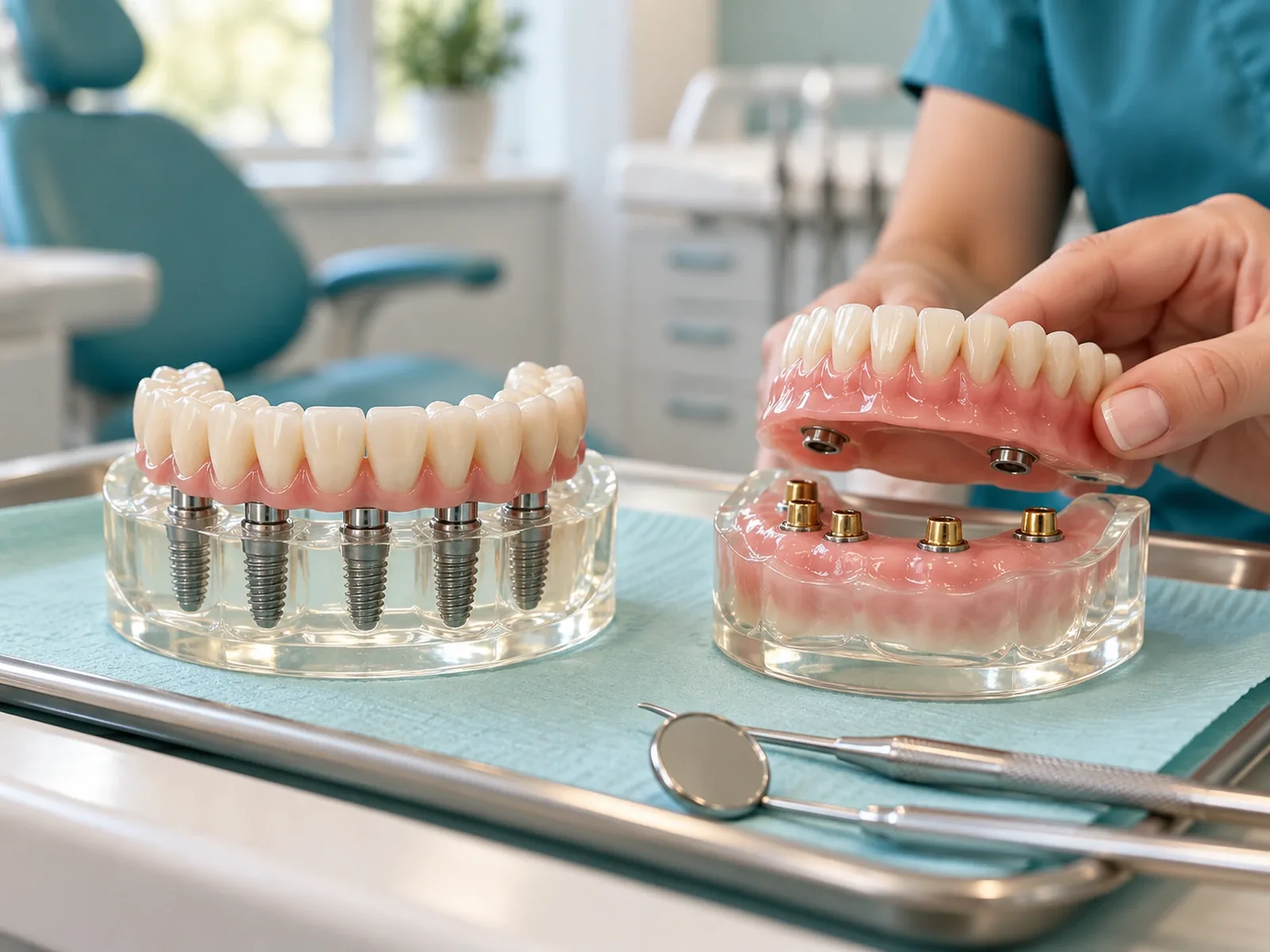
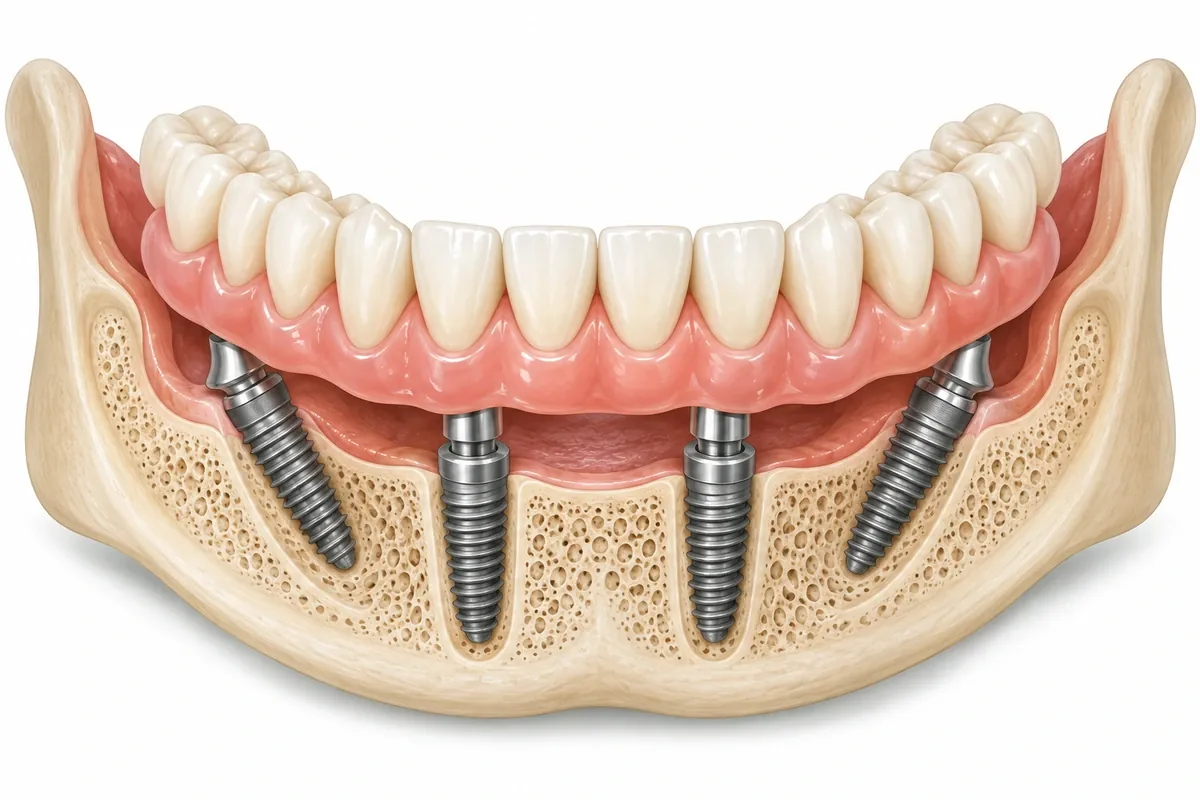
All-on-4 is a specific concept: four implants per arch, the two back ones tilted to reach denser bone while avoiding the sinus above or the nerve below, with one bridge joining all four.
All-on-X is the general term; the X is whatever number your anatomy calls for, often four to six. Read it as "a fixed full-arch bridge on implants" and nothing more specific.
The count is a planning outcome driven by your bone, bite and the teeth being designed. Our guide to four or six implants explains why more is not automatically better.
Illustration: a full-arch bridge supported by four implants, with the back two tilted to use the strongest bone. Educational drawing, not a patient scan.
Who full-arch treatment helps
Full-arch implants are usually considered when:
most of the teeth in a jaw are loose, broken down or infected and cannot be reliably repaired;
a conventional denture is loose or painful and the ridge has shrunk so a reline no longer helps;
gum disease has advanced to the point where saving the remaining teeth means repeated treatment with an uncertain outlook;
you want teeth that stay in, rather than a removable denture.
General health, smoking, uncontrolled diabetes, certain medications and heavy grinding all shape the plan without automatically ruling you out. Our implant candidacy guide covers these factors.
First decide what should be saved
A full arch is a major, irreversible step, so the first planning question is not "how many implants?" but "do all of these teeth really need to come out?" Dr. Zohdi assesses each remaining tooth: its bone support, infection, whether it can be restored, and how long it is likely to last. Sometimes a few teeth can be kept, and a plan combining crowns, gum treatment and a few implants serves you better; our full-mouth reconstruction pages describe that approach.
Other times the remaining teeth have a poor outlook, and removing them to build a stable, predictable bridge is the kinder path. Either way, you deserve to hear the reasoning and the alternative, and a second opinion is always reasonable before a decision this size.
The decisions that shape your plan
Once a full arch is the right direction, several design choices follow, each with its own guide.
Fixed or removable? A fixed bridge stays in and is cleaned in your mouth; a removable implant denture clips on and comes out for cleaning. Compare them in fixed implant teeth or removable implant dentures.
Teeth the same day? For suitable patients a temporary bridge can be attached around surgery day, depending on how firmly the implants grip bone; a backup plan belongs in writing. See same-day implant teeth.
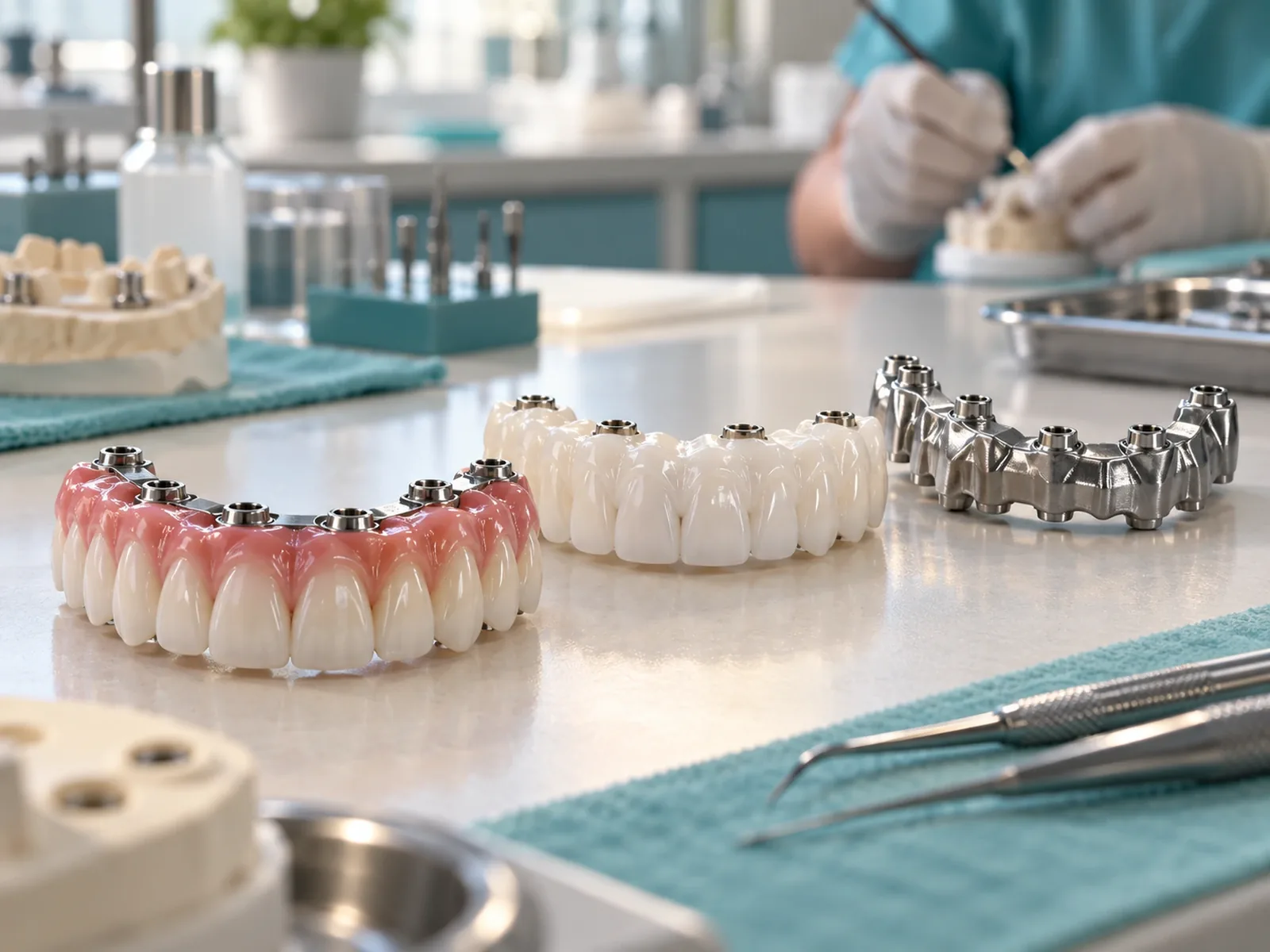
What material? Acrylic on a titanium bar, solid zirconia or layered porcelain each look, wear and repair differently. See full-arch implant materials.
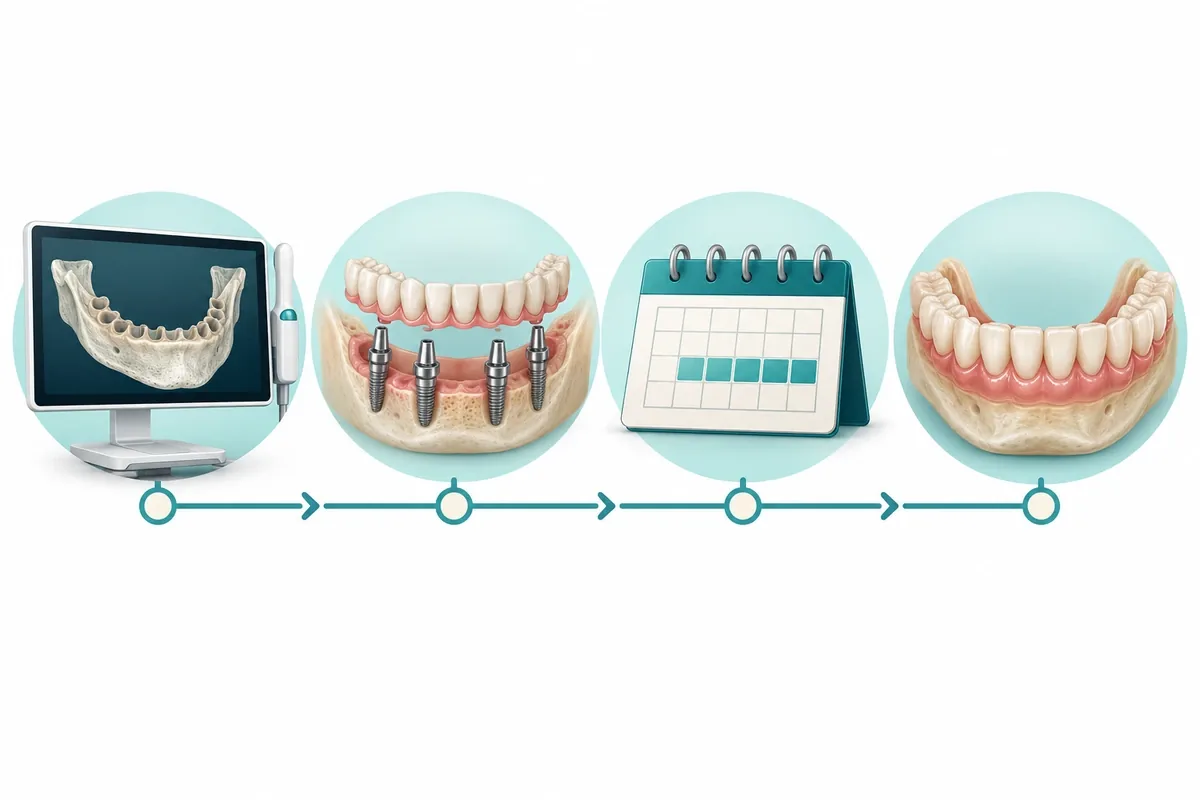
Full-arch treatment is a sequence over several months, not one appointment.
Illustration: the stages of full-arch treatment. The temporary teeth and the final teeth are separate steps months apart. Educational drawing.
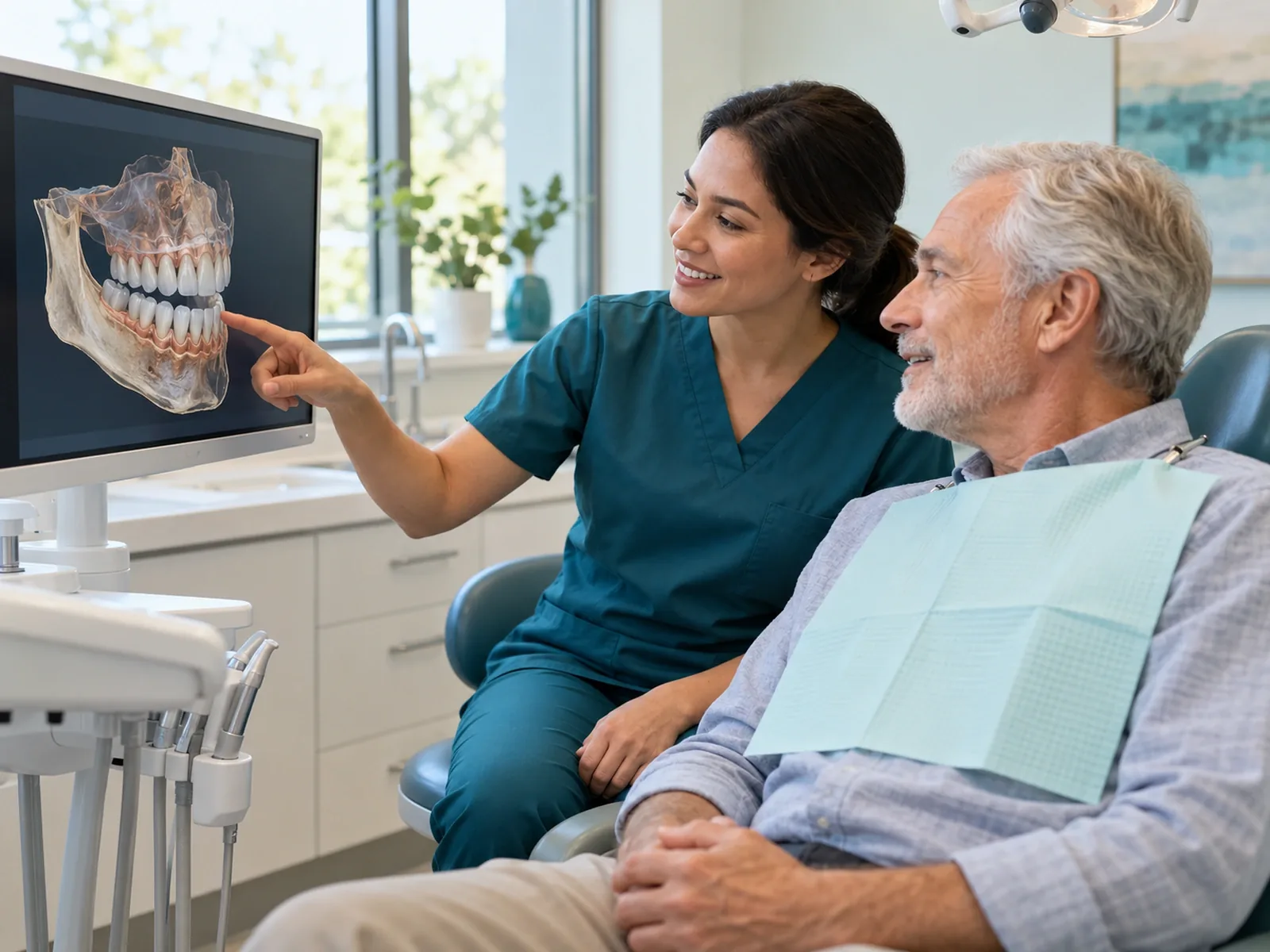
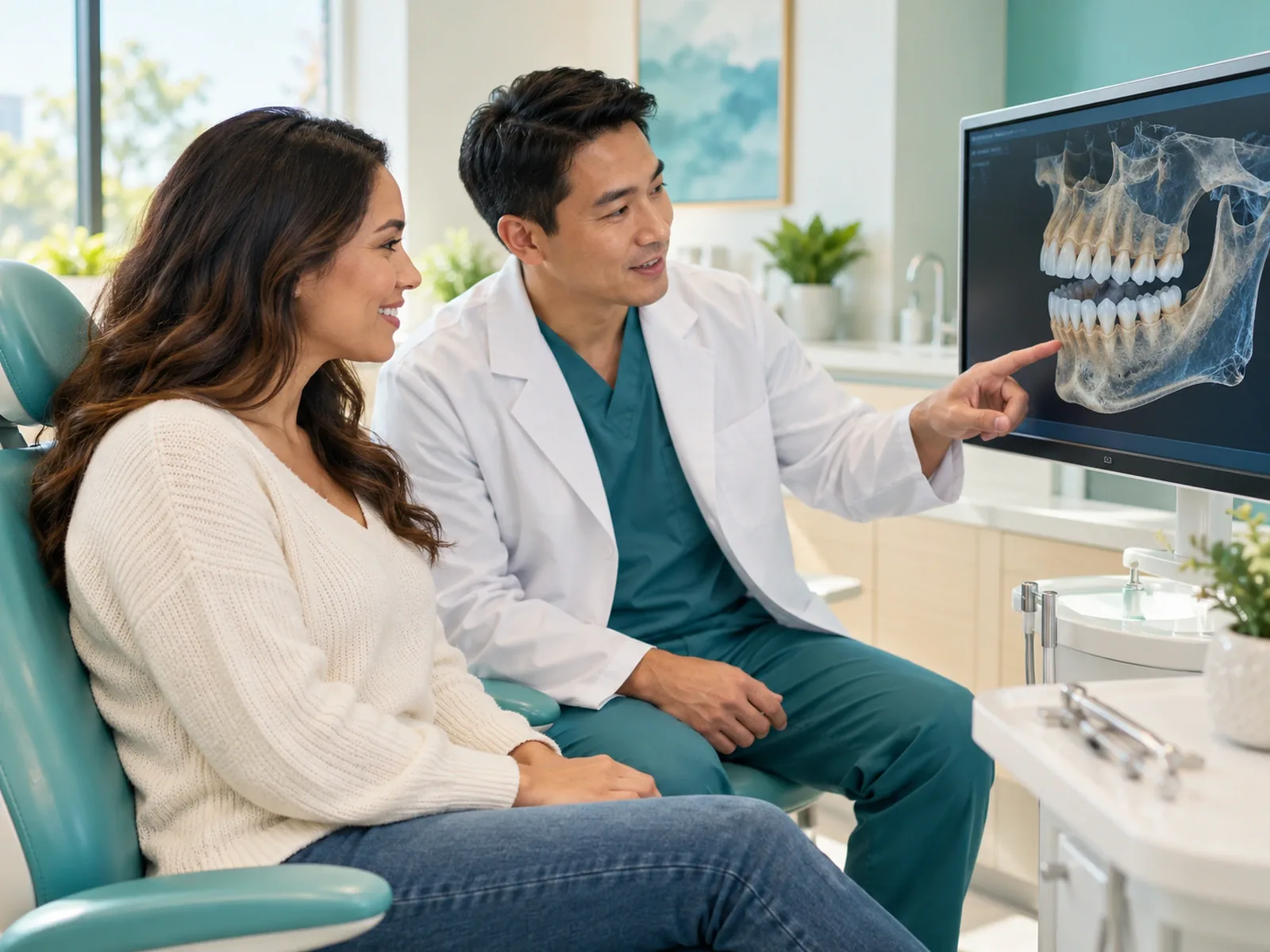
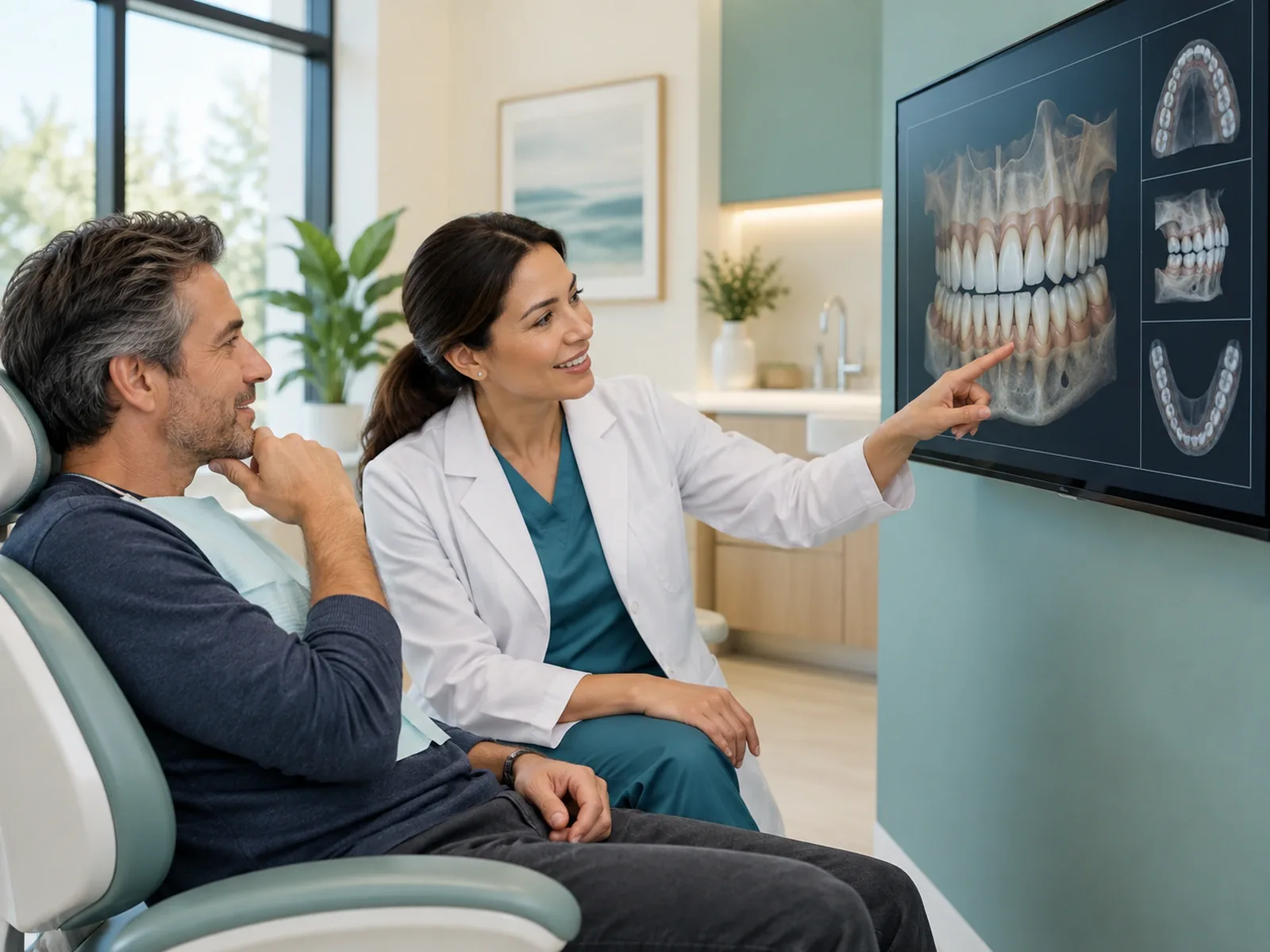
Consultation and planning. Examination, a 3D scan of your jaws, photographs and models or digital scans. The teeth are designed first; implant positions are planned to support them.
Surgery. Remaining teeth are removed, the ridge is shaped, and the implants are placed under local anesthesia, often using a guide made from the plan. If the implants are stable enough, a fixed temporary bridge is attached within about a day; otherwise you leave with a removable temporary.
Healing. Over the following months the implants fuse to bone. You eat a soft diet, learn to clean under the temporary, and return for checks. The temporary is also a trial run for the shape, shade and bite of the final teeth.
Final bridge. New scans are taken, the final bridge is made by the lab, tried in, adjusted and delivered.
Maintenance. Daily cleaning under the bridge and professional visits for the life of the restoration.
Our general implant treatment timeline and implant recovery guides apply to full-arch cases too. Surgery is a long appointment; we explain each step, pace it with breaks, and agree on a pause signal.
Cost and long-term care
Full-arch treatment is a significant investment, and quotes vary widely because they include different things. Our guide to what goes into full-arch cost shows how to read an estimate line by line and how insurance and financing usually work.
Treatment does not end at delivery. The bridge needs daily cleaning of the space between it and your gums, and periodic professional checks of the gums, bite and screws. Our guide to keeping full-arch implant teeth clean explains the routine and the warning signs that mean you should call.
Risks and alternatives
Like any surgery, implant placement carries risks: infection, bleeding, nerve irritation in the lower jaw, sinus involvement in the upper jaw, and the chance that an implant does not fuse and must be replaced. Over time, gum inflammation around implants can lead to bone loss if cleaning lapses, and bridges wear, chip and occasionally loosen. None of these is common with careful planning and care, but you should hear them before you decide.
The alternatives are real options. A removable implant denture uses fewer implants at lower cost. Complete dentures remain reasonable for many people. Dr. Zohdi will lay these out side by side so the choice is yours.
Start with a conversation, not a brand name
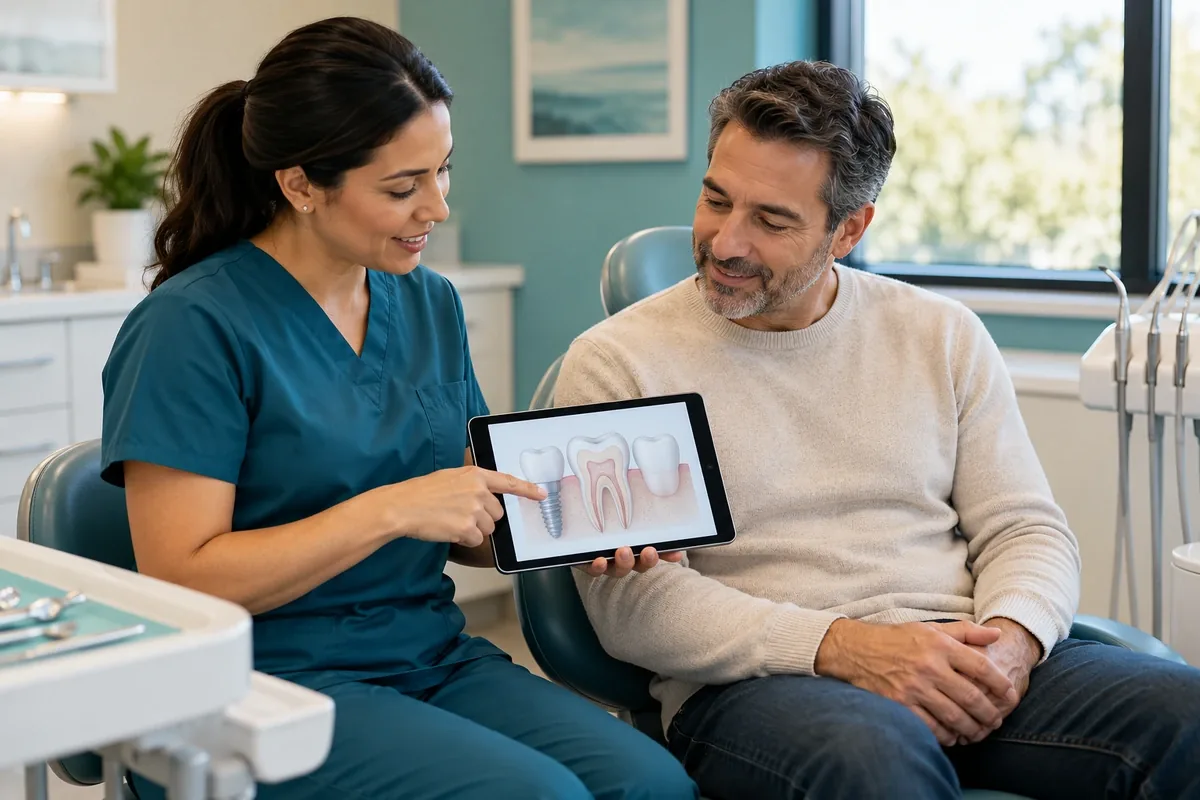
The best full-arch outcome begins with an honest look at your remaining teeth, your bone and what you want from your smile. Dr. Zohdi will walk you through your scan, explain which design fits and why, and give you a written plan you can compare with any other. To begin, request a consultation at our office at 302 N Ridgeway Dr in Cleburne, or call (817) 641-6261.
Commonly several months from surgery to final bridge, because bone needs time to fuse to the implants. Same-day temporary teeth change what you wear during healing, not how long healing takes.
Will I be without teeth at any point?
Plans are built so that you are not. You leave surgery with either a fixed temporary bridge or a removable temporary denture, and the final bridge replaces it.
Can I do one jaw now and the other later?
Yes. Many patients treat the worse arch first, and the two arches can use different designs, such as a fixed bridge on top and a removable implant denture below.
Does insurance cover full-arch implants?
Usually only a small portion, if any, and annual maximums are far below the cost. Have benefits verified rather than estimated; our insurance page explains how we help.