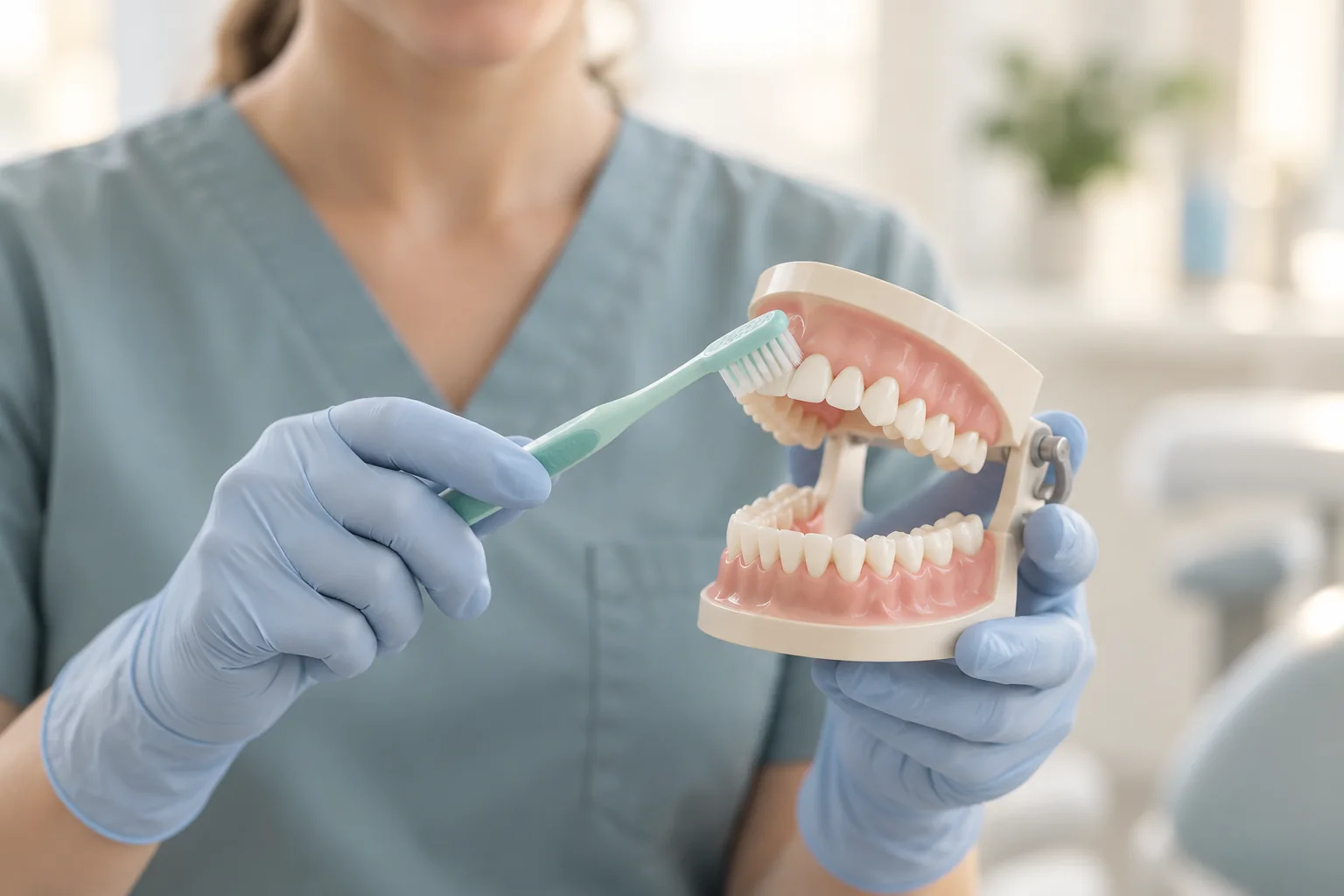

A routine cleaning and a “deep cleaning” are often spoken about as if one were simply a bigger version of the other. They are not. A routine cleaning is preventive care: it removes plaque and tartar from a mouth whose gums are healthy or mildly inflamed, to keep disease from starting. A deep cleaning, properly called scaling and root planing, is treatment for periodontitis, a disease that has already begun destroying the bone that holds your teeth.
Which one you need is decided by measurements, not by how long it has been since your last visit, how much stain you have, or how a particular visit is labeled. This page explains what each service is designed to do, how to read the gum chart that justifies the recommendation, what the in-between situations look like, and what to ask before you agree to either one. If you already know you need treatment and want to understand the procedure itself, our page on scaling and root planing covers that in detail.
The two services side by side
| Routine cleaning | Deep cleaning (scaling and root planing) | |
|---|---|---|
| Purpose | Prevent gum disease | Treat existing periodontitis |
| Gum condition | Healthy, or gingivitis without bone loss | Pockets, bleeding, and bone loss on X-rays |
| Where it works | Tooth surfaces above and just below the gumline | Deep into pockets and along root surfaces |
| Anesthetic | Usually none | Local anesthetic for the area treated |
| Visits | One visit, often with the exam | Often two to four visits, by section, plus a reevaluation |
| What follows | Another routine cleaning in about six months | Periodontal maintenance, usually every three to four months |
| Insurance category | Preventive | Periodontal therapy |
What a routine cleaning is designed to do
A preventive cleaning, paired with a dental exam, removes the plaque and hardened tartar that collect on teeth even with good brushing, polishes away surface stain, and gives the hygienist a chance to review your home care. It is the right service for a mouth with shallow gum pockets and no bone loss, and it is enough to reverse gingivitis, the early, inflammation-only stage of gum disease.
What a routine cleaning cannot do is reach the bottom of a deep pocket. When the gum has detached from the tooth and tartar has built up on the root several millimeters below the gumline, a preventive cleaning polishes the visible part of the tooth and leaves the disease untouched underneath. That is why “just give me a regular cleaning” is not a neutral choice when periodontitis is present.
What supports a deep-cleaning recommendation
A deep cleaning should rest on findings you can see. Before it is recommended, you should have a complete periodontal chart and recent X-rays, and someone should walk you through them.
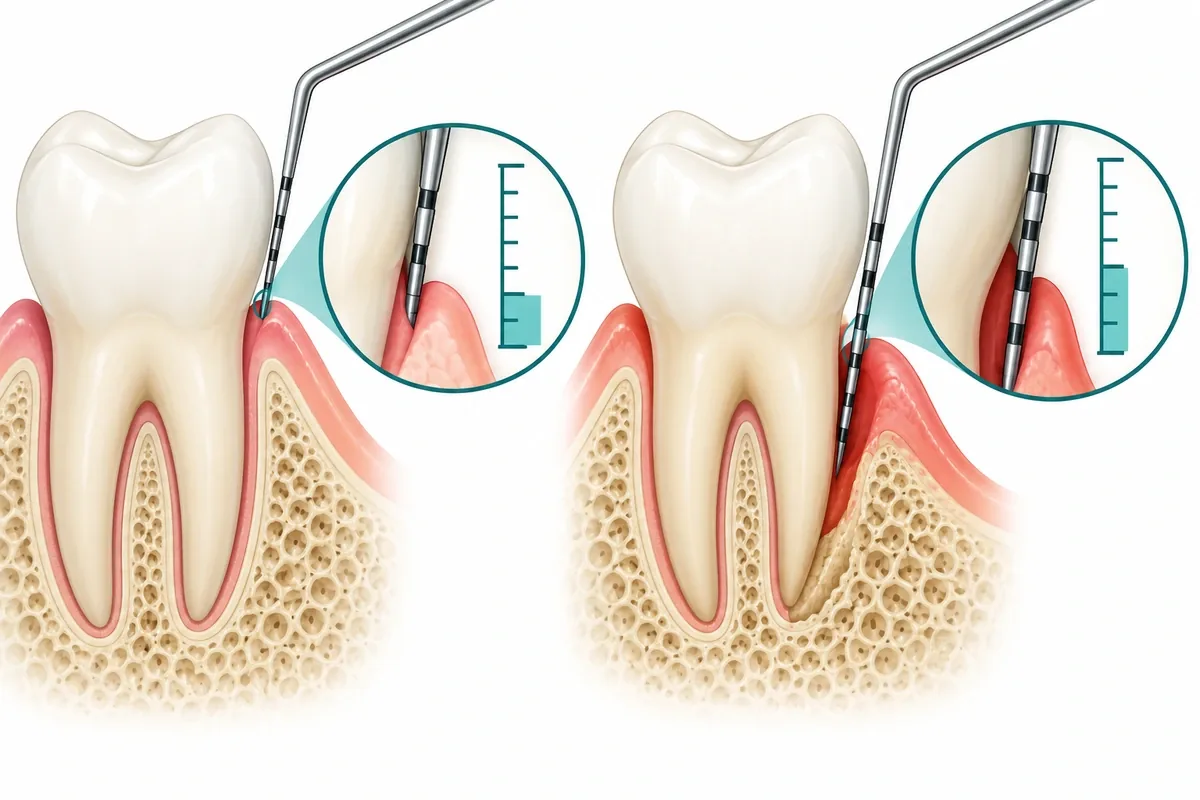
How to read your gum chart
The chart records a pocket depth, in millimeters, at six points around every tooth, plus whether each point bled when it was measured.
- 1 to 3 mm, no bleeding: healthy attachment. A routine cleaning is appropriate.
- Bleeding with shallow readings: gingivitis. Cleaning and home care, then recheck.
- 4 mm, especially with bleeding: a warning zone that needs watching or treatment, depending on the rest of the picture.
- 5 mm or more with bleeding, and bone loss visible on X-rays: periodontitis. These are the sites a deep cleaning is meant to treat.
A few isolated 4 mm readings do not make the whole mouth diseased, and one quadrant with deep pockets does not mean every quadrant needs treatment. A good recommendation names the specific areas, and your chart should show them. If you are told you need a deep cleaning, ask three questions: which teeth, what the readings are there, and what the X-rays show. For what the treatment itself involves and how it heals, see scaling and root planing; for what comes after, see periodontal maintenance.
The in-between situations
Not every mouth fits neatly into one column, and this is where confusion often starts.
- Gingivitis cleaning. Gums that are inflamed throughout but have no bone loss may need a more thorough cleaning than a standard preventive visit, sometimes with a follow-up a few weeks later. It is still not a deep cleaning, because there is no root surface to treat.
- Full-mouth debridement. When tartar is so heavy that the dentist cannot measure the gums or see the teeth properly, a first visit removes the bulk of it so that a real exam can follow. The decision about what comes next is made after that visit, not before.
- Localized treatment. A mouth that is healthy except for a few deep sites may need scaling and root planing only on those teeth and a routine cleaning everywhere else.
- Returning after years away. Missing several checkups does not, by itself, mean periodontitis. Plenty of people return with heavy tartar and healthy bone. The exam decides. Our guide to returning to the dentist after a long break explains how that first visit works.
Why the services are not interchangeable
Choosing a routine cleaning when periodontitis is present leaves the infection active. Bone loss continues silently, and the eventual result can be loose teeth and tooth loss that then needs replacement. Choosing a deep cleaning when the chart does not support it exposes you to anesthetic, extra visits, and periodontal insurance coding you did not need. Both mistakes come from matching the service to a label rather than to the tissue.
At Cleburne Dental we chart every new patient’s gums and show you the numbers. If your chart says routine, that is what we recommend. If it says treatment, we will point to the exact teeth and explain why. You are welcome to ask for a plain-language explanation, to take a copy of your chart and X-rays home, or to seek a second opinion. Comparing two dentists’ readings of the same chart is far more useful than comparing the names of the services they offer.
Insurance and cost differences
Dental plans treat these services as different categories. Routine cleanings are usually covered as preventive care, often at a high percentage and a set number of times per year. Scaling and root planing and periodontal maintenance are classified as periodontal therapy, which may involve a deductible, a lower coverage percentage, frequency limits by quadrant, or a requirement for charting and X-rays to be submitted. We verify benefits and give you a written estimate before treatment. Our dental insurance page explains how we work with plans.
Sources and further reading
- NIDCR: Gum disease
- American Academy of Periodontology: Nonsurgical treatment
- ADA MouthHealthy: Gum disease
General information, not a diagnosis. Read how we create and review our dental guides.