Cosmetic Dentistry in Cleburne: Understand Your Options
Whether you want brighter teeth, a chip repaired or a complete smile makeover, the right plan starts with what bothers you and chooses the smallest change that fixes it. Dr. Zohdi offers whitening, bonding, porcelain veneers, gum reshaping and clear aligners, planned together.
Cosmetic dentistry begins with a personal question: what would you like to change about your smile? The next question is clinical: which approach can make that change while respecting the health and structure of your teeth? At Cleburne Dental, Dr. Zohdi treats both questions as equally important. A beautiful result that costs healthy enamel it did not need to is not a good trade.
Patients come to us with yellowing, chips, gaps, uneven edges, a gummy smile, crooked front teeth or a missing tooth they have hidden for years. Each of these is a different problem with a different best fix. This page explains how we sort them out, what each treatment does and costs you in commitment, and where to read more about the one that fits you.
Color, shape, spacing, gum display and missing teeth are not interchangeable. A tooth that looks dark may need whitening, or it may have a damaged nerve. A tooth that looks short may need porcelain, or it may just be hidden by gum tissue. Crowding is a position problem, and covering crooked teeth with veneers to make them look straight is rarely the best answer when clear aligners can move them.
Our guide to why teeth become discolored is a good example of why diagnosis comes first: surface stain, internal discoloration and a single dark tooth look similar and are treated completely differently.
An examination also checks for decay, gum disease and cracks. Those findings decide timing. Gum disease has to be treated and stable before veneers or a gum lift; a cavity under an old filling is fixed before anything is bonded over it.
Choose the smallest change that solves it
We order cosmetic options by how much they alter your natural teeth:
Two comparison guides walk through the most common forks: veneers versus bonding when you have a chip or shape concern, and whitening versus veneers when color is the issue. No material is best for every smile, and a plan does not have to treat every front tooth the same way.
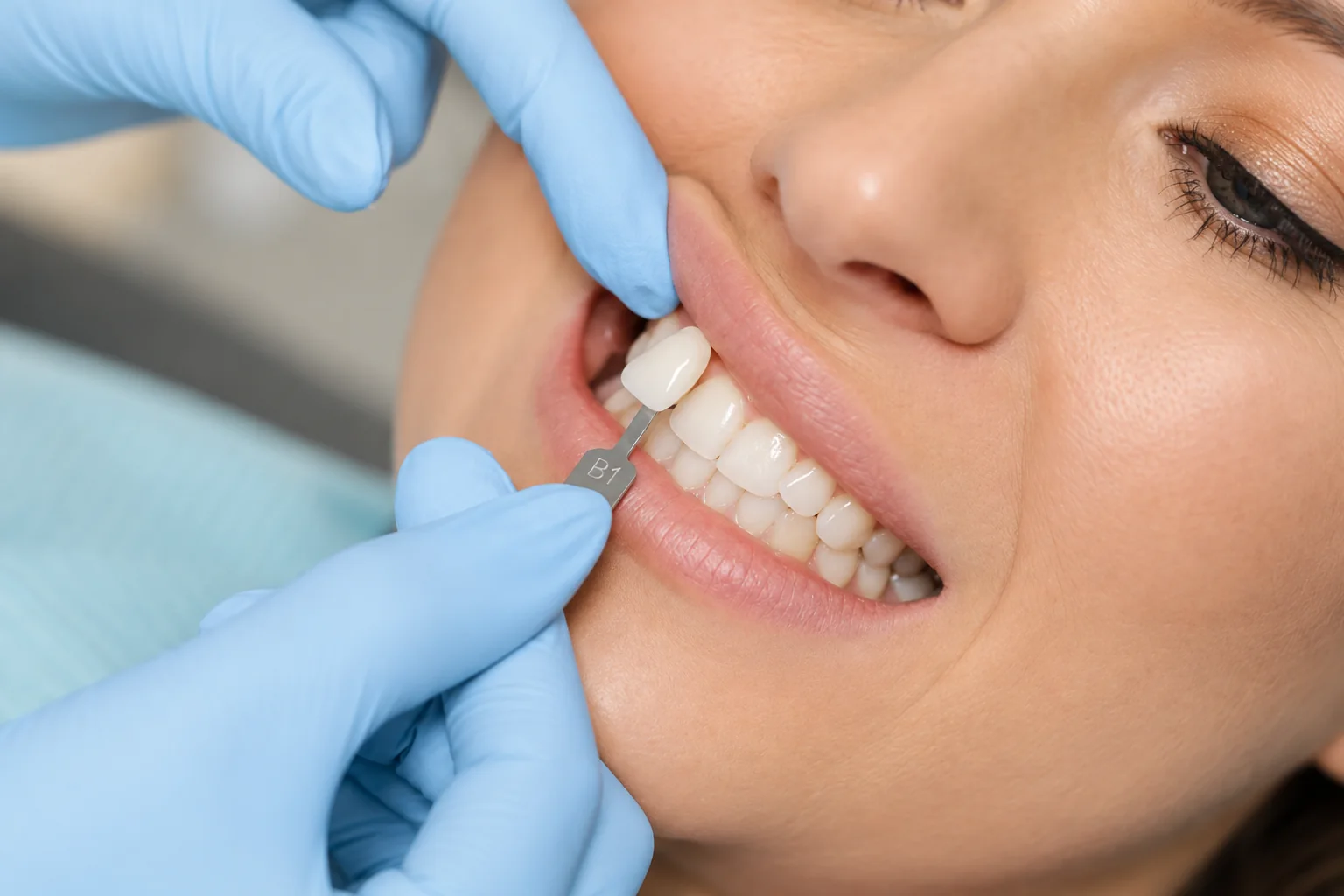
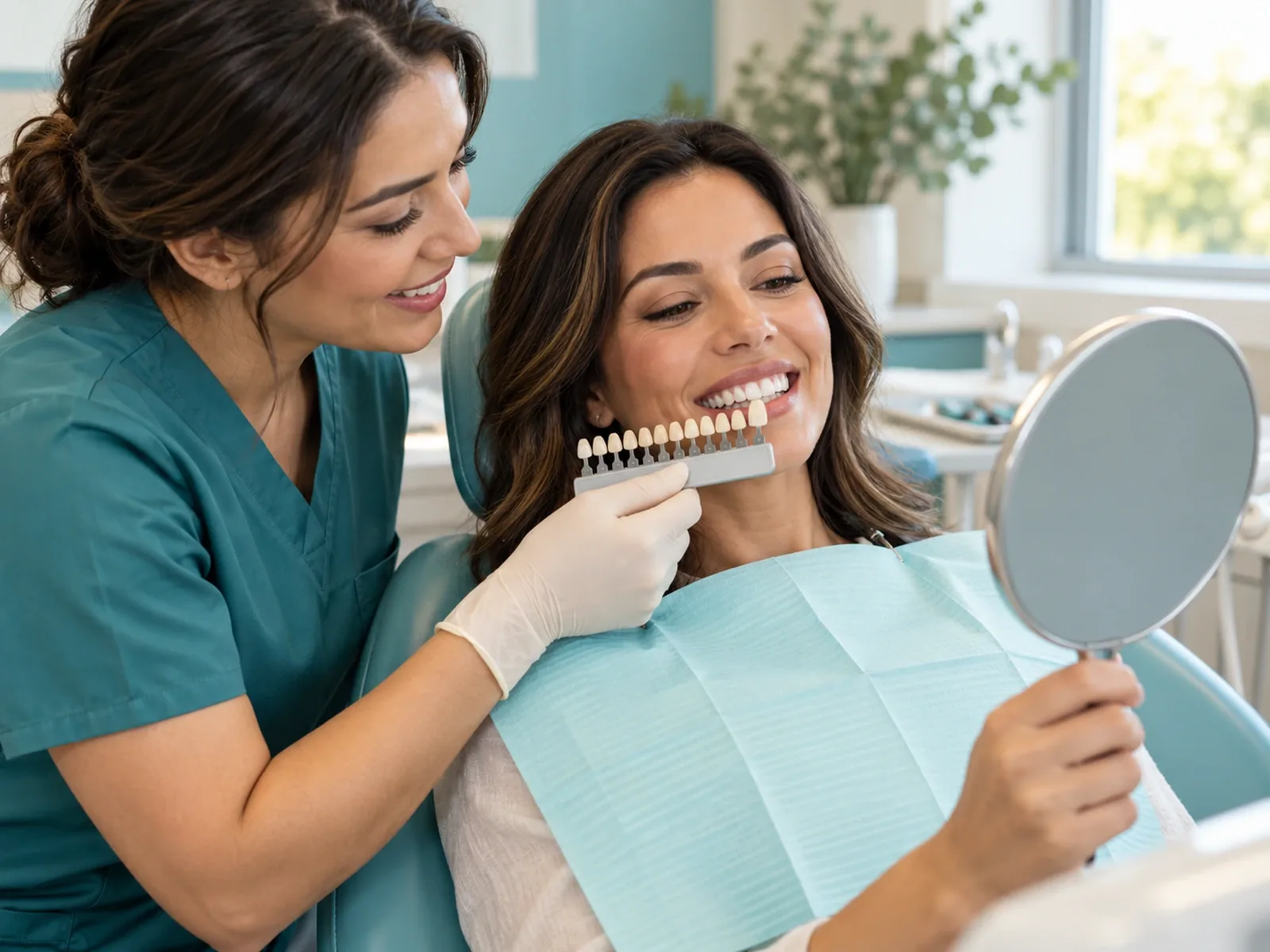
Shade matching considers your natural teeth, any existing dental work and the lightest result that still looks like you.
What each treatment involves
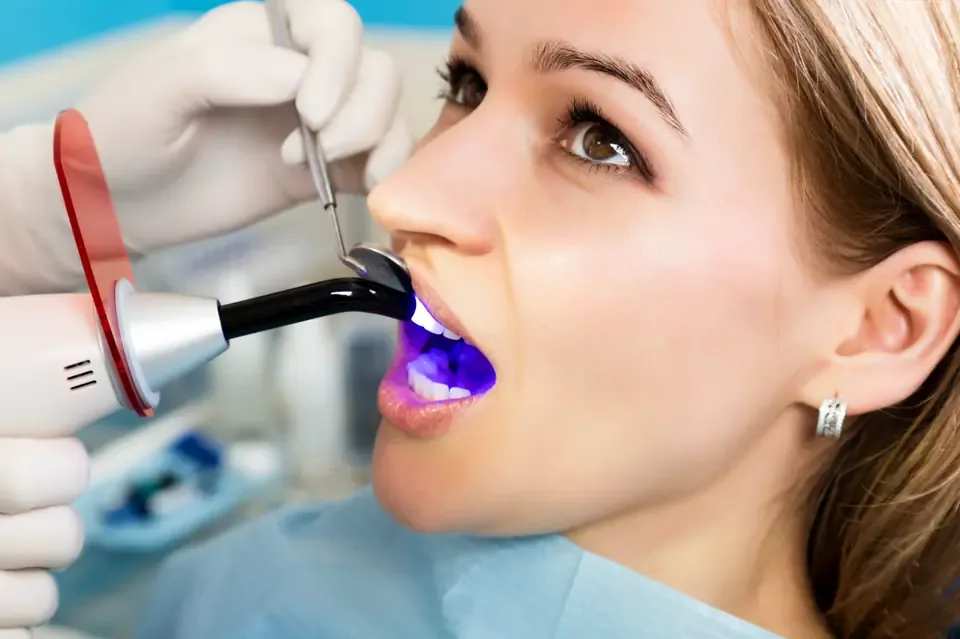
Whitening lightens natural enamel in one supervised office visit or over one to two weeks with take-home trays. It is the least expensive option, preserves every bit of your tooth, and typically holds for a year or more with touch-ups. It does not change crowns, fillings or veneers.
Bonding sculpts tooth-colored resin onto a tooth to repair a chip, close a small gap or even an edge, usually in a single visit with little or no drilling. It is repairable and often serves five to ten years, but it can stain and chips more easily than porcelain.
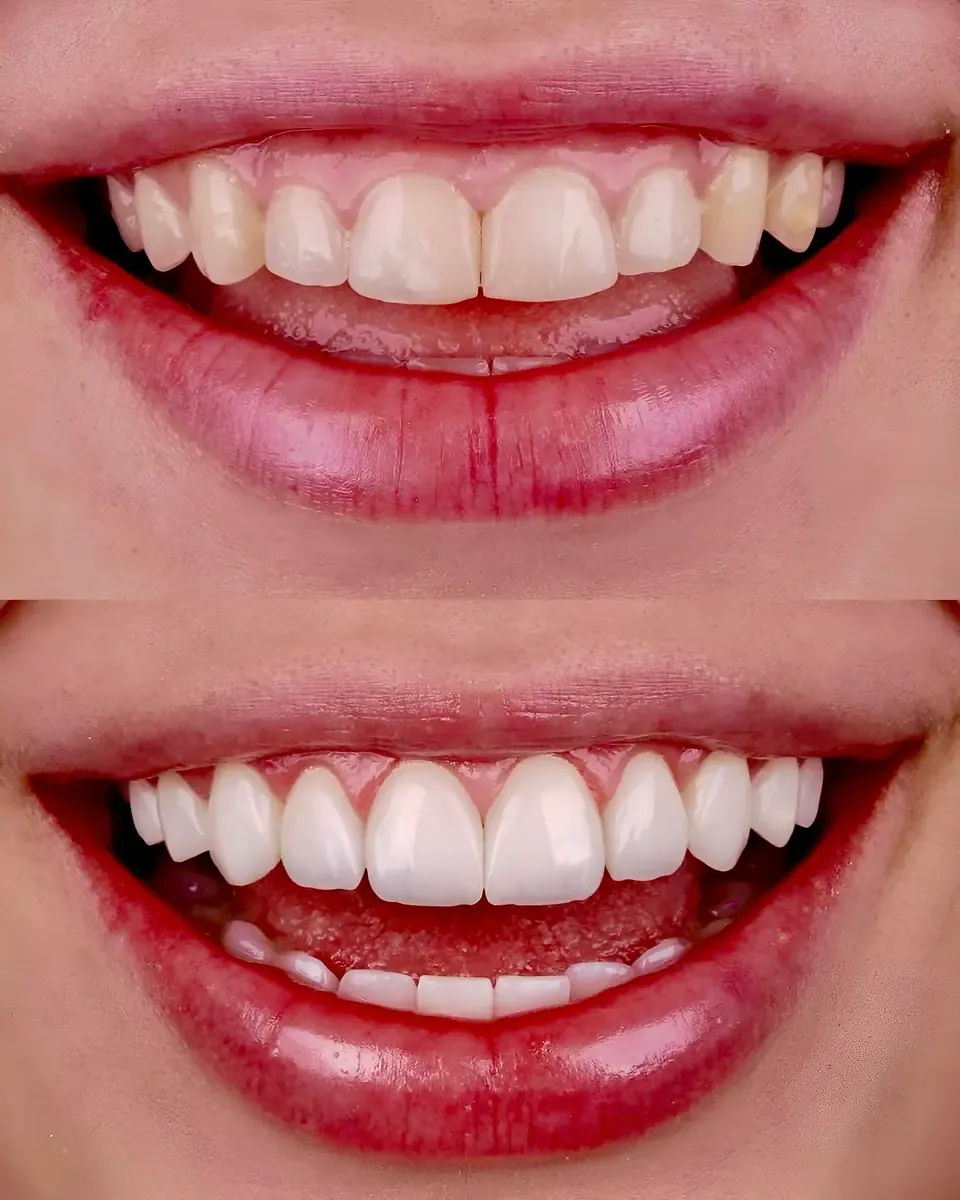
Porcelain veneers are thin ceramic shells bonded to the front of selected teeth, changing color, shape and length together. They often last more than a decade, but most require removing a thin layer of enamel, so a veneered tooth needs a restoration for life. Our veneer care guide explains that commitment.
Gum lift reshapes excess or uneven gum tissue so teeth look proportionate, and is sometimes done before veneers or crowns so the edges sit against a settled gum line.
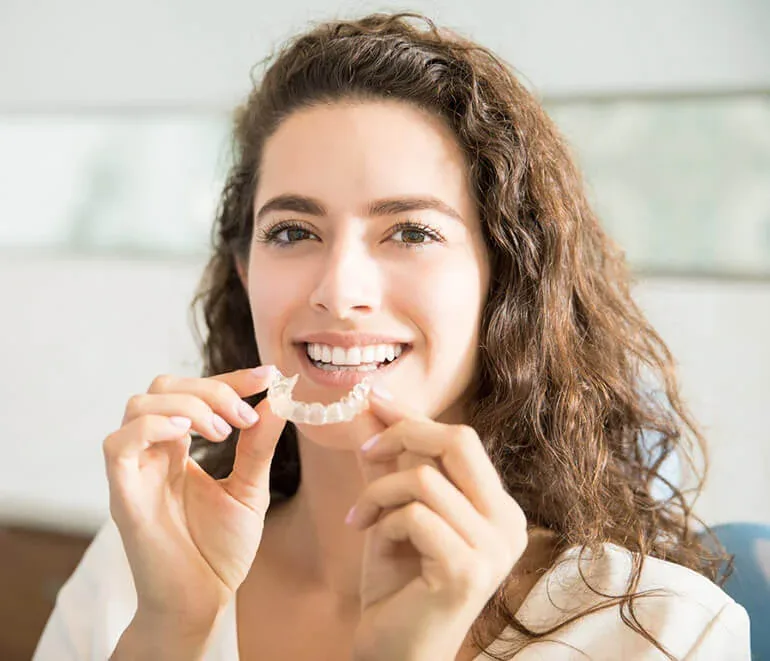
Clear aligners move teeth into position with removable trays, often reducing or removing the need for porcelain.
Tooth-colored fillings and crowns are restorative rather than cosmetic, but we use metal-free materials so repaired teeth blend in, and a worn or weakened front tooth is sometimes best restored with a crown rather than a veneer.
When several things need to change
If more than one concern shows up on the same front teeth, the answer is a sequenced plan rather than a pile of procedures. Smile makeover planning explains how we design the result first, treat health before appearance, move teeth before covering them, whiten before matching shades, and build in stopping points so you can pause and decide how far to go. Digital previews may be available to show the intended shapes before anything is prepared.
Think past the first photograph
Restorations stain, chip, need repair or require replacement, and the natural teeth around them keep changing. Whitened teeth need occasional touch-ups. Bonding needs re-polishing. Veneers need protection from grinding and eventual replacement. Teeth that have been moved need retainers. Daily brushing, cleaning between teeth and regular exams protect the result and the teeth beneath it. Ask what maintenance each option needs before you choose, not after.
Comfort, cost and insurance
Cosmetic visits are done with local anesthetic when a procedure needs it, at a pace you set, with clear explanation of each step and a signal to pause whenever you want. Costs vary with the treatment and the number of teeth; whitening is the least expensive, veneers the most, and we give a written itemized plan before anything begins. Because most cosmetic work is elective, dental insurance rarely covers it, though a crown or bonding that repairs a damaged tooth may be handled differently. Our insurance and financing pages explain how we help.
Not sure where to start?
Our virtual smile consultation lets you send a photo of your smile and receive Dr. Zohdi's first thoughts from home, free and without obligation. It cannot replace an examination, but it will tell you which options are worth discussing. You can also look through our smile gallery to see how different approaches look in practice.
Taking the next step
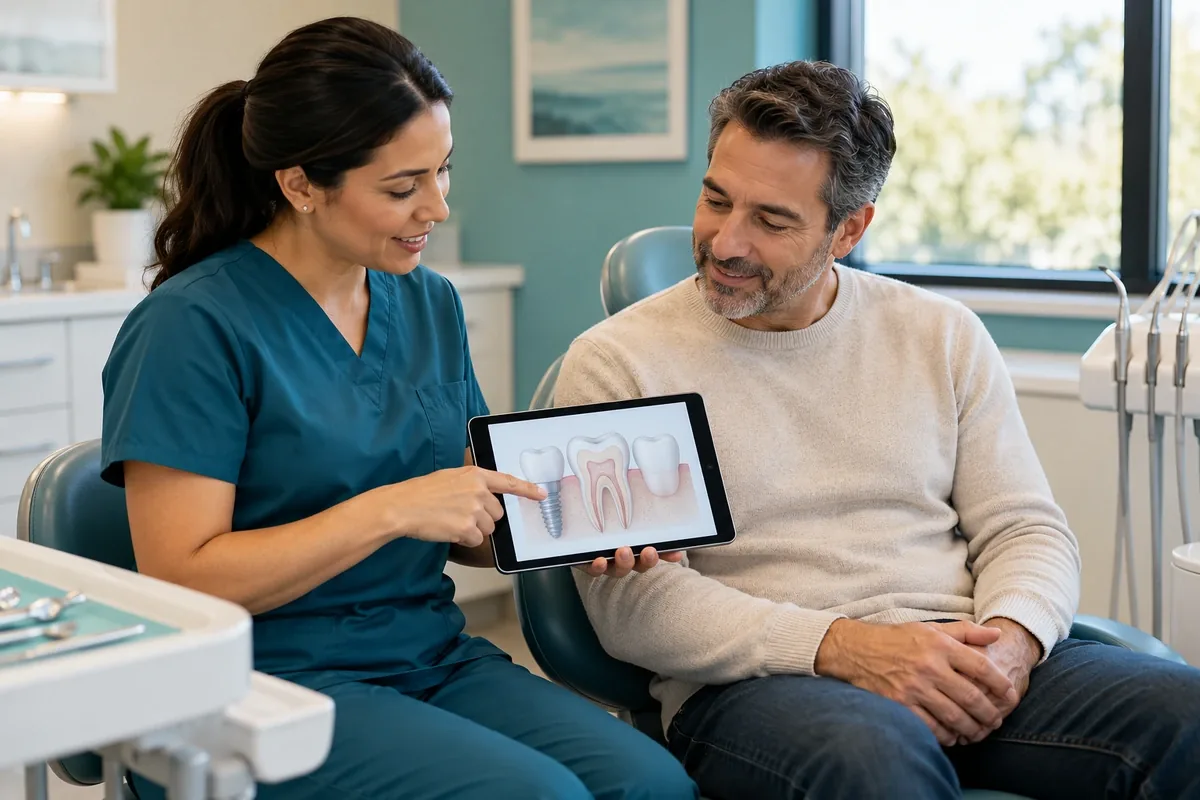
If something about your smile has bothered you for a while, you do not have to arrive knowing the solution. Bring the concern, your priorities for time, maintenance and budget, and any photographs that help explain what you like. Request a cosmetic consultation at our Cleburne office and we will compare your options, starting with the smallest change that could get you there.
How do I know which cosmetic treatment is right for me?
Describe what bothers you, and let the examination identify the cause. Dr. Zohdi will recommend the most conservative option that solves it, and explain the larger ones only when they are genuinely needed.
Is cosmetic dentistry covered by insurance?
Usually not, because it is elective. Restorative parts of a plan, such as a crown on a broken tooth, may receive partial coverage. We check your benefits before treatment.
How long do results last?
Whitening often holds a year or more with touch-ups, bonding five to ten years, and veneers often more than a decade with good care. Habits, grinding and gum health matter more than the material.
I have gum disease. Can I still have cosmetic work?
Gum treatment comes first. Healthy, stable gums are essential for the fit and longevity of veneers and gum reshaping, and our gum care team will get you there before cosmetic work begins.
Does cosmetic treatment help oral health too?
Sometimes. Bonding seals a chipped edge, a crown protects a weakened tooth, and straightened teeth are easier to clean. Purely cosmetic changes like whitening do not improve health, so we never oversell them.