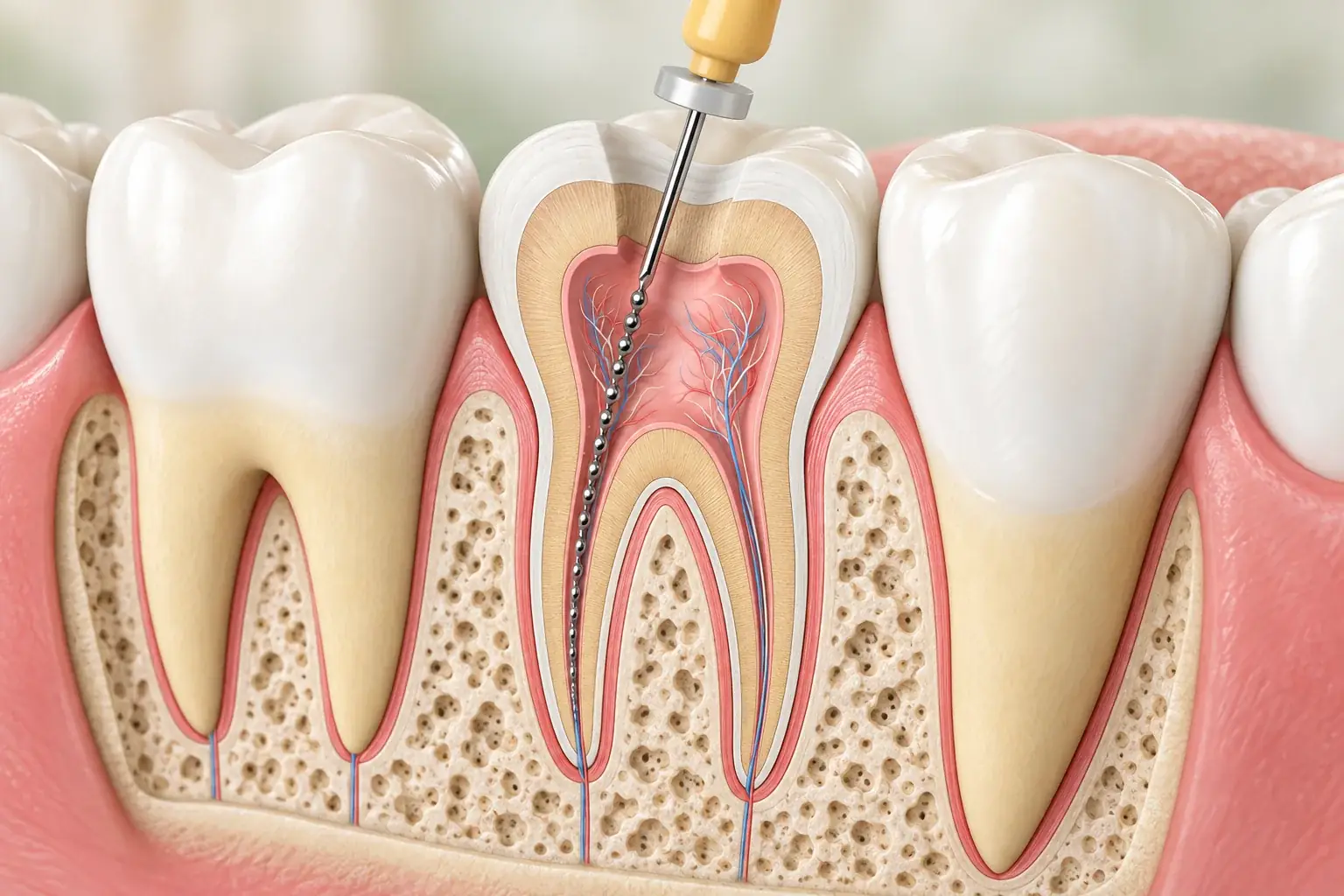

Tooth pain is the most common dental emergency we see, and one of the hardest to judge from home. The ache you feel may come from a cavity, a crack, an inflamed or dying nerve, an infection, your gums, or even your sinuses. The tooth that seems to hurt is not always the tooth responsible, because the nerves in the jaw can refer pain from one tooth to its neighbors or from the lower jaw to the upper.
That is why we ask you not to decide in advance which treatment you need. Our job is to find the source and relieve it; yours is to notice the pattern of the pain, protect the area, and call us at (817) 641-6261 during office hours, Monday through Thursday, 8:00 AM to 5:00 PM.
Go to the nearest emergency room or call 911 if you have trouble breathing or swallowing, swelling that is spreading quickly across the face or down the neck, swelling that reaches the eye or changes your vision, uncontrolled bleeding, or a high fever with feeling very unwell. Those are medical emergencies and should not wait for a dental appointment or a website reply.
Where tooth pain comes from
A tooth has layers: hard enamel with no nerve supply, dentin beneath it with tiny tubes that transmit sensation, and the pulp at the center holding the nerve and blood vessels. Pain tends to become more intense and persistent as a problem reaches deeper.
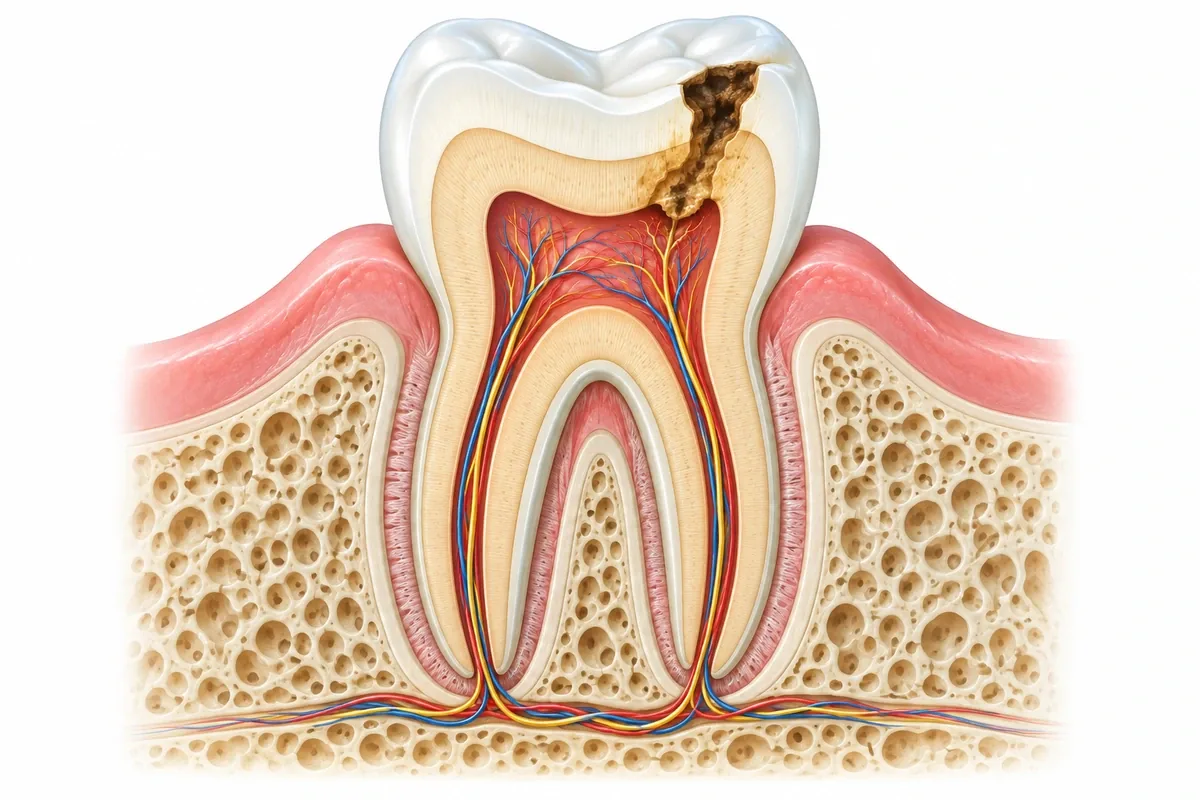
Common sources we find include:
- Decay that has worked through enamel into dentin, or all the way to the pulp.
- A cracked tooth or fractured cusp, often a tooth with a large old filling that hurts when you bite or release.
- Pulpitis, an inflamed nerve that may still be able to recover, or an irreversibly damaged one that cannot.
- A dental abscess, an infection at the root tip or in the gum. See our guide to a suspected dental abscess.
- Gum problems, such as food packed between teeth, an infected gum pocket, or a partly erupted wisdom tooth.
- Exposed roots or worn enamel, causing short, sharp sensitivity rather than a true ache.
Symptoms that should prompt a call today
Some pain can wait for a regular appointment; other pain means a tooth is in trouble now. Call promptly if you notice:
- Pain that wakes you at night or keeps you from sleeping.
- Pain from hot or cold that lingers for more than a few seconds after the trigger is gone.
- A throbbing ache that comes on its own without any trigger.
- Pain when you bite down, or a sharp jolt when you release the bite.
- A pimple-like bump on the gum, a bad taste, or drainage near the tooth.
- Any facial swelling, a swollen or tender jaw, or fever along with the pain.
- A tooth that hurt badly for days and then suddenly went quiet.
That last one surprises people. When the pulp dies, the pain often fades, but the bacteria that caused the damage are still inside the tooth and can spread into the bone. A quiet tooth after a loud one needs to be checked, not celebrated.
Brief cold sensitivity that disappears right away, or mild soreness after a filling that improves each day, can usually wait for a regular visit. If you are unsure, call and describe it.
How to describe the pattern of pain
When you call, the words you use help us decide how soon to see you and which tests to prepare. Try to tell us:
- When it started and whether it is getting better, worse, or staying the same.
- Whether it is constant or only comes with a trigger such as hot, cold, sweets, biting, releasing or lying down, and how long it lasts afterward.
- Whether you can point to one tooth or it feels spread out.
- Any swelling, fever, bad taste, injury, recent dental work, or a filling or crown that has broken or come out.
| What you notice | What it often suggests (an exam confirms) |
|---|---|
| Sharp twinge with cold or sweets that fades in seconds | Sensitivity or early decay |
| Hot or cold pain that lingers for a minute or more | Inflamed pulp that may or may not recover |
| Pain on biting or releasing, hard to locate | A crack or fractured cusp |
| Constant throbbing, worse lying down, maybe swelling | Pulp infection or abscess |
| Several upper teeth ache with a stuffy head | Sinus pressure rather than a tooth |
These are patterns, not diagnoses; two different problems can feel identical.
What you can do while you arrange care
- Floss gently around the sore tooth. Trapped food is a surprisingly common cause of sudden pain. Stop if flossing increases the pain.
- Rinse with warm salt water, about half a teaspoon of salt in a cup of warm water, several times a day. It soothes gum tissue and keeps the area clean.
- Use a cold compress on the outside of the cheek, wrapped in a thin towel, for 15 to 20 minutes at a time if there is swelling or a recent injury.
- Avoid very hot, very cold, hard and chewy foods, and chew on the other side.
- Over-the-counter pain relievers can help. Follow the label and check with a pharmacist or your physician if you have other medical conditions or take other medicines.
Do not place aspirin or any tablet on the gum (it burns the tissue), take leftover antibiotics, or try to drain swelling yourself.
What happens at the visit
An emergency visit for tooth pain in our Cleburne office usually runs in this order:
- Your story, medical history and medications.
- A targeted exam. Dr. Zohdi looks at the tooth, the gums around it, your bite, and any fillings or crowns in the area.
- An X-ray of the area. This shows decay between teeth, the condition of the root, and the bone around the root tip.
- Simple tests. Cold, tapping and bite tests on the suspect tooth and its neighbors pinpoint which tooth is responsible and whether the nerve is alive.
- A diagnosis and the first step toward relief, which may mean a filling, starting a root canal, treating the gum, or removing a tooth that cannot be saved.
- A plan for what comes next. Emergency care often stabilizes the tooth; a crown or other follow-up may be needed to finish the job.

How treatment is chosen
The right treatment depends on the diagnosis and how much healthy tooth remains, not on how much it hurt.
- A cavity that has not reached the pulp is usually repaired with a filling.
- A cracked or heavily broken-down tooth with a healthy nerve may need a crown to hold it together.
- A tooth whose pulp is irreversibly inflamed or infected can often be kept with root canal treatment, followed by a crown.
- Pain from the gums is treated with cleaning of the pocket and, where needed, periodontal care.
- A tooth that is split, fractured below the gum, or too damaged to restore may be best served by an extraction, with a conversation about replacement afterward.
Many of the most painful teeth we see are saved with a root canal and a crown.
What affects the cost
The cost depends on what we find. A limited emergency exam with an X-ray is the starting point; the treatment itself, whether a filling, root canal, extraction or crown, drives the total. Insurance often covers emergency exams and X-rays as diagnostic benefits, with treatment covered by category. We give a written estimate before treatment; see our insurance and financing pages.
Risks of waiting
An untreated toothache rarely improves on its own. Decay keeps spreading, a crack can run until the tooth splits, and an infected nerve can become an abscess in the bone. Each step narrows the options: a tooth that could have had a filling may later need a root canal, then an extraction. Early assessment keeps more choices open.
Sources and further reading
- ADA MouthHealthy: Dental emergencies
- American Association of Endodontists: What is a root canal?
- Mayo Clinic: Toothache first aid
- American Association of Endodontists: Cracked teeth
General information, not a diagnosis. Read how we create and review our dental guides.