

If it has been years since you sat in a dental chair, you already know the hardest part is making the call. People put off dental care for all kinds of reasons: cost, a bad experience, a move, a pandemic, a busy decade, or a quiet fear of what might be found. None of those reasons disqualify you from care, and none of them will be held against you here.
The first visit is about information, not commitments. We find out what is going on in your mouth, explain it in plain words, and sort it into what matters now and what can wait. You do not need to arrive knowing the condition of every tooth, and you will not be asked to sign up for a full treatment plan on the spot.
It also helps to know that a long gap does not automatically mean a long list. Many people who return after years away need a thorough cleaning, a filling or two and a plan to keep things stable. Some need more. The point of the exam is to replace worry with facts.
Start with why you are coming back
When you call or request an appointment online, tell the office what brings you in. It changes how the visit is scheduled.
- A checkup after a long gap. We set aside time for a complete new-patient exam, X-rays and a conversation, and possibly a cleaning if your gums turn out to be healthy.
- Something specific is wrong. A tooth that hurts, a broken filling, a sore gum, a loose tooth. An active problem needs a focused exam first; a routine cleaning slot is not the right place to sort it out. If you are in pain or have swelling, say so, and read our toothache guide for what to do in the meantime.
- You want to change something bigger. Replacing missing teeth, fixing a smile you have been hiding, getting dentures that fit. We still start with a full exam, but we plan the conversation around your goal.
Mention anything that would make the first visit easier: that you are nervous, that you gag easily, that you want explanations before each step, or that you prefer to hear findings before any treatment is discussed.
What to bring
- A list of medications and supplements, with doses. Blood thinners, bone-density medications, diabetes medications and anything for anxiety or blood pressure can all affect dental care.
- Any major medical changes since your last dental visit: new diagnoses, surgeries, pregnancy, joint replacements.
- Your dental insurance card, if you have coverage, so benefits can be checked before anything is recommended.
- Old dental records or X-rays if they are easy to get. Ask your former office to send them; most can transfer digital images quickly. If you cannot get them, do not let that stop you. Missing records are a minor inconvenience, not a barrier.
What the first visit involves
A new-patient visit to our Cleburne office after a long absence is longer than a routine checkup because we are starting from scratch.
- Conversation. Your history, your concerns, your goals and anything that has made dental care hard in the past.
- X-rays. A full set of dental X-rays is usually needed as a baseline, because without recent images we cannot see between teeth, under old fillings or at the bone level. If you have good recent images from elsewhere, we may need fewer.
- Gum measurements. A small probe measures the space between gum and tooth around every tooth. This is the single most important measurement for deciding what kind of cleaning you need.
- The exam. Every tooth, every filling and crown, your bite, your jaw joints, and the soft tissues of your mouth including an oral cancer screening.
- Findings and options. We show you what we found, on the screen and in the mirror, and talk through choices. If your gums are healthy, a cleaning may happen at the same visit. If gum disease is present, the right cleaning is different and is planned separately.
Expect to hear some unfamiliar words. Ask what each finding means, how it was found, and what happens if nothing is done. Those three questions turn jargon into a decision you can actually make. Our exams and cleanings guide explains the visit in more detail, and our general and family dentistry pages cover the routine care that follows.
Common findings after a long gap, and what they mean
Knowing what is typical takes some fear out of the exam.
- Tartar build-up and bleeding gums. Almost universal after years without a professional cleaning. Gum inflammation that has not yet affected bone is reversible with a cleaning and better home care.
- Gum disease with bone loss. Common after long gaps, often without pain, and the main reason the recommended cleaning may be scaling and root planing rather than the standard cleaning you remember. Our comparison of routine and deep cleanings explains the difference and why it matters.
- Cavities, sometimes several, often between teeth or under old fillings where they have grown quietly.
- Worn or broken fillings and crowns. Dental work ages; our guide to replacing old dental work covers how we decide what to leave alone.
- Wear from grinding, flattened edges and chipped enamel.
- Teeth that cannot be saved. Occasionally a tooth has decayed or fractured past repair. If so, we talk about whether a tooth can be saved and what replacing it would involve, with no pressure to decide that day.
Lack of pain does not mean everything is fine; many of these conditions are silent until late. And a long list of findings is a starting point, not a verdict.
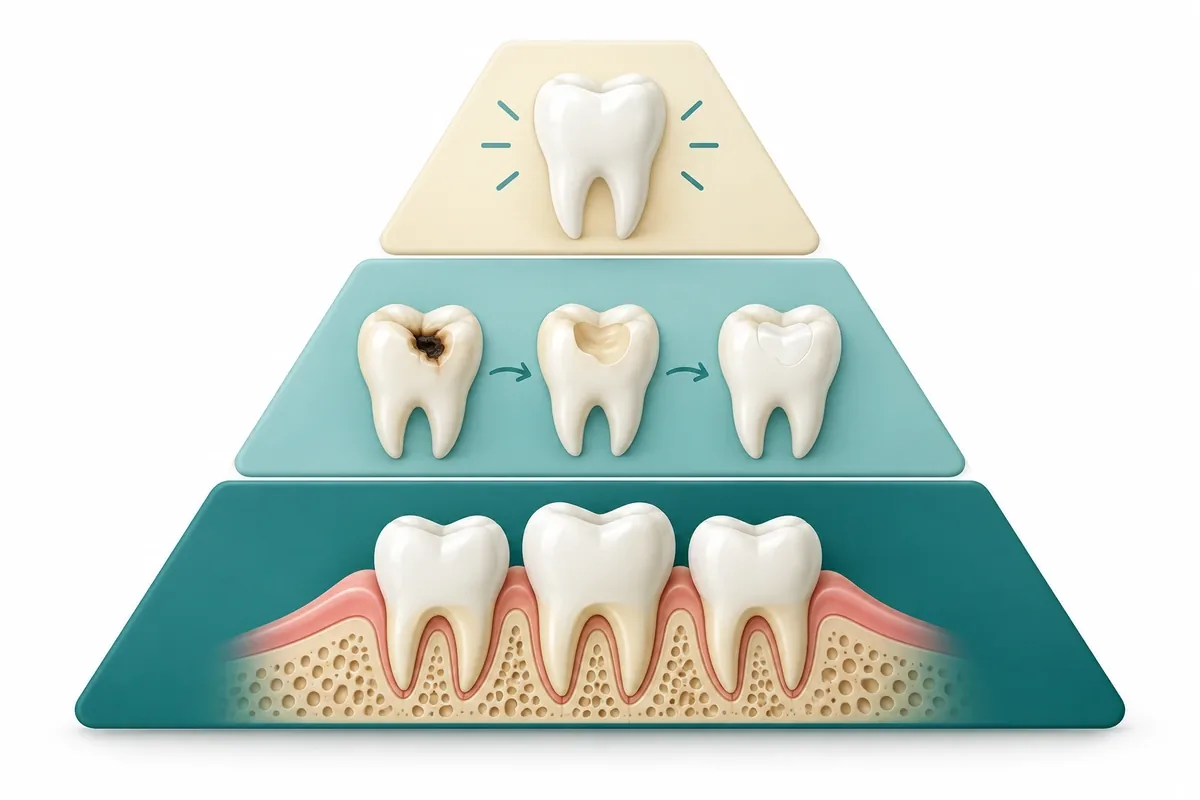
Sorting the recommendations into priorities
If several things are found, ask us to sort them into three groups. It is the most useful question you can ask.
| Group | What belongs here | Timing |
|---|---|---|
| Urgent | Infection, pain, a tooth at risk of breaking, active gum disease | Address first, usually within weeks |
| Preventive | Cavities that will grow, failing fillings, worn teeth that will chip, gum maintenance | Schedule in a sensible order over the coming months |
| Optional | Whitening, cosmetic changes, replacing a missing back tooth you have lived without | Whenever you choose, or never |
Treatment can almost always be staged. Infection and pain come first because waiting makes them worse and more expensive. A small cavity may safely wait a few months; a large one may not. We will tell you which is which, and what the consequence of waiting is in each case, so that the order of treatment is a decision you make with full information rather than one made for you.
Comfort: say it early
If fear or a past bad experience is part of why you stayed away, tell us at the first conversation. Nothing about it is unusual to us. You can ask for an explanation before each step, a hand signal that means "pause," breaks, and a visit that is only an exam and a talk, with any treatment planned for another day once you know what to expect. Local anesthetic is used for anything that could hurt, and we check that you are numb before starting. Our page on feeling nervous about dental treatment goes into what works for most people.

Cost: ask for it in writing
Before agreeing to treatment, ask for a written estimate that lists each procedure, its fee, and what your insurance is expected to pay. Ask what is not included, such as X-rays or a follow-up visit. Our insurance page explains how benefits are checked and why an estimate is not a guarantee, and our payment and financing page covers ways to spread out the cost of larger plans.
Do not let coverage alone decide the order of care; a treatment your plan will not pay for may still be the one that prevents a much larger bill next year.
Sources and further reading
General information, not a diagnosis. Read how we create and review our dental guides.