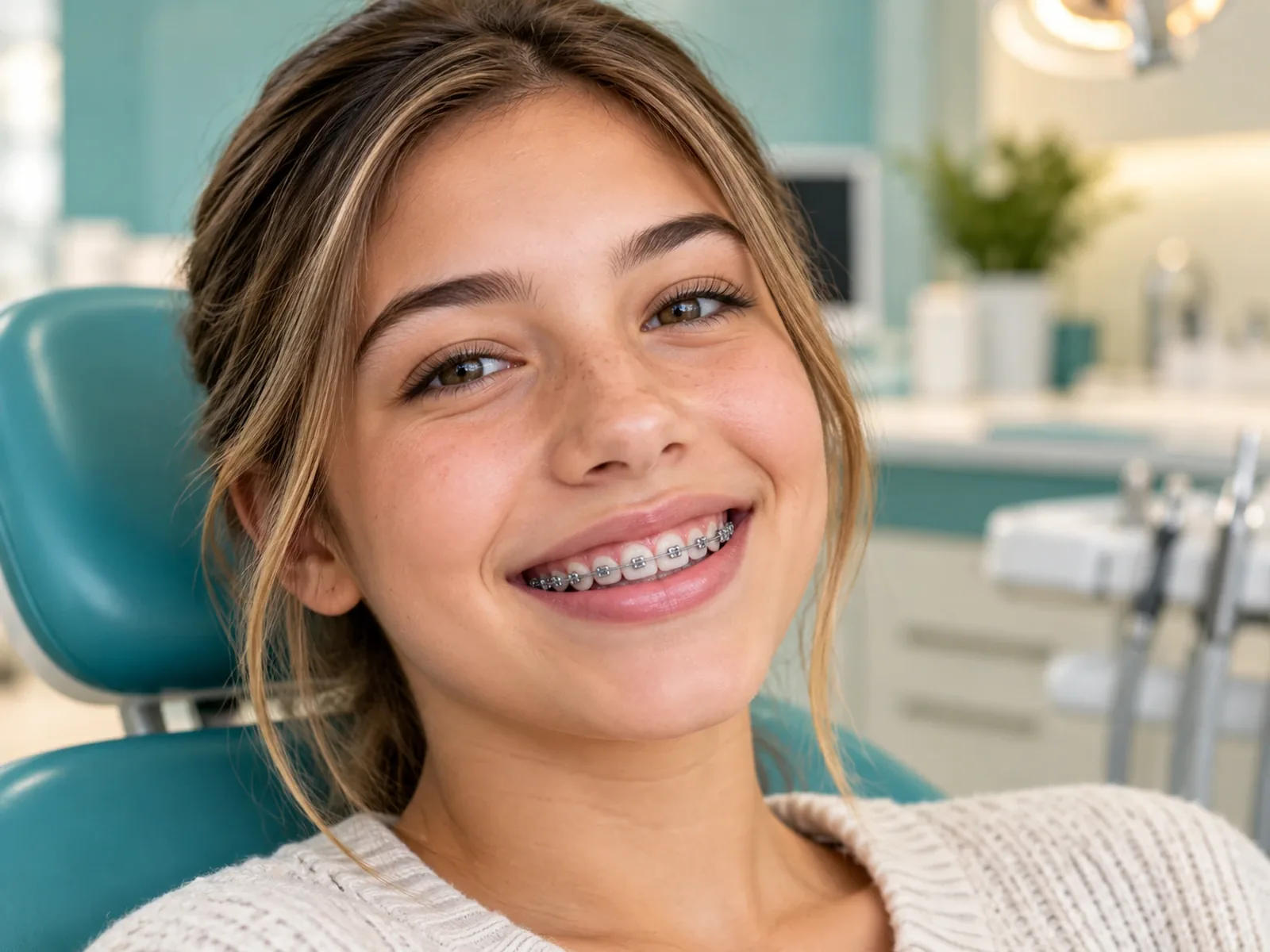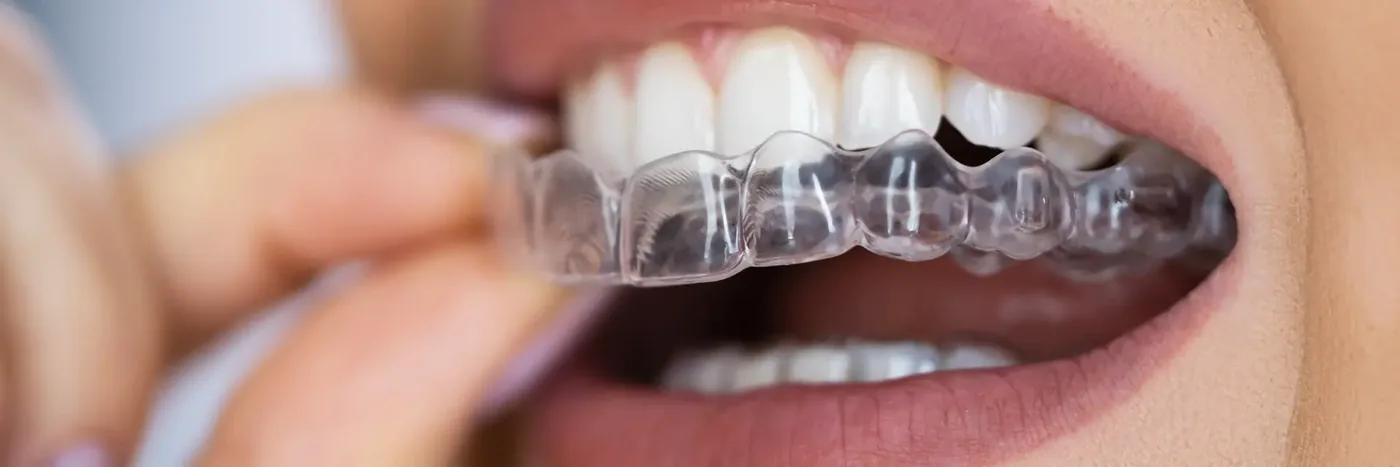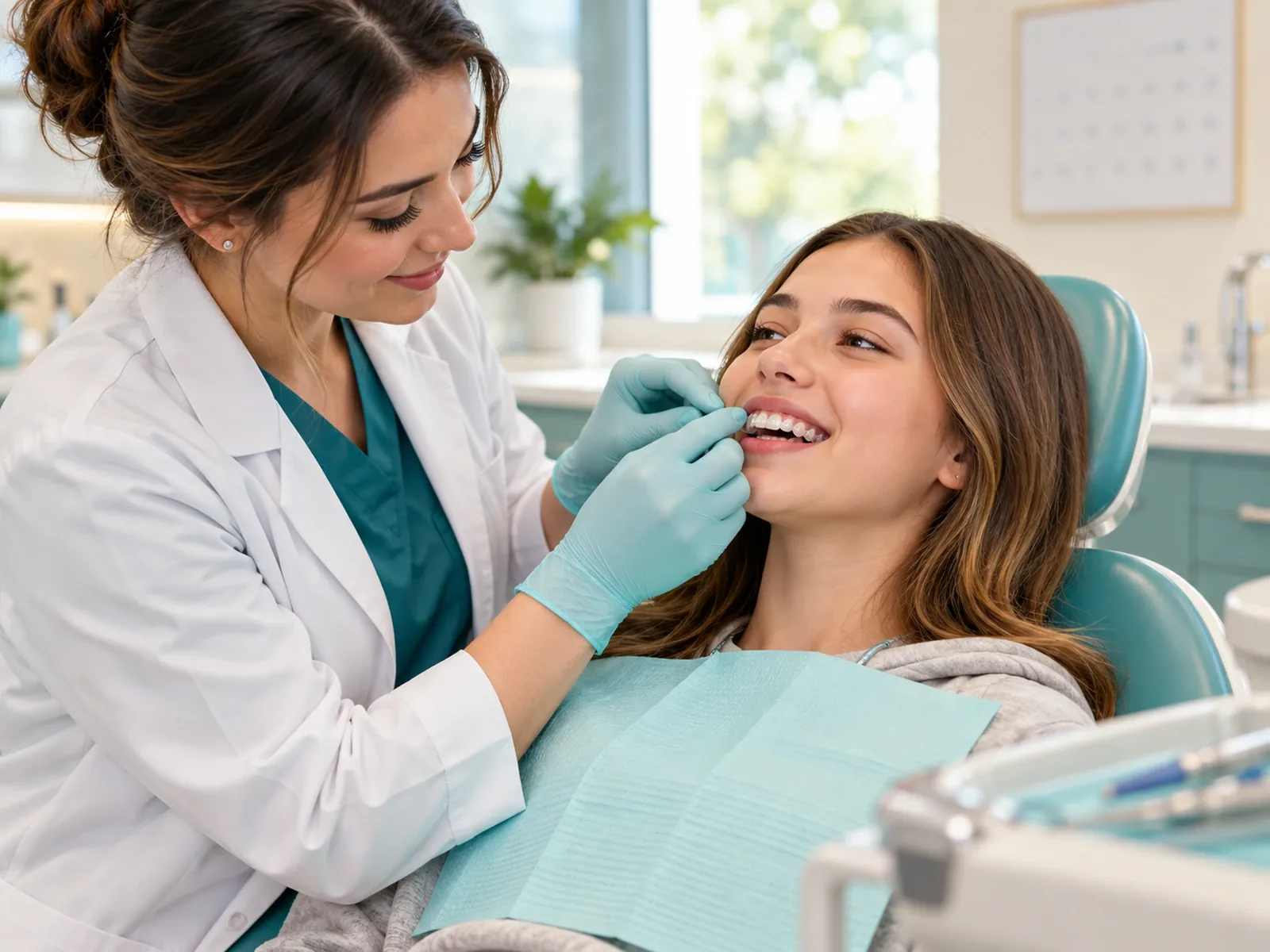
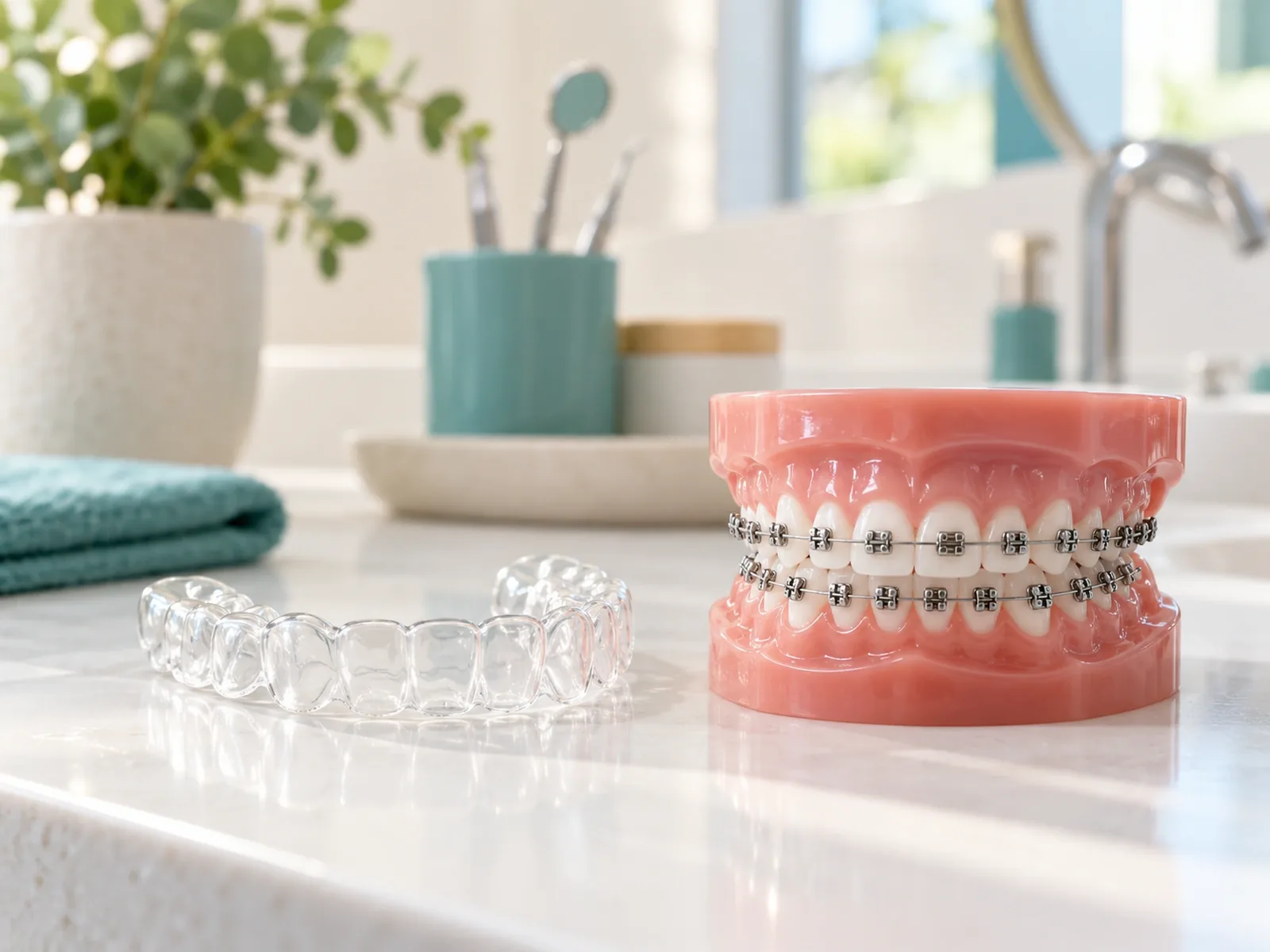
Braces and clear aligners both move teeth by applying gentle, sustained pressure. The difference is in how that pressure is delivered and what each system asks of you. Braces are bonded on and work around the clock whether you think about them or not. Aligners are removable trays that work only while you wear them, which gives you freedom at mealtimes and hands you the responsibility for keeping them in the rest of the day.
Patients often arrive having already decided based on photographs or a friend's experience. A better starting point is the diagnosis. Once Dr. Zohdi knows which teeth need to move, in which directions and how far, the question becomes: which appliance can get there predictably, with tradeoffs you can live with?
This page compares the two across the things that affect daily life. For detail on either appliance alone, see traditional braces and clear aligners, both part of our orthodontics service in Cleburne.
The short comparison
| Braces | Clear aligners | |
|---|---|---|
| How they stay in | Bonded to teeth for the whole treatment | Removable; worn most of the day and night |
| What you control | Cleaning, food choices, elastics | Hours of wear, tray changes, tray hygiene |
| Movements they handle well | Nearly all, including rotations and vertical moves | Mild to moderate crowding, spacing, many tipping moves |
| Eating | Avoid hard and sticky foods | Remove to eat; no food limits, but only water with trays in |
| Cleaning | Extra work around brackets and under the wire | Normal brushing, plus brushing before every reinsertion |
| Appearance | Visible; ceramic brackets are less so | Less noticeable; attachments and elastics may show |
| Visits | Adjustments every several weeks | Check-ins at intervals; trays changed at home |
| Afterwards | Retainers | Retainers |
The rest of this page explains what sits behind each row.
Which movements each appliance handles well
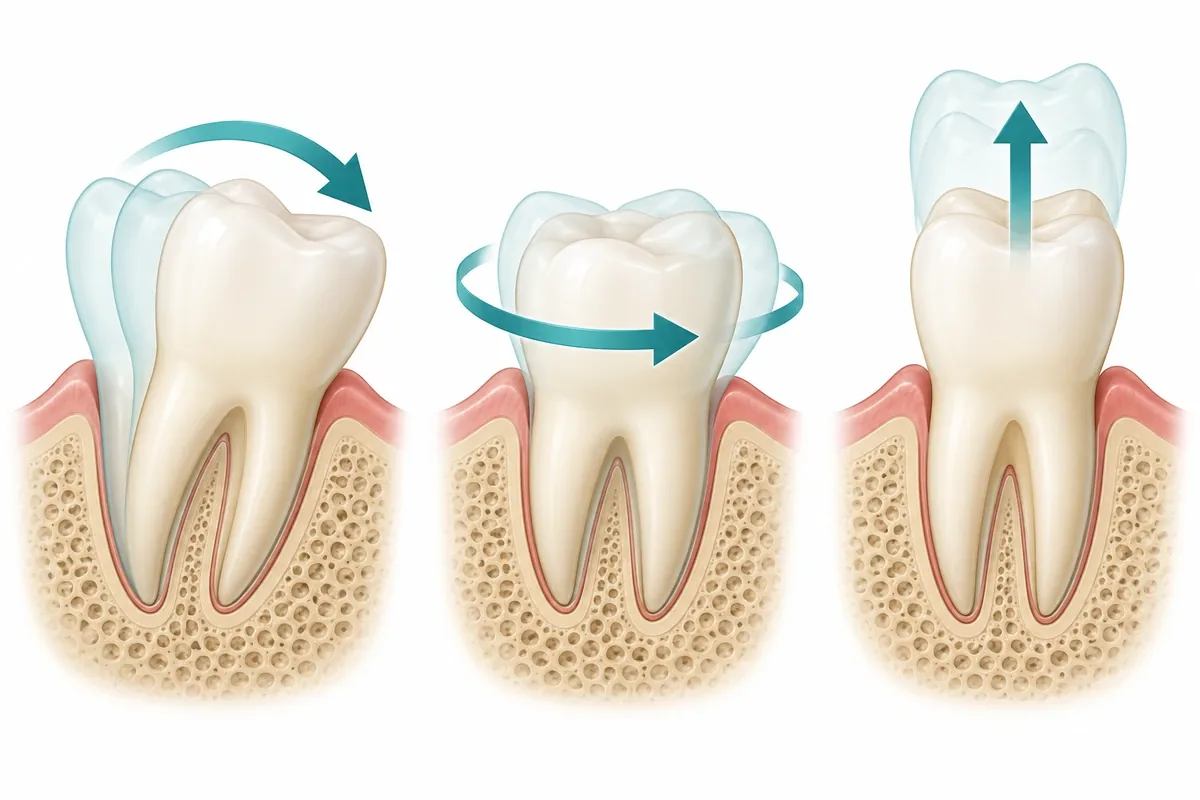
Teeth can be tipped, pushed bodily sideways, rotated, moved up or down, or torqued at the root. Braces grip each tooth through a bracket and can apply all of these forces with a wire and auxiliaries. That is why they remain the default for complex cases: severe crowding, teeth that need to come down from high in the gum, large rotations of round teeth such as canines and premolars, and some bite corrections.
Aligners push on the crown of the tooth through plastic. They are very good at tipping and small bodily movements, and modern systems use tooth-colored attachments and elastics to extend what they can do. Even so, certain movements remain less predictable in trays, and a plan that relies on them may need refinements or a short period in braces to finish.
Sometimes the best answer is both: braces for a few months to accomplish the difficult movements, then aligners to finish. Ask what makes your particular case suitable rather than choosing from before-and-after photos.
Fixed control versus removable wear
Braces cannot be forgotten in a lunch bag. They work continuously, which is one reason they are often chosen for children and for anyone who knows they will struggle with a removable appliance. But braces are not participation-free. Cleaning, protecting the brackets and wearing elastics when prescribed all affect progress.
Aligners work only when worn, and the prescribed wear time is most of the day and night, removed only for eating, drinking anything other than water, and cleaning. Patients who snack often, sip coffee or sweet drinks through the day, or travel a lot find that the hours slip. When trays are out too long, the next tray does not fit, and the plan stalls.
Be honest with yourself about your routine. An appliance that sounds convenient in theory is not convenient if it sits in its case.
Hygiene and eating
Brackets and wires create dozens of small ledges where plaque collects. Brushing takes longer, flossing needs a threader, and plaque left behind can leave permanent white marks on the enamel. Hard foods can break brackets; sticky foods pull at them.
Aligners come out for meals, so you can eat anything, and your toothbrush reaches the teeth normally. The catch is that trays go back onto teeth that must be clean. Anything trapped under the plastic, especially sugary or acidic drinks, sits against the enamel for hours. The rule is simple: only plain water with trays in, and brush before reinserting.
Neither appliance protects against cavities or gum disease. If daily cleaning is already a struggle, say so during planning; active disease needs treatment before any movement begins, and the appliance choice may follow from how realistic each cleaning routine is for you.
Appearance and comfort
Aligners are less noticeable than metal braces, but they are not invisible. Attachments bonded to the teeth are tooth-colored yet visible up close, elastics may hang between the arches, and the trays can affect speech slightly for the first few days. Ceramic braces are a middle ground that many adults choose; see our page on braces for adults for the planning points that come with age.
On comfort: braces can rub the inside of the lips and cheeks until the tissue toughens, and wire ends sometimes poke. Aligners can have rough edges and create pressure, particularly in the first day of each new tray. Both cause tooth tenderness as teeth begin to move. No appliance should be described as pain-free, and neither one is unbearable.
Comparing the complete plan, not the sticker price
Advertised prices for aligners and braces often describe different scopes. Before you compare totals, ask each estimate the same questions:
- Are records, the first appliance and all monitoring visits included?
- For aligners: how many refinements or extra trays are included, and what happens if more are needed?
- For braces: are repairs for broken brackets or wires included?
- Are retainers and retention check-ups part of the fee?
- Is the plan limited (front teeth only) or comprehensive (whole bite)?
Our orthodontic cost guide goes into each of these. As for speed, treatment time depends on the movements needed and how consistently the plan is followed. Neither appliance earns a guaranteed faster finish.
When braces are usually the better choice
- Severe crowding or large rotations.
- Teeth that need to be moved up or down significantly.
- Bite corrections that rely on strong, constant elastic wear across fixed anchors.
- A patient who, by their own admission, will not keep trays in for the required hours.
When aligners are usually the better choice
- Mild to moderate crowding or spacing.
- An adult or older teen with a reliable routine who strongly prefers a discreet appliance.
- Someone whose job or hobby makes brackets impractical (certain wind instruments, some contact sports where a mouthguard over braces is awkward).
- A patient with a history of white-spot lesions or difficulty cleaning around brackets.
These are tendencies, not rules. The assessment decides.
Sources and further reading
- American Association of Orthodontists: Aligners
- American Association of Orthodontists: Adult treatment questions
- ADA MouthHealthy: Braces
General information, not a diagnosis. Read how we create and review our dental guides.