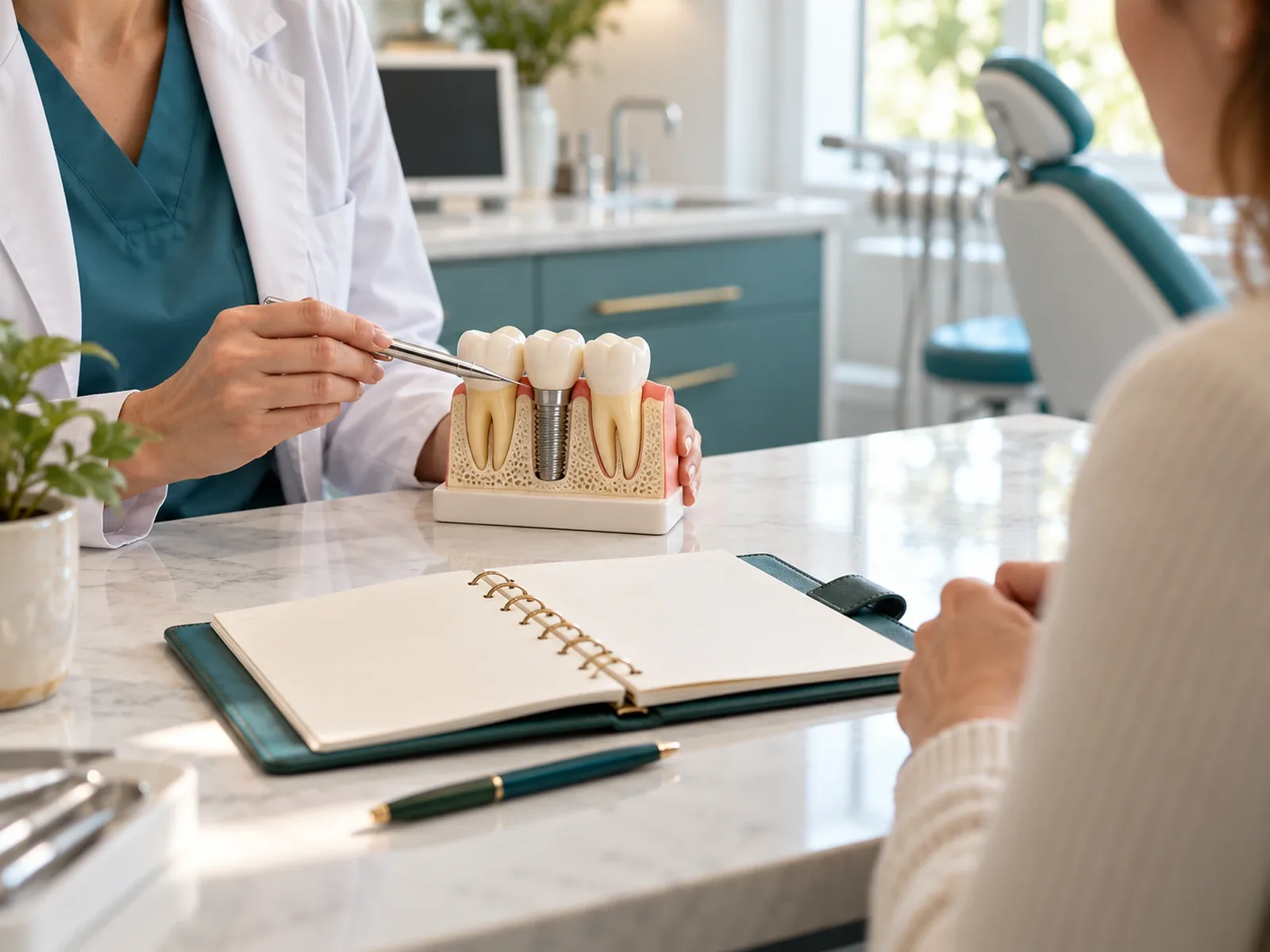

When one tooth needs a crown, the plan is short. When a dozen teeth need attention, some are infected, several are missing, and the bite has collapsed, the plan becomes a puzzle. Which problem is solved first? What happens to the teeth in between? How do you know the new bite will feel right before it is permanent?
Full-mouth reconstruction is the discipline of answering those questions in the right order. It coordinates gum treatment, extractions, root canals, implants, grafting, and final restorations so each stage sets up the next. Done well, it means fewer surprises, less repeated work, and teeth you can live with and keep clean.
This page explains the typical stages, why they are ordered the way they are, and the questions that help you follow the plan Dr. Zohdi builds for you in Cleburne. It is part of our broader full-mouth reconstruction overview.
Stage one: diagnosis and priorities
Everything starts with understanding exactly what is wrong. For a complex case the records are more thorough than a routine checkup:
- Photographs of your teeth, gums, and smile at rest and in motion
- X-rays and, when implants or grafting are possible, a three-dimensional scan
- Gum measurements around every tooth
- Impressions or a digital scan of both arches
- A record of how your teeth meet and how your jaw moves
- Notes on jaw joint sounds or soreness, tooth wear, and any habits such as clenching
From these, each tooth gets a prognosis: sound, treatable, questionable, or not worth saving. That honest sorting is the foundation of the whole plan. A tooth with a hopeless prognosis should not anchor a bridge; a tooth with a good one should not be removed for convenience.
Then come your priorities. What bothers you most: pain, chewing, appearance, a loose denture, embarrassment? What matters most in the result: durability, speed, cost, keeping natural teeth? Those answers shape which pathway makes sense, because two people with identical X-rays can reasonably choose different plans.
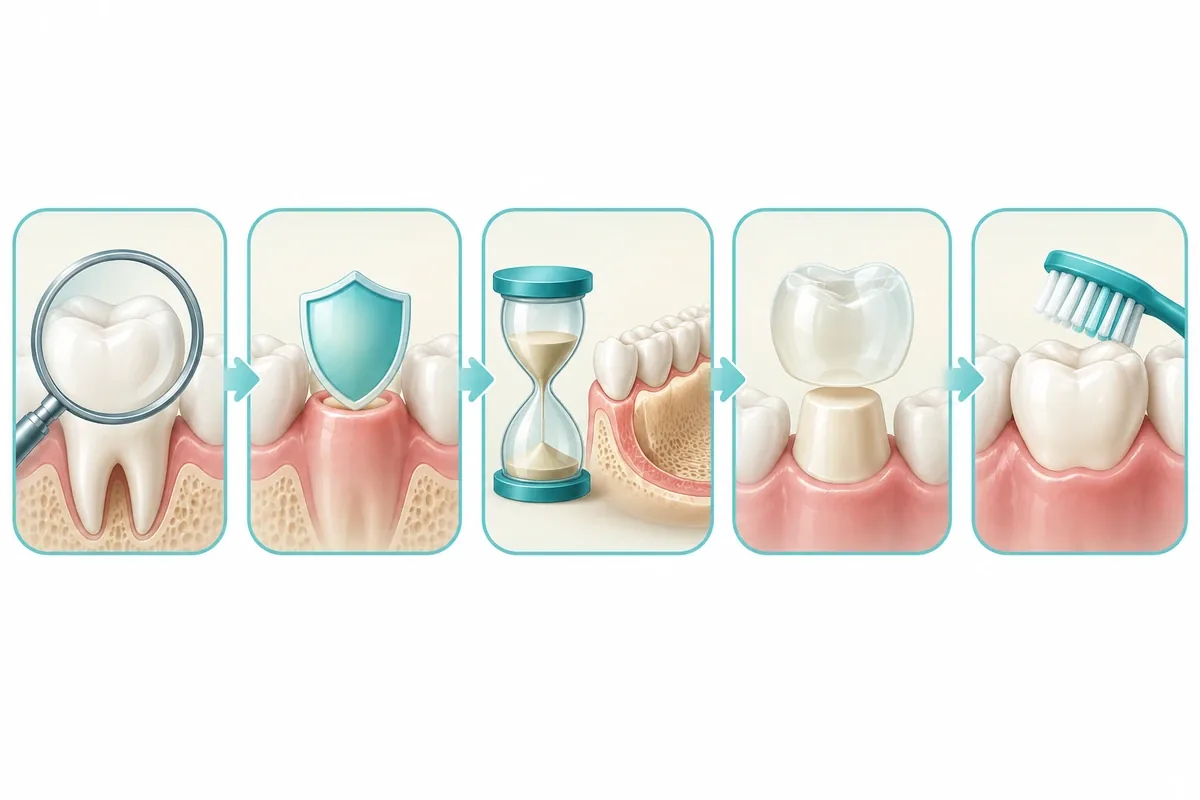
Stage two: stabilize before you build
Active disease has to be controlled before anything permanent is made. Building a beautiful crown on a tooth with untreated gum disease, or placing a new filling next to an abscess, wastes money and sets up failure.
Stabilization typically includes, in roughly this order:
- Relieve pain and treat infection. Abscessed teeth are treated or removed first.
- Control decay. Large cavities are cleaned out and sealed with temporary or permanent fillings so decay stops spreading.
- Treat the gums. Scaling and root planing and other periodontal care bring inflammation down. Gum health decides whether teeth can be kept and how they will heal around new work.
- Remove hopeless teeth. Extractions happen early so healing can proceed. Where an implant is planned, a socket graft may be placed at the same time.
- Complete root canals on teeth that will be kept and crowned.
- Place temporary protection on weak teeth so they do not fracture while the plan unfolds.
Each temporary measure should have a reason and a review point. Ask what it is protecting and when it will be replaced.
Stage three: healing and surgery
If implants or grafts are part of the plan, healing time becomes the backbone of the schedule. Grafts need months to mature, implants need months to bond with the bone, and neither can be rushed by the calendar. Our pages on the implant treatment timeline and bone graft healing explain why a site that feels fine may still not be ready.
During these months you are not left with gaps. Temporary teeth, a provisional partial, or an interim denture keep you eating and smiling. Their design matters: they must not press on healing grafts or implants.
Orthodontics, when needed, usually fits here too. Moving teeth into better positions before final crowns are made can mean smaller restorations and a more stable bite.
Stage four: test the result before it is final
This is the stage most people have never heard of, and it is the one that prevents the most regret. Before final crowns, bridges, or implant teeth are made, Dr. Zohdi can build the proposed result in a reversible form:
- A diagnostic wax-up or digital design shows the planned tooth shapes on a model or a screen.
- A trial smile transfers that design onto your actual teeth in temporary material so you can see it in a mirror.
- Provisional restorations are worn for weeks or months. You chew with them, speak with them, and clean around them.
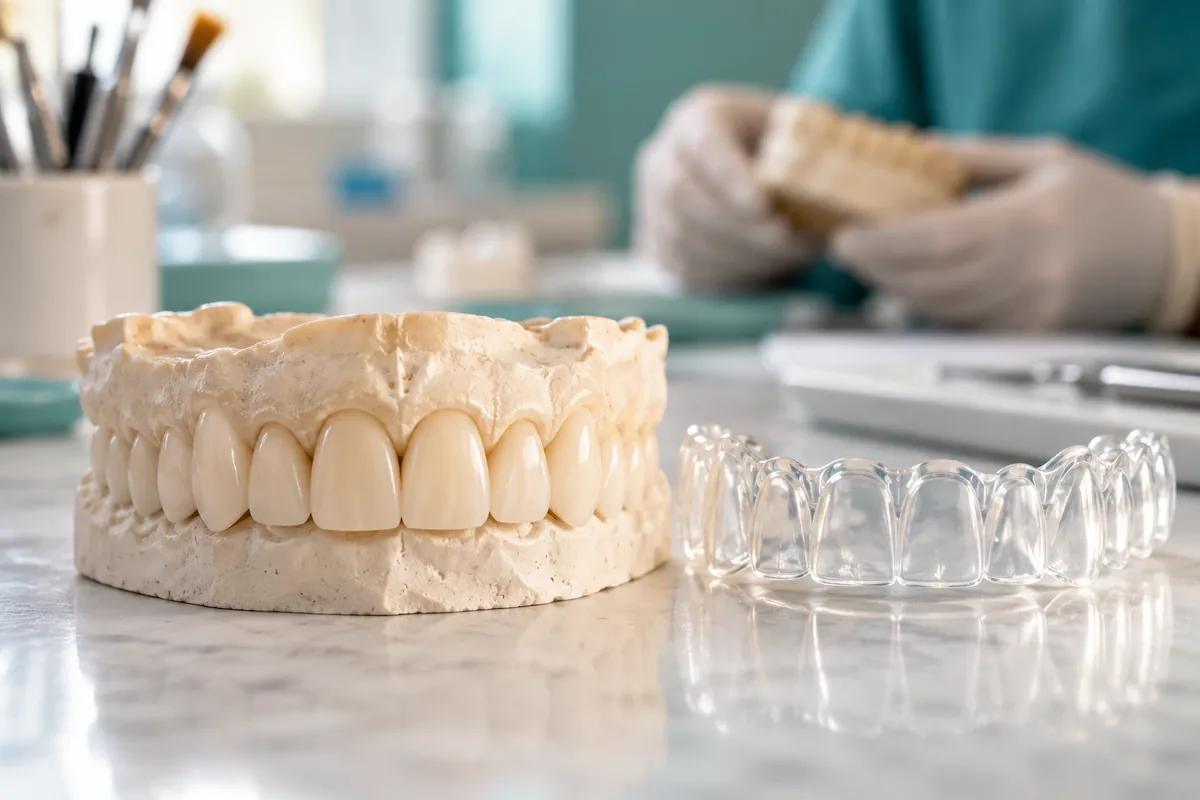
If the new teeth feel too long, your speech changes, your jaw muscles are sore, or a spot is hard to floss, those problems are fixed in the provisional, not discovered in porcelain. When you change how your teeth meet, this trial period is especially important; your jaw and muscles need time to show whether the new position is comfortable. Our page on restoring worn teeth explains why bite changes deserve this caution.
Stage five: final restorations and maintenance
Once the provisional phase has proven the design, the final work is made to copy it. This is usually done in groups: one arch or one section at a time, so the bite is never lost. Final materials are chosen for strength where you chew hardest and appearance where it shows.
The plan does not end when the last crown is cemented. Reconstructed teeth still get cavities at the edges, gums can still become inflamed, and implants need their own cleaning routine. A night guard is often recommended to protect the investment if you clench or grind. Expect a closer recall schedule for the first year and a frank conversation about home care.
Phasing for budget without breaking the plan
Many patients need to spread treatment over time, and that is usually possible. The rule is that the clinical order stays intact. Infection control and protecting fragile teeth cannot wait; a cosmetic refinement can. Dr. Zohdi can identify which stages can be separated safely, what interim care each pause requires, and what it would cost to leave a tooth temporized for longer. Our reconstruction cost guide explains how to compare phased plans fairly.
Sources and further reading
General information, not a diagnosis. Read how we create and review our dental guides.