Dental Implants in Cleburne: Know Your Replacement Options
An implant is one part of replacing a tooth. The crown or denture it supports, the bone and gums around it, and the care it needs over the years matter just as much. Here is how to compare your options.
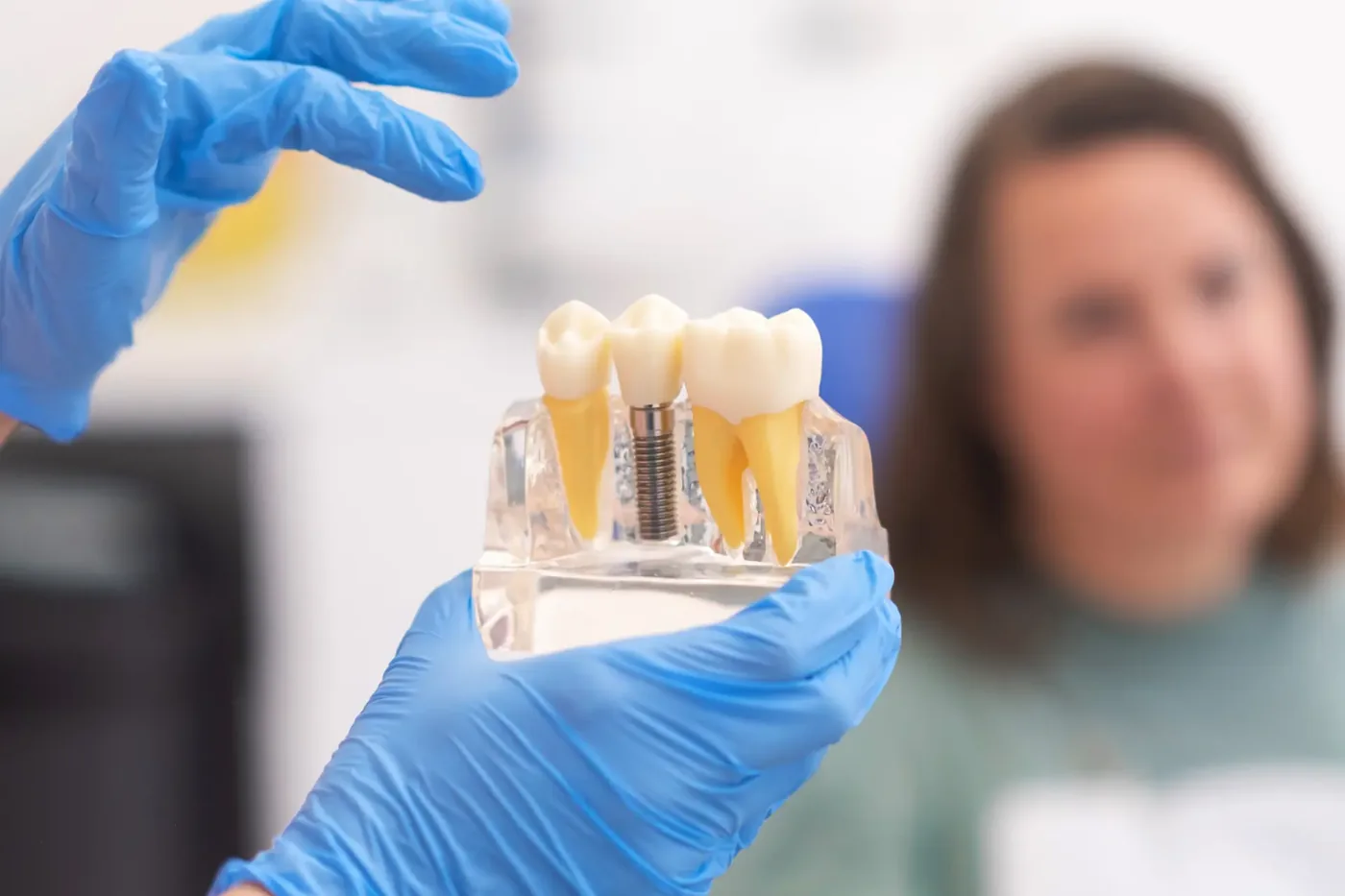
Losing an adult tooth changes more than your smile. Chewing shifts to the other side, neighbouring teeth drift into the gap, and the bone that held the root slowly shrinks because nothing is stimulating it. A dental implant replaces the missing root with a small titanium post set into the jaw; once the bone has healed around it, the post carries a crown, a bridge or a denture.
The implant itself is only one part of the treatment. The restoration you will chew with, the condition of the bone and gums that support it, and the maintenance it will need over the years matter just as much. Understanding those parts helps you compare options — and compare estimates — without relying on a single advertised package.
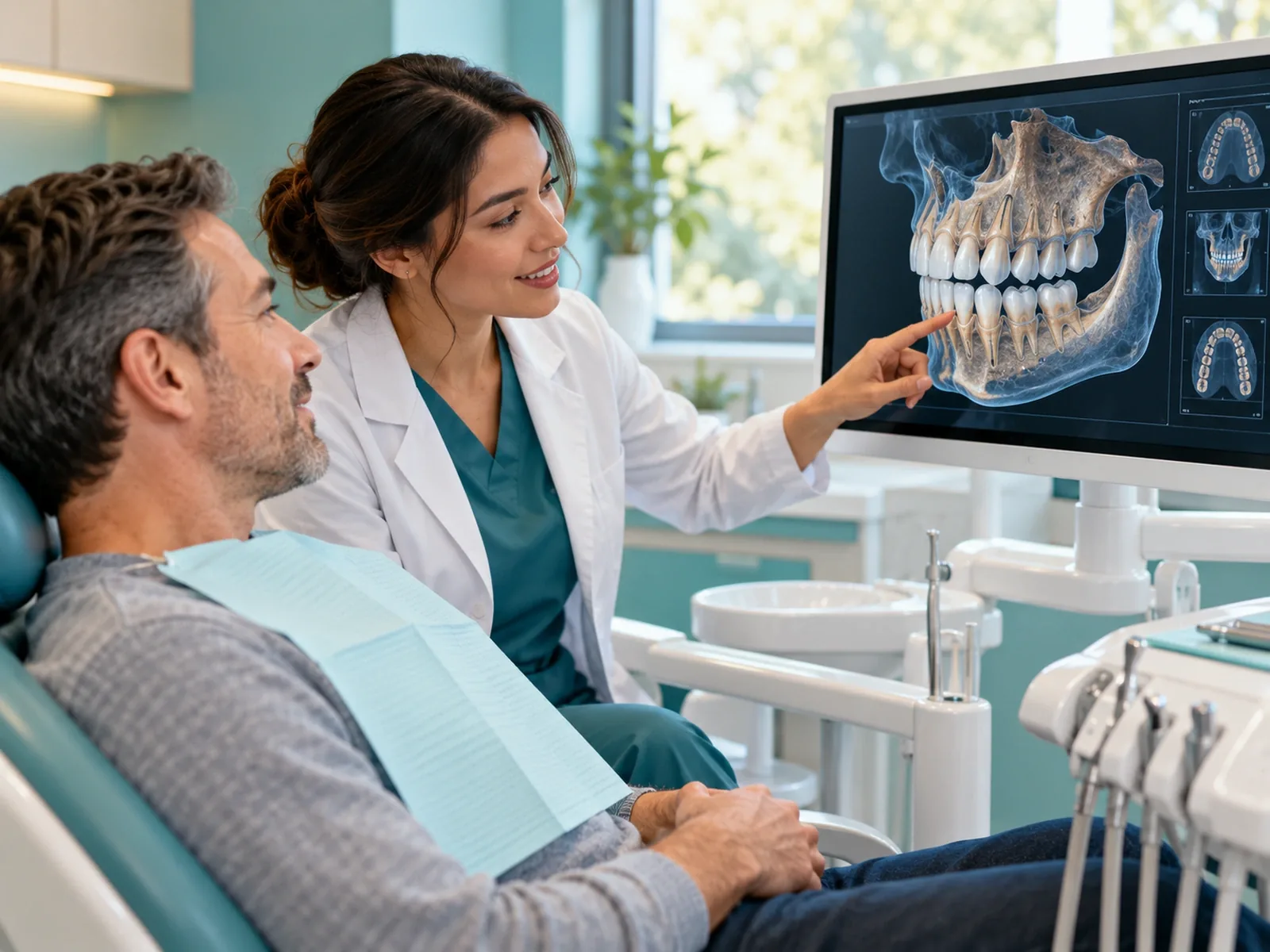
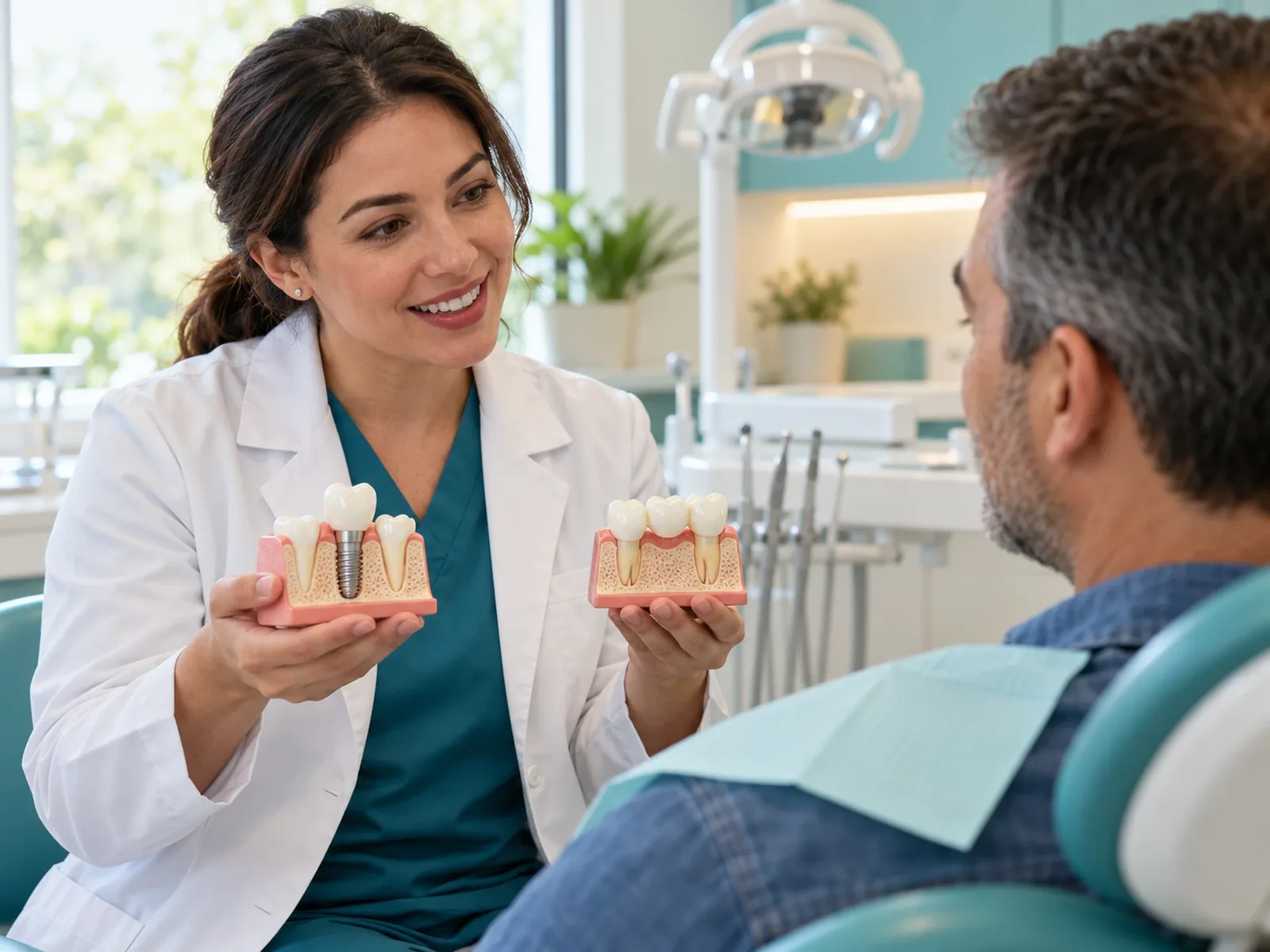
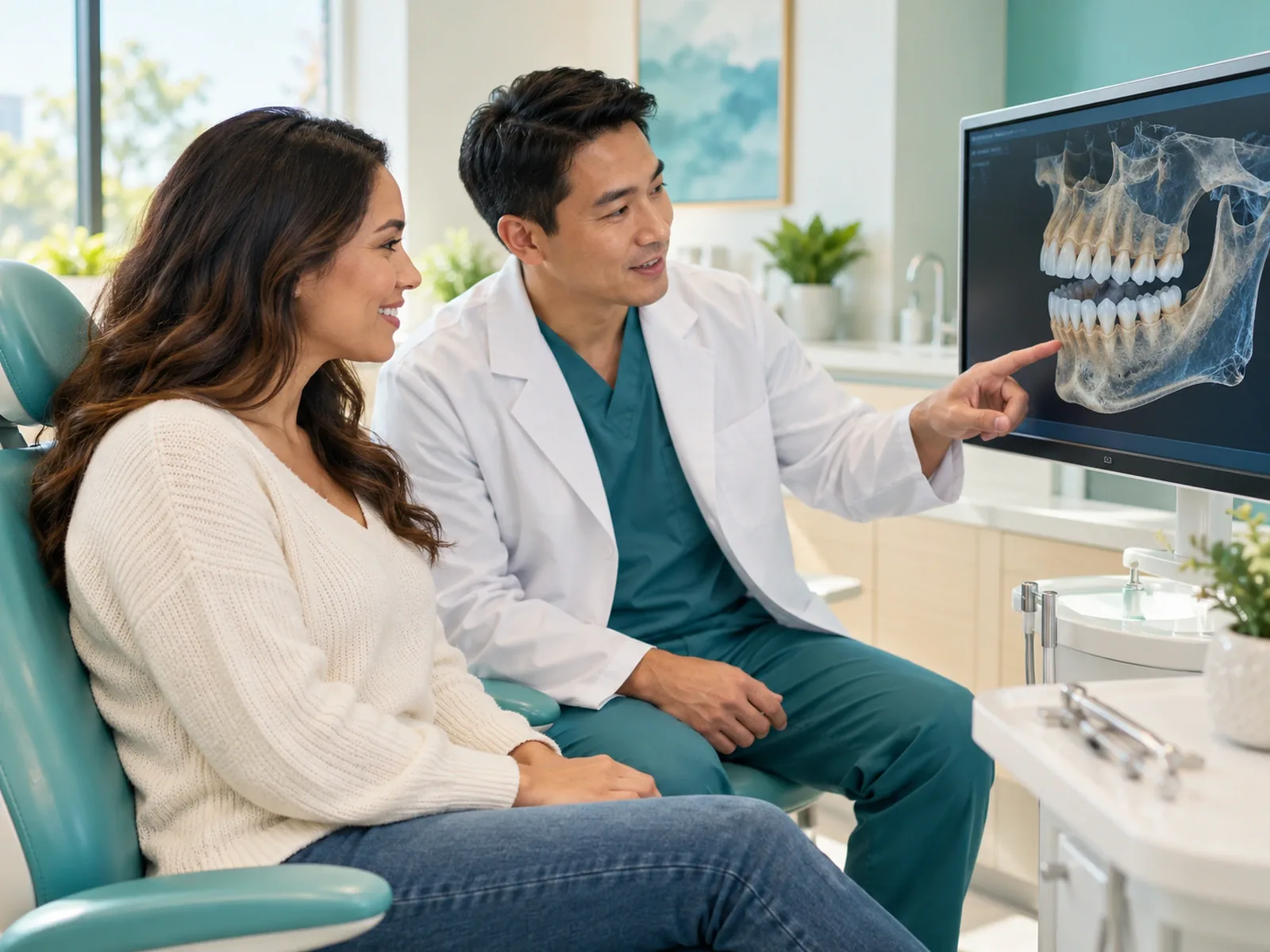
At Cleburne Dental, Dr. Zohdi plans the whole replacement, not just the surgery. You see your own X-rays on the screen, hear which of your teeth can be saved, and leave with a sequence you understand.
A plan for several missing teeth does not automatically mean every remaining tooth should be removed. If a tooth can be kept with a root canal or a crown, that is usually the better long-term investment. Where an implant is not the right fit, a dental bridge or a partial denture remain sound options; our implant vs. bridge guide walks through that decision.
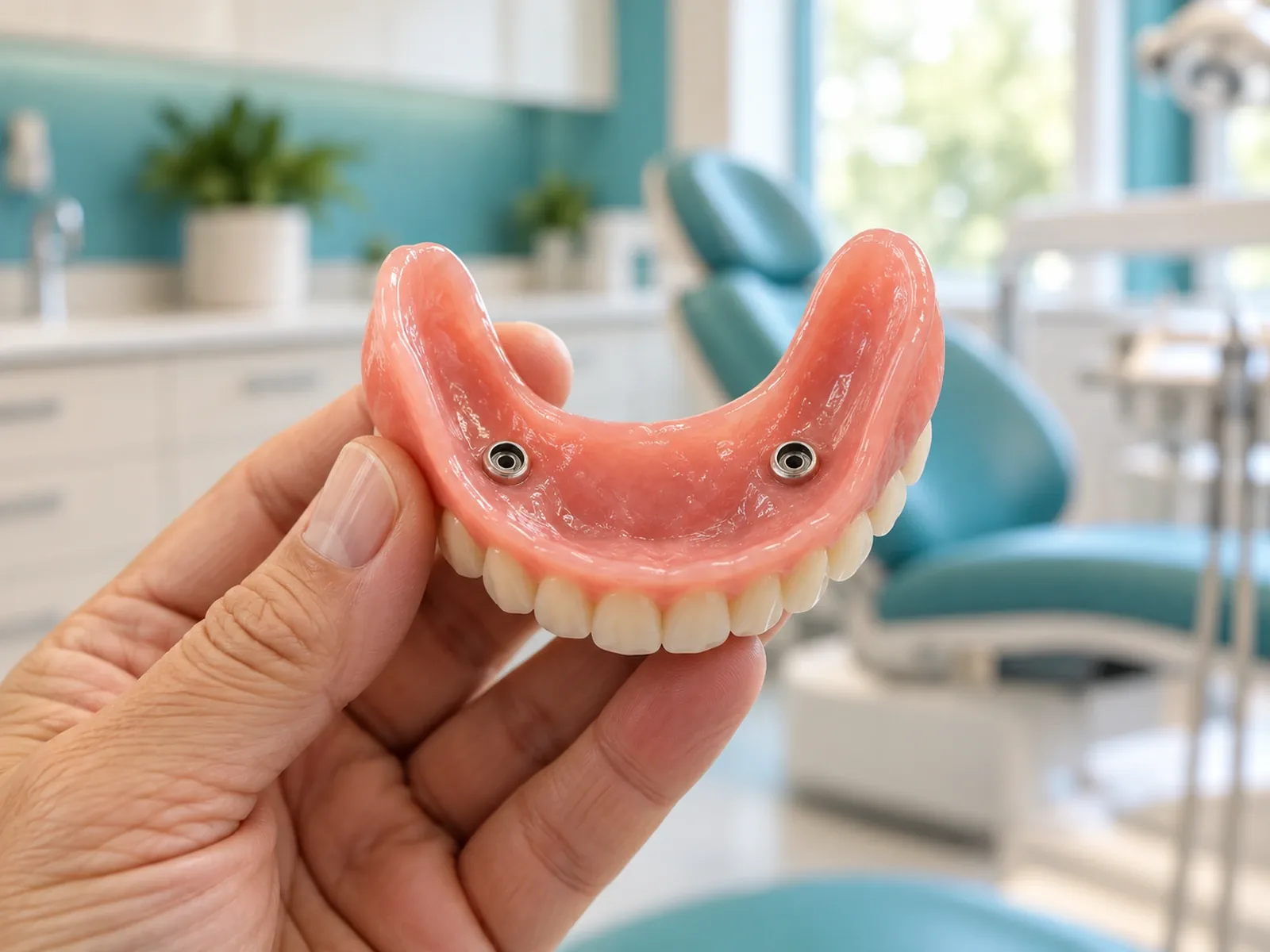
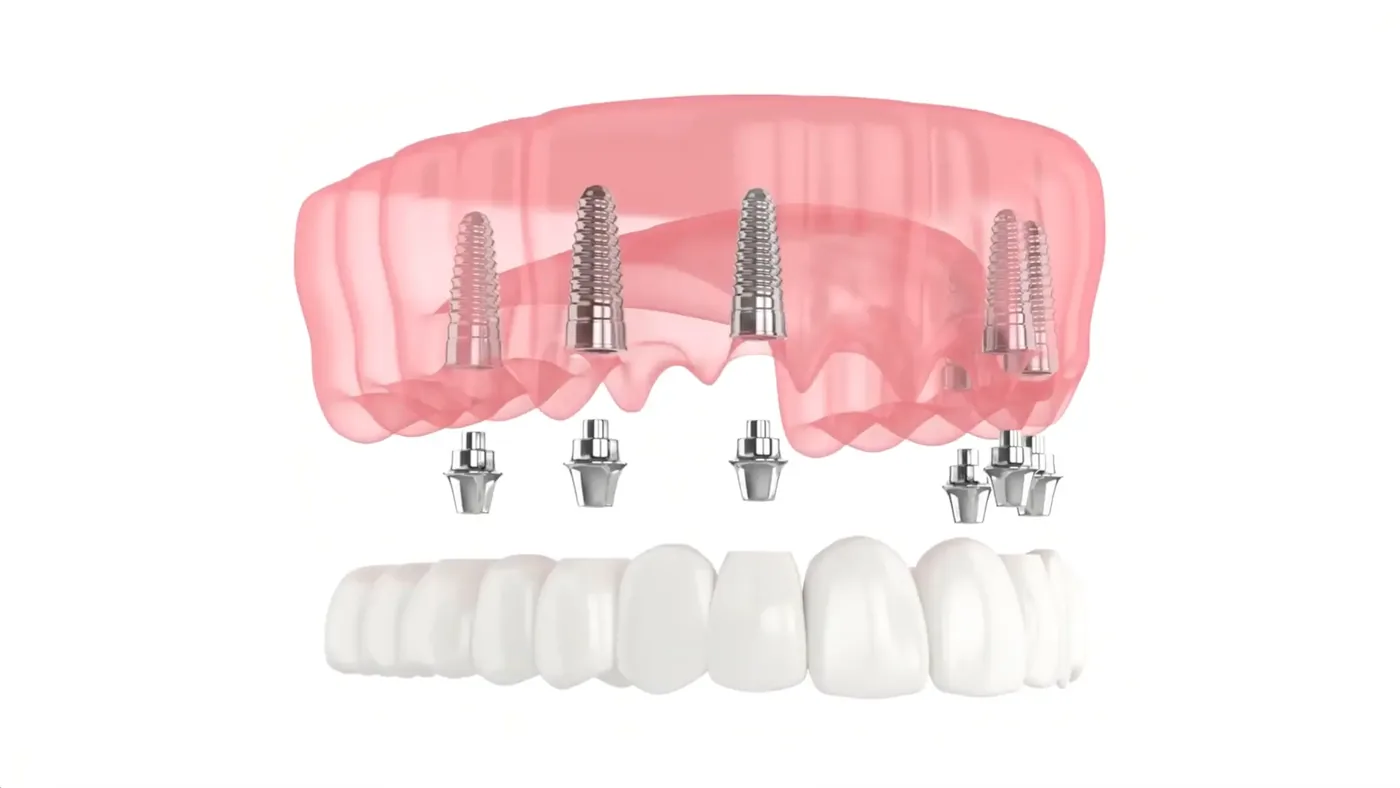
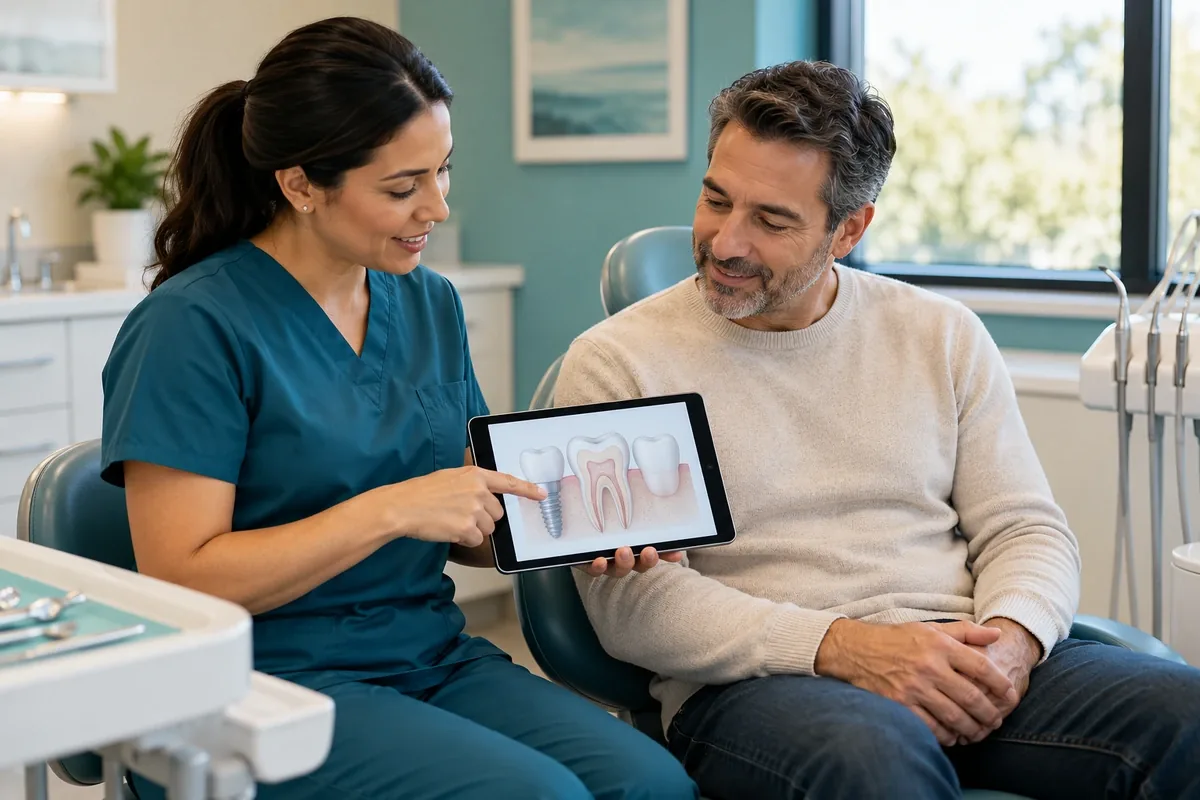
Implants can support one crown, a bridge, a removable denture or a fixed full-arch bridge. The number and position of implants depends on what they must hold.
Who is a good candidate
Most healthy adults with missing teeth can be considered, but candidacy is decided by the site and by your health, not by age. The evaluation looks at:
Bone — enough height and width to hold the implant, or a site that can be rebuilt with bone grafting.
Gums — no active gum disease; infection around an implant behaves like gum disease around a tooth.
Medical history and medications — uncontrolled diabetes, some bone medicines and radiation to the jaw change the plan.
Smoking — slows healing and raises the failure rate; quitting, even temporarily, helps.
Bite and habits — heavy grinding puts extra load on implant teeth and may call for a night guard.
Cleaning — you need to be able to reach around the final teeth every day.
Our implant candidacy guide explains each factor and what can be done when one is a problem. Teeth lost to decay, trauma, grinding or advanced gum disease are all commonly replaced with implants once the underlying problem is under control.
The timeline, step by step
Implant treatment is spread over months because living bone has to heal around the post. A typical single-tooth sequence at our Cleburne office looks like this:
Consultation and planning. Examination, X-rays and, where needed, a 3D scan to measure bone and locate nerves and the sinus. You receive a written plan.
Extraction or bone graft, if needed. A failing tooth is removed, often with socket preservation to keep the bone; a graft heals for roughly three to six months before implant placement.
Implant placement. The post is placed under local anesthesia in a visit that usually takes one to two hours. Most people describe pressure rather than pain and return to normal activities within a day or two.
Healing (osseointegration). Over about three to six months the bone bonds to the implant. A temporary tooth can usually fill the space meanwhile.
Abutment and final crown. A connector is fitted and the custom crown is attached, matched to the shade and shape of your other teeth.
Most single-tooth cases take four to twelve months from the first visit to the final crown. The implant timeline guide explains what has to happen before each stage, and the recovery guide covers what the days after surgery feel like.
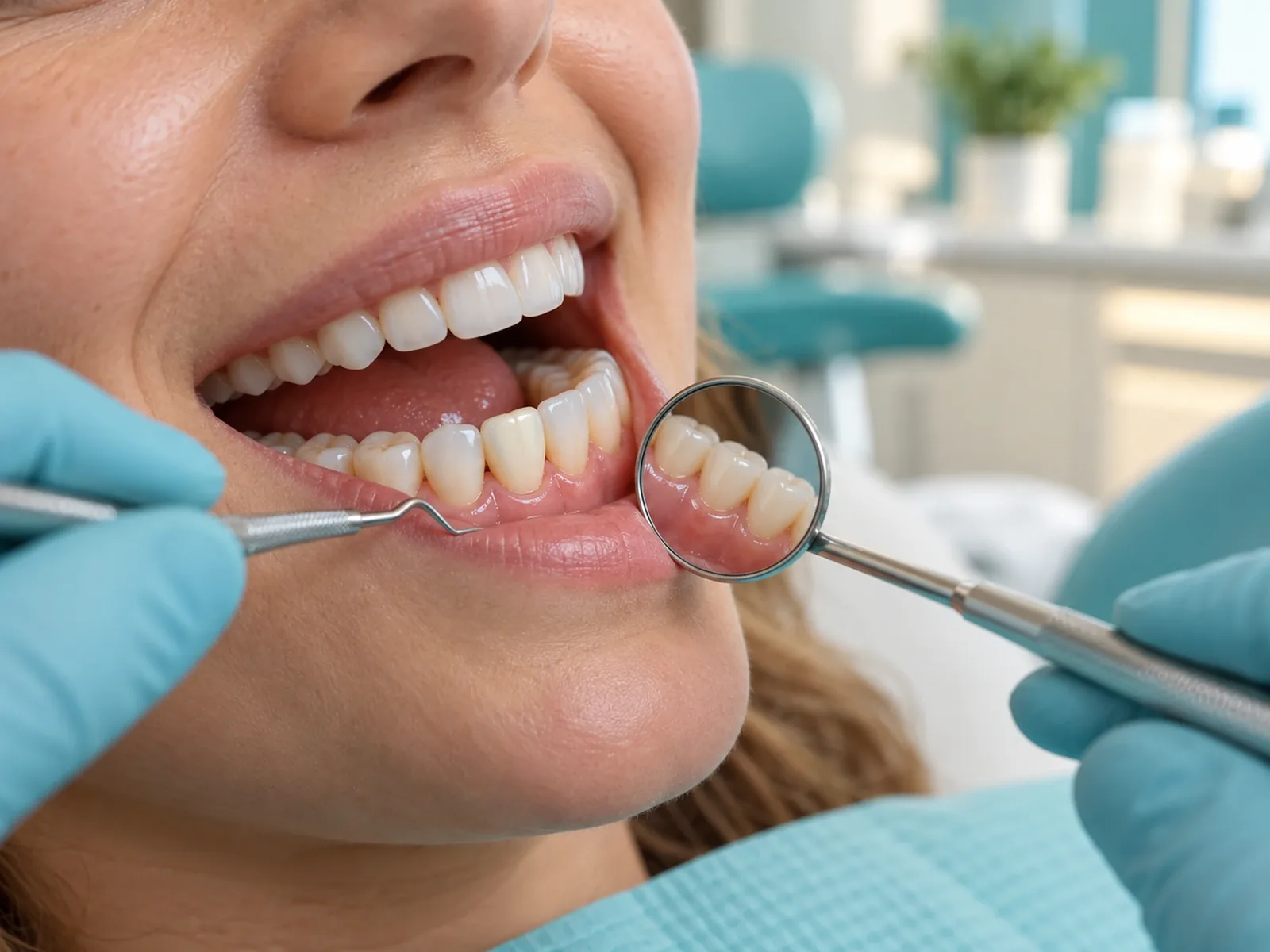
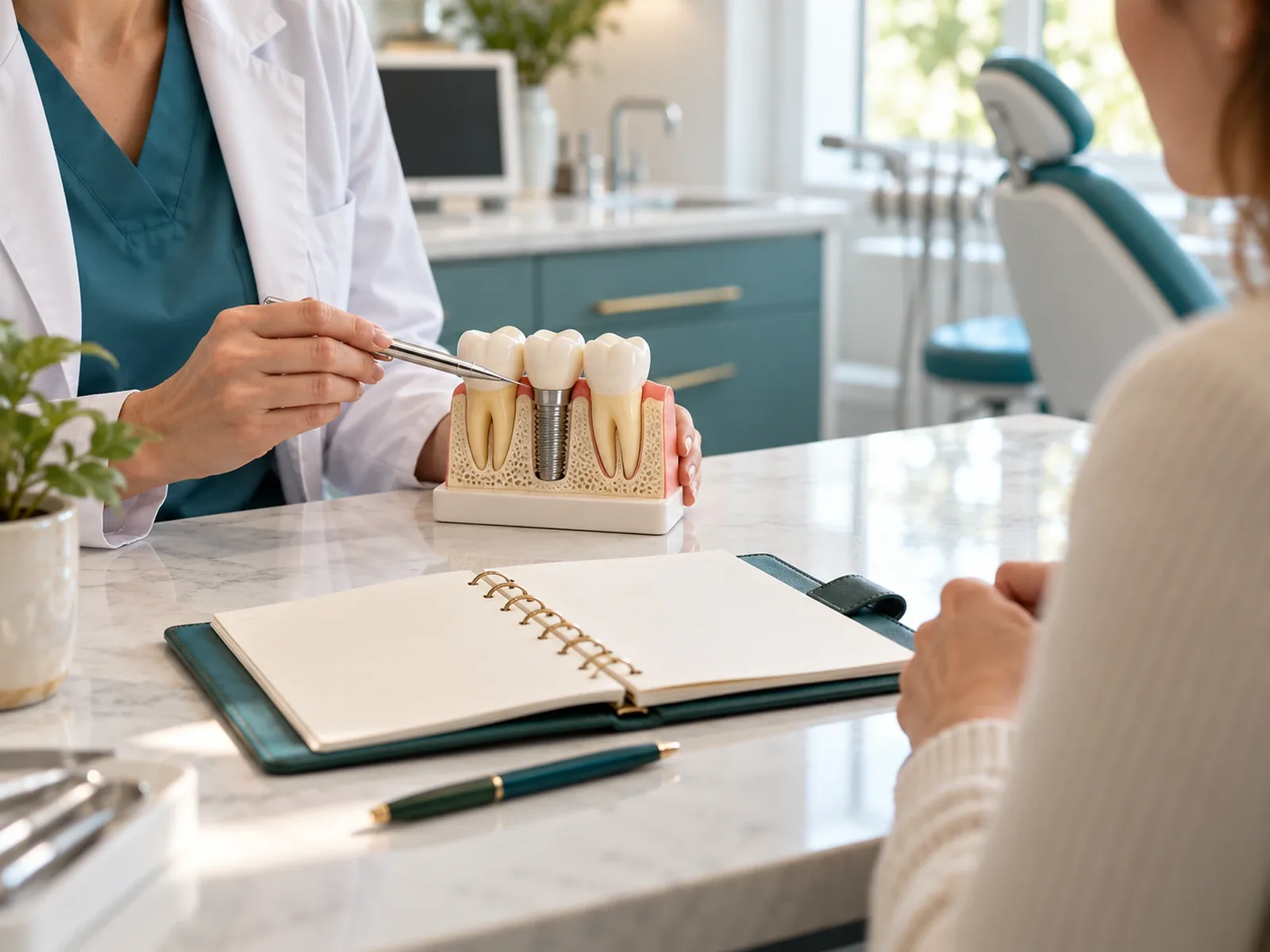
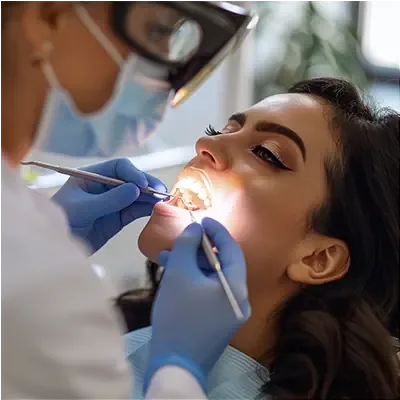
Planning starts with a thorough exam and imaging: bone height and width, nerve and sinus position, and the health of neighbouring teeth decide what is possible.
What drives the cost
An implant estimate should be a list, not a single number. Ask whether it includes imaging, extraction, grafting, the temporary tooth, the abutment, the final crown or denture, and follow-up visits. Two quotes that look far apart are often covering different things. Our implant cost guide shows how to make estimates comparable, and the insurance and financing pages explain how benefits and payment plans usually work with implant treatment.
Risks, alternatives and honest expectations
Implants have a high success rate, but they are surgery. Possible problems include infection, failure of the bone to bond, injury to nearby nerves or the sinus, gum recession around the implant and mechanical issues such as a loose screw or chipped porcelain. Years later, the gums around an implant can develop peri-implantitis — the implant version of gum disease — which is why ongoing implant care and regular cleanings are part of the plan.
No implant should be described as guaranteed for life. The titanium post often lasts decades; crowns and denture parts wear and are repaired or replaced over time. Dr. Zohdi will explain the risks that apply to your site and the alternatives — bridge, partial denture, or sometimes simply monitoring a space — before anything is scheduled.
The placement is done under local anesthesia, and most patients compare it to having a tooth removed. Soreness and some swelling for a few days are normal and are managed with over-the-counter pain relief and ice.
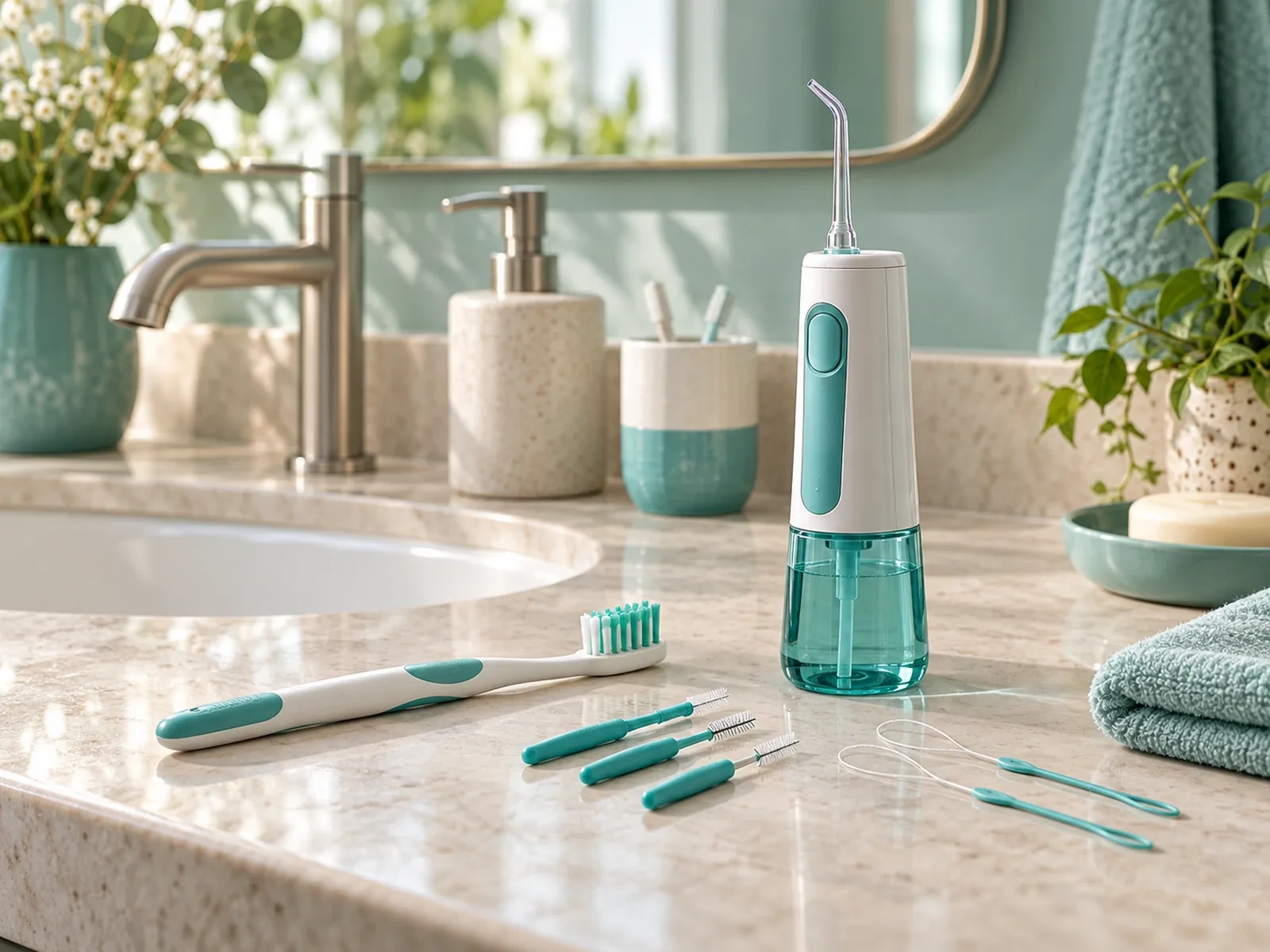
Brush twice a day, clean between the implant and its neighbours with floss or small brushes, and keep your cleaning appointments. A water flosser helps under bridges and dentures.
What if my tooth has not been removed yet?
Ask whether it can be saved first. If not, removing it with socket preservation keeps the bone ready for an implant; our guide on replacing a tooth after extraction explains the timing.
Is a dental bridge a better choice for me?
Sometimes. A bridge avoids surgery and is faster, but it uses the neighbouring teeth for support. The implant vs. bridge comparison lays out the trade-offs.
If you are weighing implants in Cleburne, request a consultation at 302 N Ridgeway Dr. We will look at the actual site, show you what we see, and give you a written plan to compare.