Dental Bone Grafting in Cleburne: Preparing an Implant Site
A dental implant needs solid bone around it. When tooth loss, gum disease, or injury has left too little, a bone graft rebuilds the site so the implant can go where the tooth belongs.
Bone grafting is the step that makes many implant plans possible. After a tooth is lost, the jawbone that held it no longer has a job and gradually shrinks. Gum disease, infection, injury, and years of wearing a denture speed that process up. By the time someone decides on an implant, the ridge may be too thin, too short, or dented in a way that would leave part of the implant exposed. A graft rebuilds that bone.
The idea is simple: graft material is placed where bone is missing and protected while your body grows blood vessels into it, breaks it down, and replaces it with living bone of your own. Over several months the scaffold becomes jawbone, and an implant can be placed in the position the final tooth needs rather than wherever bone happens to remain.
Not every implant needs a graft, and no single graft fits every situation. This page introduces the procedures Dr. Zohdi uses at our Cleburne office to prepare an implant site, the guides that go deeper on each, and how grafting fits alongside our other dental services.
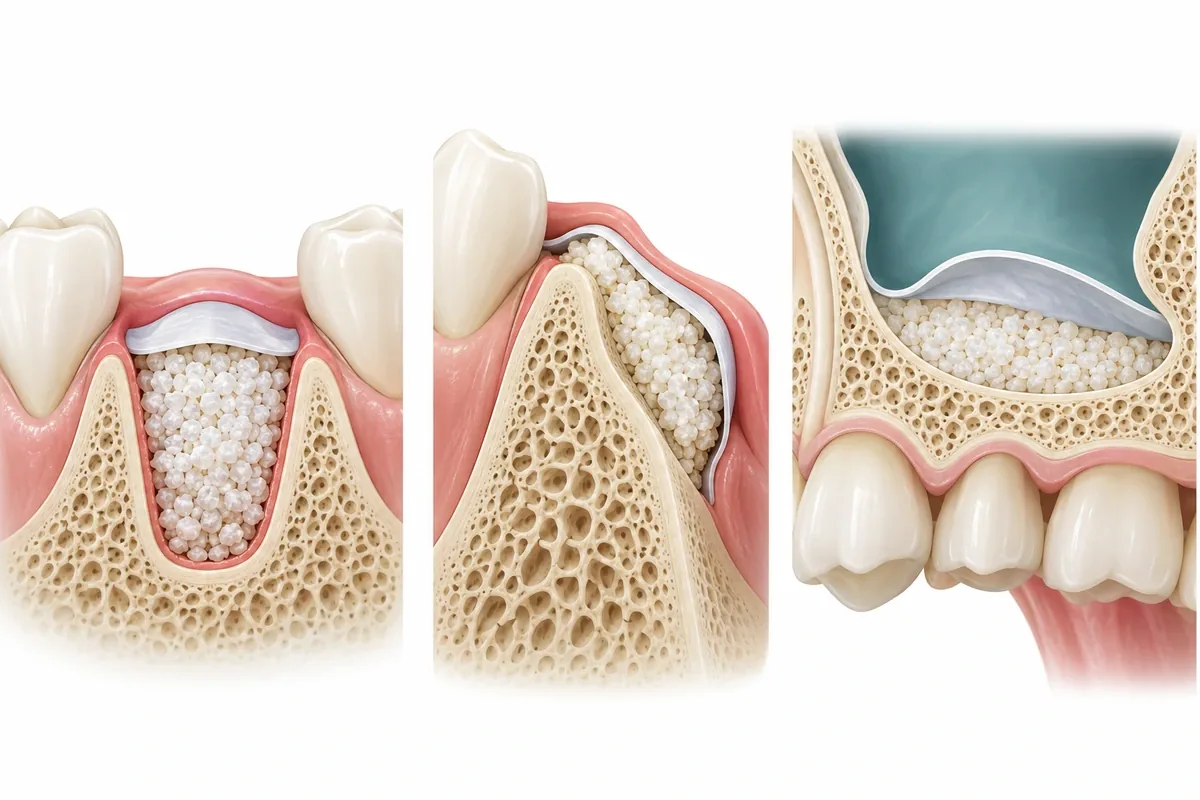
"Bone graft" is a family of procedures, not one operation. Which one is proposed depends on when the tooth was lost, where the site is, and what is missing.
Illustration: the three most common dental bone grafts, each solving a different problem. Educational drawing, not a patient photo.
Socket preservation is done on the day a tooth is removed. Graft material fills the empty socket and is covered with a membrane so the ridge keeps more of its original shape while it heals. It is the simplest graft and the one that prevents the most trouble later, especially for front teeth and for implants planned a few months down the road.
Ridge augmentation rebuilds a ridge that has already shrunk. Graft material is placed against the bone, protected with a membrane or fixed as a small block, and allowed to mature. It restores width, height, or both so the implant can sit under the crown rather than beside it.
A sinus lift applies to the upper back jaw, where the roots of molars sit just below the maxillary sinus. When those teeth are lost, the bone between the mouth and the sinus can become too thin for an implant. The sinus lining is gently lifted and graft placed beneath it to add height.
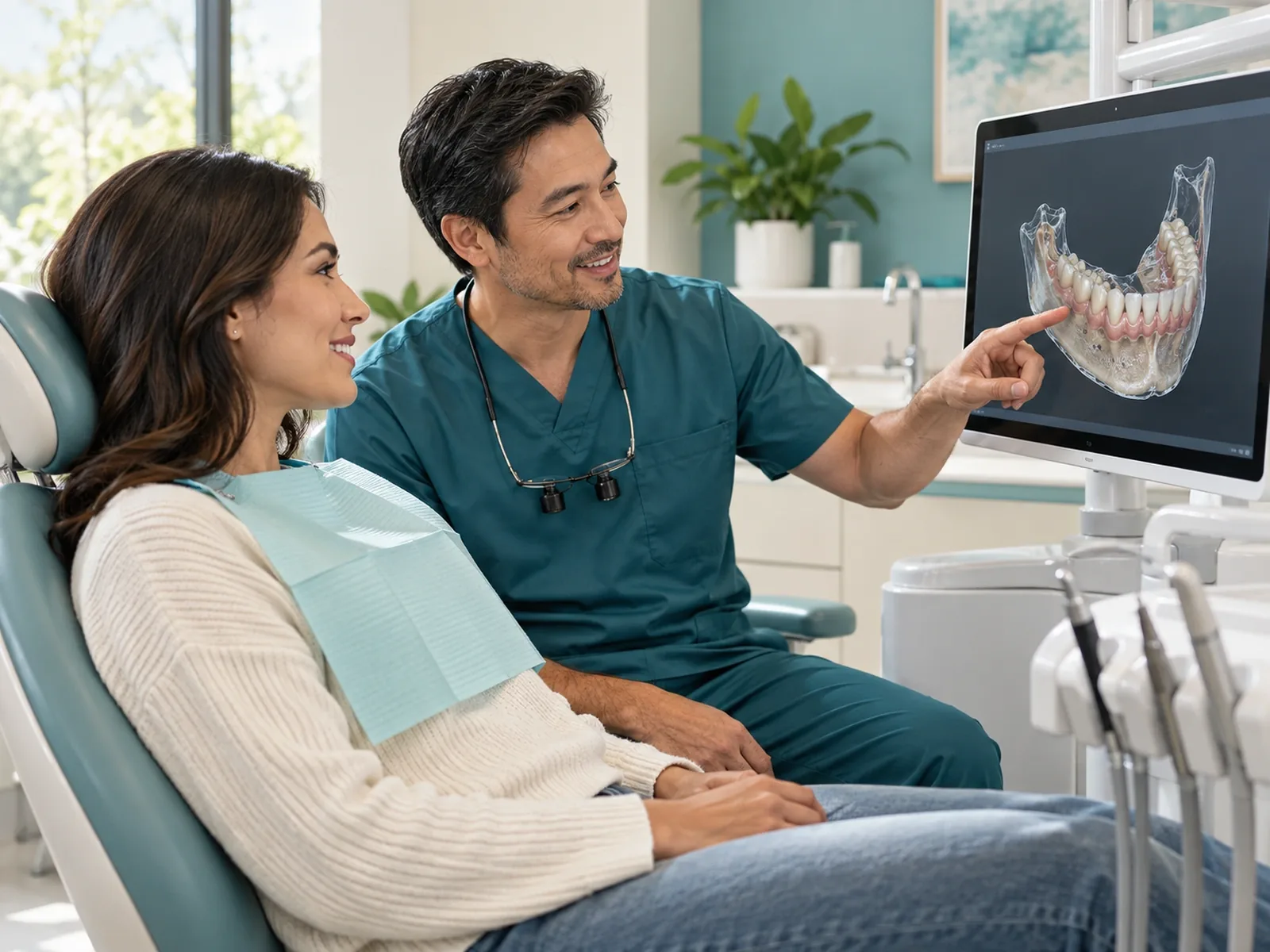
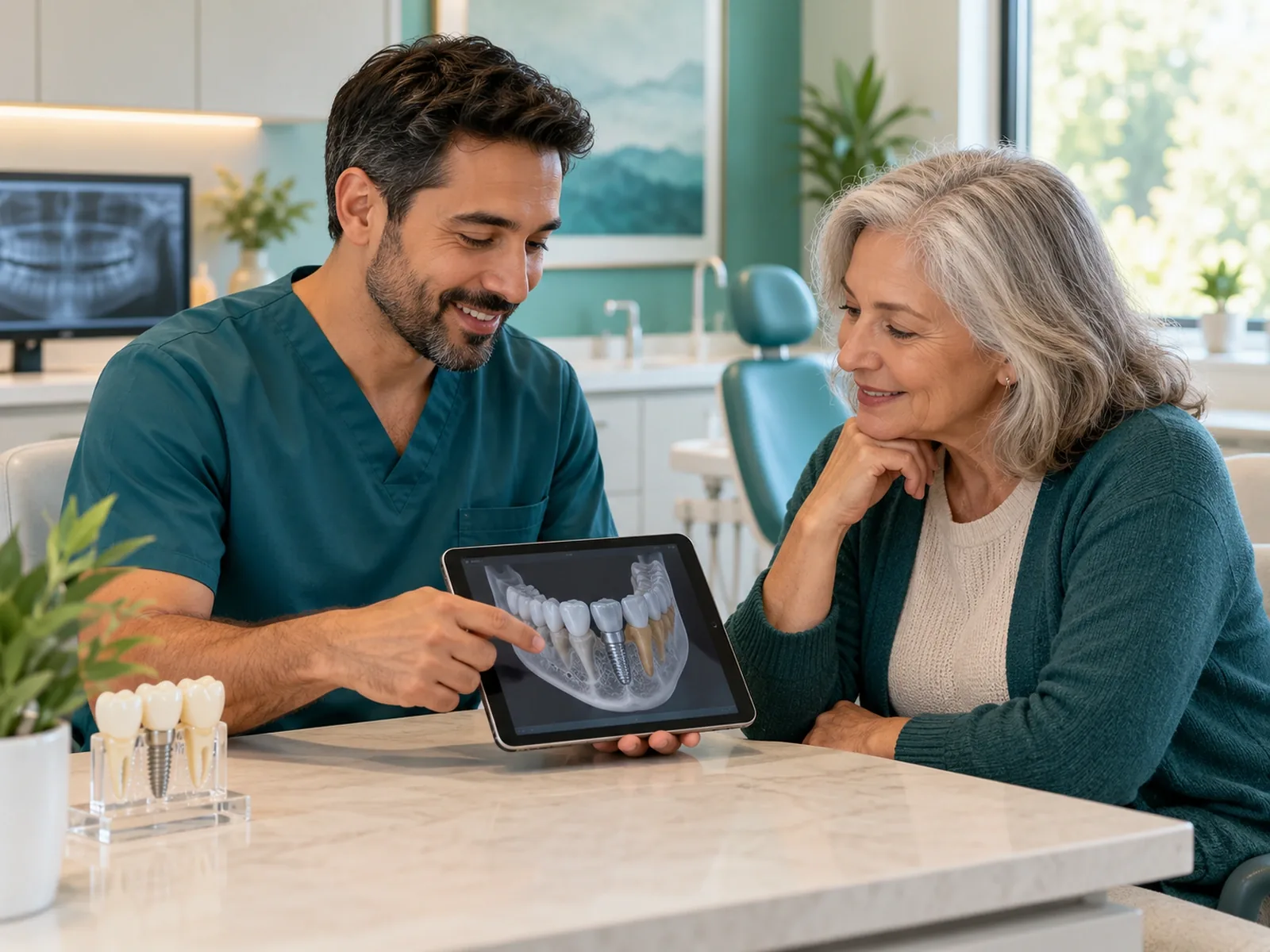
These are not interchangeable, and they are not always needed. Ask Dr. Zohdi to show you the area of concern on your scan and explain exactly which dimension the graft is meant to fix.
How the decision is made
Dr. Zohdi plans backward from the tooth. First: where does the crown need to be to look natural, meet the opposing teeth correctly, and be easy to clean? Then: is there enough bone to place an implant under that spot, with a safe margin from the nerve canal, the sinus, and neighboring roots?
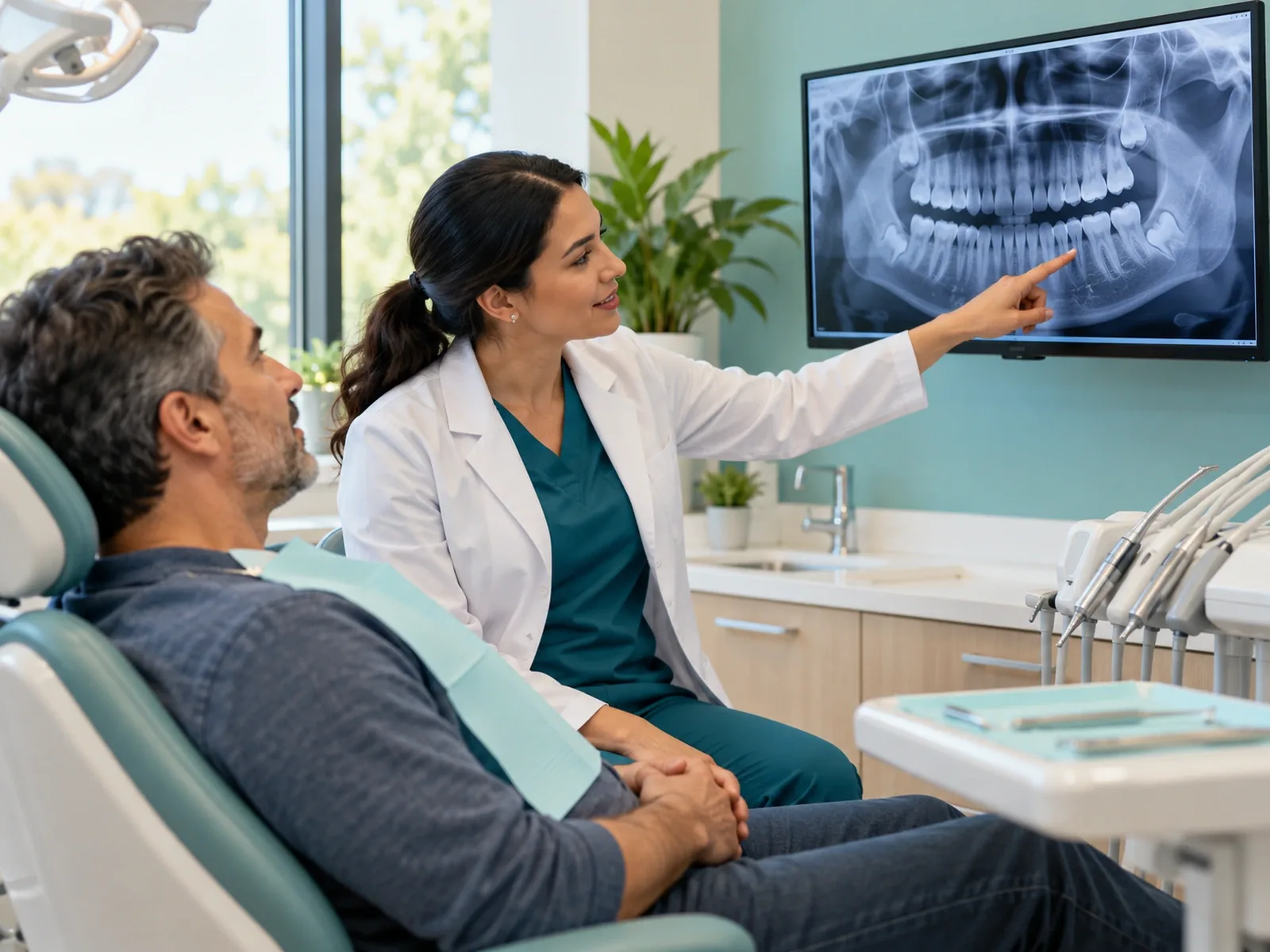
A three-dimensional scan answers that question. A standard panoramic X-ray shows height but not width, so a verdict of "not enough bone" based on a flat image alone is incomplete. The scan shows the ridge's actual shape and lets us describe the problem precisely: a width deficiency, a height deficiency, a contour defect, or generalized loss across the arch.
From there, the options fall into three groups:
Pathway
When it fits
What it involves
Rebuild the bone
A local deficiency with an otherwise sound plan
A graft, a healing period of months, then the implant
Change the implant plan
Bone exists but not exactly where expected
Shorter, narrower, angled, or differently placed implants
Choose another replacement
Surgery burden outweighs the benefit
A bridge, a partial, or an implant-supported denture
Our guide to dental implants when bone has been lost walks through these pathways in detail and explains why neither "you don't have enough bone" nor "bone is never a problem" is a complete answer.
What a grafting visit is like
These procedures are done with local anesthesia. You stay awake, you are numb, and you can signal for a pause at any time.
Graft materials come from four sources: your own bone, processed donor bone, animal-derived bone mineral, and synthetic materials. Each has tradeoffs in how fast it converts and how well it holds its shape, and personal or religious preferences about donor products are always respected.
Afterward, expect swelling and tenderness for several days, soft foods, a prescribed rinse instead of brushing the site, and a short follow-up visit. A temporary tooth or denture will be adjusted so it does not press on the graft. Smoking is one of the most common reasons grafts fail, so plan to stop for the entire healing period.
Healing is measured, not assumed
The gum closes over a graft within a few weeks and the area soon feels normal. The bone underneath takes months to mature, and there is no way to feel that from the outside. Before an implant is scheduled, Dr. Zohdi re-examines the site and takes a follow-up image to confirm the graft has gained the density and volume the plan needs.
Our bone graft healing page explains the stages, what changes the timeline, how to protect the site, and which symptoms should prompt a call. The implant treatment timeline shows how grafting fits into the complete sequence from consultation to final tooth.
Risks, limits, and alternatives
Grafting is predictable, but it is surgery. Possible complications include infection, the wound opening early, the membrane becoming exposed, partial loss of the graft, and bone that heals with less volume than planned. Sinus lifts add the possibility of a small tear in the sinus membrane, usually repaired during the procedure. Dr. Zohdi reviews the risks that apply to your procedure during the consent discussion.
A graft that falls slightly short is a detour, not a dead end: more time, a small additional graft, or a revised implant plan usually resolves it. And grafting is never the only path. A different implant design, a dental bridge, or an implant-supported denture can be the better choice when the surgery required would be extensive or when you simply prefer fewer procedures.
Cost factors
Each graft is a separate charge from the implant, abutment, and crown it supports, and the fee depends on the procedure, the size of the site, the materials, and whether a membrane and imaging are included. Insurance plans vary widely in how they treat grafting, so ask for a written, itemized estimate that lists every stage from imaging to final tooth. Our insurance and financing pages explain how we help.
No. Many sites have enough bone for an implant without any grafting, especially when the tooth was removed recently or a socket graft was placed at the time. The scan decides.
Can the graft and the implant be done at the same time?
Sometimes. Smaller defects are often grafted at the same visit the implant is placed. Larger defects are usually grafted first and the implant placed months later once the bone has matured.
Where does the graft material come from?
Most grafts use processed donor bone, animal-derived bone mineral, synthetic material, or a mix. Your own bone is used when a rigid block or its growth factors are needed. All donor and animal-derived products are processed and sterilized under FDA regulation.
How long does a graft take to heal?
Months rather than weeks, and the exact timeline depends on the type of graft, its size, its location, and your health. Readiness is confirmed by exam and imaging, not by a date.
If you have been told you need a bone graft, or that you cannot have implants because of bone loss, the next step is a clear look at the actual site. Request an implant-site evaluation at our Cleburne office. We will take the imaging, show you what is there and what is missing, and explain whether grafting, a different implant plan, or another replacement option makes the most sense for you.