
How much is a dental implant? It is one of the first questions we hear, and it deserves a straight answer. The honest one is that a price only means something when you know what it covers. One office's implant fee is the surgical post alone. Another's includes the abutment and crown. A third folds in the extraction, a bone graft and a temporary tooth. Those are three different treatments, not three prices for the same thing.
This guide, part of our dental implant services, explains every line that can appear on an implant estimate, why two patients with similar gaps can receive different quotes, how insurance and financing usually work, and what to budget for after the crown is in. It covers single and several-tooth implants at our Cleburne office; full-arch pricing has its own guide.
What a complete single-implant estimate includes
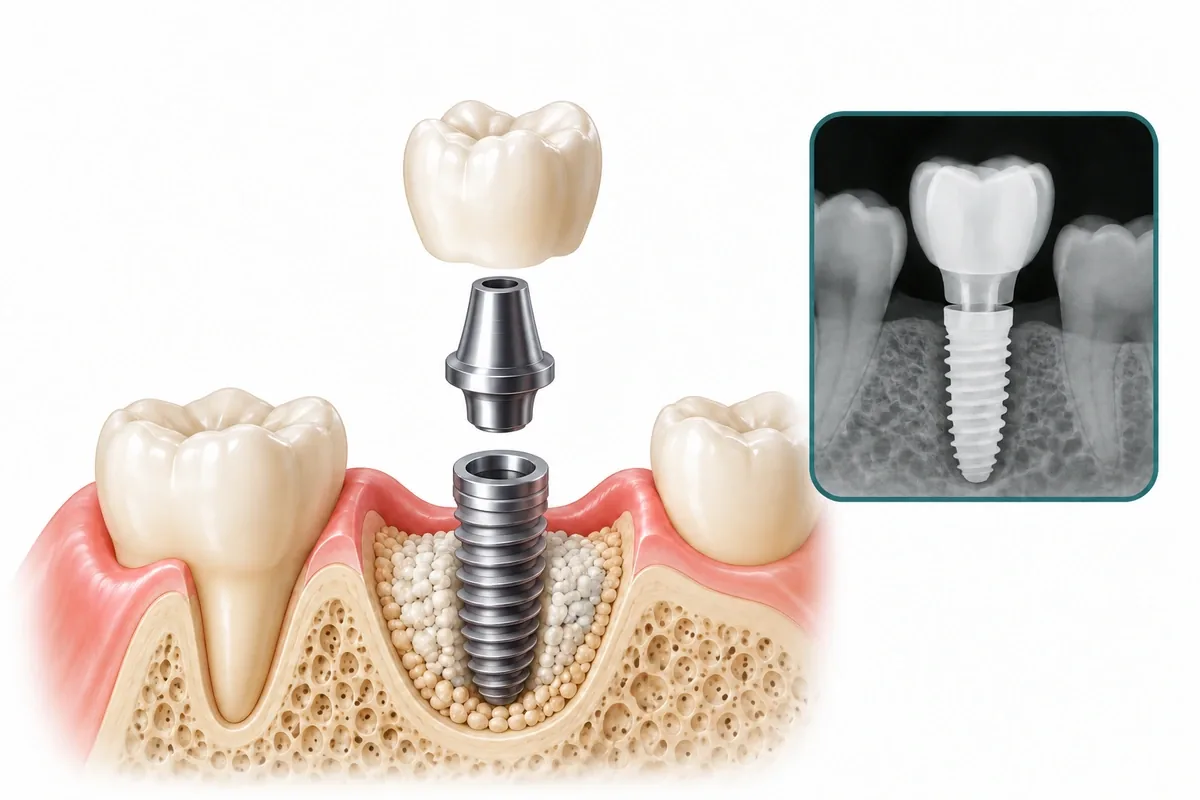
A written plan for one implant and crown normally has these parts:
- Examination and imaging. The consultation, X-rays and usually a 3D cone-beam scan to measure bone and locate nerves and sinuses.
- Extraction, if the tooth is still there. Simple or surgical, depending on the tooth.
- Bone grafting, if needed. A socket preservation graft at extraction, a ridge augmentation for a shrunken site, or a sinus lift for an upper back tooth. Each is a separate line with its own materials.
- Implant placement. The surgical visit, the implant itself and the cover or healing cap.
- A temporary tooth. A flipper, a bonded temporary or, in favorable cases, a temporary crown on the implant.
- The abutment. The connector between implant and crown. Stock or custom-made; custom costs more and is often chosen for front teeth.
- The final crown. Material (porcelain fused to metal, all-ceramic, zirconia) and how it attaches (screw-retained or cemented).
- Follow-up visits during healing and after delivery.
Not everyone needs every item. The point is to see clearly what is included, what you do not need, and what cannot be known until treatment is under way.
Why two implant quotes can be so different
When you compare estimates from different offices, line them up item by item. Common reasons for a gap:
- One quote is surgery only; the other is surgery plus abutment plus crown.
- One assumes no graft; the other has planned for one after seeing the scan.
- One uses a stock abutment and a basic crown; the other a custom abutment and layered ceramic for a front tooth.
- One includes the temporary and all follow-ups; the other bills those separately.
- One is from a dentist who places and restores the implant in one office; the other involves a surgeon and a restoring dentist, each with their own fees.
A lower headline price is not necessarily a bargain, and a higher one is not automatically better care. Ask what each number buys.
Why similar-looking cases cost differently
Two patients can each be missing one tooth and have very different plans:
- Bone. A tooth lost years ago often leaves a narrower, shorter ridge that needs grafting. A fresh extraction site with intact walls may not.
- Location. Upper back teeth sit near the sinus and may need a lift. Front teeth demand custom abutments, shaped temporaries and more visits to get the gumline right.
- The neighbors. Drifted teeth may need reshaping or orthodontics to make room.
- Health factors. Gum disease that must be treated first, or medical conditions that call for extra planning.
- Materials and lab work. Zirconia versus metal-ceramic, a custom versus stock abutment, and the laboratory's skill all affect the fee.
Ask which parts of your estimate reflect your findings. A good explanation ties each line to something seen on your exam or scan.
- Does this include the abutment and the crown, or only the implant?
- Is a graft planned, possible, or ruled out, and what would it add?
- What will I wear during healing, and is it included?
- Which follow-up visits are included, and for how long?
- What happens if the implant does not integrate? Is replacement covered?
- Who places the implant and who makes the crown, and am I paying each separately?
- What maintenance should I expect to pay for over the next ten years?
Insurance
Dental plans vary widely. Some exclude implants entirely; some cover the crown but not the implant; some cover a portion of each up to an annual maximum that is often reached quickly. Waiting periods and missing-tooth clauses (which exclude teeth lost before the policy began) may apply. Medical insurance occasionally contributes when tooth loss followed an accident or certain medical conditions.
We will submit a pre-treatment estimate so you know what your plan says before you start. A benefit estimate is not a guarantee of payment. Our insurance page explains how the process works.
Financing and payment
Many patients spread implant treatment over time, and the staged nature of implant care helps: surgery, healing and the crown are often months apart, which naturally separates payments. If you use third-party financing, compare the total you will repay, the interest rate, promotional terms and the consequences of a late payment. See our payment and financing page for the options we offer.
What to budget for afterward
An implant is a long-term investment, but it is not maintenance-free. Over the years you may pay for:
- Regular check-ups and cleanings, as for natural teeth.
- Occasional X-rays to check the bone around the implant.
- Re-tightening or replacing a loose screw.
- Replacing the crown after many years of wear.
- Treating gum inflammation around the implant if it develops.
- A night guard if you grind.
These costs are part of ownership, not a sign the original treatment went wrong. The implant care guide explains the routine that keeps them to a minimum.
Several teeth and full-arch plans
When several teeth are missing, an implant bridge can replace three teeth with two implants, which changes the arithmetic. Full-arch treatment adds prosthetic design, material and maintenance decisions that this page does not cover; use the separate full-arch cost guide for that comparison. For a removable option, see implant-supported dentures.
Getting an itemized plan
The most useful thing you can do is ask for a written, itemized estimate based on an actual exam. Dr. Zohdi will walk through each line, explain what your findings mean for the plan, and show you where there is flexibility. Request an appointment at our Cleburne office, 302 N Ridgeway Dr, or call (817) 641-6261.
Sources and further reading
General information, not a diagnosis. Read how we create and review our dental guides.