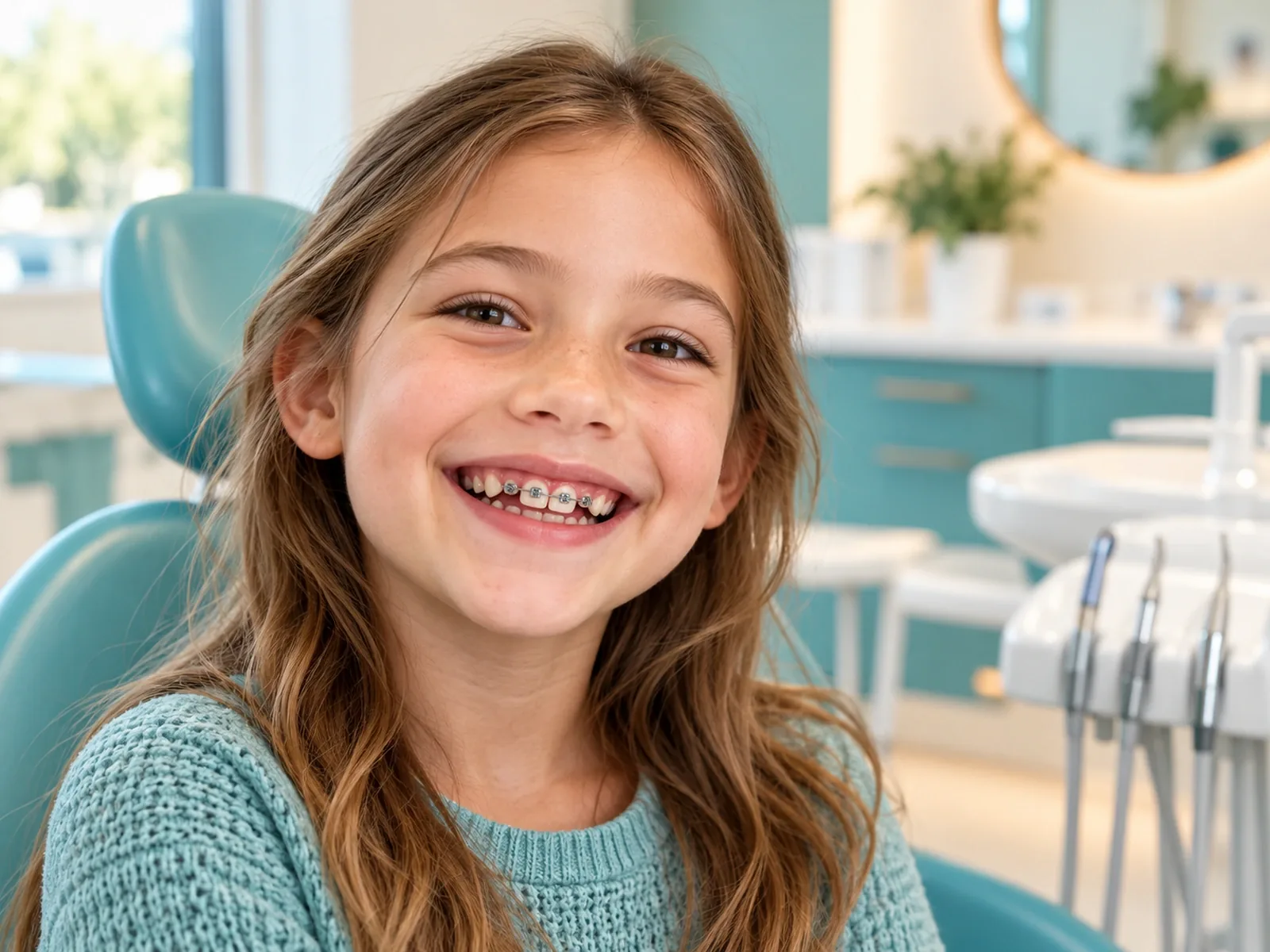
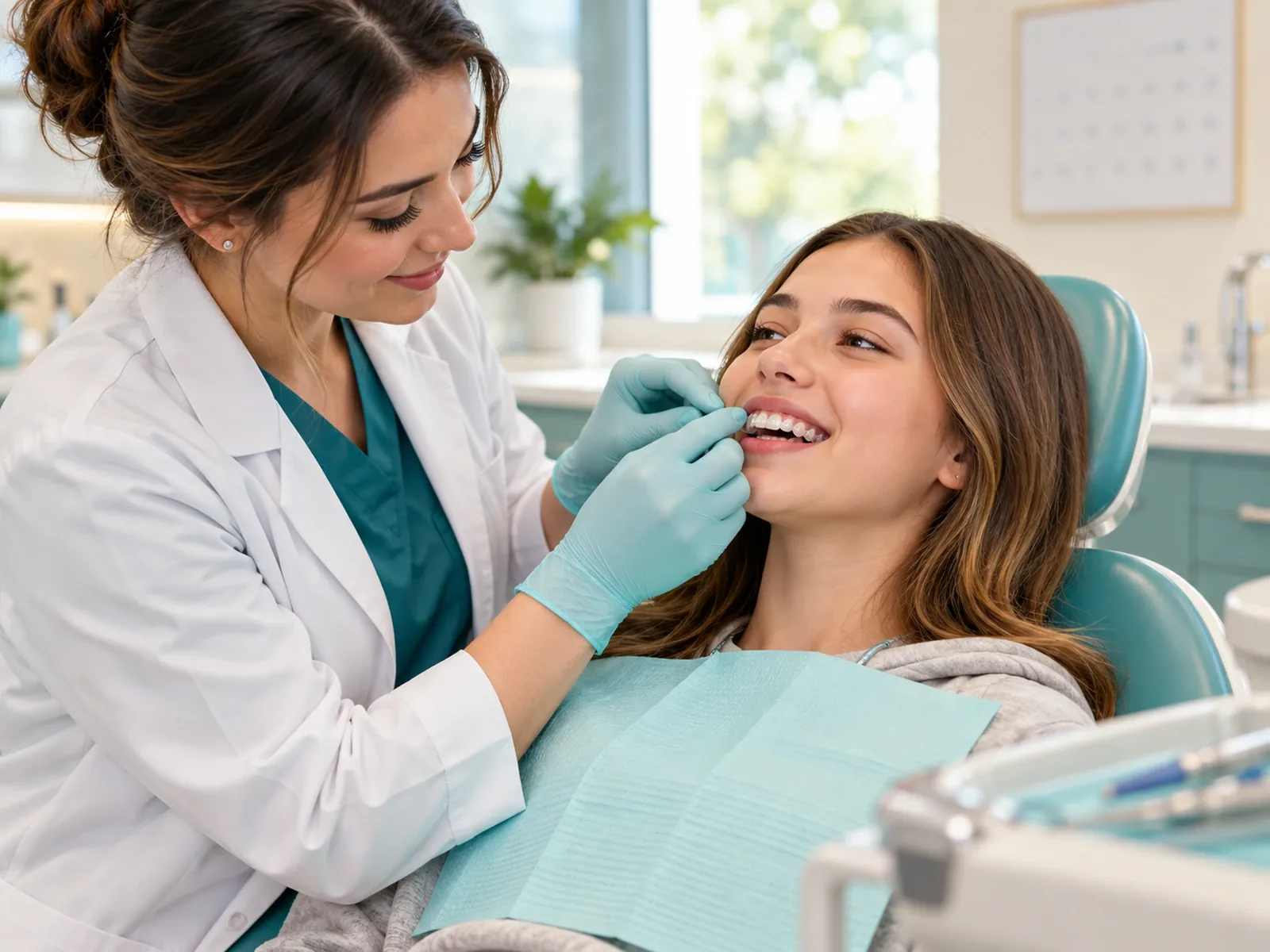
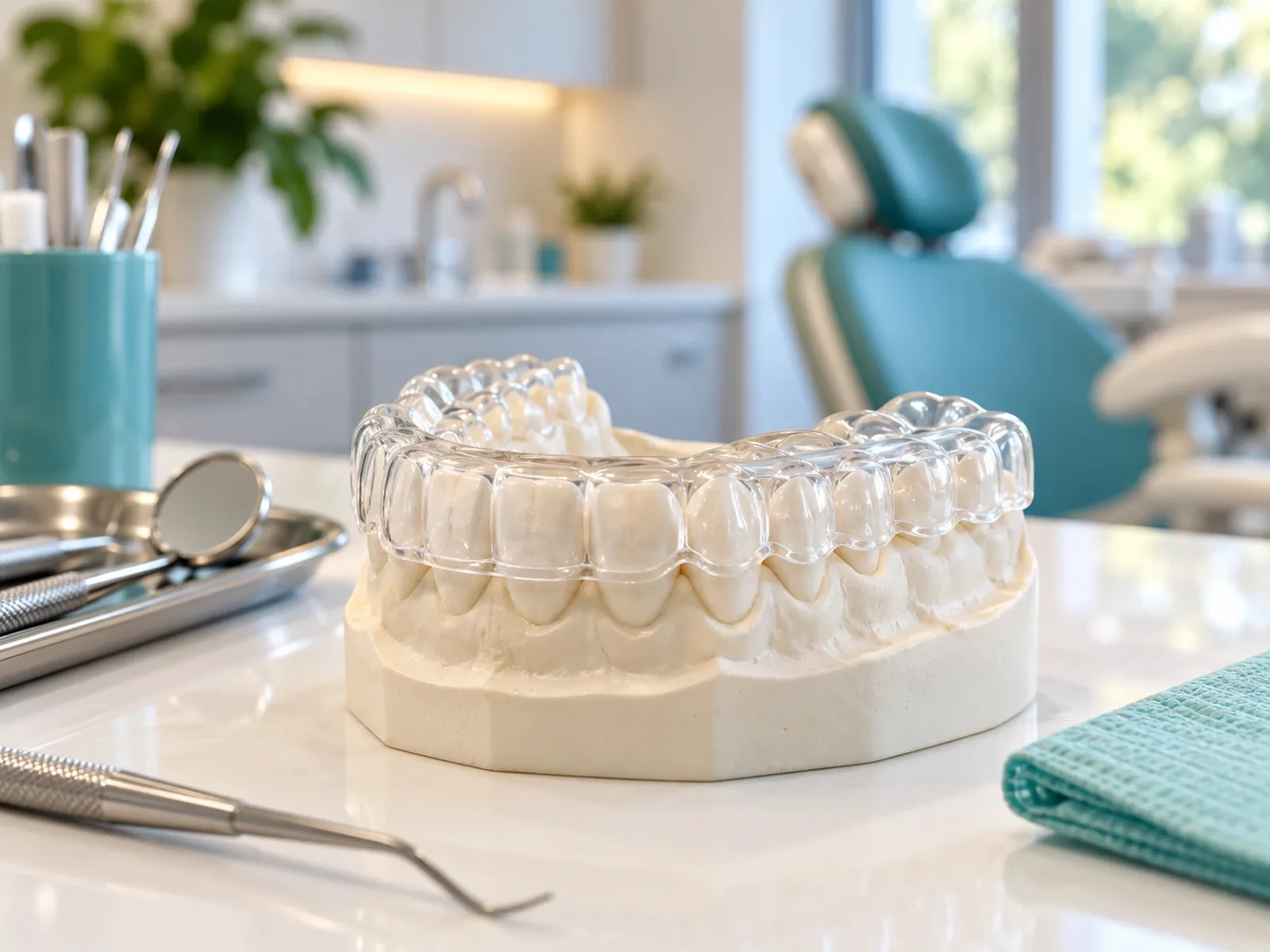
Orthodontic treatment moves teeth into positions where they line up, meet properly and are easier to keep clean. In children who are still growing, it can also guide how the upper and lower jaws develop in relation to each other. Whether the tool is braces, clear aligners or a growth appliance, the plan always starts in the same place: an assessment of the bite, the health of the gums and bone, and what you want to change.
At Cleburne Dental, Dr. Zohdi provides orthodontic care for children, teenagers and adults alongside general dentistry, which means the orthodontic plan is made with your whole mouth in view, including fillings, crowns, gum health and any future restorative work. When a case calls for an orthodontist, we say so and help arrange it.
This page explains the main choices and links to a detailed guide on each.
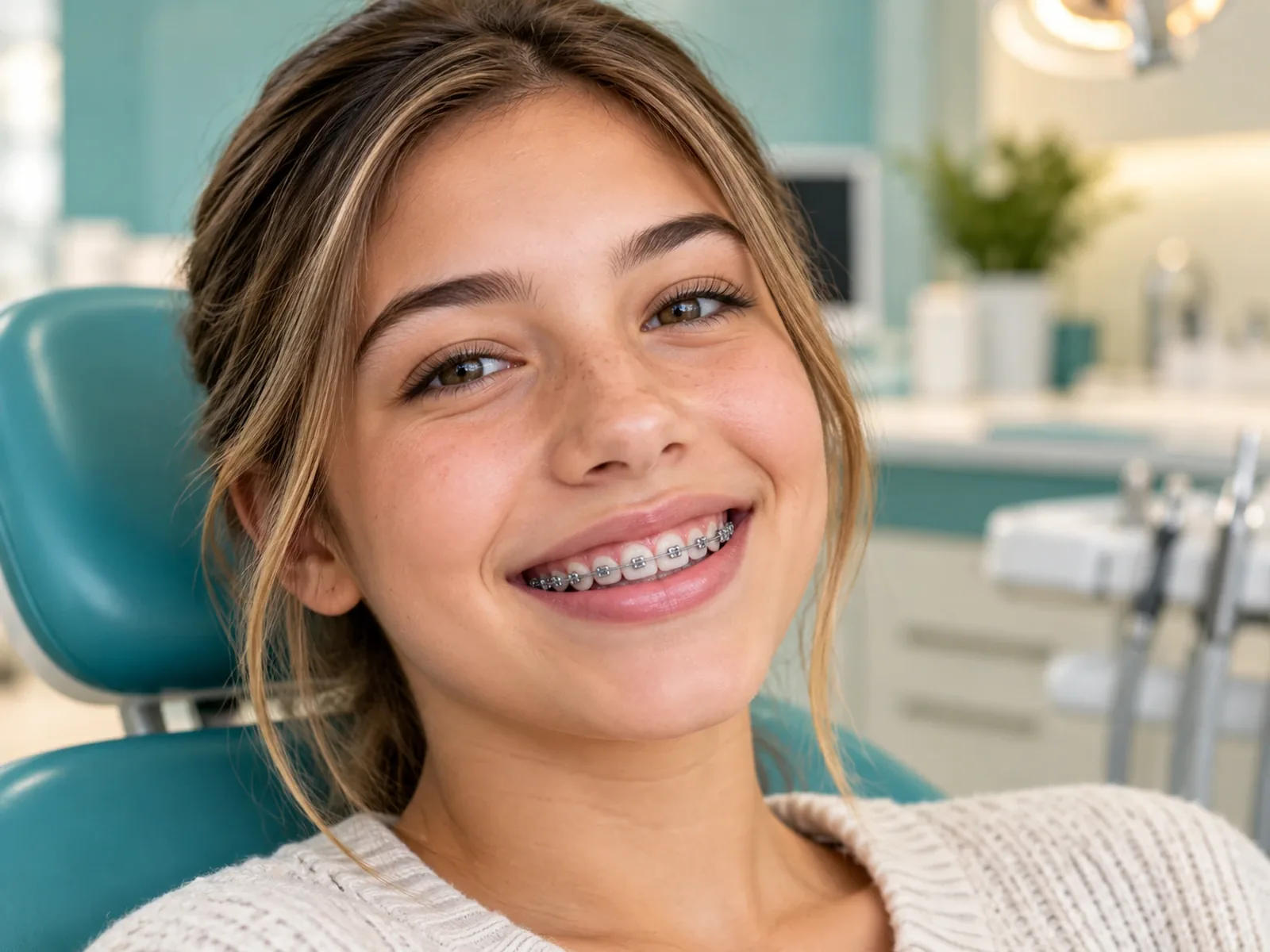
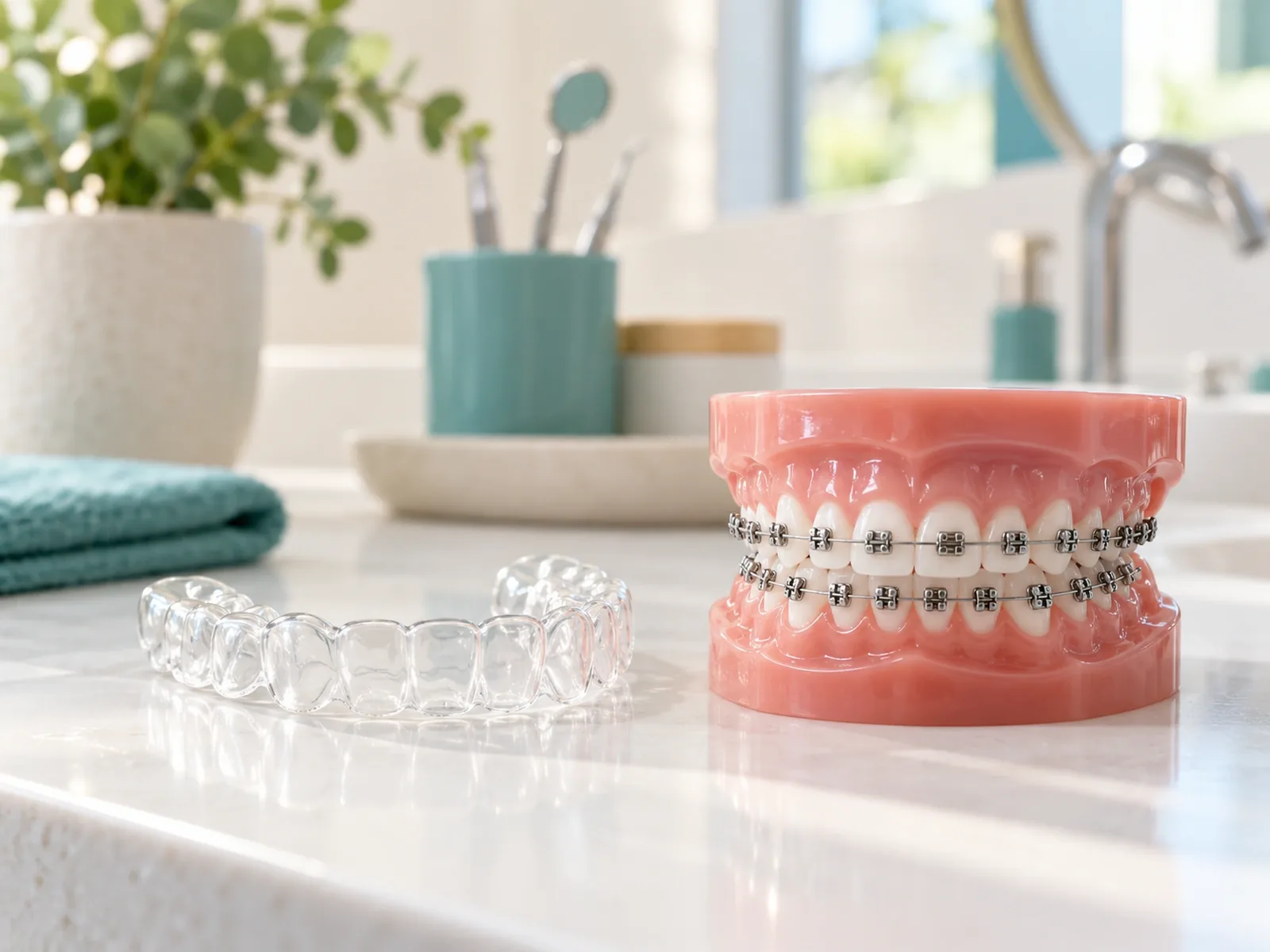
Traditional braces are brackets bonded to the teeth and linked by a wire that is adjusted over months. They work around the clock, handle nearly every kind of tooth movement and remain the most versatile option, especially for complex bites and for patients who would rather not manage a removable appliance.
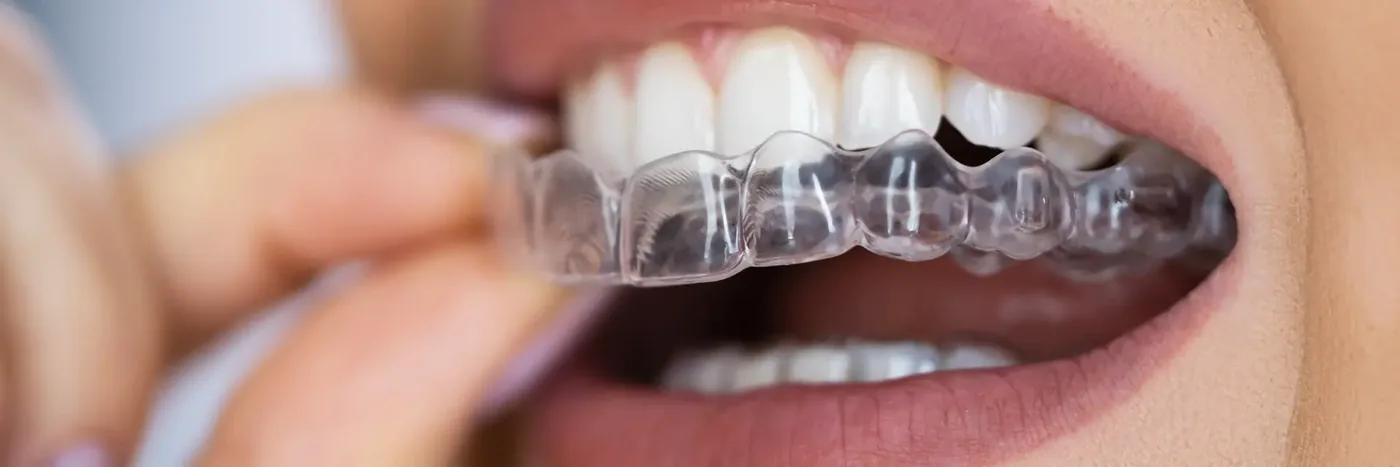
Clear aligners, including systems such as Invisalign and SureSmile, are a series of transparent trays worn in sequence. They are discreet, come out for meals and make brushing easy. They work only while worn, which makes daily wear time the deciding factor, and some movements remain more predictable with braces.
If you are weighing the two, our braces versus aligners comparison sets them side by side on movement, cleaning, eating, appearance, comfort and cost structure.
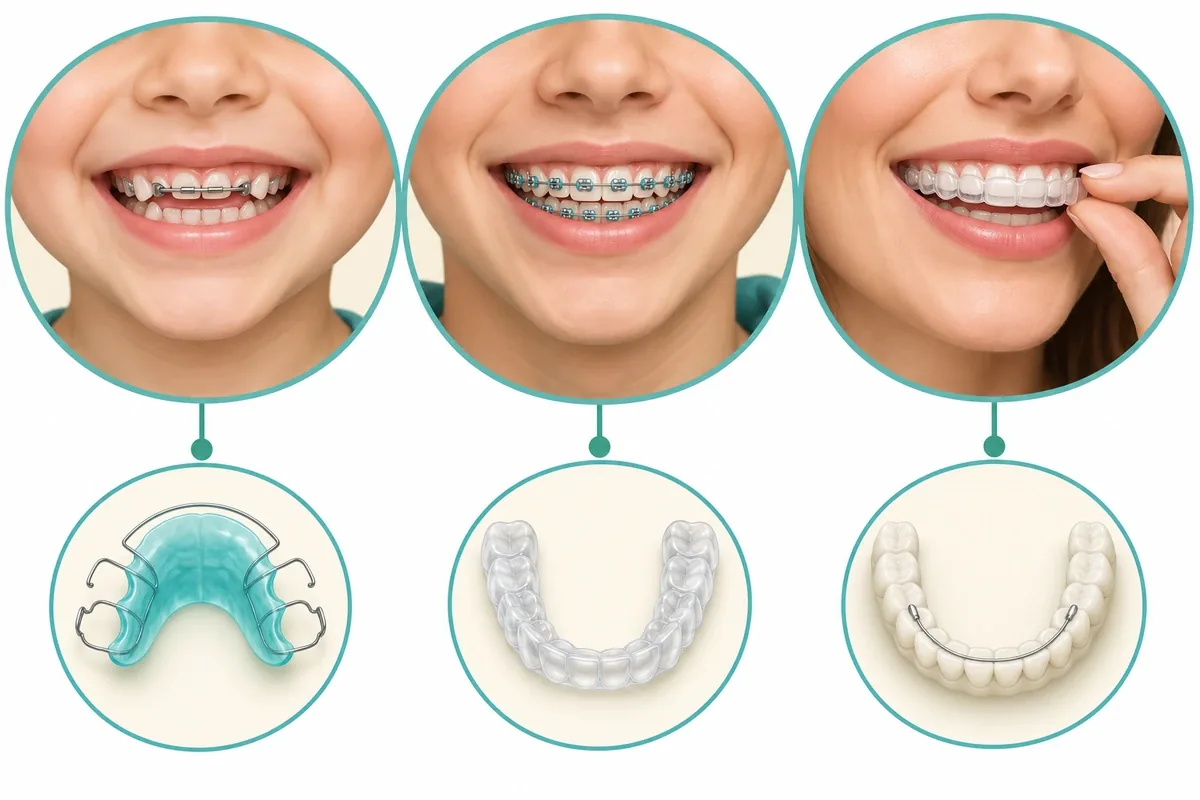
Illustration: orthodontic care follows different paths at different ages, and every path ends with retention. Not a patient photo.
Orthodontics for adults
There is no age limit for moving teeth. What changes for adults is the planning. Gum health has to be sound, because moving teeth through inflamed tissue damages bone. Crowns and bridges affect how brackets are placed. Dental implants cannot be moved, so the order of implant and orthodontic work has to be decided together. And adults often choose between a limited plan that straightens the visible front teeth and a comprehensive plan that corrects the whole bite. Our guide to braces for adults walks through each of these.
Children: evaluation first, treatment only when there is a reason
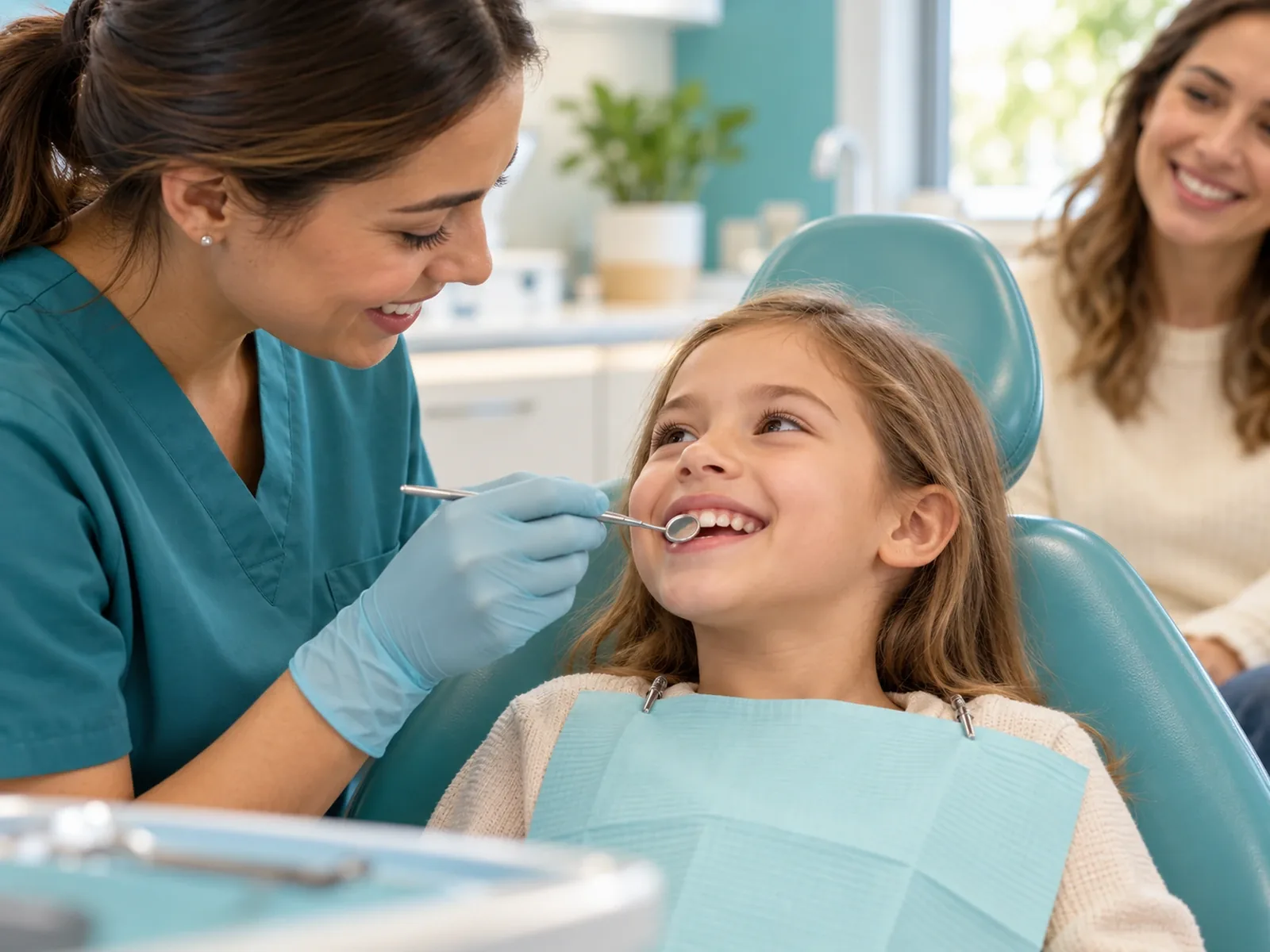
The American Association of Orthodontists recommends a first orthodontic check by about age seven. That is when the permanent front teeth and first molars are in, giving the first clear view of how the bite is forming. It is a look, not a start date. Most children evaluated at that age are simply watched, and many later have a single course of treatment in their early teens. Our page on the early orthodontic evaluation explains what the visit covers and what "let's watch this" should mean in practice.
A small share of children have a specific developing problem that is easier to correct during growth: a crossbite, severely protruding front teeth, a blocked permanent tooth, or a habit reshaping the bite. For them, Phase I orthodontics addresses that one problem early, usually with a second phase expected later.
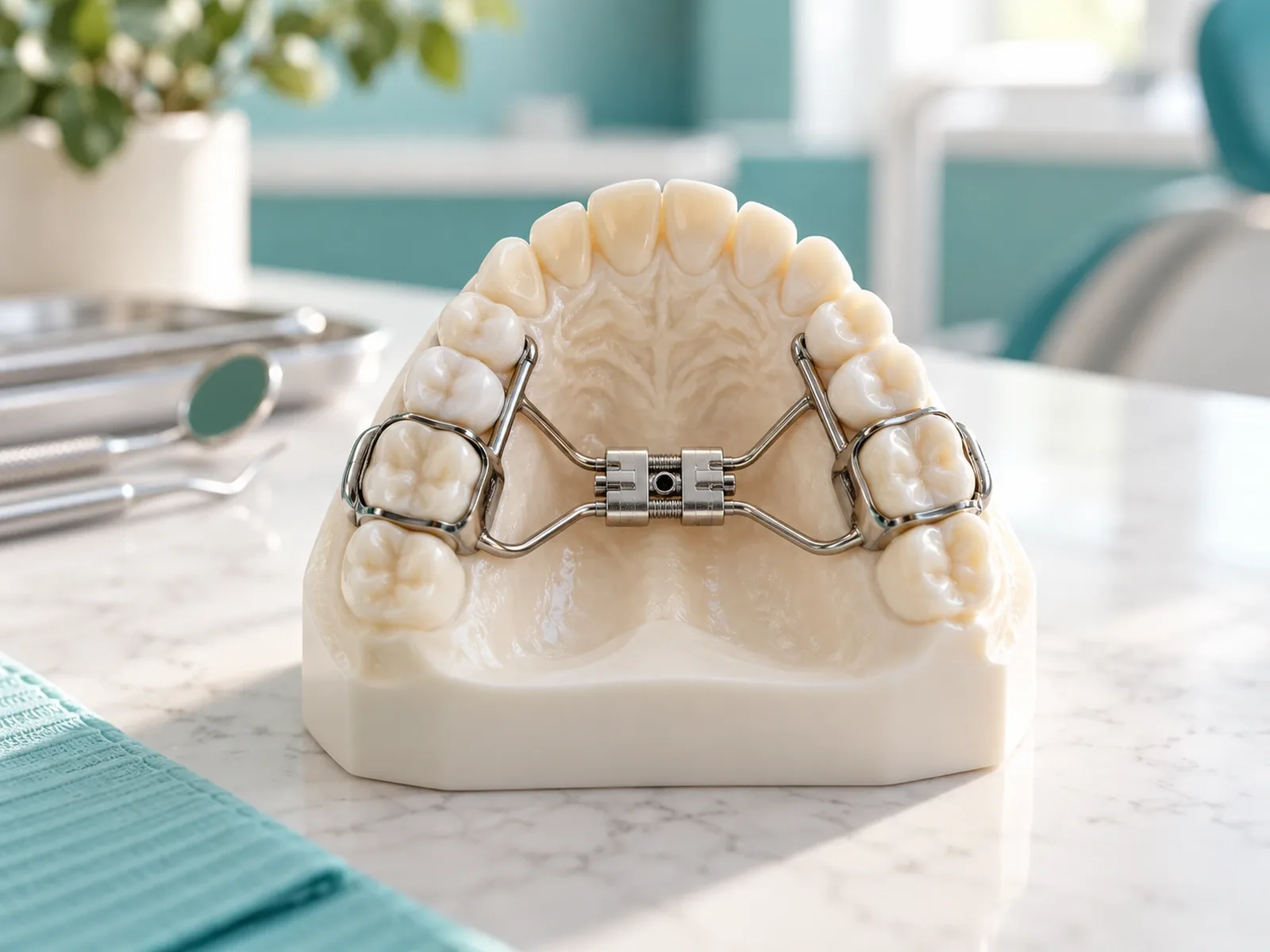
Palatal expanders are one Phase I tool, used to widen an upper jaw that is too narrow. They have specific indications and work best before the mid-palate seam fuses in the early teens. They are not a universal way to avoid braces or extractions, and they should not be promised as a cure for snoring or breathing problems.
Throughout any of this, routine children's dental care continues; orthodontics does not pause cavity checks, sealants or fluoride.
What treatment asks of you
Orthodontics is a partnership that runs for months. Between visits, the work is yours: cleaning carefully around brackets or brushing before trays go back in, protecting the appliance from hard and sticky foods, wearing elastics or trays for the prescribed hours, and keeping appointments. These habits, more than the appliance brand, decide whether a case finishes on schedule.
Our guide to orthodontic treatment time explains what shortens or lengthens a case: the complexity of the movements, gum and bone health, growth, participation and the biology of how teeth respond. Neither braces nor aligners is automatically faster.
Our orthodontic cost guide explains what an estimate should include (records, visits, repairs or refinements, retainers, retention checks), why limited and comprehensive plans are priced differently, how orthodontic insurance works and what to ask about payment arrangements. A lower advertised fee often describes a narrower scope rather than a better deal.
Retention is part of the result
Teeth drift after treatment: the gum fibers pull them back for a year or more, and jaws keep changing subtly with age. Retainers, fixed or removable, hold the result while the tissues settle and protect it for years afterwards. They are part of the plan from the start, not an add-on at the end.
If your teeth have already shifted after earlier treatment, our page on why teeth move after braces or aligners explains how to tell ordinary drift from a problem needing attention, and how to choose between a new retainer and a short retreatment.
Related care
Orthodontics overlaps with other parts of dentistry. Patients who grind their teeth may need a night guard designed to work with their retainer. Active children and teens need sports mouthguards that fit over braces or replace aligners during contact sports. Correcting a bite may be one step in a wider smile makeover plan that includes bonding or veneers. And jaw pain or clicking deserves its own assessment; bite correction is never a promised cure for it.
Guides in this section
Traditional braces: how fixed braces are planned, placed, adjusted and cared for.
Braces for adults: planning around gums, crowns, implants and missing teeth.
Do I need a referral to an orthodontist, or can a general dentist do braces?
General dentists with orthodontic training treat many cases in-house. Complex jaw-growth problems or surgical cases are referred. We will tell you honestly which category you are in.
At what age should my child be seen?
Around seven for a first look, or earlier if you notice a crossbite, protruding teeth, early tooth loss or a habit that concerns you. Most children are then watched rather than treated.
Are aligners as good as braces?
For many cases, yes. For some movements, braces are more predictable. The assessment, not the appliance, decides.
How long does treatment take?
It depends on what needs to move. Simple alignment can take months; comprehensive bite correction takes longer. You will get an estimate from your own records, not an average.
Will I need a retainer forever?
Some nighttime wear, indefinitely, is the realistic answer for most people. Teeth drift for life.
If you or your child are considering braces or aligners in Cleburne, request an orthodontic consultation. We will examine the bite, explain what we see and compare the options based on your teeth and your life, not a one-size-fits-all promise.