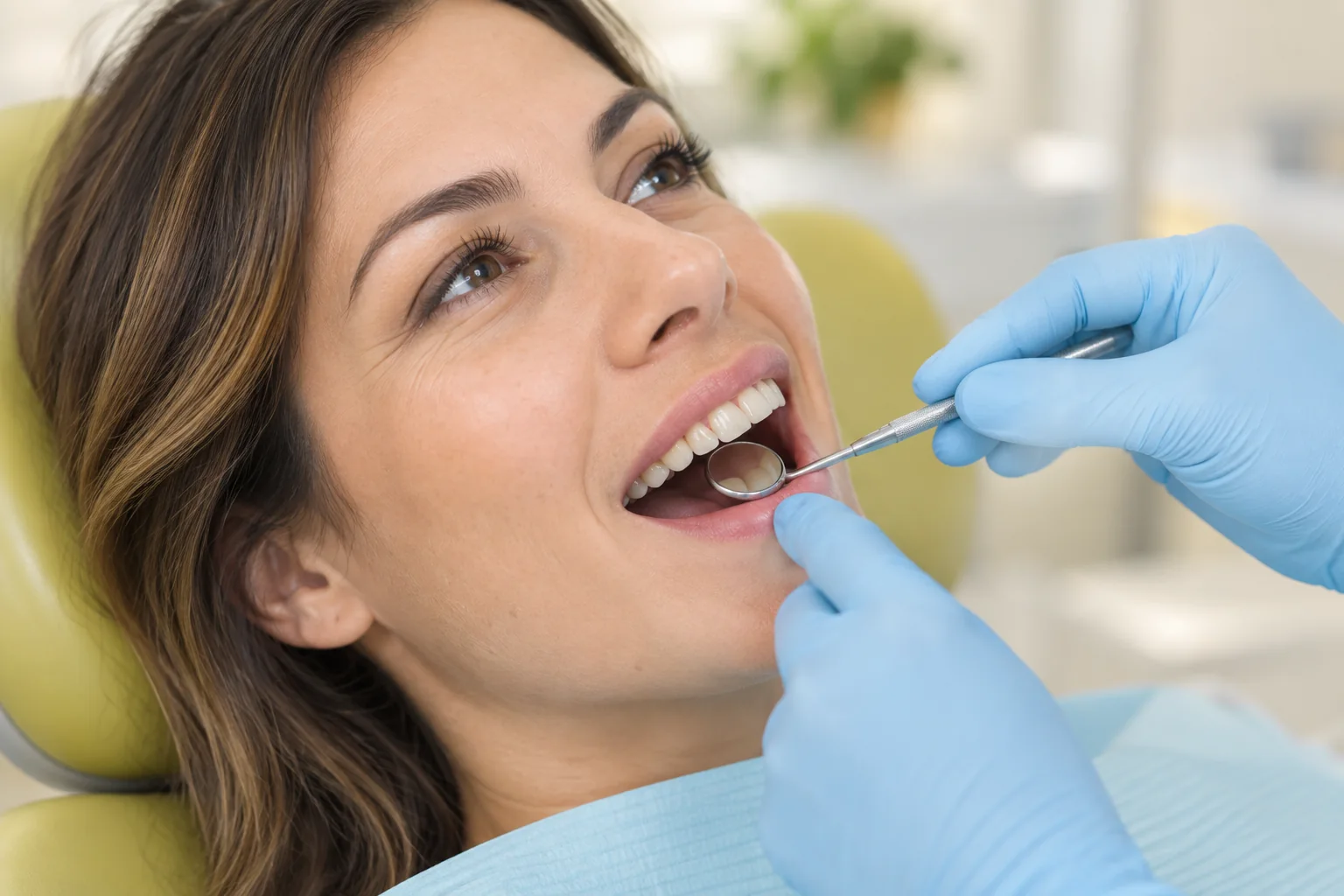
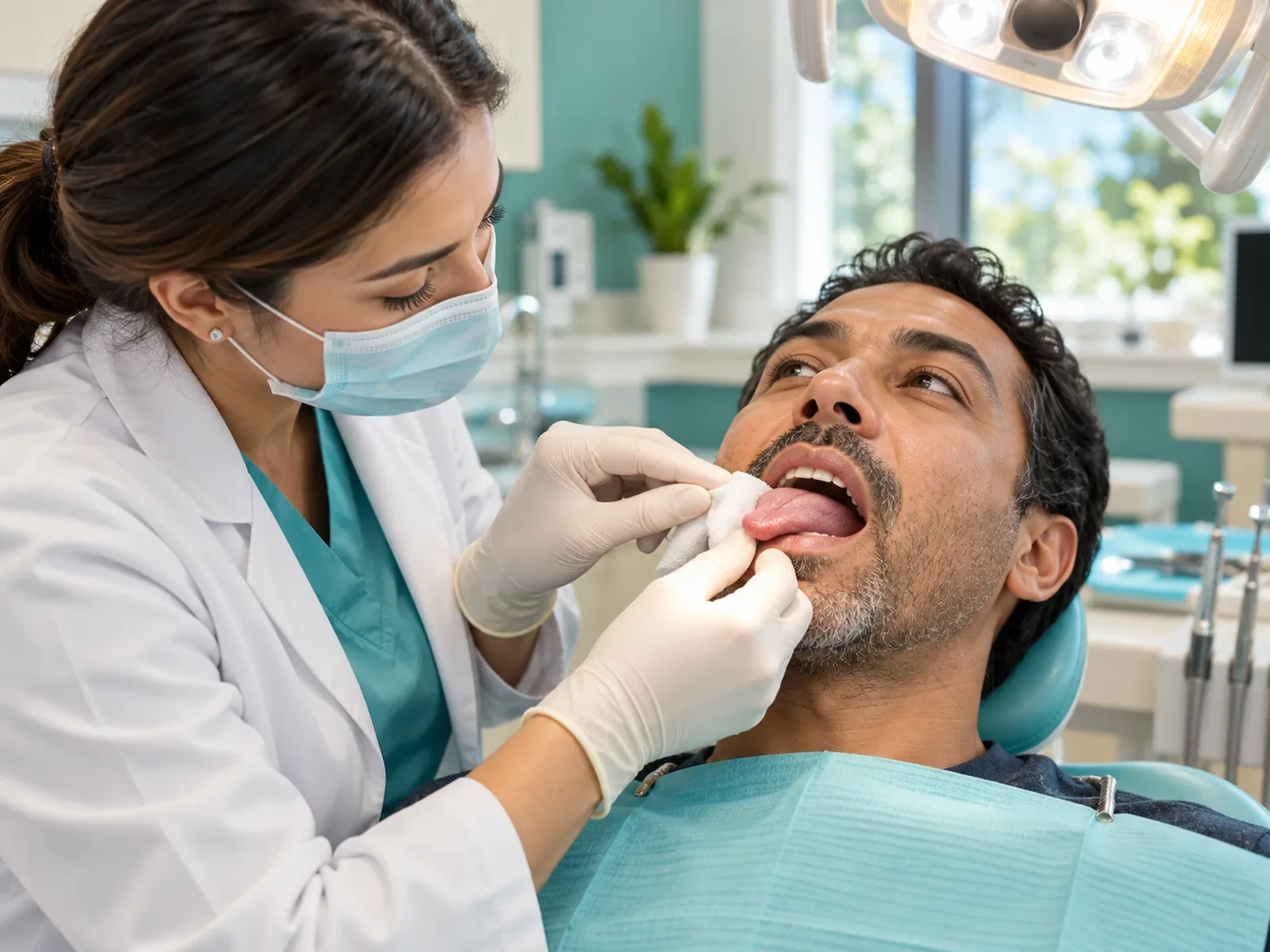
An oral cancer screening is part of a thorough dental exam, and most people never notice it happening. It is a deliberate look at and feel of the soft tissues of your mouth, lips, face and neck for anything that has changed, looks out of place or has not healed. It takes a couple of minutes and involves nothing more than light, a mirror, gloved fingers and gauze.
A screening cannot prove you do not have cancer, and an unusual spot is not a diagnosis of it. What it can do is find changes early, when the answer is a quick recheck or a simple biopsy rather than major treatment, and when cancers of the mouth and throat are far more treatable.
This page explains what we look for, which changes you should bring to us without waiting for a checkup, what happens when something looks unusual, and what a normal result does and does not mean.
Who is at risk
Anyone can develop oral cancer, but some things raise the odds:
- Tobacco in any form, including cigarettes, cigars, pipes, chewing tobacco and snuff. Smokeless tobacco causes changes exactly where it sits against the cheek or gum.
- Heavy alcohol use, and particularly tobacco and alcohol together, which multiply each other's effect.
- HPV infection. Cancers at the back of the throat and base of the tongue linked to human papillomavirus have become more common, often in people in their forties and fifties who never smoked.
- Sun exposure for cancer of the lower lip, which matters for anyone who works outdoors.
- Age, with most cases occurring after forty, though not all.
- A previous oral or head-and-neck cancer, or a family history of one.
- A weakened immune system or long-term irritation from a sharp tooth or an ill-fitting denture.
A risk factor does not mean you will develop cancer, and having none does not rule it out. We ask so we know where to look most carefully, not to judge; please answer honestly.
What the examination involves
The screening has two parts and usually comes before or after the tooth-by-tooth exam.
Outside the mouth. We look at your face and lips for asymmetry, swelling or sores, and feel along the jaw and down each side of the neck for enlarged or firm lymph nodes. We may ask you to swallow while we feel your throat.
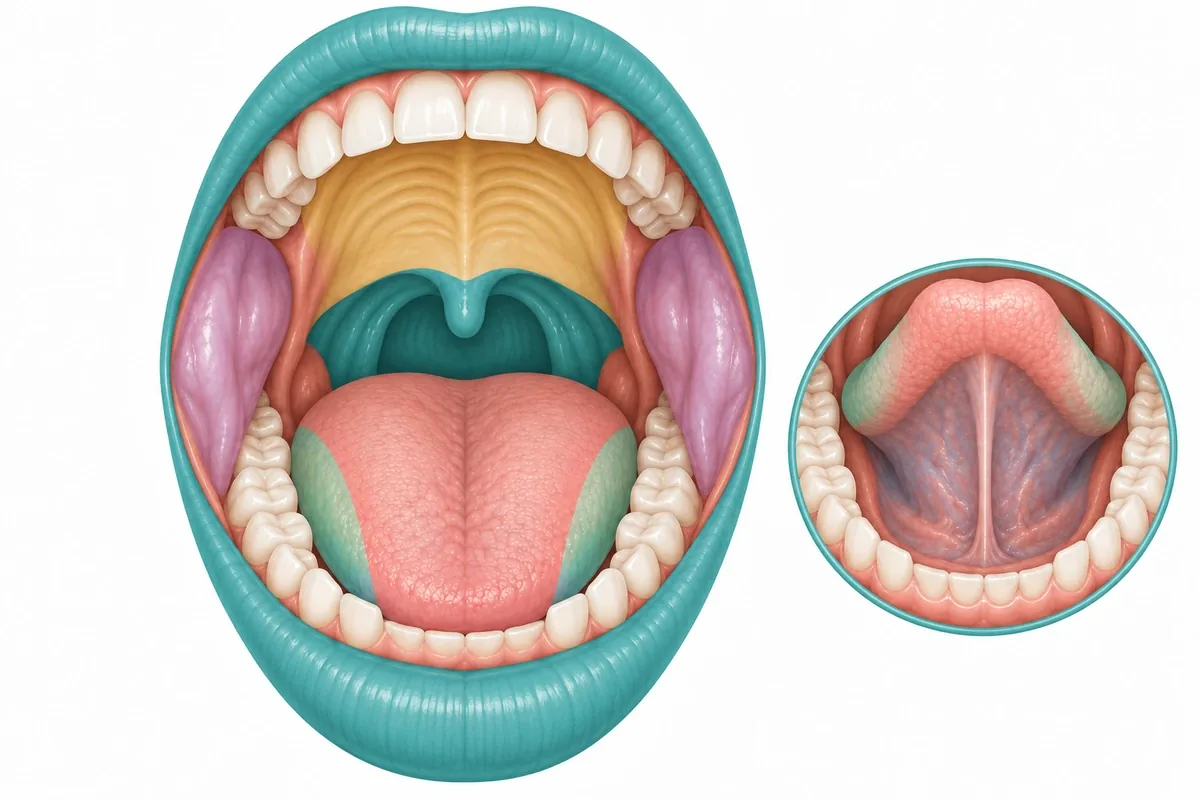
Inside the mouth. With a light and mirror we examine:
- the lips, inside and out
- the inside of both cheeks, where tissue is pulled gently aside
- the gums, all the way around, and the ridge under any denture, which is removed for the exam
- the roof of the mouth, hard and soft
- the top, sides and underside of the tongue; we hold the tip with gauze and move it so the sides can be seen, because that is where many tongue cancers start
- the floor of the mouth under the tongue, which we also feel with a finger
- the tonsils and back of the throat as far as can be seen
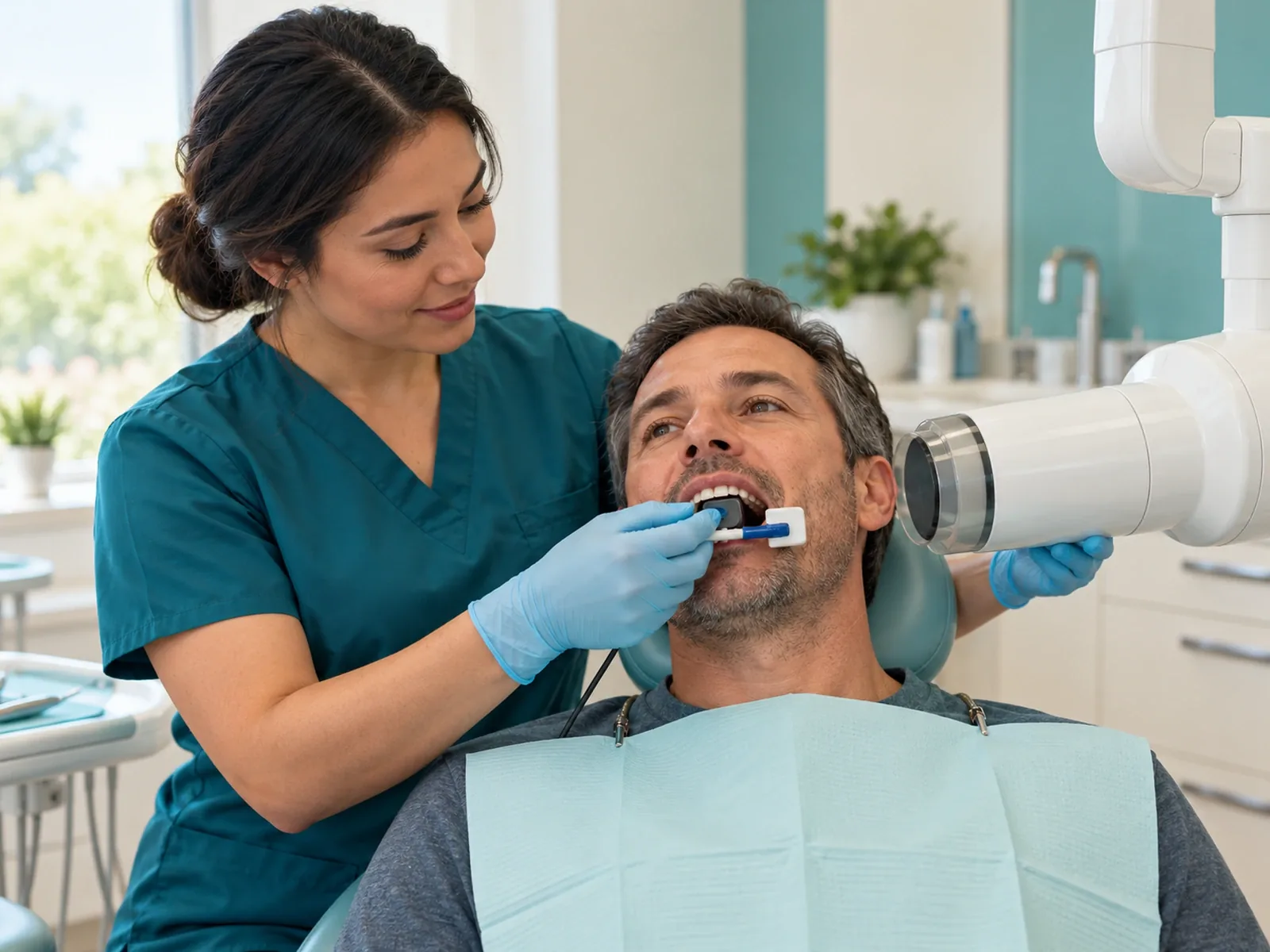
We are looking for sores that have not healed, red or white patches, lumps or thickened areas, rough or crusted spots, unexplained bleeding and any area that feels different on one side from the other. Dental X-rays are for teeth and bone and are not a screening tool for soft tissue, although they occasionally show a bone change that needs follow-up.
Some offices use special lights or rinses intended to highlight abnormal tissue. These are aids at best; they do not replace a careful look, and they do not replace a biopsy when one is needed.
Changes you should report, and when
The two-week rule is the one to remember: a sore, patch, lump or change in your mouth that has not healed or gone away in two weeks should be examined, even if it does not hurt. Most cancers in the mouth cause no pain early on, so pain is a poor guide.
Call us about:
- a sore or ulcer that has lasted more than two weeks
- a white, red or mixed red-and-white patch anywhere in the mouth
- a lump, thickening or rough area on the lip, tongue, cheek or gum
- numbness or tingling in part of the mouth, lip or chin
- loose teeth with no obvious dental cause
- a persistent sore throat, hoarseness or the feeling that something is caught in the throat
- difficulty or pain when chewing, swallowing or moving the jaw or tongue
- a denture that suddenly no longer fits because the tissue underneath has changed
- a lump in the neck
Do not wait for your next cleaning if something like this is persisting or getting worse. If you are having difficulty breathing or swallowing, or swelling that is spreading quickly, go to an emergency room or call 911 rather than waiting for any dental appointment.
Most findings are not cancer
The mouth is busy, and it gets irritated. The large majority of spots we see have an ordinary explanation: a canker sore, a cheek bite, a burn from hot food, a denture rub, a harmless bony bump on the palate or inner jaw, a fluid-filled bump on the lip from a blocked saliva gland, a map-like pattern on the tongue that comes and goes, or a lacy white condition of the cheeks called lichen planus that is common and usually benign.
Some of these look very much like early cancers, and no one can reliably tell them apart by eye alone, let alone from a photograph. What separates them is time and, when needed, tissue: irritation heals once its cause is removed; cancer does not.
What happens if something looks unusual
Finding something does not mean you will be sent straight for surgery. The usual steps are:
- Document it. We note the location, size, color and texture, and often take a photograph so we can compare later.
- Remove any obvious cause. A sharp filling edge is smoothed, a rough denture area is adjusted, a habit is discussed.
- Recheck in about two weeks. If the area has healed or clearly shrunk, it was irritation. If it is unchanged or larger, it needs more than observation.
- Biopsy or referral. A small sample is taken under local anesthetic, either here in Cleburne or by an oral surgeon or ENT doctor, and examined under a microscope by a pathologist. This is the only way to know what a persistent spot is.
- Results and next steps. We tell you who will contact you with results and when to expect them. If something is found, you are referred promptly to the right doctor, and we help coordinate.
If you are asked to come back for a recheck, please keep that visit. The spot feeling better is not the same as the tissue being normal, and the recheck is the part of the process that answers the question.

Checking your own mouth between visits
Once a month, in good light, look inside your lips and cheeks, at the top and both sides of your tongue, underneath it, at the roof of your mouth, and feel along both sides of your neck. You are looking for anything new that stays; knowing what is normal for you is what makes a change noticeable.
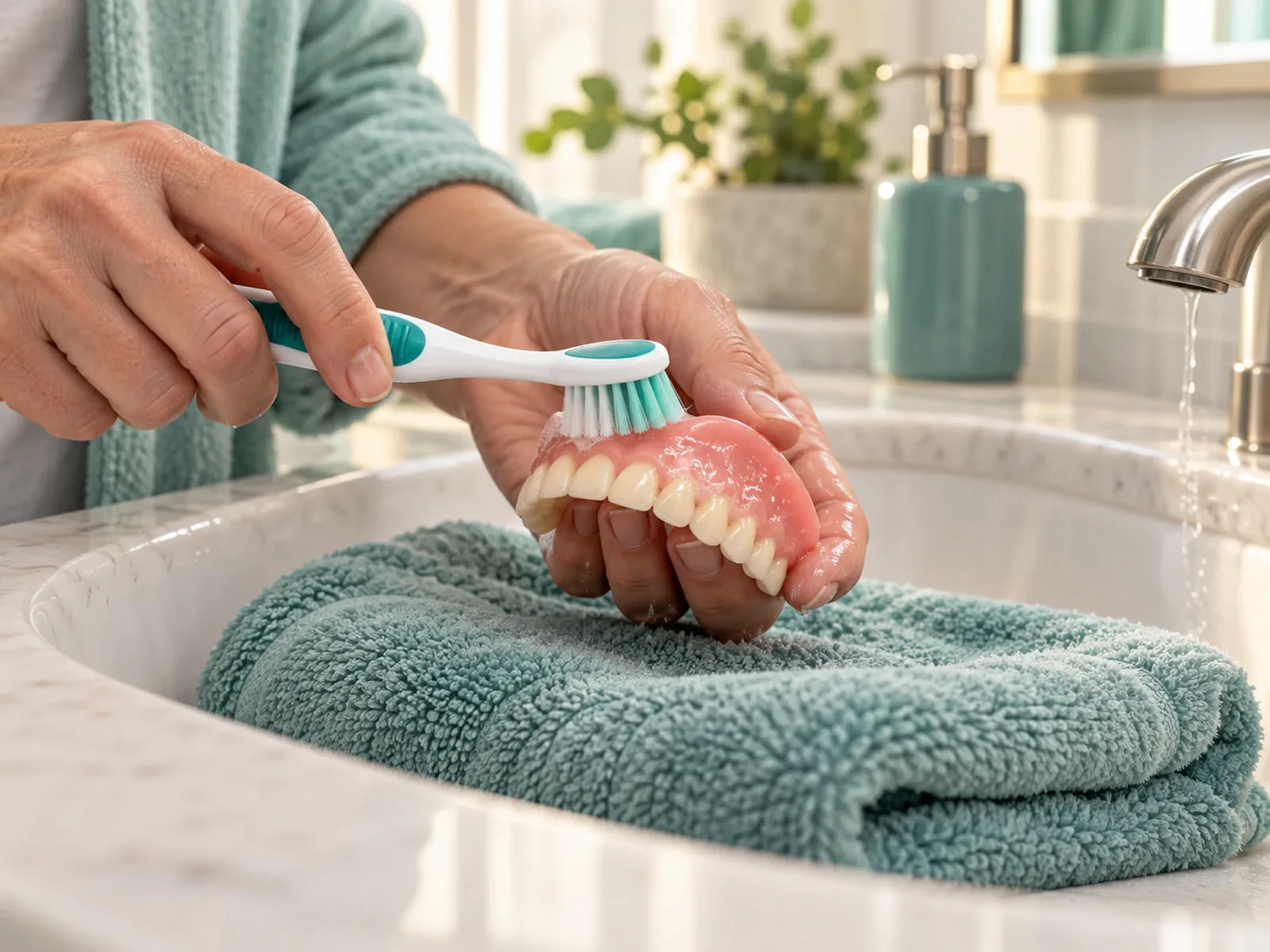
If you have had a long gap in dental care, a screening is one of the quieter reasons to come back; our guide to returning to the dentist after a long break explains what the first visit involves. Denture wearers should take dentures out nightly and look at the tissue underneath; our denture care page has more.
Sources and further reading
General information, not a diagnosis. Read how we create and review our dental guides.