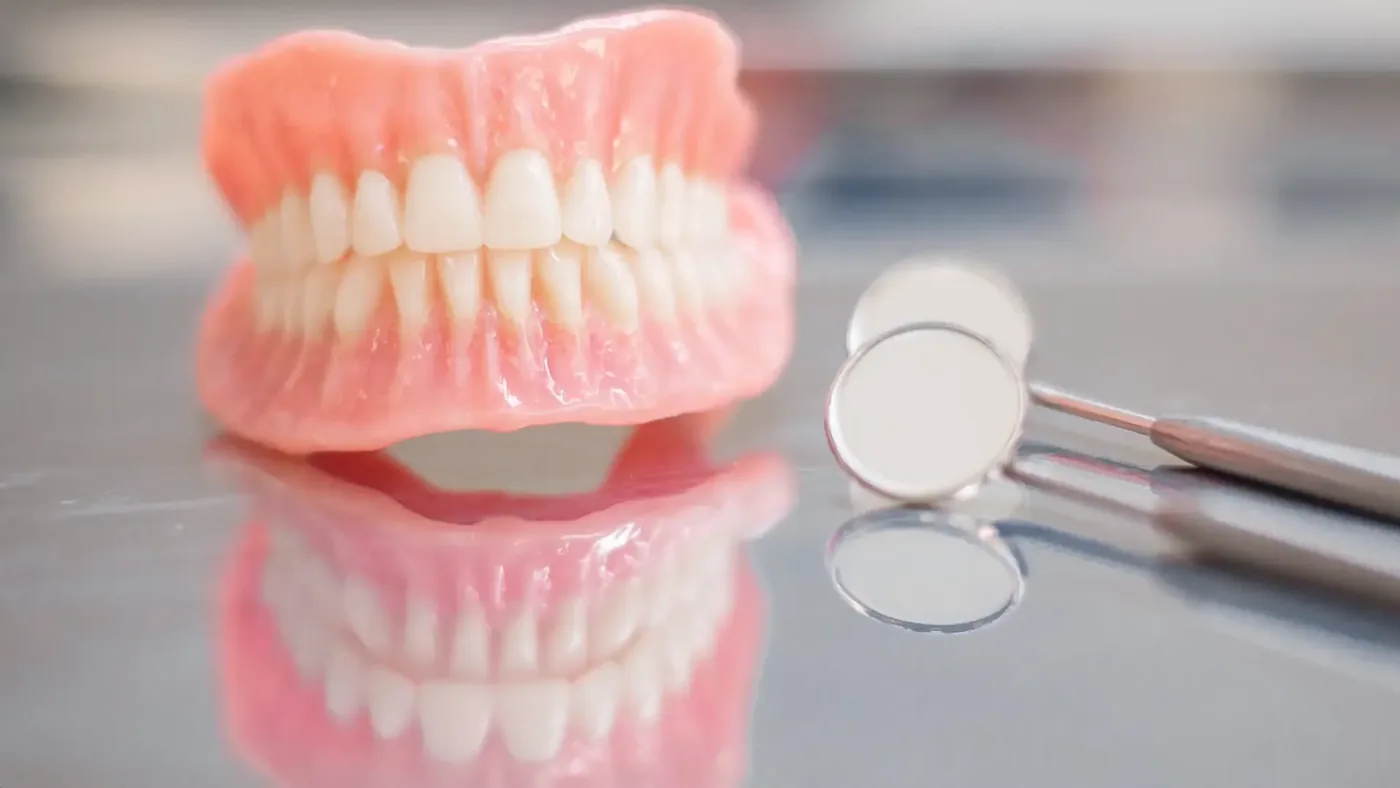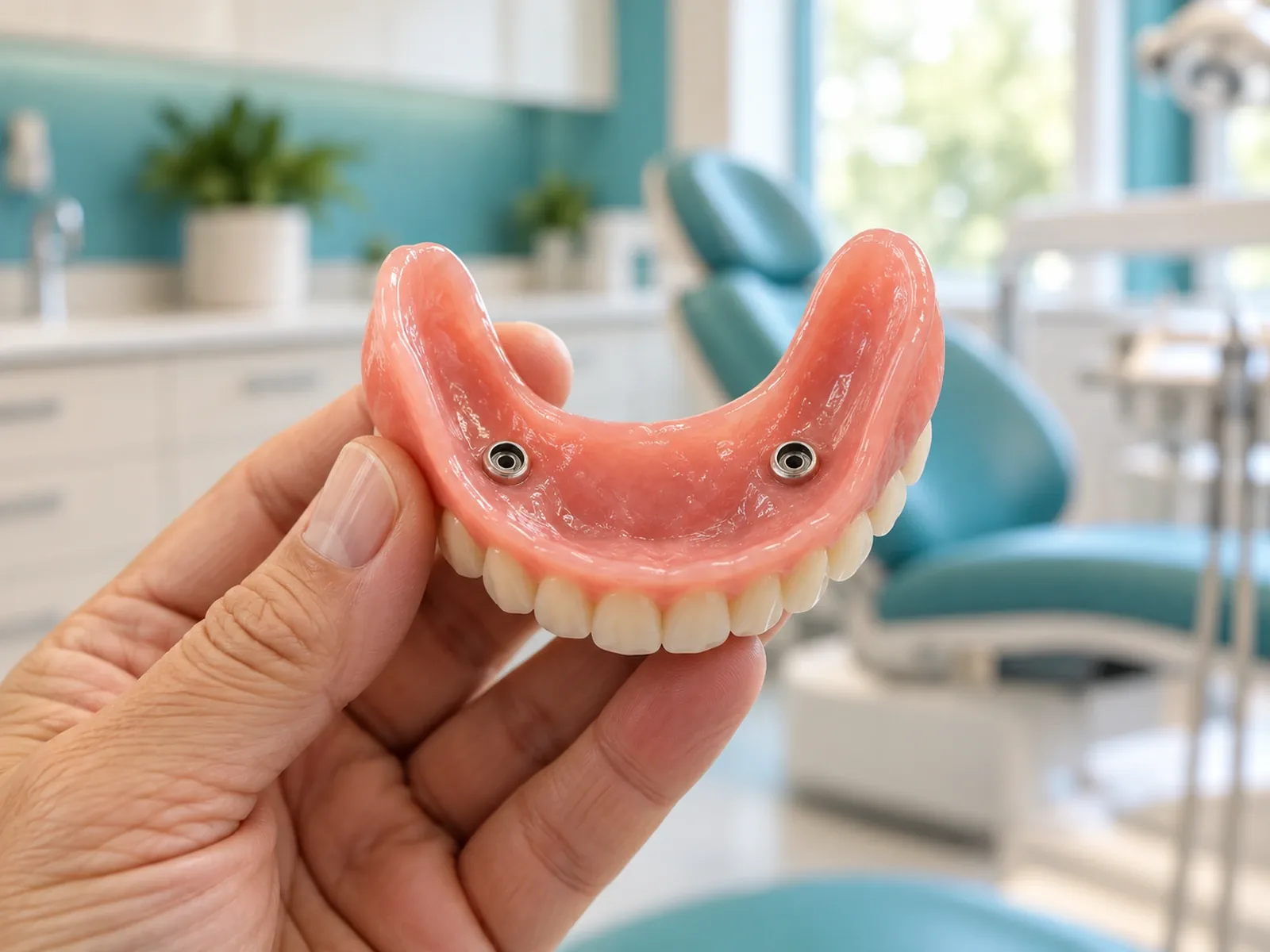
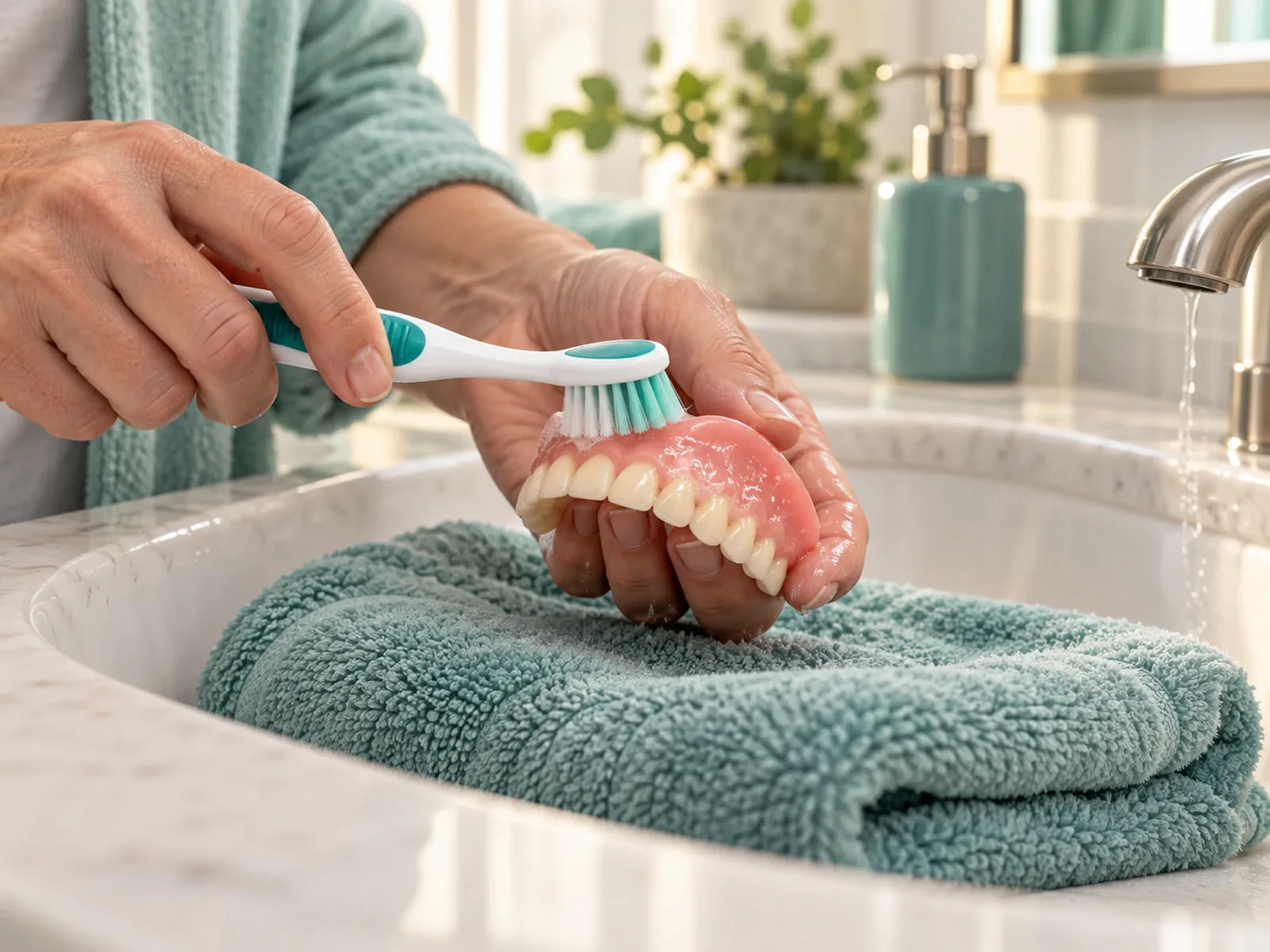
Denture care is really three jobs: keeping the denture clean, keeping the mouth under it healthy, and keeping any natural teeth it rests on free of decay and gum disease. A denture that looks clean can still carry a film of plaque in the fitting surface, and gums that are sore or red under a perfectly intact denture are telling you something about fit or hygiene.
The right products and routine depend on what your denture is made of and whether it has soft liners, clasps or implant attachments. The steps below are the general pattern; the specific instructions you were given for your own denture take priority where they differ.
This guide covers the daily routine, what damages dentures, how to care for the gums and any remaining teeth, the extras for partials and implant dentures, and the changes that should bring you back to our Cleburne office. For the types of dentures and the services around them, see our dentures overview.
A daily routine that works
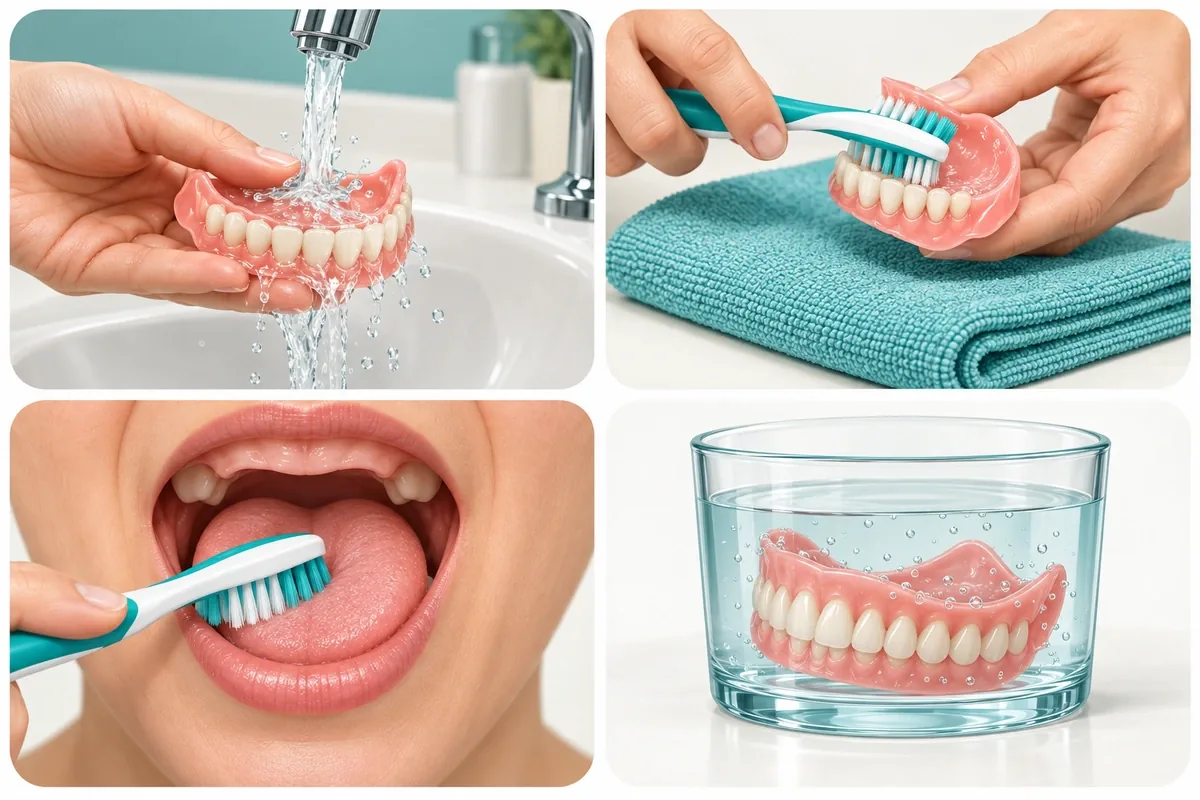
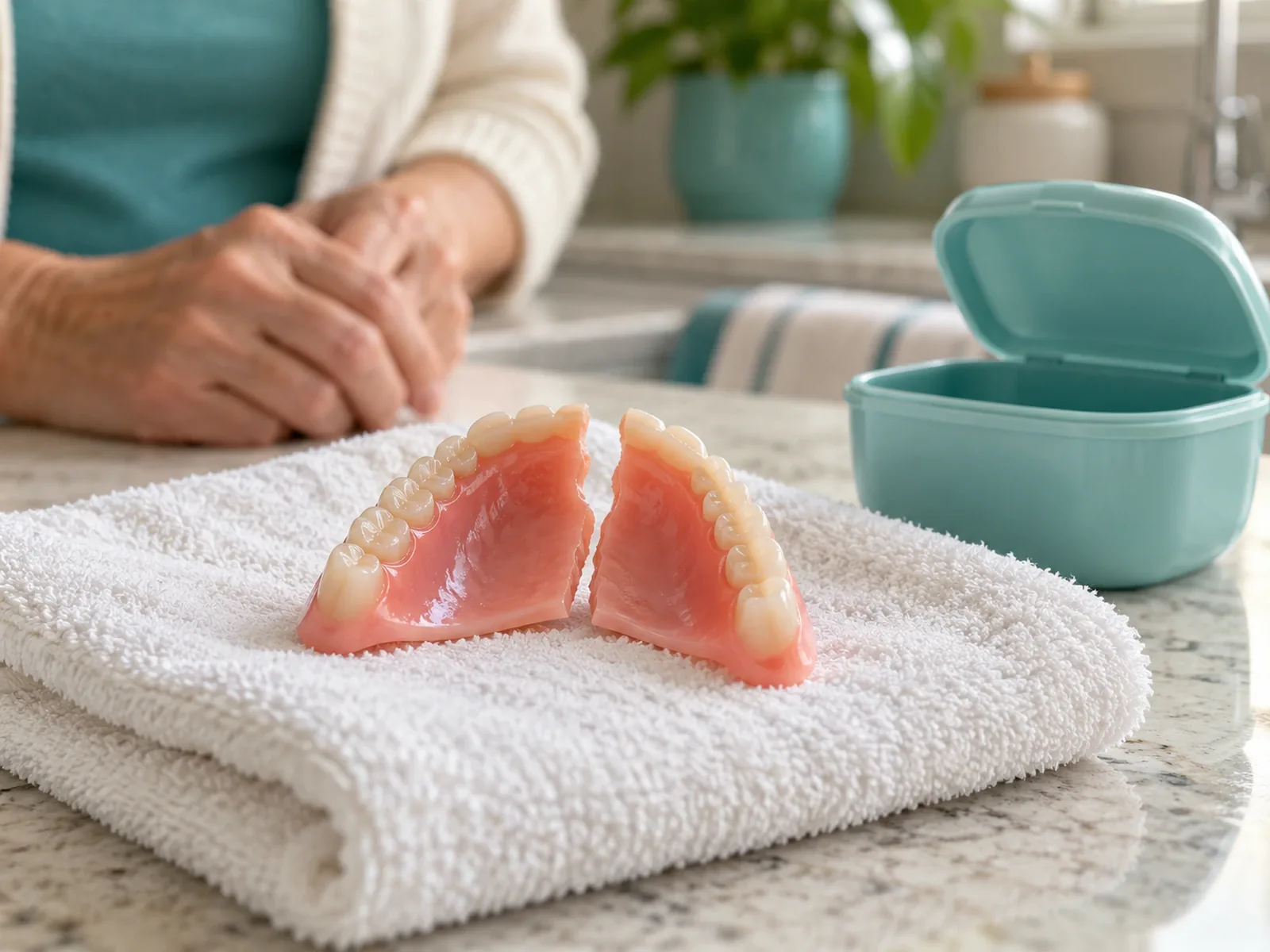
- Rinse after eating. Take the denture out, rinse it under running water to clear food, and rinse your mouth. Put a towel in the sink or fill it with water first; most denture breaks happen on a hard sink.
- Brush the denture once a day, every day. Use a soft denture brush or a soft toothbrush and a non-abrasive denture cleaner, mild hand soap or dish soap. Brush every surface, especially the fitting surface that sits against the gums and any grooves around the teeth. Ordinary toothpaste is too abrasive; it scratches acrylic and the scratches hold stain and bacteria.
- Brush your mouth too. With the denture out, use a soft brush to clean your gums, tongue and palate, and brush any natural teeth thoroughly. This stimulates the tissue and removes the plaque that causes irritation and bad breath.
- Soak overnight. Most dentures should stay moist to hold their shape. Soak in water or a denture-soaking solution as instructed. Rinse well before putting the denture back in, since soaking solutions are not meant to be swallowed.
If you use adhesive, clean every trace of it from the denture and your gums each day. Residue under a denture is a common cause of irritation.
What damages a denture
- Hot or boiling water warps acrylic and flexible materials. Use lukewarm water only.
- Abrasive toothpaste, scouring powder and stiff brushes scratch the surface.
- Bleach and bleach-based cleaners can whiten pink acrylic, corrode metal clasps and attachments, and damage soft liners. Do not improvise with household chemicals.
- Letting the denture dry out for long periods can change its shape.
- Dropping it. Clean over a towel or water and set it down with care.
- Home repairs, glue or reline kits. If it breaks or loosens, see our guides to denture repair and relines rather than fixing it yourself.
Some materials have extra rules. Soft liners should not be brushed hard and may need a specific cleaner. Flexible partials often should not go into certain effervescent solutions. Ask what applies to yours.
Why the denture comes out at night
Gums covered by a denture all day need a break. Removing the denture overnight lets the tissue recover, reduces the risk of a fungal irritation called denture stomatitis that shows up as redness under the base, and lowers the chance of sores at the corners of the mouth. If you have a reason to wear your denture at night, such as the first night after an immediate denture, follow the instruction you were given. For everyday wear, out at night is the general rule.
Extra care with a partial denture
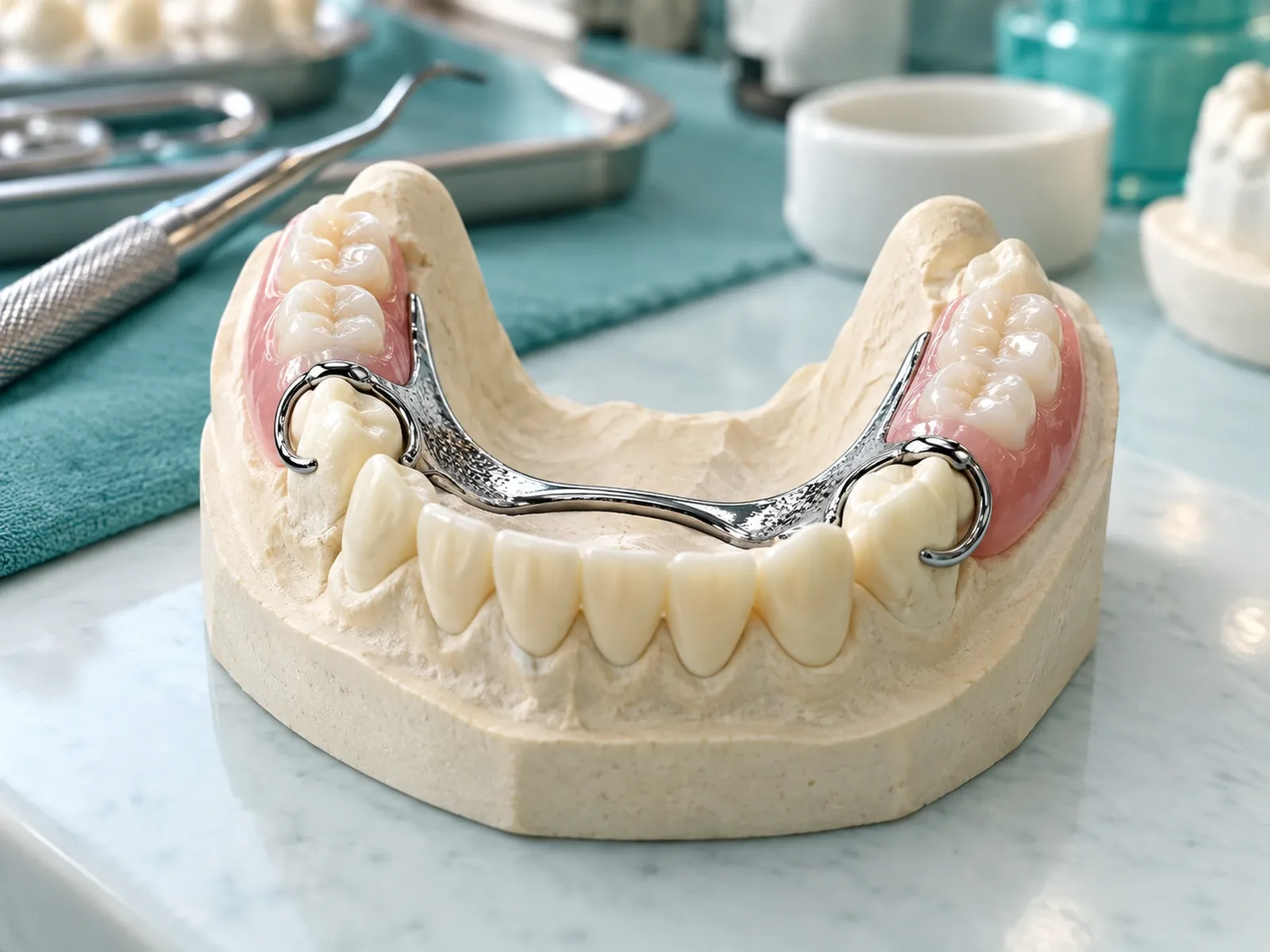
A partial sits on your natural teeth with clasps and rests, and those are exactly the places plaque collects. The partial does not protect the teeth it touches; it makes cleaning them more important.
- Brush the natural teeth carefully after removing the partial, with attention to the surfaces where clasps and rests sit.
- Clean between the teeth daily with floss or small interdental brushes.
- Brush the inside of the clasps on the partial itself; food packs there.
- Do not bend or tighten clasps. A loose clasp is a quick adjustment at the office.
- Keep up fluoride use as recommended, since the clasp teeth are at higher risk of decay.
Our partial dentures guide explains how the supporting teeth are assessed and why their health decides how long the partial lasts.
Extra care with an implant-supported denture
If your denture snaps onto implants, two more things join the routine. The attachment inserts inside the denture wear over time and are replaced periodically; worn inserts are the usual reason a snap-in denture feels less secure. And the gum around each implant abutment needs daily cleaning with a soft brush, and sometimes floss or an interdental brush, because plaque around an implant leads to inflammation just as it does around a tooth. Review the routine with the clinician who knows your attachment system, and see our page on implant-supported dentures for how they are maintained.
Changes you should not ignore
Cleaning harder is not a substitute for a diagnosis. Make an appointment if you notice:
- The denture is looser, or you need more adhesive than before.
- A sore that has not healed within a week or two.
- Red, swollen or bleeding gums under the denture, or cracks at the corners of your mouth.
- A persistent bad taste or odour despite good cleaning.
- A white or red patch, a lump, or an area of tissue that looks different.
- Clicking, a change in your bite or a crack in the denture.
Most of these are simple fit or hygiene problems. A few are not, which is why a tissue change is examined rather than assumed to be denture rubbing. Our guide to getting used to new dentures covers the early sore spots that are expected with a new denture.
Why you still need exams with no natural teeth
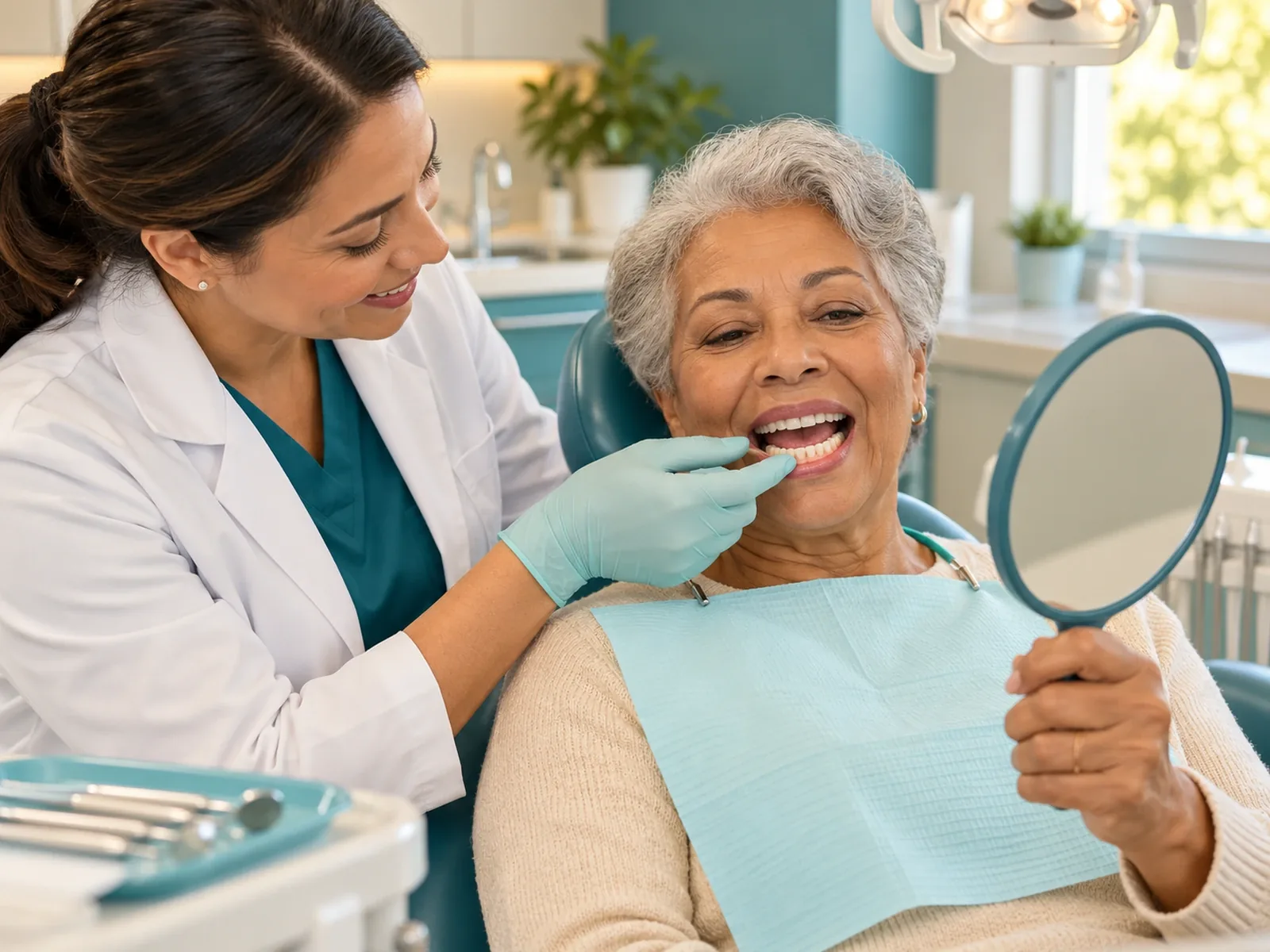
Denture wearers sometimes stop seeing a dentist because there are no teeth to check. The gums, tongue, palate and the lining of the mouth still need to be looked at, the denture's fit and bite need to be assessed as the ridge changes, and oral cancer screening applies to everyone. A regular exam also catches a loosening fit early, when a reline is simple, instead of after the base has started to flex and crack. We will tell you the interval that suits your situation.
Sources and further reading
- ADA MouthHealthy: Dentures
- Mayo Clinic: Denture care — how do I clean dentures?
- American College of Prosthodontists: Dentures
General information, not a diagnosis. Read how we create and review our dental guides.