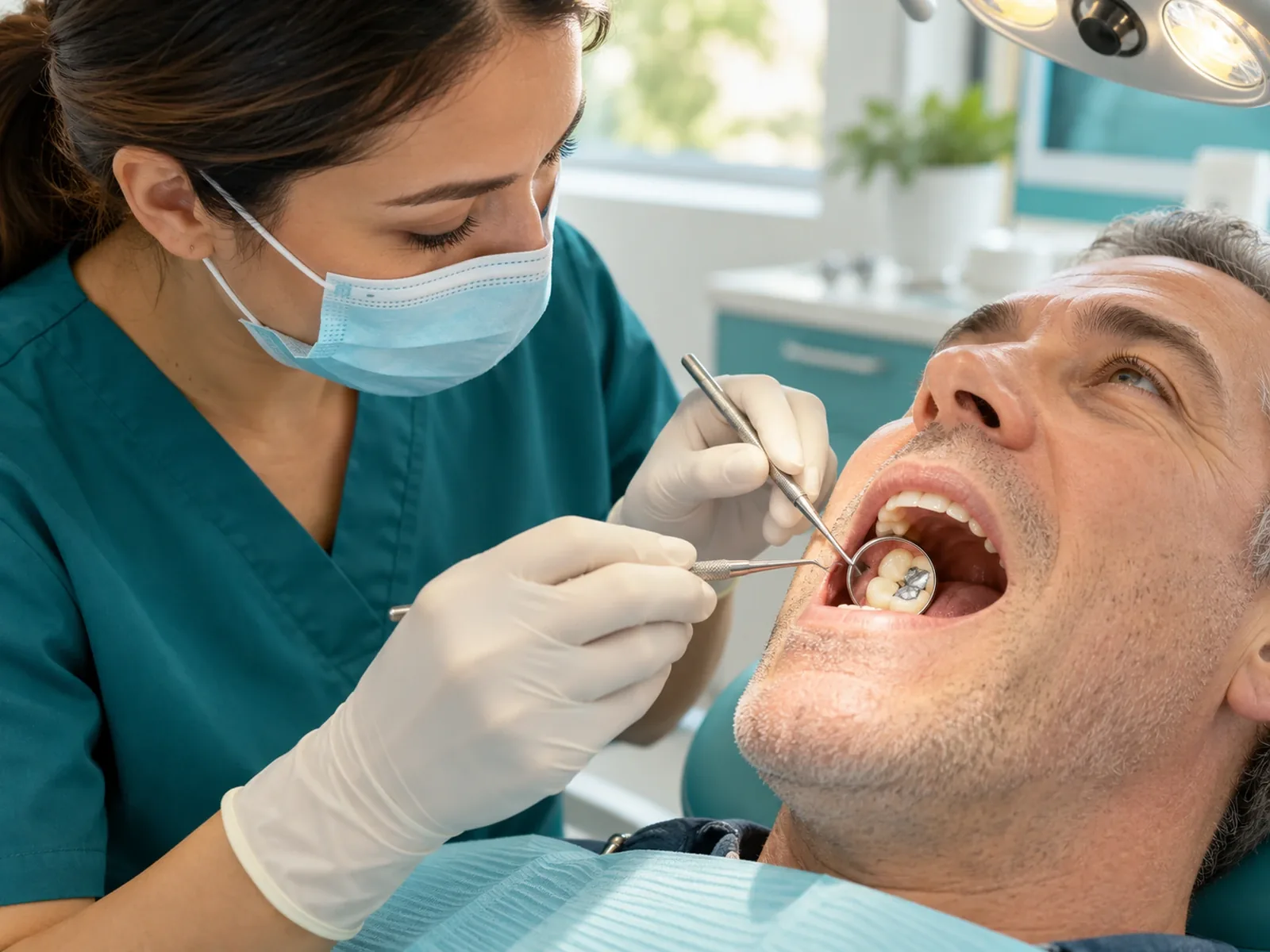

You have a treatment plan in your hand with more procedures than you expected, a total that made you sit down, or recommendations you do not quite follow. You want to make a good decision, and you are not sure how. A second opinion is the ordinary, sensible response, and any dentist confident in their plan will welcome it.
The goal of a second opinion is not to find out who is right. It is to understand your own mouth well enough to choose. The second dentist may agree with everything, suggest a different route to the same end, identify a missing piece of information, or disagree about how much treatment is needed. Each of those outcomes is useful, and each is more useful if you arrive prepared.
This page explains what to bring, how to frame your questions, how to compare two plans that use different words for similar things, and when waiting for a second appointment is not safe. It sits within our full-mouth reconstruction section because large, multi-stage plans are where second opinions help most, but the same approach applies to any recommendation you want to understand better.
When a second opinion makes sense
Any time, really, but especially when:
- The plan involves many teeth, surgery, or removal of teeth you thought were healthy.
- You were told a tooth cannot be saved and you want to understand why.
- The recommendations changed significantly from a previous dentist's with no obvious new problem.
- The explanation did not make sense to you, or you felt rushed.
- You are being asked to commit a large sum and want to confirm the diagnosis first.
- Several reasonable options seem to exist and you want help weighing them.
Not every second opinion involves a big plan. Whether a deep cleaning is really needed or whether old fillings and crowns should be replaced are also common and legitimate questions.
Bring the information behind the recommendation
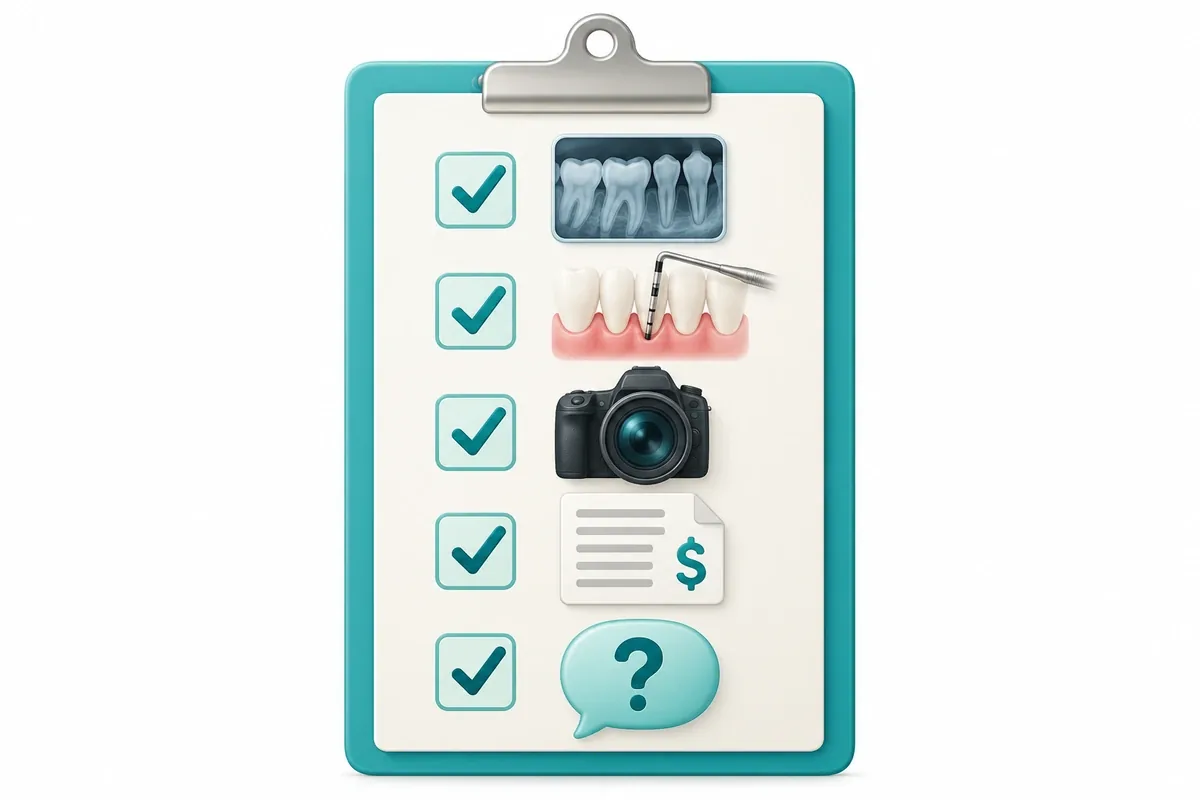
A second opinion is only as good as the information it works from. Ask your current office for copies of:
- X-rays, including any three-dimensional scan, with their dates. You are entitled to copies of your records.
- Periodontal (gum) measurements, which show the support around each tooth.
- Photographs, if any were taken.
- The written treatment plan with procedure codes and fees.
- Recent dental history: what was done in the past few years, and any symptoms you have now.
Then write down what you actually want to know. "Is this plan good?" is hard to answer. Specific questions are not:
- Can this tooth be saved, and what would saving it involve?
- Why are crowns recommended on these particular teeth?
- Is the grafting necessary, or is there an implant plan that avoids it?
- Is this gum treatment supported by the measurements?
- What happens if I do nothing for a year?
Share the records before the visit when possible so Dr. Zohdi can review them before you come to Cleburne. Tell the office which decision you want help with when you book, so the right amount of time is set aside.
What happens at the visit
A second-opinion visit is a consultation, not a cleaning. Expect:
- A conversation about your history, symptoms, and the questions you brought.
- A review of the outside records and a decision about whether they answer the current questions. Recent, good-quality X-rays may be sufficient; old or incomplete ones may need updating.
- A clinical examination of the teeth and gums in question.
- An explanation, in plain language, of what the findings show and what the reasonable options are.
- A discussion of how the findings relate to the original plan: where there is agreement, where there is a difference, and why.
You should leave understanding the reasoning, not just the verdict. If something is still unclear, say so.
Separate the diagnosis from the preference
When two plans differ, it helps to ask which of three things they disagree about.
The findings. Does one dentist see decay, a crack, or bone loss the other does not? This is sometimes a matter of image quality or of a tooth that looks different clinically than on film. It can be resolved with better records.
The prognosis. Both may agree a tooth is damaged but differ on whether it will last. Judging a tooth's future is partly experience and partly philosophy. Our page on saving versus extracting a tooth explains what goes into that judgment: remaining structure, infection, gum support, and what the tooth has to do once restored.
The priorities. One plan may favor keeping every possible tooth; another may favor predictability and fewer future surprises. Neither is wrong, but only one may match what you want. Ask each dentist what they assumed about your priorities.
Two careful clinicians can look at the same mouth and recommend different, defensible plans. Disagreement is information, not proof that one of them is careless.
Compare complete courses of care
Plans are easy to misread when they are different lengths. A proposal with fewer line items may have left out temporaries, the final restorations, a night guard, or a later stage described as "to be determined." A longer plan may include preventive steps the shorter one assumes you will do elsewhere.
For each plan, write down:
- What the mouth will look like and how it will function at the end
- Every stage between now and then, including healing periods
- Which teeth are kept, which are removed, and what replaces them
- What temporary teeth you will wear and for how long
- What maintenance and future repair each result will need
- The fee for each stage, and what remains uncertain
Only then compare totals. Our reconstruction cost guide goes deeper on reading an itemized estimate, and our page on how reconstruction is sequenced explains the stages a thorough plan contains.
When waiting is not safe
Most restorative decisions allow time for reflection, and a few weeks to gather records and get a second view rarely changes the outcome. Some situations do not wait:
- Swelling of the face or gums, especially if it is growing
- Severe or worsening pain, or pain that wakes you
- A tooth knocked out or broken in an accident
- Fever with dental pain
- Bleeding that will not stop
Call the office at (817) 641-6261 during business hours for urgent problems. Swelling that affects breathing or swallowing, swelling spreading toward the eye, or major facial trauma needs emergency care: go to the nearest emergency room or call 911. You can still seek a second opinion about the long-term plan once the emergency is handled.
Sources and further reading
- American Association of Endodontists: Cracked teeth
- American Association of Endodontists: What is a root canal?
- ADA MouthHealthy: Crowns
General information, not a diagnosis. Read how we create and review our dental guides.