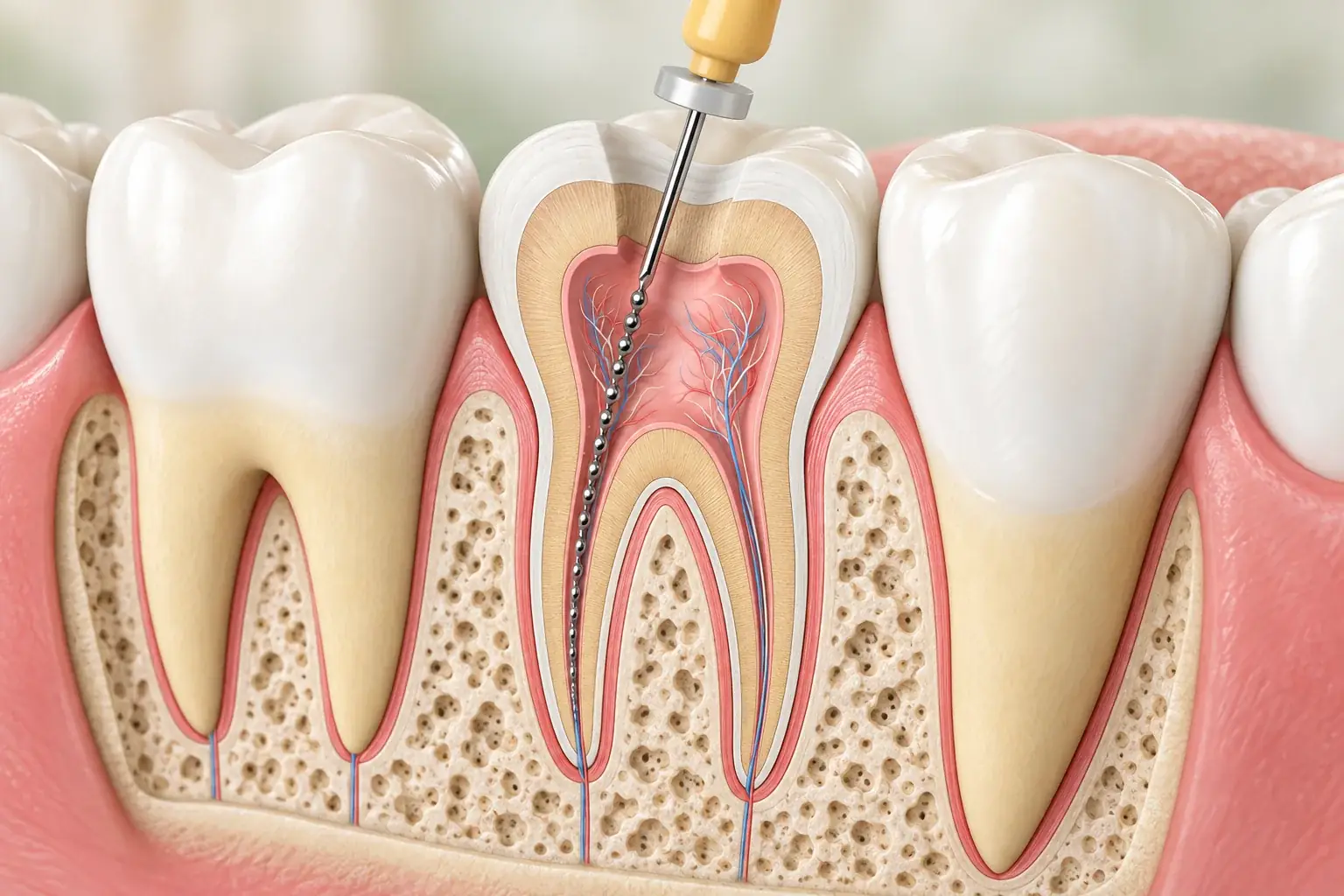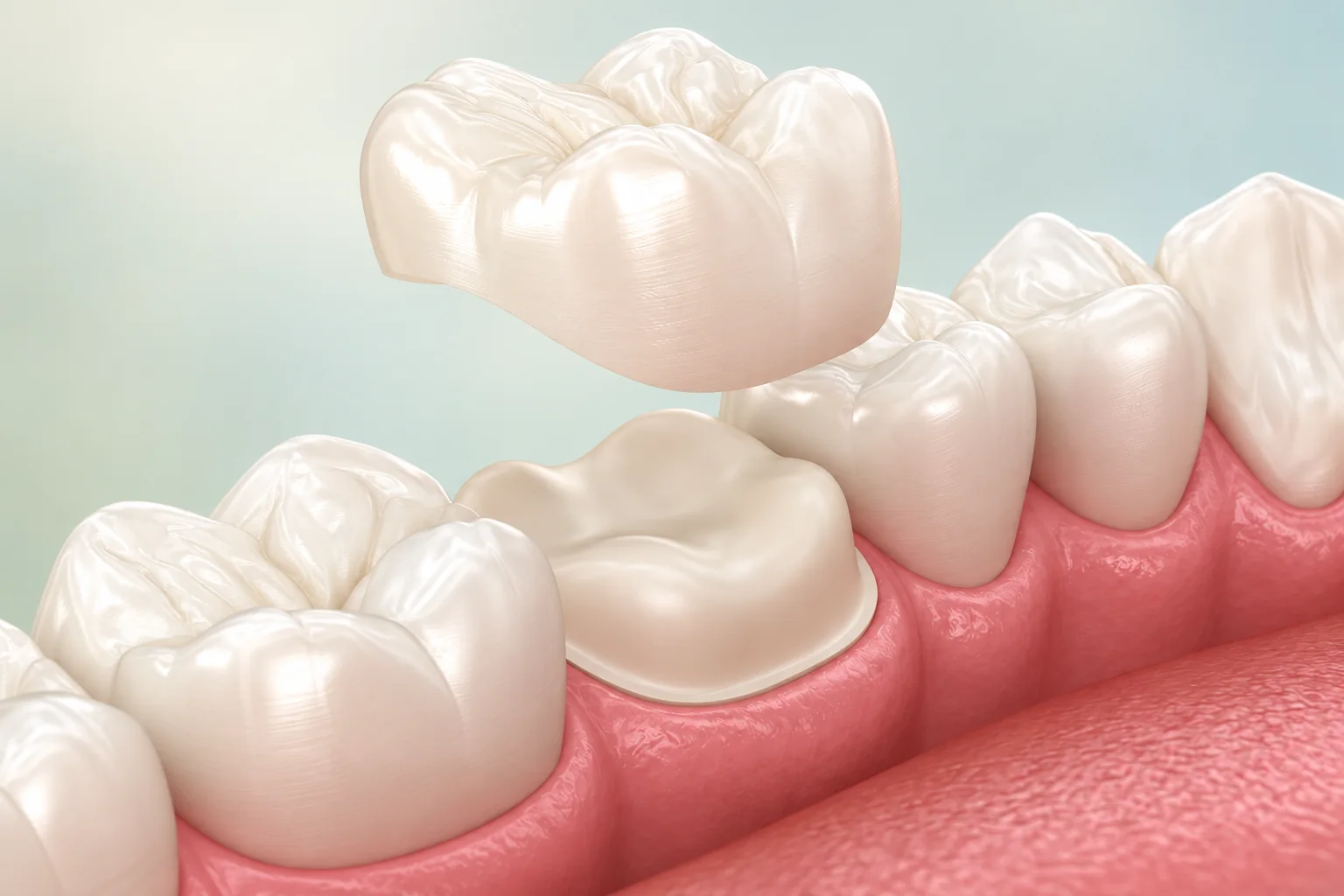

"Can this tooth be saved?" is really two questions. First, can the immediate problem be treated: can the infection be cleared, the decay removed, the break repaired? Second, once that is done, is there enough healthy tooth and supporting bone left to rebuild it into something that will chew comfortably and last for years? A root canal that is technically successful on a tooth that cannot hold a crown has not saved anything.
At Cleburne Dental we try to answer both questions before recommending either path, whether that path is restorative care or one of our oral surgery services. Dr. Zohdi will show you the X-ray and the tooth itself, name the findings that favor keeping it, the findings that work against it, and the ones that are still uncertain. Then we compare the complete options, not just "root canal or extraction," but everything that comes after each choice.
This page explains what makes a tooth restorable, how to compare the full treatment paths side by side, how to think about uncertainty and cost, and when it makes sense to get a second opinion before deciding.
What makes a tooth restorable
Several findings go into the judgment. No single one decides it; the combination does.
- How much solid tooth is left above the gum. A crown needs a collar of healthy tooth to grip, usually a couple of millimeters all the way around. A tooth broken off at or below the gumline often lacks it. Sometimes a small gum procedure or orthodontic movement can expose more tooth, but that adds steps and cost.
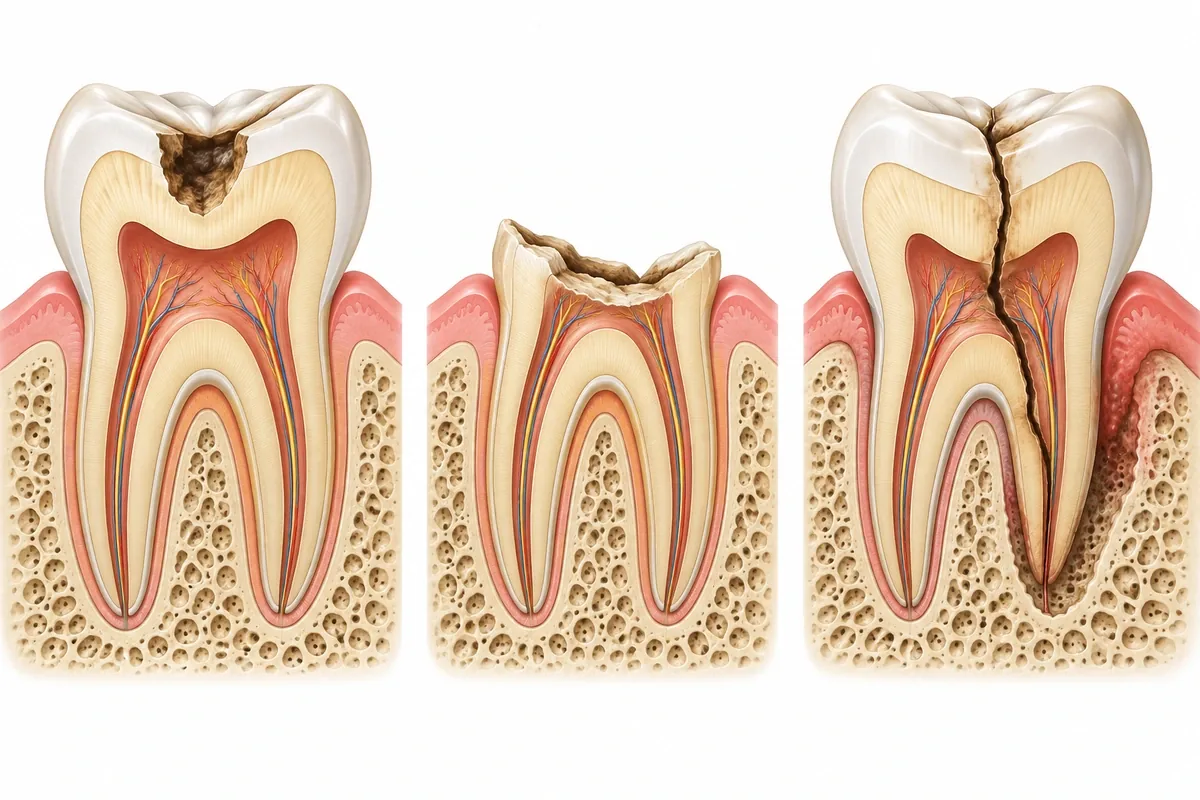
- Where the decay or fracture goes. Decay that runs under the gum toward the bone is much harder to seal than decay on the chewing surface. A crack's depth and direction matter more than its length; see below.
- Bone and gum support. A tooth with advanced gum disease and significant bone loss may be mobile and have a poor outlook even if the tooth itself is sound.
- Whether a root canal is feasible. Very curved or calcified canals, a previous root canal that has failed, or a post already in the root can complicate treatment. Our page on retreatment of a previously treated tooth covers that situation.
- Forces on the tooth. Heavy grinding, a tooth that takes the full bite because neighbors are missing, or a back molar that works hard all day can shorten the life of a heavily rebuilt tooth.
- The tooth's strategic value. A tooth that anchors a partial denture or supports a bridge may be worth more effort than one that could be removed without changing anything else.
- Your health and priorities. Medical conditions, how many visits you can manage, and how you feel about keeping natural teeth versus a replacement all belong in the decision.
How we describe the outlook
| Outlook | What it usually means |
|---|---|
| Favorable | Enough tooth and bone remain; the problem is treatable with predictable results |
| Guarded | The tooth can be treated, but one or more findings (deep decay, a crack of uncertain depth, limited bone) make the long-term result less certain |
| Poor or hopeless | Repair is unlikely to last or is not possible; extraction is recommended |
A guarded tooth is not a wrong choice to keep. It is a choice made with eyes open, often with a plan for what to do if it fails.
Cracked teeth deserve special mention
Cracks are the most common source of uncertainty. A craze line in the enamel is harmless. A crack that runs across a cusp can usually be fixed with a crown. A crack that extends into the pulp needs a root canal and a crown and has a good but not guaranteed outlook. A crack that runs down the root, called a vertical root fracture, cannot be sealed, and the tooth is removed.
The problem is that X-rays rarely show cracks, and the full extent may not be visible until old fillings are removed or the tooth is opened. We will tell you when the plan includes a "look and decide" step, so you are not surprised if the recommendation changes mid-treatment.
Compare the whole path, not just the first step
The most common mistake is comparing the fee for a root canal with the fee for an extraction. Neither path ends there.
| Path | Steps involved | Timeline | Ongoing care |
|---|---|---|---|
| Save the tooth | Root canal treatment, a buildup, and usually a crown | A few weeks to a couple of months | Brush and floss normally; crown may need replacement in time |
| Extract and place an implant | Extraction, possible socket graft, implant placement, healing, abutment and crown | Often several months | Cleaning around the implant; crown may need replacement in time |
| Extract and place a bridge | Extraction, healing, preparing the two neighboring teeth, bridge | A few months | Special floss threaders; relies on the health of two other teeth |
| Extract and use a partial denture | Extraction, healing, impressions, fitting | Weeks to a few months | Removable; relines and adjustments over time |
| Extract and leave the space | Extraction only | Days | Monitor for drifting and bite changes |
The right comparison includes the number of visits, the recovery after each step, how the result is cleaned, the likelihood of repair later, and what happens if the space is left empty. Our guide to replacing a tooth after extraction and our comparison of an implant versus a bridge go deeper on the replacement side.
Cost: what to ask for
Ask for a written estimate of the full path on each side, including the crown after a root canal and the final crown after an implant, not just the first procedure. Dental insurance often treats these steps differently, and our insurance team can explain what your plan covers for each. If the recommended path is a larger investment, our financing options can spread it out. A cheaper first step that leads to a more expensive second step is not actually cheaper.
Uncertainty deserves an honest conversation
No dentist can guarantee how long a treated tooth or a replacement will last. What you can ask for is clarity:
- What is the single biggest risk with saving this tooth?
- What signs would tell us it is failing, and what would we do then?
- Is this treatment intended as a long-term solution or as a reasonable attempt with a more guarded outlook?
- If I extract instead, what are the risks on that side?
Conservative dentistry does not mean saving every tooth at any cost. It means choosing the level of treatment that fits the tooth, and understanding the alternatives before committing.
When a second opinion helps
If the decision is not urgent and you still feel unsure, a second opinion is a sensible step, and we offer them. Bring your X-rays and the written treatment plan, not just a price quote, so the second dentist can evaluate the same findings. Reasonable dentists can disagree about a guarded tooth; hearing two explanations often makes your own priorities clearer.
When the decision cannot wait
Some situations change the calculation. A tooth with facial swelling or a spreading abscess needs the infection addressed promptly, whether by starting root canal treatment or removing the tooth; comparison shopping should not delay that. A badly broken tooth should be seen within a day or two so the remaining structure can be protected. Difficulty breathing or swallowing, or swelling spreading toward the eye or neck, is an emergency: go to the emergency room or call 911.
Sources and further reading
- American Association of Endodontists: Cracked teeth
- American Association of Endodontists: What is a root canal?
- ADA MouthHealthy: Extractions
- ADA MouthHealthy: Root canals
General information, not a diagnosis. Read how we create and review our dental guides.