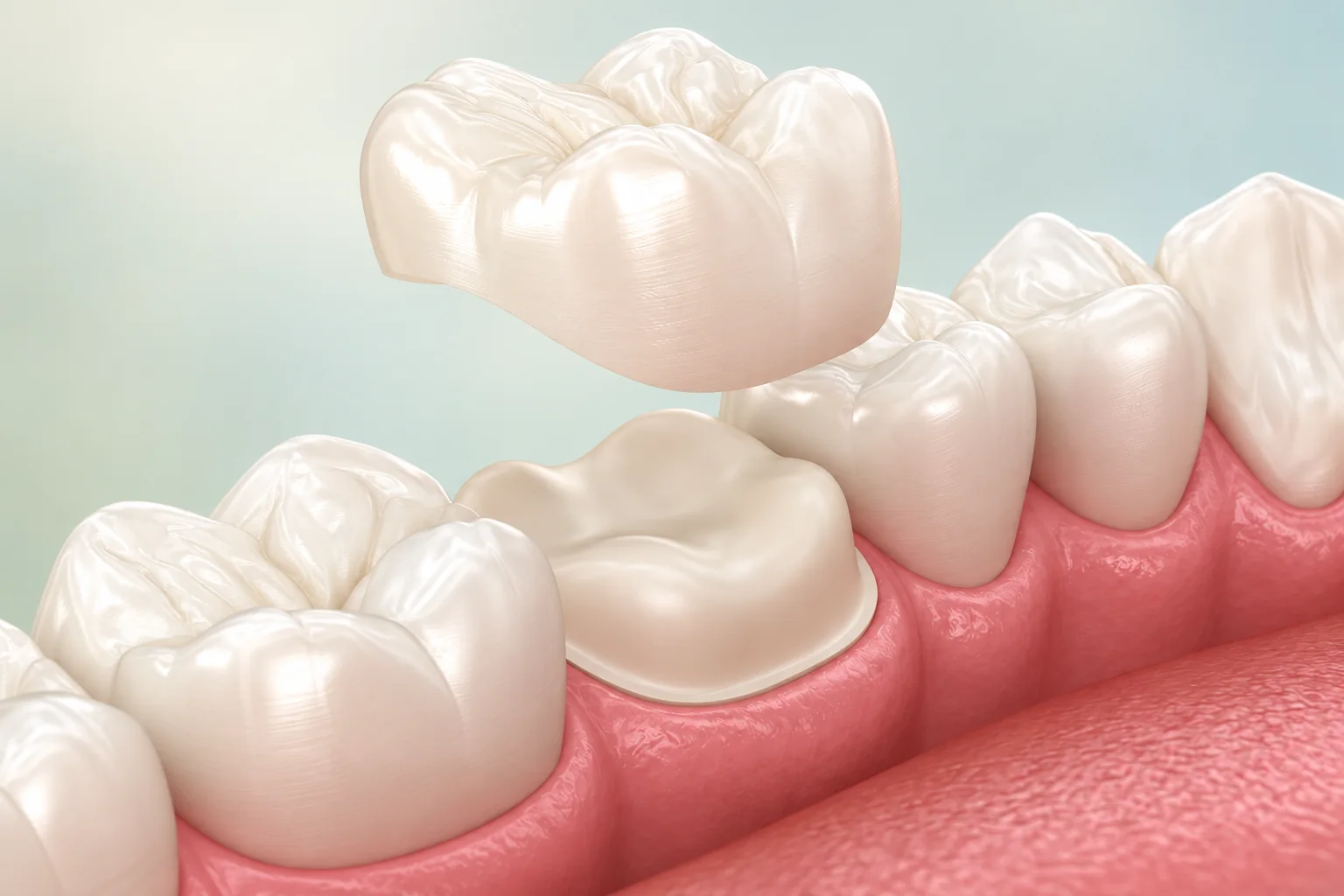

Fillings and crowns do not come with an expiration date. Some restorations placed decades ago are still sealed and doing their job; some placed a few years ago are already leaking. So when a dentist suggests replacing old work, or you wonder about it yourself, the question is not how old it is. It is what the restoration is doing, what the tooth underneath looks like, and what you would gain or lose by changing it.
That matters because every replacement removes a little more tooth. A tooth can be filled only so many times before it needs a crown, and crowned only so many times before there is nothing left to crown. This page explains how Dr. Zohdi tells a failing restoration from an aging one, when repair is better than replacement, what can be found underneath, and the questions worth asking before anything is removed.
Age alone is not a reason
Dental materials wear, but slowly, and a restoration's condition depends far more on how well its edges are sealed and how the tooth around it has been cared for than on the year it was placed. A well-placed amalgam filling can serve for decades. Composite fillings tend to have a shorter average life, and crowns commonly last many years, but averages describe populations, not your tooth.
So "it's old" is a reason to check a restoration carefully, not a reason to replace it. What we are looking for is evidence that it has stopped doing its job.
Signs an old restoration may actually be failing
Some signs you may notice yourself; others show up only on examination or X-ray.
- Decay at the margins. The edge where restoration meets tooth is the most common place new decay starts. It may appear as a soft spot, a shadow under enamel, or a dark area on an X-ray.
- A crack or fracture in the filling, the crown, or the tooth around it.
- An open margin or ledge. If floss shreds or catches on the same spot every time, there may be a gap collecting plaque.
- Food trapping that started recently between two teeth, which can mean a contact point has worn or broken.
- Pain on biting or lingering sensitivity, which may point to a crack, a leaking filling, or an irritated nerve.
- A crown that feels loose or moves slightly when pressed, even if it has not come off.
- Wear through the restoration so that tooth is exposed underneath.
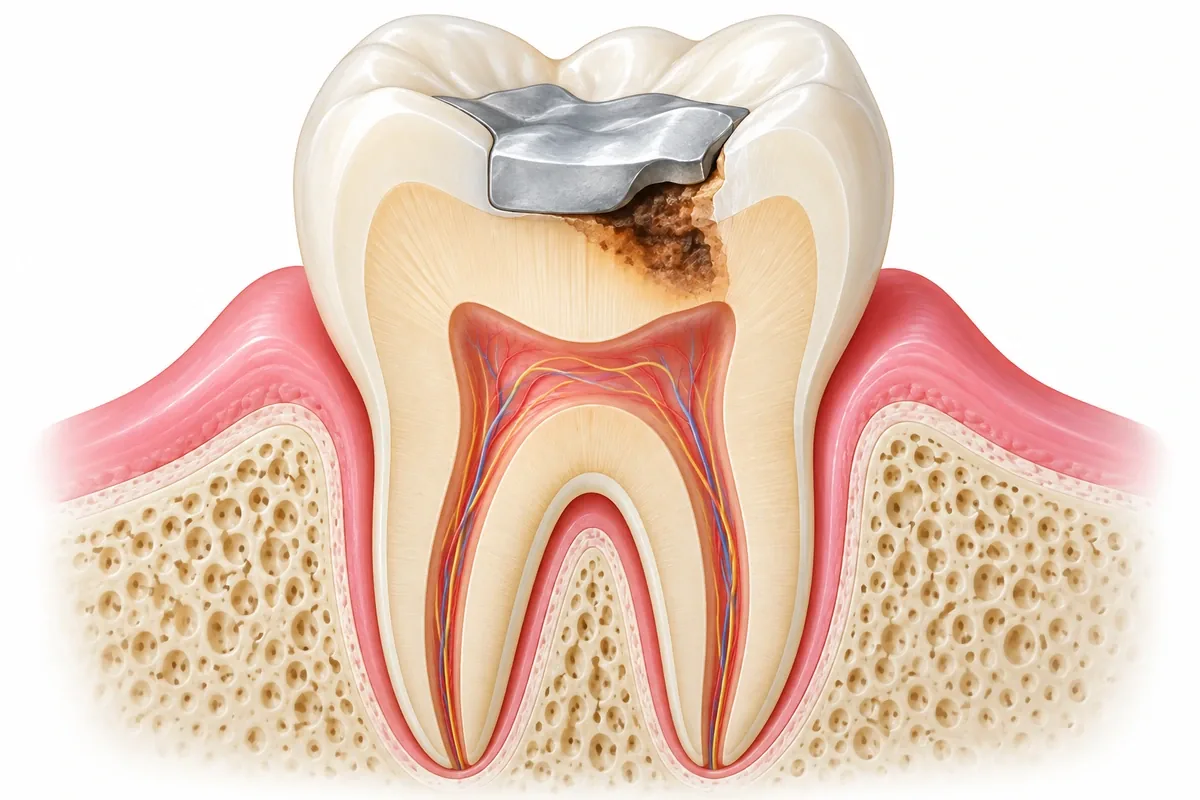
A restoration that looks fine can hide a problem, and one that looks ugly can be perfectly sound. That is why X-rays and a careful exam, not a glance in the mirror, are the basis for the decision. Ask Dr. Zohdi to point out what he sees and to separate what is known from what is suspected.
Separating appearance from disease
Many requests to replace old work are really about appearance: a silver filling that shows when you laugh, a dark line at the edge of an old crown, a filling that has yellowed against whiter teeth. These are legitimate reasons to want a change. They are just not evidence of disease, and it helps to be clear about which conversation you are having.
On silver fillings specifically: amalgam contains mercury bound in a stable alloy, and the FDA considers existing amalgam fillings safe for most people and does not recommend removing sound ones for health reasons. Removing them for appearance is a reasonable personal choice, but it is a cosmetic decision with a cost in tooth structure, and it should be made with that understanding.
A dark line at the gumline of an older crown is usually the metal core of a porcelain-fused-to-metal crown showing as the gum has receded slightly. It is not decay, though decay can also occur there, so the margin should still be checked. If the line bothers you, a metal-free crown solves it.
If a shade mismatch is the main complaint, consider the order of operations. Whitening the natural teeth first and then matching any replacement fillings to the new shade often gives a better result than replacing fillings to match teeth you plan to whiten later.
Repair, refurbish, or replace
Replacement is not the only option, and often not the best one.
- Polish and reseal. A rough or slightly stained edge on an otherwise sound filling can sometimes be smoothed and resealed in minutes.
- Repair. A chipped corner of a composite filling, or a small area of decay at one edge, can often be cleaned out and patched with new composite bonded to the old. This keeps the sound portion of the restoration and the tooth under it.
- Replace. When decay runs under most of the restoration, the filling or crown is cracked, the fit is poor, or the tooth itself has fractured, the restoration needs to come out. Sometimes a larger filling will do; sometimes the tooth has reached the point where it needs an onlay or crown.
- Monitor. A stable restoration with a cosmetic flaw or a tiny, inactive defect can simply be watched and rechecked at your regular visits.
The right choice depends on how much of the problem there is and whether it can be reached without removing everything. It is fair to ask, "Could this be repaired instead?"
What can be found underneath
Once an old restoration comes out, the tooth beneath it is visible for the first time in years. Usually it is roughly what the X-ray suggested. Sometimes the decay is deeper, a crack appears, or a wall is thinner than expected. This is not a sign that something went wrong; it is the nature of working on a tooth that has already been repaired.
Possible next steps include a bigger filling than planned, a crown instead of a filling, root canal treatment if the nerve is involved, or, rarely, a conversation about whether the tooth can be saved at all. Before an old restoration is removed, ask how such findings would be communicated, whether treatment would pause for you to decide, and how your estimate might change. Knowing the range of outcomes in advance turns a surprise into a decision.
When old work becomes a bigger plan
Replacing a single filling is simple. Replacing several old crowns, or restoring teeth that have worn down over decades, is a different undertaking. The order matters, the bite has to be planned, and the cost adds up. If you have been told you need many restorations replaced, see planning complex dental care and our guide to restoring worn teeth. A plan that starts with "all of your old fillings need to come out" deserves a careful explanation of why each one does.
Bring your prior records when you can, especially recent X-rays and any notes about which restorations were being watched. Comparing old images with new ones is one of the best ways to tell a restoration that is slowly changing from one that has always looked that way.
Sources and further reading
- ADA: Clinical practice guideline on restorative treatment of caries
- ADA MouthHealthy: Crowns
- FDA: Dental amalgam fillings
General information, not a diagnosis. Read how we create and review our dental guides.