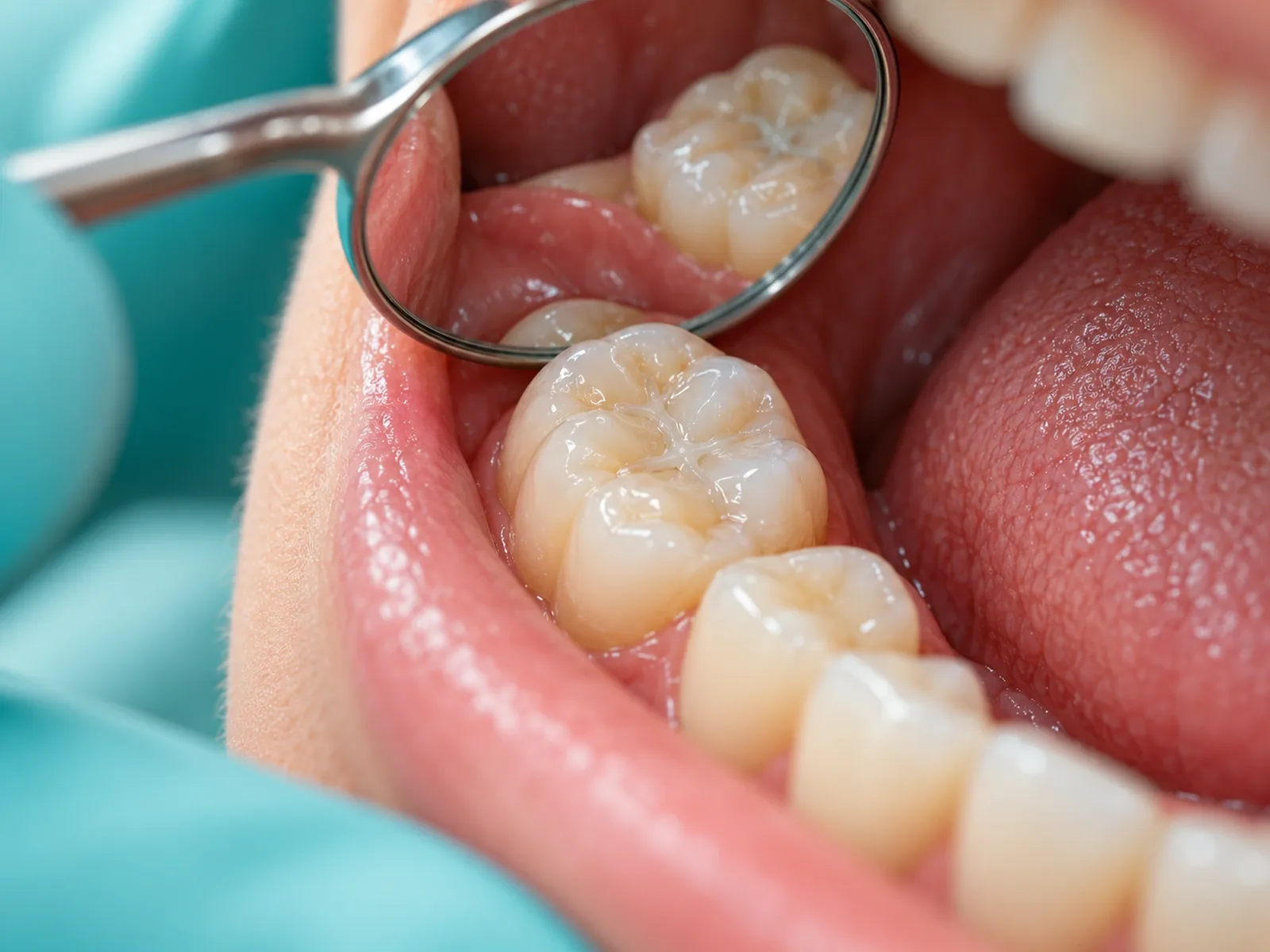
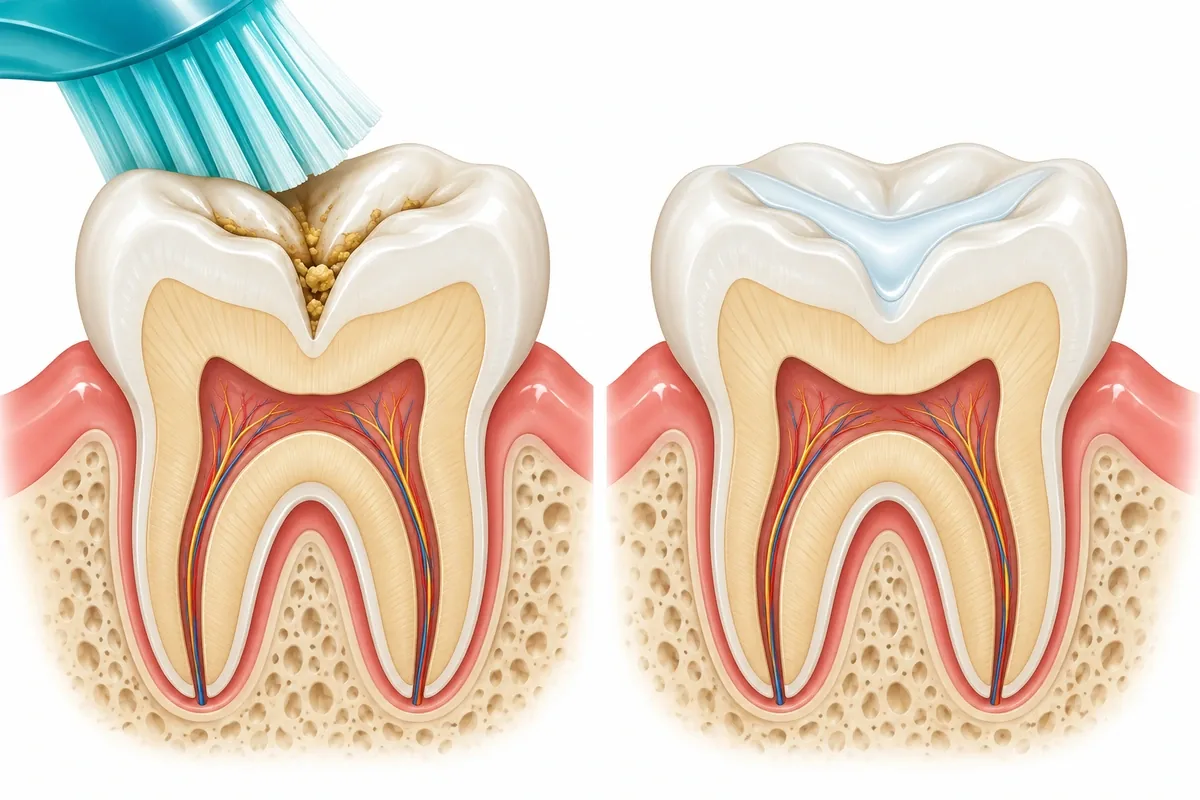
Run your tongue over a back tooth and you will feel ridges and valleys. Those valleys, called pits and fissures, are often narrower than a single toothbrush bristle. Food and plaque settle into the bottom where nothing reaches them, and that is why the chewing surfaces of molars are the most common place for a cavity to start, especially in children.
A dental sealant is a thin coating, usually a tooth-colored or clear resin, flowed into those grooves and hardened. It turns a rough, deep surface into a smooth, shallow one that a toothbrush can actually clean. Placing one takes a few minutes, involves no drilling and no numbing, and can protect a tooth through the years when it is most vulnerable.
Whether a tooth should be sealed depends on the tooth, not on a birthday. A newly erupted molar with deep grooves in a child who has had cavities is an obvious candidate. A shallow-grooved tooth in an adult with no decay in twenty years is probably not. This page explains how we decide, what placement involves and what sealants can and cannot do.
Which teeth are good candidates
Permanent molars are the usual target. The first permanent molars come in around age six and the second around age twelve, behind the baby teeth rather than replacing any. Sealing them within a year or two of eruption, before the grooves have time to collect decay, is the ideal window.
Other teeth are sealed case by case:
- Premolars (the teeth between the canines and molars) when their grooves are unusually deep.
- Baby molars in young children at high risk of decay, since those teeth need to last until age ten to twelve.
- Adult teeth with deep grooves and no fillings, particularly in adults whose cavity risk has gone up because of dry mouth or diet changes.
Before sealing, we examine the surface closely and may use X-rays to be sure there is no decay already beneath it. A very early, non-cavitated spot can sometimes be sealed deliberately to starve it of food and stop it progressing. A groove that has already broken down into a cavity needs a filling instead; sealing over active decay would hide it rather than treat it.
What placement involves
Sealing a tooth is one of the simplest things we do, which is part of why it is a good first "procedure" for a child.
- Clean. The tooth is polished to remove plaque and debris from the grooves.
- Dry and isolate. Cotton rolls or a small shield keep saliva away. A dry surface is the single most important factor in how long the sealant lasts.
- Condition. A mild gel is placed on the chewing surface for a few seconds to roughen the enamel microscopically so the sealant can grip, then rinsed off and the tooth dried again.
- Apply. The liquid sealant is painted into the grooves and allowed to flow to the bottom.
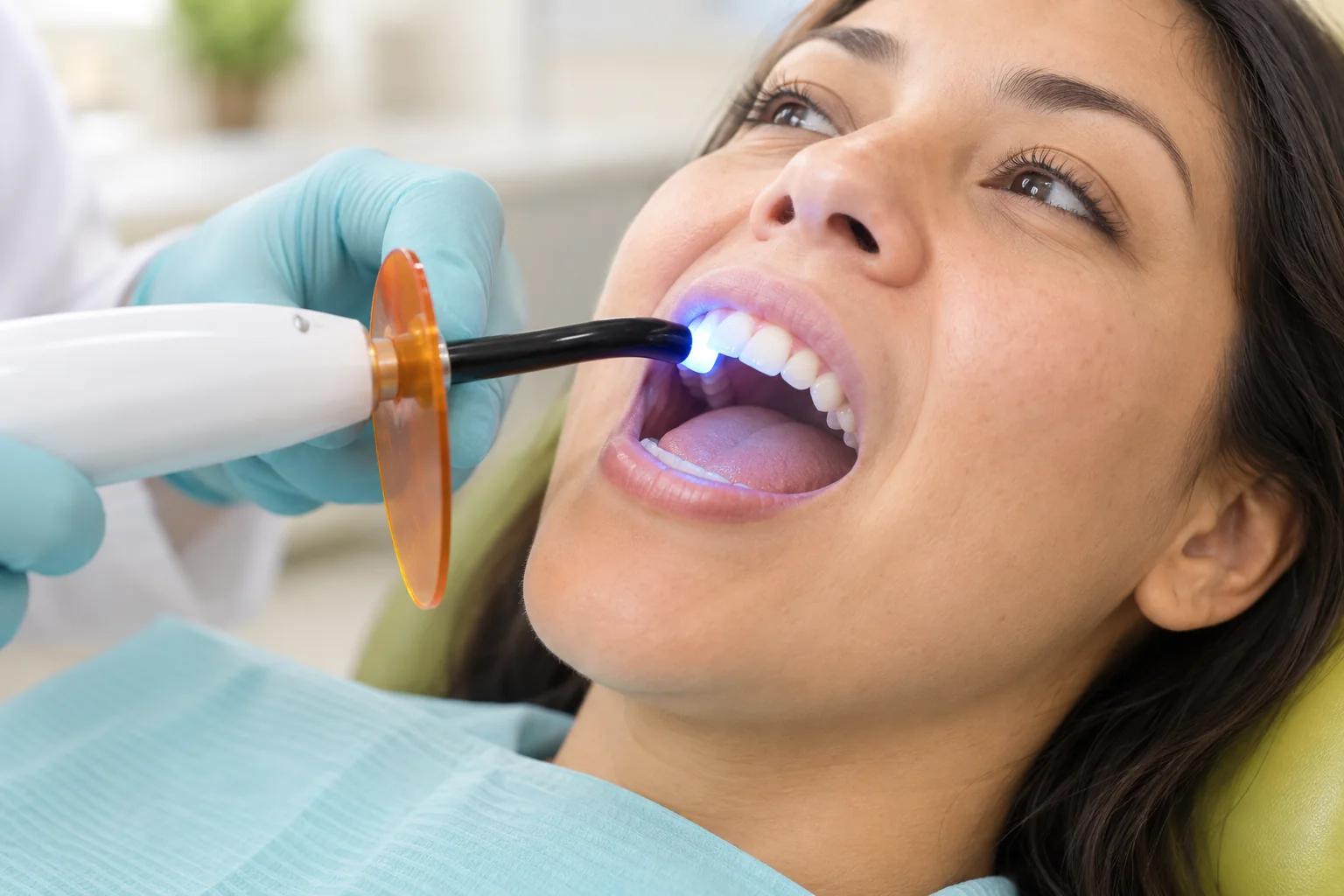
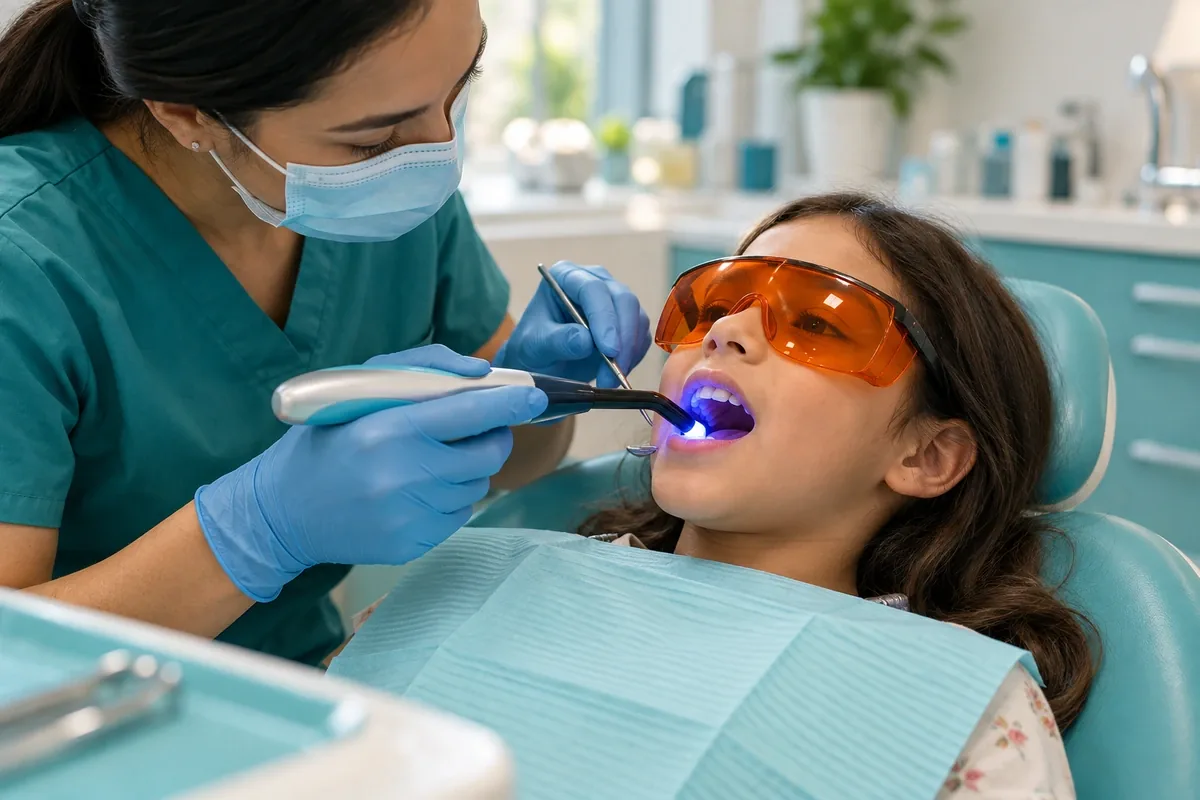
- Harden. A blue curing light sets the material in seconds.
- Check the bite. We make sure the sealant is not too high and smooth any excess. You can eat normally right away.
The whole process takes a few minutes per tooth. Nothing is numbed because nothing is drilled. The most a child feels is a slightly sour taste from the conditioning gel and the sensation of air and water.
If a molar is only partly through the gum, we may wait until more of the surface is exposed, since a sealant placed on a partly erupted tooth is likely to fail at the edge. If a child cannot yet sit still long enough to keep the tooth dry, we may suggest trying again in a few months and protecting the tooth with fluoride in the meantime.
How long sealants last and how they are checked
Sealants are not permanent, but they are durable. Many last several years, and some last far longer. They wear under chewing, and a piece can chip off, especially on a tooth that bites ice or hard candy. A tooth with a partly lost sealant is roughly back to where it started, so the sealant needs checking.
We look at every sealed tooth at each exam. If part has worn or chipped, it is usually simple to clean the surface and add more material. You generally cannot tell at home whether a sealant is still intact, which is one more reason regular checkups matter even for children with no history of cavities.
What sealants do not do
A sealant covers the chewing surface only. It does nothing for the sides of the tooth where it touches its neighbors, which is the other common place for decay, and nothing for the roots or gumline. Sealed teeth still need:
- brushing twice daily with fluoride toothpaste
- flossing, because decay between back teeth is just as common in sealed mouths
- limits on sugary drinks and frequent snacking
- regular exams, so any new decay elsewhere on the tooth is found early
Sealants are one piece of the general and family dentistry we provide in Cleburne, alongside fluoride, daily cleaning and sensible eating. They do not replace any of the others, and they are not a reason to skip checkups.
A note on materials
Most sealants are resin-based plastics similar to the material in tooth-colored fillings. Some contain trace amounts of BPA or can release a tiny amount briefly after placement; the ADA has reviewed this and considers the exposure far below any level of concern, and rinsing after placement reduces it further. Glass ionomer sealants are an alternative that releases fluoride and tolerates a slightly damp surface, which can be useful on partly erupted teeth, although they tend not to last as long.
Cost and coverage
Many dental plans cover sealants on permanent molars for children up to a set age, sometimes once per tooth over a period of years. Coverage for premolars, baby teeth and adults varies and is often excluded. Ask about the fee per tooth and what your plan allows before the visit; our insurance page explains how we help with that. Weighed against the cost of a filling and the lifetime of repairs that can follow one, sealing a vulnerable molar is usually inexpensive prevention.
Sources and further reading
General information, not a diagnosis. Read how we create and review our dental guides.