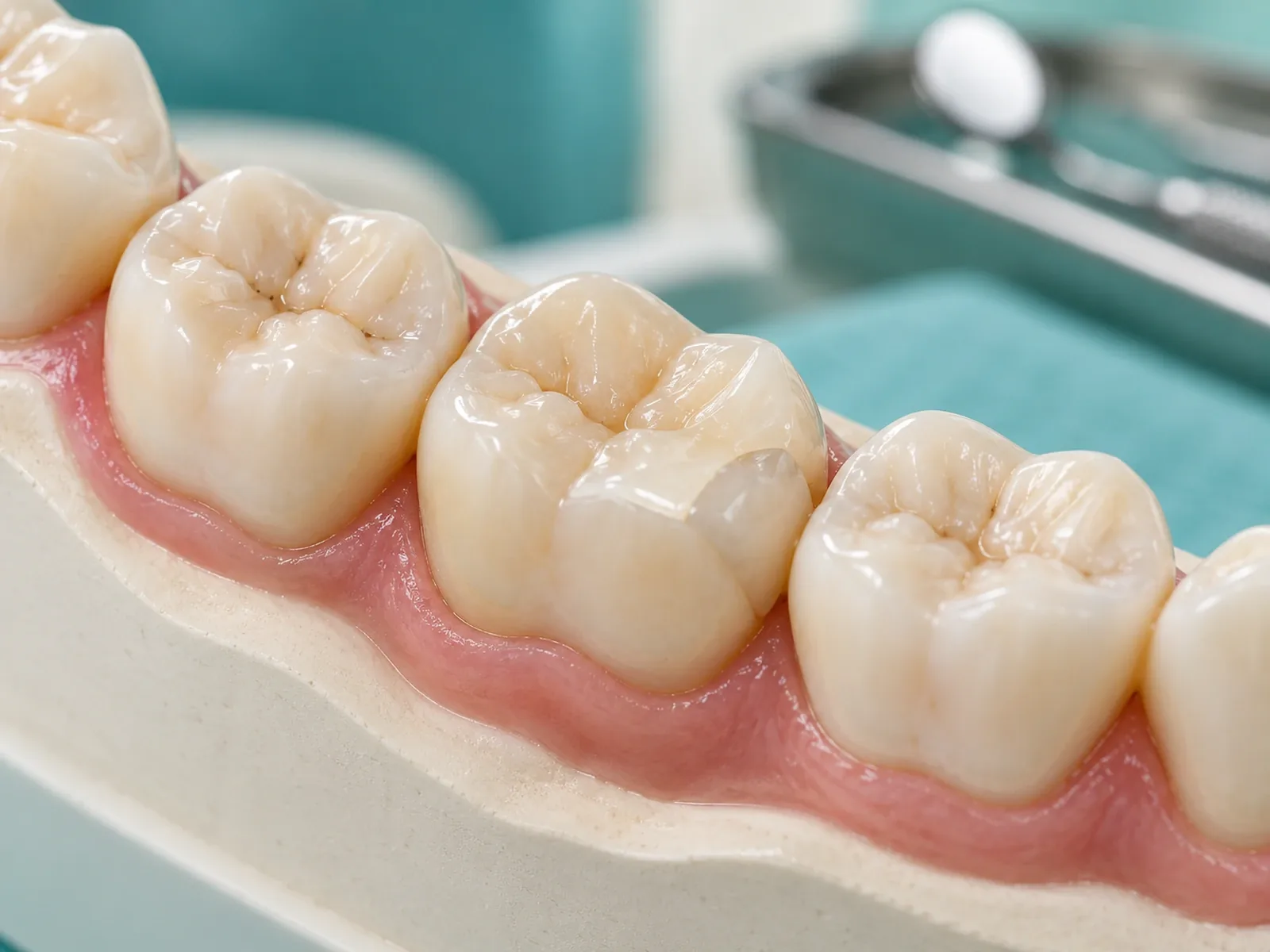

A tooth-colored filling repairs a tooth after decay or a small fracture has removed part of it. Dr. Zohdi cleans out the damaged area and rebuilds it with composite, a resin material that bonds directly to the tooth and is shaded to match it. Fillings are the most common restorative treatment we do at Cleburne Dental, and for a small or medium defect they are usually the most conservative repair available.
The best restoration for a tooth depends on how much sound tooth remains and where the damage sits, not on appearance alone. This page explains how a cavity is confirmed, what composite is made of and where it works well, what happens at the appointment, and how to look after a filling once it is in.
What a cavity is, and how we confirm one
Tooth decay happens when bacteria in plaque turn sugars into acid, and that acid slowly dissolves the mineral in enamel. Early on, the surface softens but stays intact. If the process continues, the enamel breaks down and a hole forms that spreads into the softer dentin underneath. Left alone, decay can reach the pulp and cause a toothache or infection.
Finding decay is a combination of looking, feeling, and imaging. A dark spot or stained groove is not automatically a cavity; some stains are harmless and some early lesions have already hardened again. Dental X-rays show decay between teeth and under old fillings where it cannot be seen directly. Dr. Zohdi will tell you what evidence points to active decay and why a filling is or is not recommended.
Very early decay that is still confined to enamel can sometimes be stopped without drilling. Improved cleaning, fluoride treatment, and watching the area at your next visit may be enough. Once decay has reached dentin or broken the surface, it does not heal on its own and a filling is the way to stop it.
What a tooth-colored filling is made of
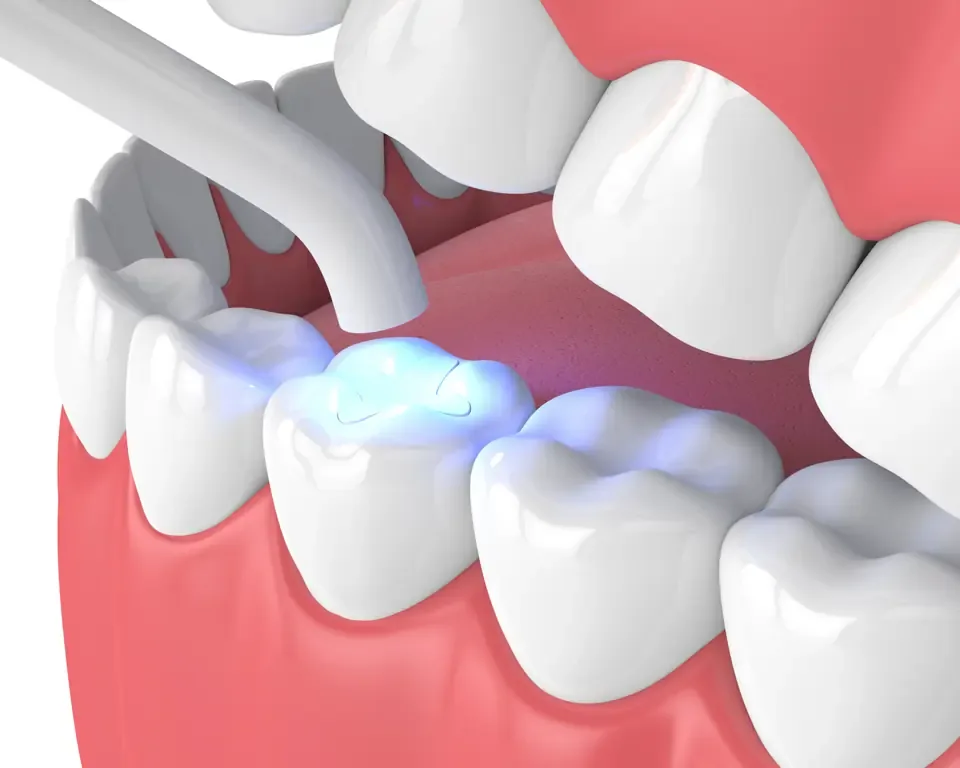
Composite is a blend of plastic resin and finely ground glass or ceramic particles. It starts as a soft paste, is shaped in the tooth, and is hardened with a blue curing light. Because it bonds chemically to enamel and dentin, it needs no undercuts to hold it in, so less healthy tooth has to be removed than with older materials.
| Composite (tooth-colored) | Amalgam (silver) | |
|---|---|---|
| Appearance | Matched to the tooth shade | Silver, darkens over time |
| How it holds | Bonded to the tooth | Held by the shape of the preparation |
| Tooth removed | Only the damaged part | Often more, to create retention |
| Mercury | None | Contains mercury in a stable alloy |
| Best use | Front and back teeth, small to medium defects | Large back-tooth fillings where keeping the tooth dry is difficult |
Composite contains no mercury. The FDA considers existing amalgam fillings safe for most people and does not recommend removing sound amalgam fillings just because of the material, so a silver filling that is doing its job can stay. When an old amalgam does need replacing, composite is what we use.
Where composite works well and where it may not
Composite is at its best in small to medium cavities, chipped edges, worn areas at the gumline, and places where appearance matters. It is used in both front and back teeth.
It has limits. Composite must be placed on a dry tooth to bond properly, so a cavity that extends far below the gumline is harder to fill well. It also shrinks very slightly as it hardens, which is why it is placed in thin layers. And a filling replaces lost material but does not hold a weakened tooth together. When a back tooth has lost a cusp, has a crack, or needs a filling so large that the remaining walls are thin, an onlay or crown protects it better. Our filling-versus-crown guide explains how that line is drawn.
One cosmetic note: composite is color-matched to your teeth on the day it is placed, and it does not lighten with whitening. If you are thinking about whitening and have visible fillings to replace, whiten first so the new fillings can be matched to the brighter shade.
What happens at a filling appointment
Most fillings are finished in a single visit.
- Numbing. Local anesthetic numbs the tooth and surrounding gum. Very shallow fillings sometimes need none, and you can tell us at any point if you feel anything.
- Removing the decay. The soft, infected tooth structure is removed and the edges are cleaned to sound tooth. Only the damaged part is taken away.
- Keeping the tooth dry. Cotton rolls, suction, or a small rubber sheet isolate the tooth so the bond is strong.
- Bonding. The surface is conditioned with a mild gel, rinsed, and painted with a bonding agent that is cured with the light.
- Building the filling. Composite is placed in thin layers, each shaped and hardened with the curing light before the next goes on.
- Shaping and polishing. The filling is carved to the tooth's natural contours, your bite is checked with marking paper, and the surface is polished smooth.
After your filling
Your lip, cheek, or tongue may stay numb for a few hours. Avoid chewing on that side until the feeling returns so you do not bite yourself, and be careful with hot drinks. Composite is fully hardened when you leave, so you can eat as soon as the numbness wears off.
Some sensitivity to cold or pressure for a few days is common, particularly after a deep filling, and it fades as the tooth settles. Call us if the filling feels high when you bite, if pain gets worse instead of better, or if you have a sharp pain on biting that lingers. A high spot takes a minute to adjust and often resolves the discomfort entirely.
Keeping fillings in good shape
A filling repairs one area; the rest of the tooth is still natural and can still decay, especially along the edge of the filling. Brush twice a day with fluoride toothpaste, clean between your teeth daily, and keep your regular exams and cleanings so small problems at a margin are caught before they become new cavities.
Composite resists staining but is not immune to it. Coffee, tea, red wine, and tobacco can dull a filling over the years. Rinsing with water afterward helps. If you grind or clench, a night guard protects fillings and natural teeth alike.

Fillings do not last forever. Edges wear, the tooth around them flexes, and eventually some will need repair or replacement. Age alone is not a reason to replace one; see replacing old dental work for how that decision is made.
Cost factors
The fee depends on how many surfaces of the tooth the filling covers and whether it is a front or back tooth. Fillings are a basic restorative service that many dental insurance plans cover in part. Our team checks your benefits before treatment and explains any out-of-pocket amount; see insurance and financing.
Sources and further reading
- ADA MouthHealthy: Cavities
- ADA: Clinical practice guideline on restorative treatment of caries
- FDA: Dental amalgam fillings
General information, not a diagnosis. Read how we create and review our dental guides.