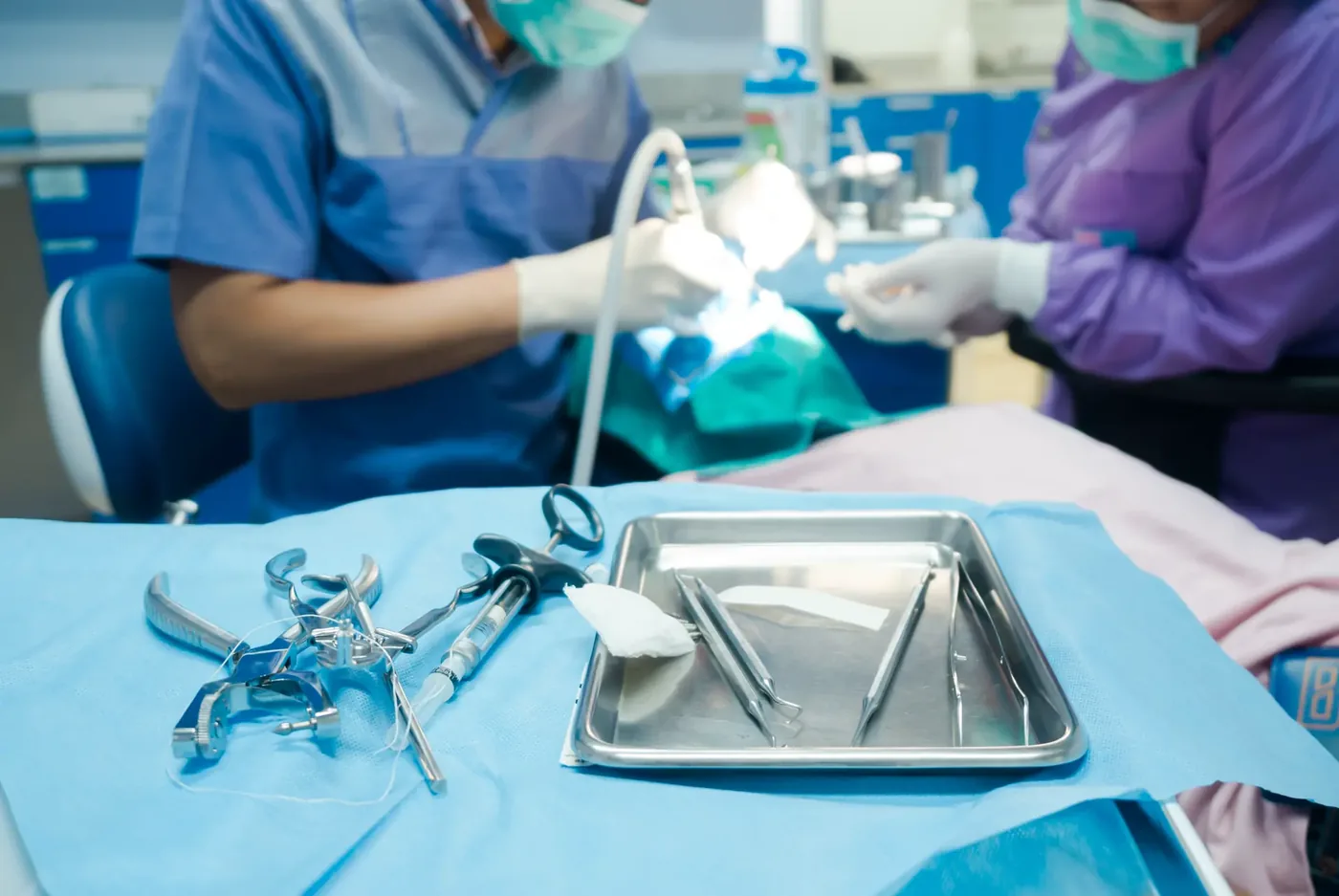

Pain after a tooth extraction should follow a predictable curve: sorest in the first two or three days, then a little better each day. When pain instead fades and then returns stronger around day three to five, often as a deep throbbing ache that spreads toward the ear, dry socket is the most likely explanation. The medical name is alveolar osteitis, which simply means inflammation of the tooth socket.
Dry socket is uncomfortable but not dangerous, and it responds quickly to treatment in the dental office. The important thing is to call rather than wait it out, because the pain can last a week or more untreated and only a few minutes to relieve once a dressing is placed. If Dr. Zohdi removed the tooth, call our Cleburne office at (817) 641-6261 and tell us the pain is getting worse; we treat post-extraction pain as a same-day priority.
This page explains what dry socket is, how to tell it apart from normal healing and from infection, what the office visit involves, and what you should and should not do at home while you wait to be seen.
What dry socket is
After a tooth is removed, blood fills the socket and clots within an hour or so. That clot is more than a plug: it protects the bone and nerve endings underneath and provides the scaffold on which gum and new bone grow. Dry socket occurs when the clot is dislodged, dissolves early, or never forms properly. The bone of the socket is left exposed to air, food, and saliva, and the nerve endings in it react with intense pain.
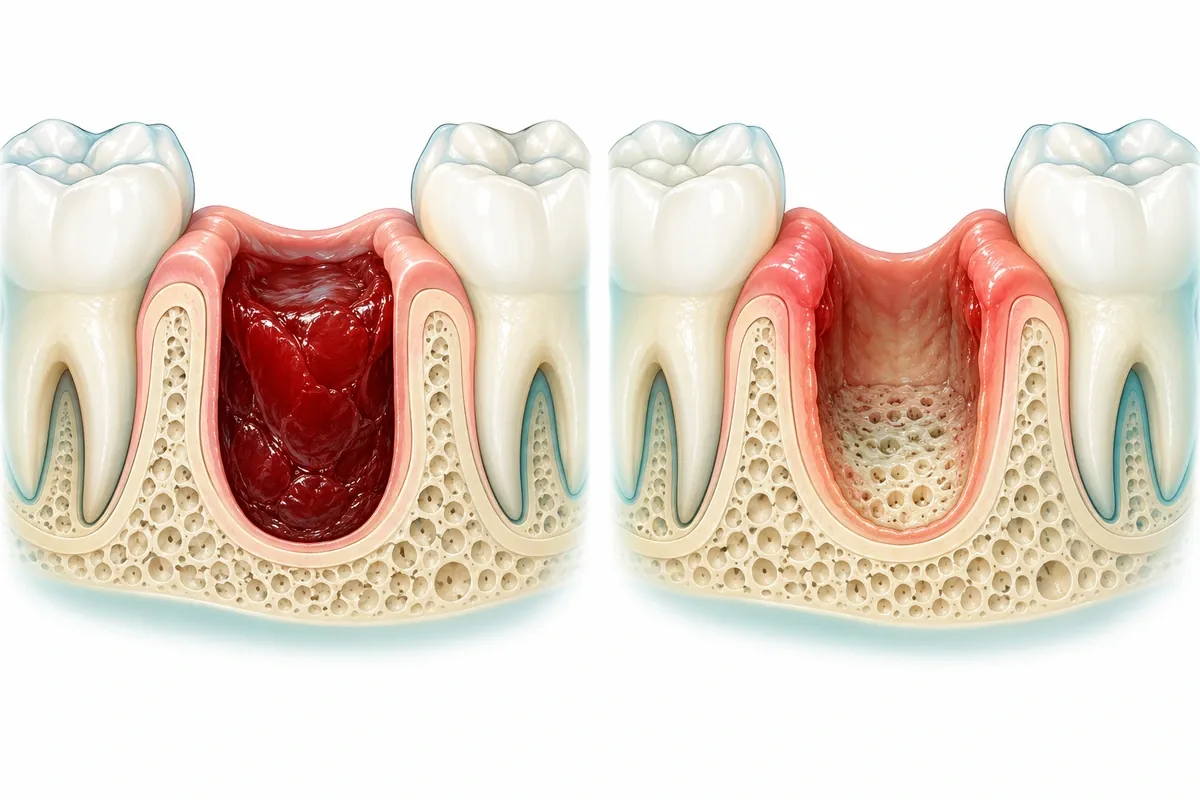
Dry socket is uncommon after routine tooth extractions and more common after removal of lower wisdom teeth, where the socket is deep and the blood supply is less generous. Our oral surgery overview explains both procedures. It is not an infection, even though it can produce a bad smell, which is why antibiotics alone do not relieve it.
How to tell dry socket from normal soreness or infection
Only an examination can confirm the cause of pain, but the pattern of symptoms points strongly in one direction or another.
| Normal healing | Dry socket | Infection | |
|---|---|---|---|
| Timing | Worst on days 1 to 3, then improving | Improves briefly, then worsens on days 3 to 5 | Can appear any time, often after day 3, sometimes weeks later |
| Pain | Dull, controlled by medicine | Severe, throbbing, radiates to ear, temple, or neck; medicine barely helps | Aching or throbbing, often with pressure |
| The socket | Dark clot, then whitish healing film | Looks empty; grayish bone may be visible | May have pus or a swollen red rim |
| Swelling | Peaks day 2 to 3, then fades | Little or none | Increasing, may feel hard or warm |
| Other signs | Mild bad taste | Strong odor or foul taste, no fever | Fever, pus, swollen glands, feeling unwell |
If swelling is spreading toward the eye or down the neck, you have a fever, or you are having any trouble swallowing or breathing, do not assume it is dry socket. Those are signs of a spreading infection; see our page on dental pain with facial swelling and seek care urgently. Difficulty breathing or swallowing, rapidly spreading swelling, or uncontrolled bleeding means going to the emergency room or calling 911.
Why it happens
Dry socket is not usually anyone's fault, but several factors make it more likely:
- Smoking or vaping. Nicotine narrows blood vessels and the drawing motion creates suction. This is the largest controllable risk.
- Suction and pressure. Straws, spitting, vigorous rinsing, and even energetic sneezing with a closed mouth in the first days can pull the clot loose.
- Location. Lower back teeth, especially impacted wisdom teeth, have a higher rate than upper or front teeth.
- Difficult extractions. More bone removal and more trauma to the tissue mean a slower, more fragile clot.
- Infection before the extraction. Bacteria already present in the site can break the clot down.
- Hormonal factors. Oral contraceptives and the time of the menstrual cycle have been linked to higher rates in women.
- Previous dry socket. If you have had one before, mention it so we can take extra precautions.
Even a patient who follows every instruction perfectly can develop dry socket. When it happens, the priority is relief, not blame.
What the office visit involves
Treatment is simple and usually brings relief within minutes to an hour:
- Examination. Dr. Zohdi looks at the socket, checks for swelling, fever, or fragments, and may take an X-ray to rule out a retained root tip or another cause.
- Gentle rinsing. The socket is irrigated with saline or an antiseptic solution to flush out food debris. This step is often what stings most, and we go slowly.
- Medicated dressing. A small strip of dressing soaked in a soothing medication (commonly eugenol-based, which smells like cloves) is placed in the socket. It covers the exposed bone and numbs the nerve endings.
- Pain plan. We review your pain medicine and adjust it if needed.
- Follow-up. The dressing is usually changed every day or two until the pain subsides on its own, which often takes a few visits. Once the socket is comfortable without a dressing, healing continues normally.
Antibiotics are added only if there are actual signs of infection. If the extraction was done at another office, call them first; they know exactly what was done and can see you fastest.
What to do at home until you are seen
- Take your pain medicine on schedule. Over-the-counter ibuprofen with acetaminophen, in label doses, is often the most effective combination for dental pain unless you have been told to avoid one of them.
- Rinse very gently with warm salt water after eating to keep food out of the socket; let the water fall out rather than spitting.
- Apply a cold compress to the outside of the face for 20 minutes at a time.
- Stick to soft foods and chew on the other side.
- Avoid smoking, straws, and alcohol, which make things worse.
What not to do
- Do not pack the socket yourself with cotton, gauze, or anything else. Material left inside can trap bacteria and is hard to remove.
- Do not put aspirin, clove oil, essential oils, or other products directly in the socket. Aspirin burns the gum, and oils applied undiluted irritate exposed bone. The clinical dressing uses a controlled dose on a carrier that is removed and replaced.
- Do not try to scrape or rinse the socket forcefully to "clean it out."
- Do not wait for your next routine cleaning. Increasing pain after an extraction should be seen within a day or two, not deferred.
Lowering your risk before your next extraction
If you are planning an extraction and are worried about dry socket, there are practical steps. Stop smoking for as long as you can before and after surgery, and ask about nicotine replacement. Follow the instructions in our extraction recovery guide carefully for the first three days. Tell us about oral contraceptives, a history of dry socket, or an existing infection so we can plan accordingly. For high-risk sites we may place a protective dressing or recommend a chlorhexidine rinse in advance.
Sources and further reading
General information, not a diagnosis. Read how we create and review our dental guides.