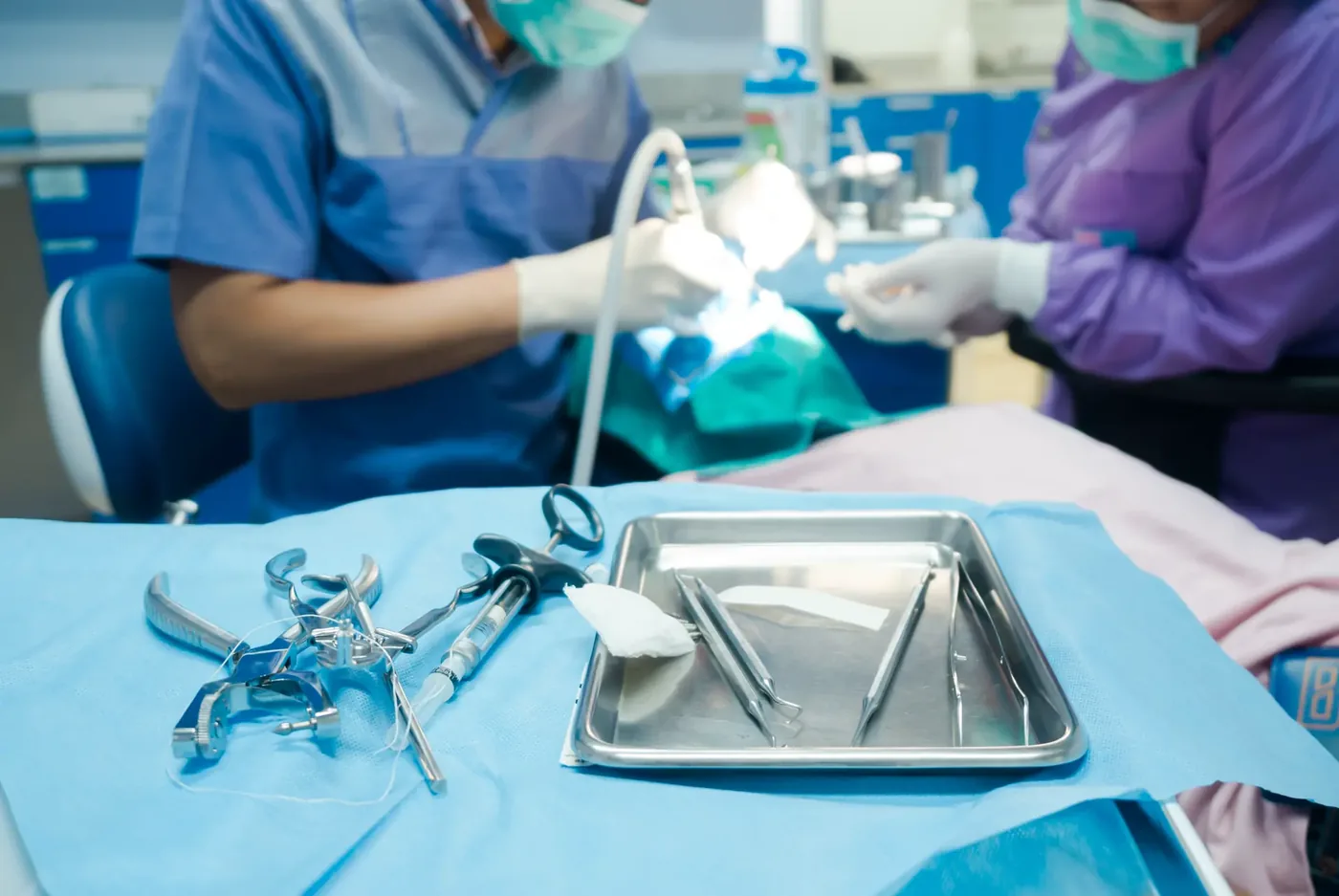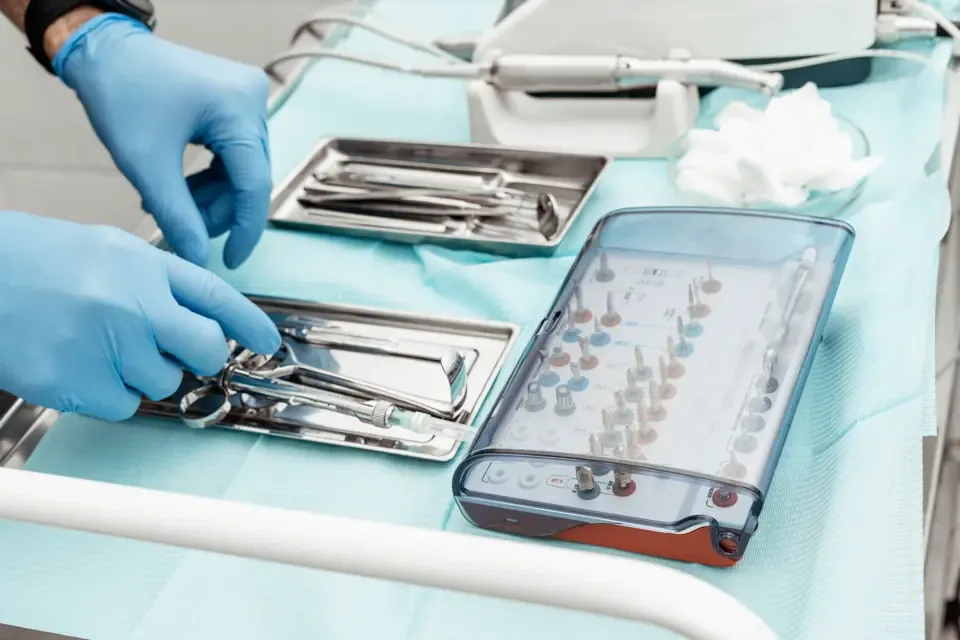

A tooth extraction removes a tooth from the socket of bone that holds it. Dentists recommend it when a tooth is too decayed, broken, infected, or loose to repair in a way that will last, or when removing it serves a larger plan such as orthodontics or dentures. Because an extraction cannot be undone, you deserve a plain explanation of why this tooth cannot reasonably be kept before anyone picks up an instrument.
At Cleburne Dental, extractions are the most common part of our oral surgery services, and we treat that conversation as part of the procedure. Dr. Zohdi will show you the X-ray, point out the problem, and tell you whether a root canal, crown, or gum treatment is still a realistic alternative. If saving the tooth is possible but has a guarded outlook, you will hear that too, so the decision is yours and it is informed.
This page explains the difference between a simple and a surgical extraction, what we need to know before your appointment, what the visit feels like, and why the question "what goes in the space?" belongs in the discussion before the tooth comes out.
Why a tooth may need to come out
Most extractions fall into a handful of categories:
- Decay that has destroyed too much tooth. When a cavity reaches well below the gumline or leaves too little solid tooth to hold a filling or crown, repair tends to fail.
- A fracture that runs into the root. A vertical crack that splits the root cannot be sealed; a root canal does not fix it.
- Infection that cannot be cleared. Some abscessed teeth respond well to root canal treatment. Others, especially with a crack or a failed earlier treatment, do not.
- Advanced gum disease. When bone loss has left a tooth very loose, there may be nothing left to anchor it.
- Crowding or orthodontic planning. Sometimes a healthy tooth is removed to make room for the others to align.
- Teeth that never came in properly. Impacted or partly erupted teeth, most often wisdom teeth, may be removed to prevent infection or damage to neighbors.
If you are still weighing whether a tooth is worth saving, our guide on deciding between saving and extracting a tooth walks through the questions to ask.
Simple extraction versus surgical extraction
These two words describe technique, not difficulty of recovery or how much it will hurt.
| Simple extraction | Surgical extraction | |
|---|---|---|
| The tooth | Fully visible above the gum, with a crown solid enough to grip | Broken at the gumline, curved or fused roots, or still under gum or bone |
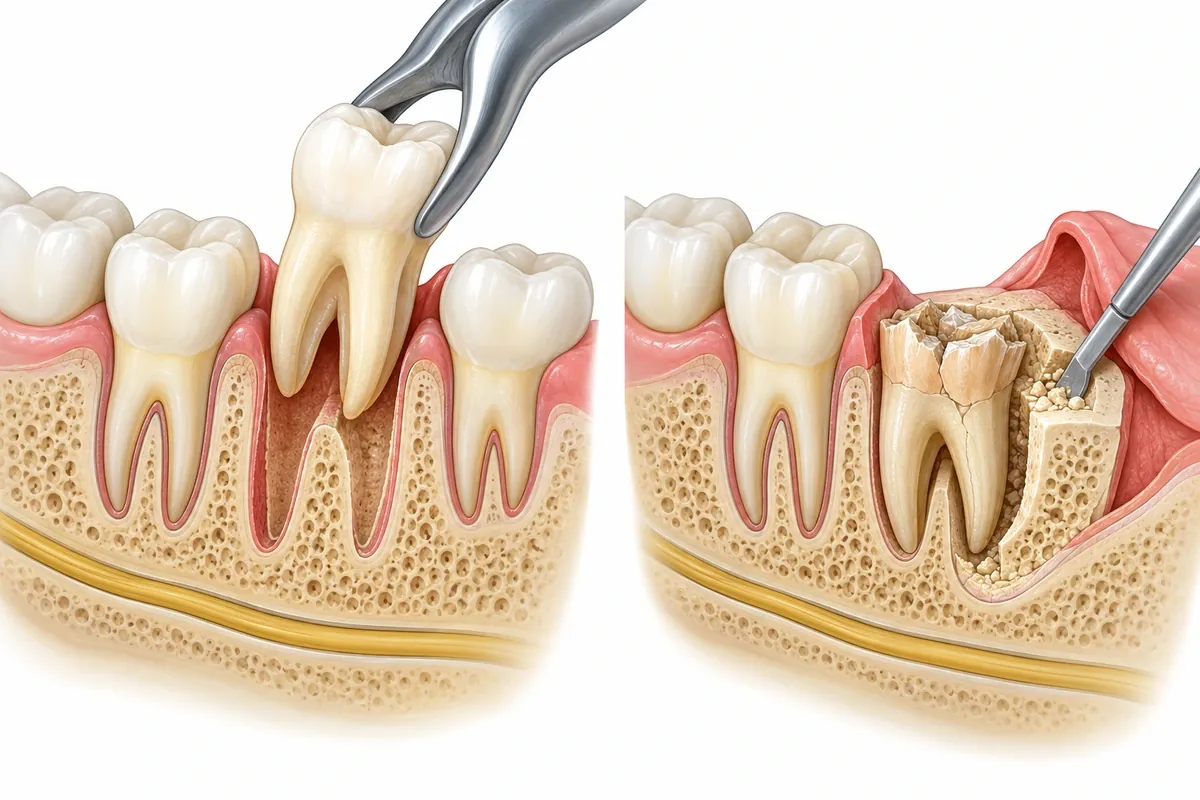
| What is done | The tooth is loosened in its socket and lifted out | A small opening in the gum, sometimes a little bone removed, and the tooth may be divided into pieces |
| Stitches | Usually not needed | Often placed; many dissolve on their own |
| Typical visit | Shorter | Longer, with more planning from the X-ray |
A surgical extraction is not a sign that something went wrong. It simply means the tooth cannot be removed cleanly without creating access first. Dividing a molar into sections, for example, lets each root come out along its own path with less force on the surrounding bone.
What we need to know before your appointment
Your medical history shapes how an extraction is planned. Please tell us about:
- Blood thinners such as warfarin, apixaban, rivaroxaban, clopidogrel, or daily aspirin. Most extractions can be done safely while you stay on them, with extra attention to bleeding control. Never stop a prescribed blood thinner on your own; if any change is needed, we coordinate it with your physician.
- Bone medicines for osteoporosis or cancer (bisphosphonates and similar drugs), which can affect how the jawbone heals.
- Heart conditions, artificial joints, or a weakened immune system, which may call for an antibiotic beforehand.
- Diabetes, since blood sugar control influences healing.
- Allergies, pregnancy, and any past problems with numbing injections or with healing after dental work.
Bring a current list of medicines and supplements. An X-ray of the tooth is needed to see the roots and nearby structures; for lower back teeth or upper teeth near the sinus, a wider image may be taken.
What happens during the visit
Knowing the sequence makes the appointment less intimidating:
- Review and consent. We confirm the tooth, the reason, and your questions, and you sign a consent form that lists the risks that apply to you.
- Numbing. Local anesthesia is placed around the tooth. A topical gel is applied first so the injection is more comfortable, and we wait until the area is fully numb before starting.
- Loosening. Instruments gently widen the socket and free the ligament fibers that hold the tooth. You will feel pressure and movement; you should not feel sharp pain, and if you do, raise your hand and we stop and add more anesthetic.
- Removal. The tooth is lifted out. For a surgical extraction, the gum is opened and the tooth may be divided first.
- Cleaning the socket. Infected tissue or fragments are removed and the site is rinsed. If you have chosen socket preservation grafting, the material is placed now.
- Closing. Gauze is placed for pressure and stitches are added if needed. You bite firmly on the gauze while we go over the written instructions.
If you feel anxious, say so. Agreeing on a hand signal, taking a short break, or simply having each step explained before it happens makes a real difference, and we are glad to work that way. Our page on coping with dental anxiety has more ideas.
The first days of recovery
A blood clot forms in the socket within the first hour and is the foundation for healing. Protecting it is the main job of the first three days: pressure on the gauze, no spitting, straws, or smoking, soft foods, and gentle rinsing only when instructed. Soreness and mild swelling peak around day two or three and then ease.
Our guide to recovery after an extraction covers eating, cleaning, and medicines day by day and the warning signs that mean you should call. If pain gets worse after it had started to improve, read about dry socket and contact us; it is treatable, and waiting only prolongs the discomfort.
Planning for the space before the tooth comes out
Front teeth and most back teeth have jobs: holding their neighbors upright, keeping the opposite tooth from drifting down, and sharing chewing force. When a tooth is removed, the bone that held it begins to shrink, which can narrow the options later.
That is why we talk about replacement before the extraction, not after. Depending on the tooth, your choices may include a dental implant, a fixed bridge, a removable partial denture, or watching the space. Some decisions change how the extraction itself is done: for example, an implant plan often calls for a gentler technique and a graft in the socket to hold its shape.
Not every extracted tooth needs replacing. Wisdom teeth and some teeth removed for orthodontic reasons are left alone. Our guide to replacement after extraction compares the options and their timing.
What affects the cost
The fee depends on the type of extraction (simple or surgical), the tooth's position, whether grafting or a temporary tooth is planned, and the imaging required. Dental insurance commonly covers a portion of extractions; see our insurance page for how we help with claims, and our payment and financing page if you would like to spread the cost of a larger plan. You will receive a written estimate before treatment.
Risks and alternatives
Extraction is one of the most common dental procedures, and most heal without trouble. Possible complications include prolonged bleeding, infection, dry socket, bruising, a stiff jaw for a few days, damage to a neighboring tooth or filling, and, for some lower teeth, temporary or rarely lasting numbness of the lip or tongue when roots lie close to the nerve canal. Upper back teeth sit near the sinus, and occasionally a small opening forms that needs extra care to close.
The alternatives are to repair the tooth (root canal treatment, a crown, or gum therapy) or to monitor it. Leaving an infected or fractured tooth untreated is rarely wise because infection can spread; a toothache with facial swelling should be seen promptly.
Sources and further reading
- ADA MouthHealthy: Extractions
- Mayo Clinic: Dry socket
- American Association of Endodontists: Cracked teeth
General information, not a diagnosis. Read how we create and review our dental guides.