
Healing after an extraction is mostly your body's work. Within an hour a blood clot fills the socket; over the next days the gum edges grow toward each other over it; within a few weeks the surface is closed; and over several months new bone fills in underneath. Your part is to protect that process in the first few days and to recognize the small number of signs that mean something needs attention.
The written instructions Dr. Zohdi gives you after your extraction take priority over this page, because they reflect what was actually done: a simple removal, a surgical one with stitches, a socket graft, or an immediate denture each come with slightly different directions. What follows explains the reasoning behind those instructions and answers the questions patients in Cleburne ask us most often in the days after a tooth comes out.
If your extraction was done elsewhere, contact the office that did it for advice specific to your procedure. For an overview of the procedures themselves, start with our oral surgery and extractions page.
What normal healing looks like
| Timeframe | What is normal | What to do |
|---|---|---|
| First 24 hours | Numbness for a few hours, oozing that tints saliva pink, mild to moderate soreness as the anesthetic wears off | Bite on gauze, rest, ice the cheek, start pain medicine before the numbness is gone |
| Days 2 to 3 | Swelling and soreness at their peak, some bruising, a stiff jaw, bad taste | Keep eating soft foods, begin gentle salt-water rinses, switch from ice to warm compresses after 48 hours |
| Days 4 to 7 | Steady improvement each day; a whitish or yellowish layer over the socket, which is new tissue, not pus | Ease back into normal foods on the other side; keep rinsing after meals |
| Weeks 2 to 4 | Gum closed or nearly closed; the socket may feel like a small dip | Brush the area normally but gently; dissolvable stitches have usually fallen out |
| Months 2 to 6 | The dip flattens as bone fills in | If an implant or bridge is planned, this is when the next steps are scheduled |
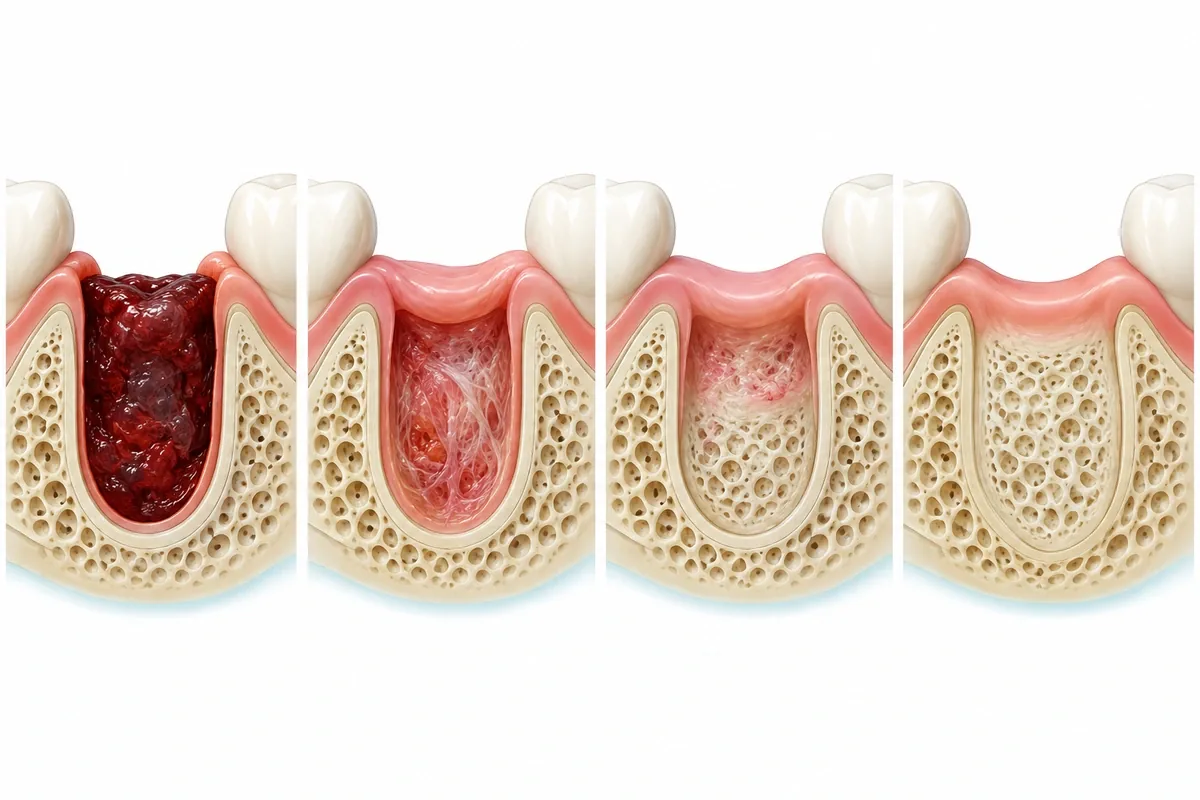
The pattern to remember: things should get a little better every day after day three. Pain that improves and then returns stronger, or swelling that grows after day three, is not normal and deserves a call.
Protect the clot in the first three days
Almost every avoidable problem after an extraction comes from the clot being disturbed. For the first 72 hours:
- No straws, no spitting, no forceful rinsing. Suction and pressure can pull the clot out. Let liquid fall out of your mouth over the sink instead of spitting.
- No smoking or vaping. Smoking is the strongest risk factor for dry socket: it slows healing and the drawing motion can dislodge the clot. The longer you can wait the better; ask us before surgery about nicotine patches.
- No alcohol, which interferes with clotting and pain medicines, and do not poke the socket with your tongue, fingers, or a toothbrush.
- Keep your head elevated on an extra pillow the first night to reduce oozing and throbbing.
- Take it easy. Bending, lifting, and hard exercise can restart bleeding. Light walking is fine.
Bleeding: what is normal and how to stop it
Some oozing for the first day is expected, and a little blood mixed with saliva looks like more than it is. If the site is actively bleeding, fold clean gauze into a thick pad, place it directly over the socket, and bite firmly for 30 to 45 minutes without checking. If gauze is not controlling it, a moistened black tea bag works the same way; the tannins help the clot form. Sit upright and avoid talking while you hold pressure.
Call us if bleeding soaks through gauze every half hour despite firm pressure. Heavy bleeding that will not slow, or any trouble breathing or swallowing, needs emergency care: go to the nearest emergency room or call 911.
Eating and drinking
Drink plenty of water, but no straws. For the first day choose cool or lukewarm soft foods: yogurt, applesauce, smoothies eaten with a spoon, pudding, lukewarm soup, mashed potatoes, scrambled eggs. Avoid hot foods and drinks until the numbness is fully gone, because you can burn yourself without feeling it.
Over the next several days add soft solids and chew on the other side. Skip nuts, seeds, popcorn hulls, and chips that can lodge in the socket, and very spicy or acidic foods that sting. Most people are eating normally within a week or two.
Keeping the mouth clean
A clean mouth heals faster and lowers the chance of infection, but the socket needs a gentler approach than the rest of your teeth:
- Day of surgery: no rinsing or brushing near the site. You may brush the other teeth carefully.
- Day after surgery onward: rinse gently with warm salt water (half a teaspoon of salt in a cup of warm water) after meals and before bed. Tilt your head to let the water move over the site rather than swishing hard.
- Brushing: brush your other teeth as usual and begin brushing the teeth next to the socket gently after a few days, keeping bristles off the clot.
- Prescription rinses: if you were given a chlorhexidine rinse, use it as directed; it can stain teeth temporarily, which polishes off at your next cleaning.
- Food in the socket: a few days in, food may catch in the dip. Gentle salt-water rinsing clears most of it. If we gave you an irrigation syringe, begin using it when instructed, usually after about a week.
Medicines, swelling, and bruising
Take pain medicine on the schedule we recommend for the first two days rather than waiting until pain is severe; staying ahead of discomfort is easier than catching up. For most extractions, over-the-counter ibuprofen and acetaminophen, alternated or combined as we direct, work well. Follow label doses and ask us or your pharmacist about interactions.
If you were prescribed an antibiotic, finish the full course. Do not take leftover antibiotics or anyone else's prescription. Keep taking your regular medicines, including blood thinners, unless your physician says otherwise. Swelling peaks at 48 to 72 hours, and bruising on the cheek or neck can take a week or more to fade. Both are normal.
Stitches, grafts, and immediate dentures
Most stitches we place dissolve within one to two weeks; a loose thread is normal. Non-dissolving stitches are removed at a short follow-up visit. Avoid pulling at either kind.
If socket preservation graft material was placed, a few sandy granules in your mouth for several days is expected. Rinse even more gently, and read about how a bone graft heals for the months ahead. If you received an immediate denture, leave it in for the first 24 hours unless told otherwise; it acts as a bandage, and its first removal is handled at your follow-up visit.
Returning to work, exercise, and travel
For a single simple extraction many people return to desk work the same or next day; surgical extractions and multiple teeth usually call for two to three days of rest. Hold off on strenuous exercise, heavy lifting, and contact sports for about a week. Because we use local anesthesia only, you can drive yourself home. If you are planning travel within the first week, tell us before the procedure so we can time it sensibly.
When to call us
Contact our Cleburne office at (817) 641-6261 during business hours if you notice:
- Pain that gets worse after day two or three instead of better, or pain that your medicine no longer controls, which may be dry socket
- Swelling that increases after day three, feels hard, or spreads toward the eye or down the neck
- Fever, chills, or pus from the site
- Bleeding that does not stop with 45 minutes of firm pressure
- Numbness of the lip, chin, or tongue that lasts beyond the first day
- A bad taste or drainage that persists, or liquid coming through your nose when you drink after an upper extraction
For problems outside office hours, see our guide to after-hours dental emergencies. Go to the emergency room or call 911 for difficulty breathing or swallowing, swelling that is spreading rapidly or closing your eye, or bleeding you cannot control.
Sources and further reading
General information, not a diagnosis. Read how we create and review our dental guides.