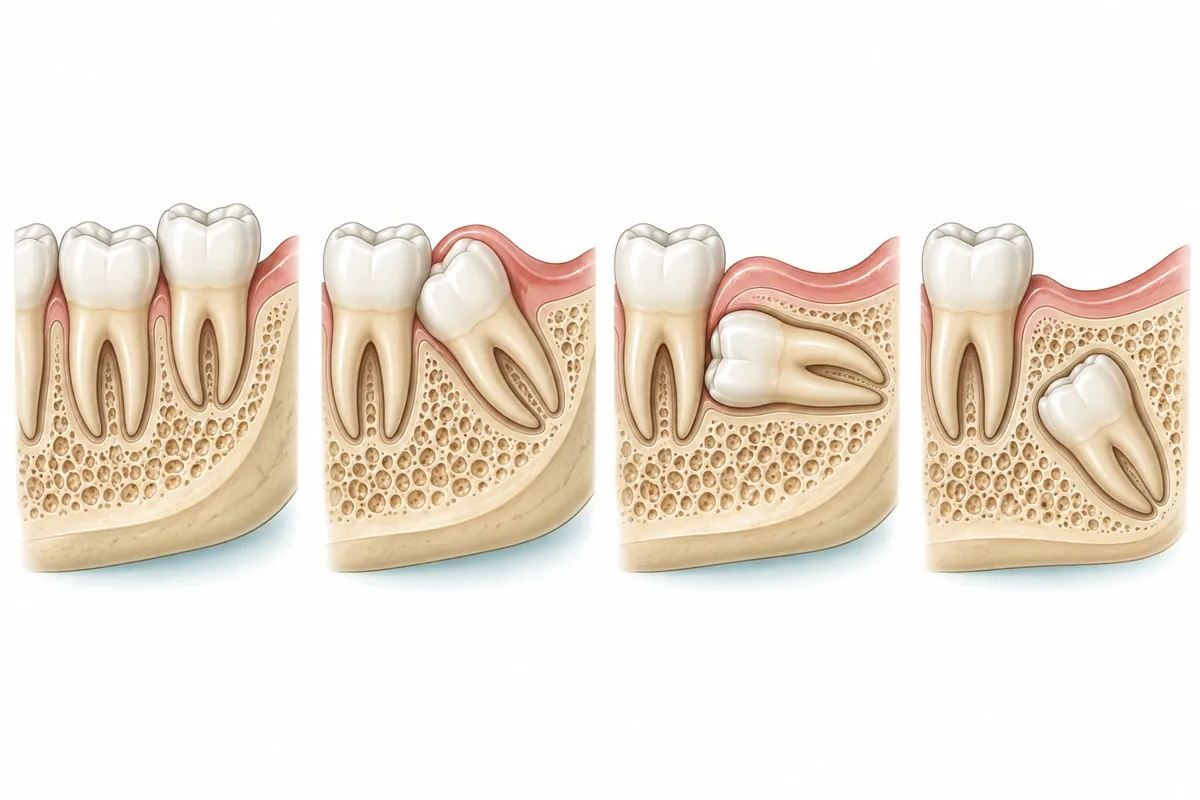
Wisdom teeth are the third molars, the last adult teeth to arrive at the very back of the mouth. Most people have four, two upper and two lower, though some have fewer or none. They tend to appear between the mid-teens and the mid-twenties, and by then the jaw is often already full. A tooth with nowhere to go may come in tilted, only partway, or stay trapped under gum and bone. That trapped position is called impaction.
Impaction by itself is not an emergency, and a wisdom tooth that is upright, fully through the gum, and easy to clean can be kept like any other molar. The question is whether a particular tooth is causing damage now or is positioned so that trouble is likely later. At Cleburne Dental we answer that with an exam and an X-ray that shows the whole tooth, its roots, and the structures around it, and then we talk through the choices with you: why removal may be recommended, what impaction means for planning, what the visit is like, and what recovery honestly looks like.
Why removal may be recommended
A wisdom tooth earns a recommendation for removal when it is already causing a problem or is very likely to. The common findings:
- Infection around a partly erupted tooth (pericoronitis). When a tooth is only partway through, a flap of gum covers part of it and traps food and bacteria. The result is swelling, tenderness, a bad taste or bad breath, and sometimes difficulty opening the mouth. It often comes back after it is treated.
- Decay in the wisdom tooth or the molar in front of it. A tilted wisdom tooth leans against the second molar and creates a pocket that a toothbrush cannot reach. Cavities form on both teeth, and the second molar is the one you need for chewing.
- Gum and bone loss behind the second molar. The same trap can cause a deep gum pocket that damages the bone supporting the tooth in front.
- Pain or pressure that comes and goes at the back of the jaw, sometimes with sensitivity in nearby teeth, when imaging confirms the wisdom tooth is the source.
- A cyst or other change in the bone around an unerupted tooth, which is uncommon but visible on an X-ray.
Ask what specific finding supports the recommendation for each tooth. An absence of pain does not prove a tooth is healthy, since decay and bone loss behind a second molar usually cause no pain until advanced.
A note on crowding
For years wisdom teeth were blamed for lower front teeth shifting after braces. Research has not confirmed that removing them prevents this. Teeth shift for many reasons, which is why retainers matter after orthodontic treatment. We will not promise that removal keeps teeth straight; our page on why teeth move after braces explains the real causes.
When keeping a wisdom tooth makes sense
A wisdom tooth that has fully erupted into a normal position, bites against the tooth above or below it, and can be brushed and flossed is worth keeping. Fully buried teeth with no sign of disease in an older adult are often watched rather than removed, because the surgery carries more risk than the tooth does. Monitoring means a periodic X-ray and a look at the gum around the tooth at regular checkups, and we will tell you what change would move a tooth from the "watch" list to the "remove" list.
What impaction means for planning
The X-ray tells us how involved a removal will be. Dr. Zohdi looks at:
- Depth and angle. An upright tooth that is mostly through the gum behaves like an ordinary surgical extraction. A horizontal tooth under bone needs a small gum opening, a little bone removed, and the tooth divided into sections so each piece comes out along its own path.
- Root shape. Curved, spread, or fused roots change how the tooth is sectioned.
- The nerve canal in the lower jaw. The nerve that supplies feeling to the lip and chin runs under the lower molars. When roots overlap or wrap around it, the risk of temporary numbness rises, and a three-dimensional scan or a referral to an oral surgeon may be the prudent choice.
- The sinus above the upper molars. Upper wisdom teeth sometimes sit right against the sinus floor, which calls for gentle technique and specific after-care instructions.
- Your age and medical history. Roots finish forming in the early twenties. Teeth are often easier to remove before then, and bone heals faster in younger patients, which is why removal is commonly discussed in the mid-teens to early twenties. Removal can still be done safely later when there is a reason.
We treat many wisdom teeth in our Cleburne office as part of our oral surgery services. When a tooth's position or your health makes an oral surgeon the safer choice, we say so and arrange the referral.
What the appointment is like
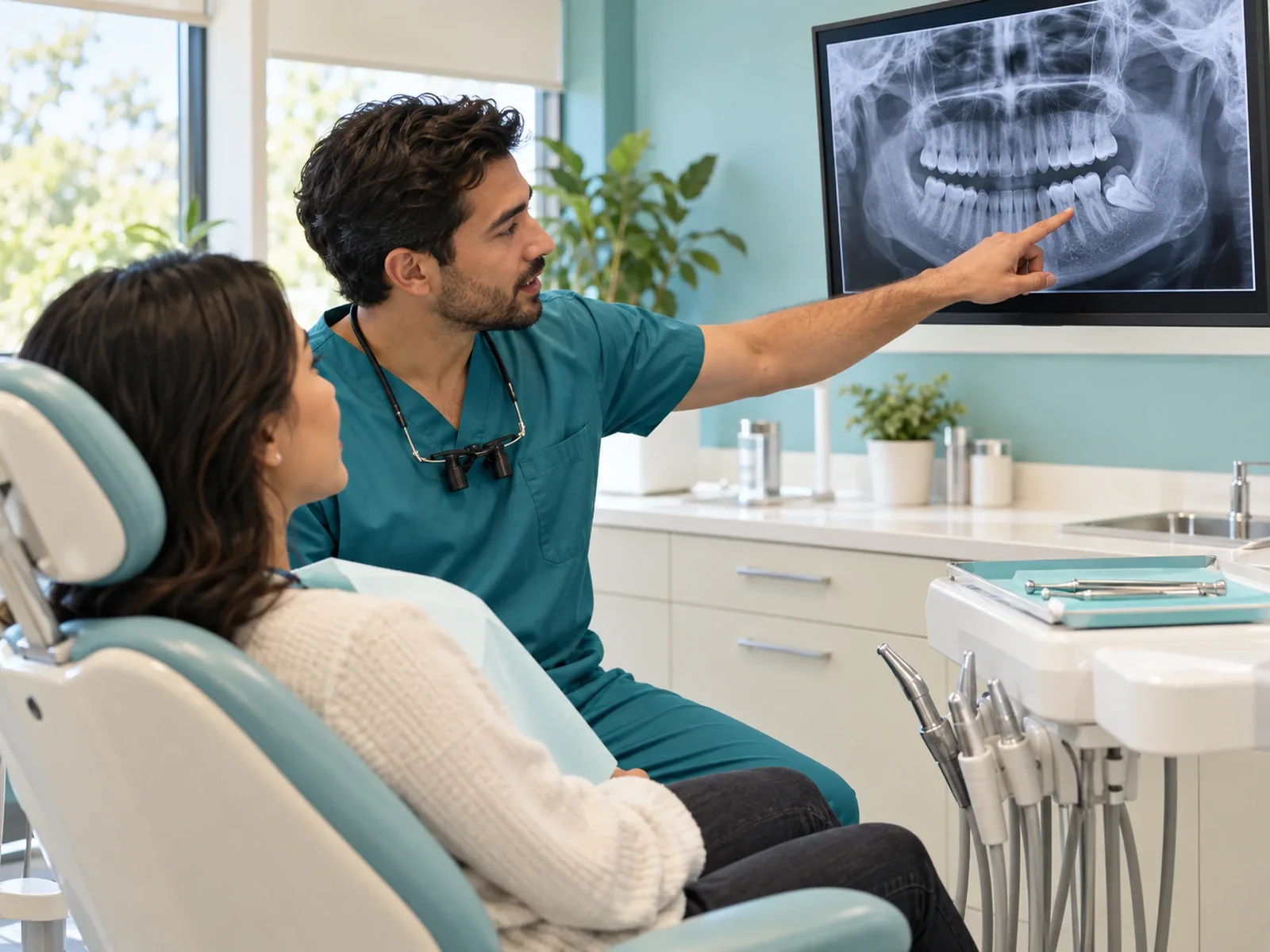
- Consultation and imaging. We take a panoramic X-ray, show you where each tooth sits, and explain which teeth we recommend removing and why. When the plan is straightforward, the exam, X-rays, and removal can often be done in the same visit, or you can schedule the removal for another day.
- Numbing. Local anesthesia is used. We apply a topical gel first and wait until the area is completely numb. You will feel pressure and vibration, but not sharp pain, and you can raise a hand at any time to pause.
- Removal. Each tooth is loosened and lifted out; impacted teeth are uncovered and sectioned as needed. Appointment length depends on how many teeth are removed and how they sit.
- Closing and instructions. Stitches are placed where needed, gauze is applied, and Dr. Zohdi goes over written instructions for eating, cleaning, and medicines before you leave.
Because we use local anesthesia, you will be awake and able to talk with us throughout, and you can drive yourself home unless you prefer company. Nervous patients are welcome; telling us ahead of time lets us slow the pace and explain each step. Our dental anxiety page has more on how we approach it.
Recovery: what to expect
Soreness and swelling are normal for the first several days and usually peak around day two or three. Most people plan on about three days of rest from work or school, limit strenuous exercise for about a week, and feel largely back to normal within a week. The gum closes over within a couple of weeks; bone keeps filling in for months underneath.
The basics for the first few days:
- Bite on gauze for the first hour, then change it as instructed until oozing stops.
- Use ice on the cheek in 20-minute intervals the first day to limit swelling.
- Eat soft, cool foods; avoid straws, spitting, smoking, and alcohol, all of which can dislodge the clot.
- Take pain medicine as directed, starting before the numbness wears off, and begin gentle salt-water rinses the day after surgery.
Our extraction recovery guide covers each day in more detail. If pain gets worse after it had improved, especially around day three to five, read about dry socket and call us; a dressing placed in the office brings fast relief.
What affects the cost
The fee depends on how many teeth are removed and how each is positioned, since a fully erupted tooth and a bony impaction are different procedures. We provide a written estimate at your consultation and explain insurance coverage and payment options before anything is scheduled.
Risks and alternatives
Wisdom tooth removal is routine, but it is still surgery. Possible complications include bleeding, infection, dry socket, bruising, a stiff jaw, and damage to a neighboring filling. Lower teeth close to the nerve canal carry a small risk of lip, chin, or tongue numbness, usually temporary and rarely permanent. Upper teeth near the sinus occasionally leave a small opening that needs extra care to heal.
The alternative to removal is monitoring, appropriate for healthy, well-positioned teeth and some deeply buried, symptom-free ones. For an infected partly erupted tooth, cleaning under the gum flap and antibiotics can calm an episode, but it usually returns until the tooth is removed.
Sources and further reading
- ADA MouthHealthy: Wisdom teeth
- Mayo Clinic: Impacted wisdom teeth
- American Association of Oral and Maxillofacial Surgeons: Wisdom teeth management
General information, not a diagnosis. Read how we create and review our dental guides.