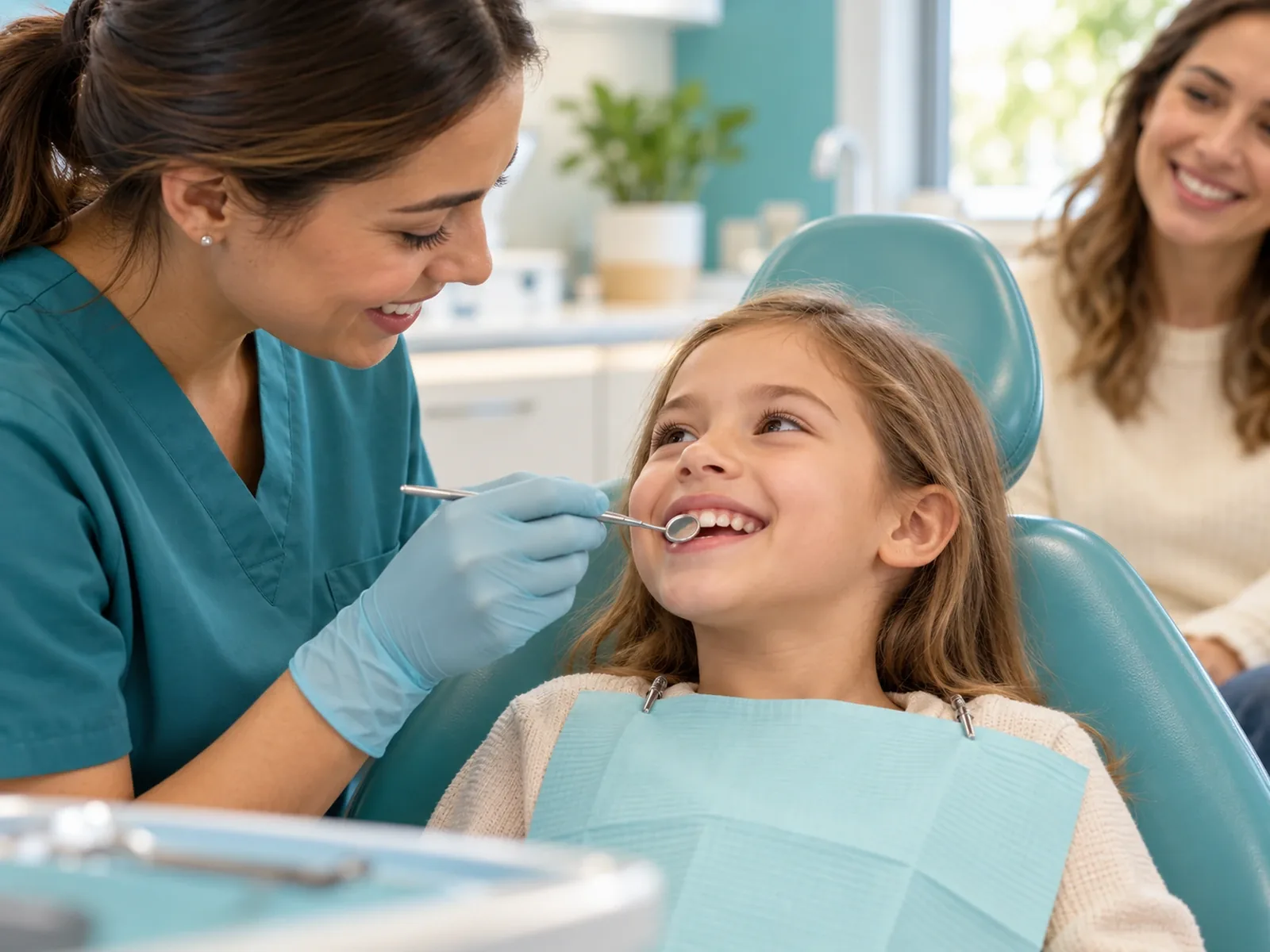
An early orthodontic evaluation is a first look at how your child's teeth, jaws and bite are developing. It is not a commitment to braces, and it does not assume every child needs an appliance. For most children the outcome is reassurance and a plan to check again as growth continues.
The American Association of Orthodontists recommends a first orthodontic check no later than about age seven, or earlier if a parent or dentist notices a concern. That recommendation is about looking, not treating. Only a small share of children evaluated at that age benefit from starting treatment then. The rest are watched, and many of those eventually have a single course of braces or aligners in their early teens, when most permanent teeth are in.
This page explains what the evaluation can and cannot tell you, what "observation" should mean in practice, and how to recognize when early treatment is being proposed for a sound reason. It is part of our orthodontics service at Cleburne Dental and sits alongside routine children's dentistry.
Why age seven is a useful checkpoint
By about seven, most children have their first permanent molars at the back and permanent front teeth coming in. Baby teeth are still present between them. This "mixed dentition" stage is the first time a dentist can see:
- How the back teeth meet, which hints at the jaw relationship.
- Whether there is enough room for the permanent front teeth, or whether crowding is already showing.
- Whether the upper jaw is wide enough for the lower jaw, or whether the bite crosses over on one side.
- Whether the front teeth stick out far enough to be at risk of injury, or whether the lower teeth bite in front of the upper ones.
- Whether habits such as thumb-sucking are changing the shape of the bite.
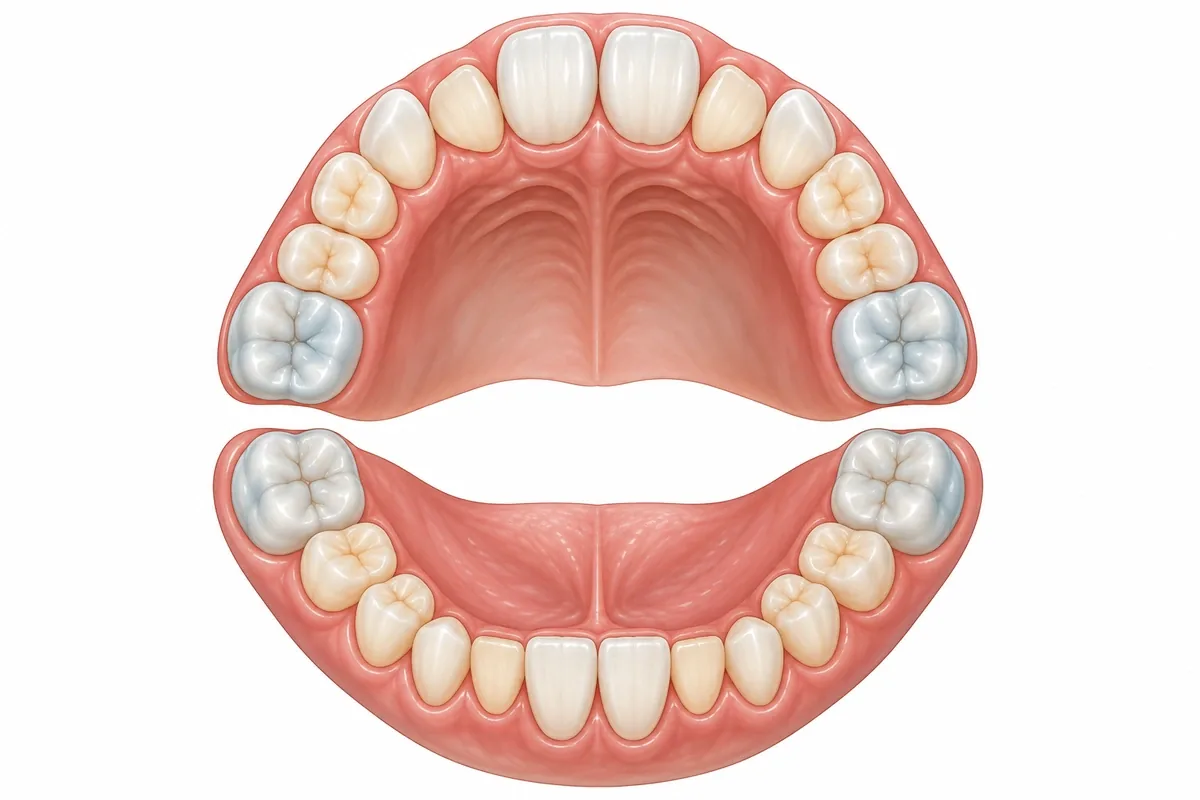
Some of these are best left alone to develop. A few are easier to influence while the jaws are still growing than they would be at thirteen. Seven is simply early enough to catch the second group without acting on the first.
What the evaluation involves
The visit is straightforward and comfortable for a child. Dr. Zohdi will:
- Look at the teeth and gums and how the upper and lower teeth fit together when your child bites.
- Watch how the jaw closes and whether it shifts to one side.
- Ask about habits, breathing, snoring, speech and any difficulty chewing.
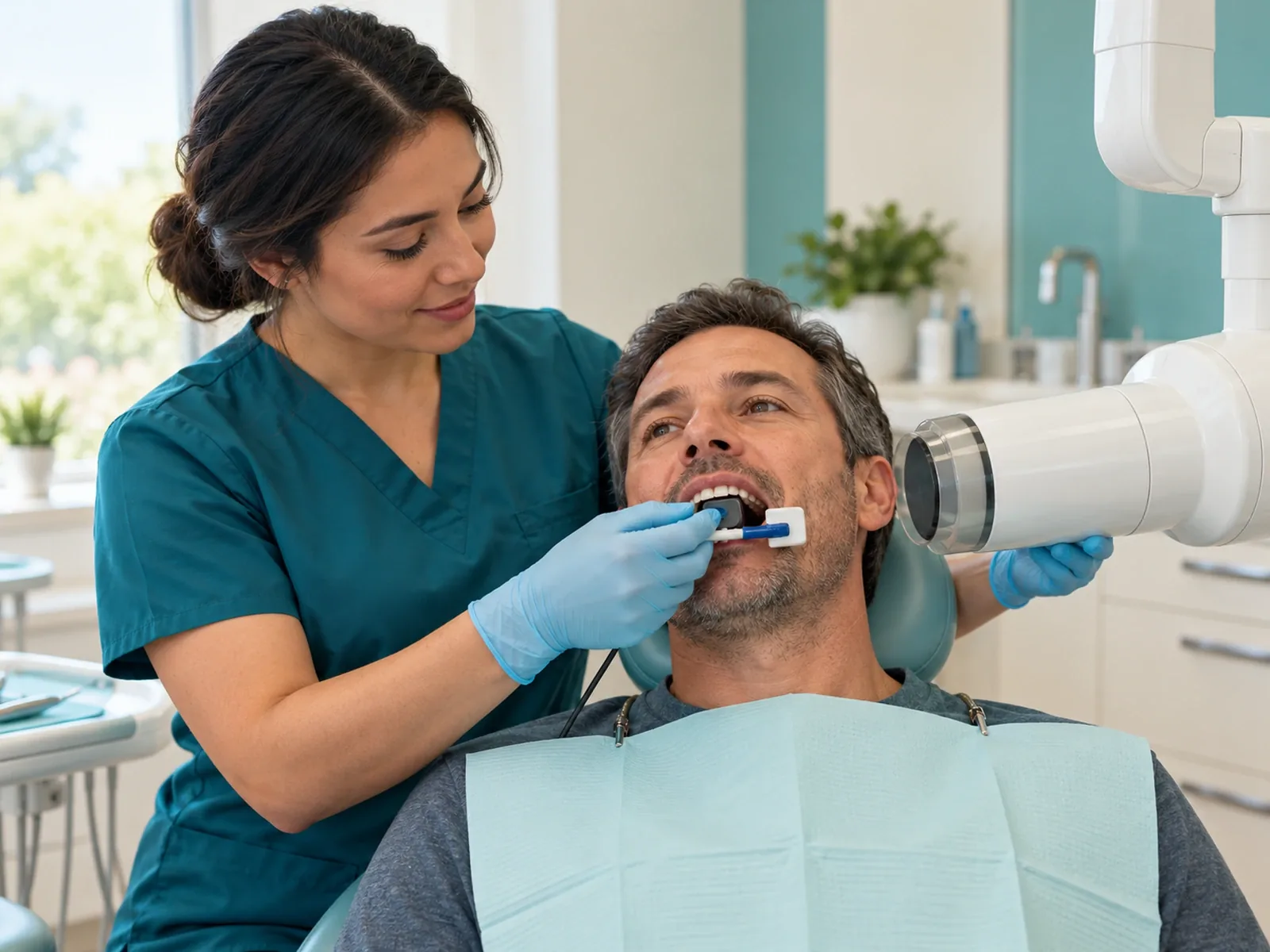
- Review X-rays if they are indicated, to see unerupted teeth, their direction of travel and whether any are missing or extra.
- Possibly take photographs or a digital scan as a baseline to compare against later.
You will leave with one of three conclusions: everything looks on track and no follow-up beyond routine visits is needed; something is worth watching and here is the plan for watching it; or a specific problem would benefit from acting now.
What parents can mention
You see your child eat, sleep and talk every day, and that counts. Helpful things to bring up include:
- Difficulty chewing or a preference for soft foods.
- Baby teeth lost very early or hanging on very late.
- A permanent tooth coming in behind or beside a baby tooth that has not fallen out.
- Mouth breathing, snoring or restless sleep.
- A jaw that shifts or clicks when closing.
- Thumb or finger sucking past age four or five.
- Front teeth that protrude noticeably, or a lower jaw that looks ahead of the upper.
A list of symptoms does not diagnose the need for treatment, but it tells us where to look.
Observation is a real plan
If the recommendation is to wait, ask two questions: what exactly are you watching, and what would change your mind? A good answer names the finding ("the upper canines are coming in at a steep angle") and the trigger ("if there is no improvement by the time the baby canines are lost, we would consider making room").
Observation visits are usually spaced months apart and often folded into routine check-ups. Timing is driven by tooth eruption and growth, not by a birthday or a school year. Two children of the same age can be at very different dental stages.
When early treatment is considered
Early, or Phase I, orthodontic treatment is used for a defined problem that is better addressed during growth. Common examples include:
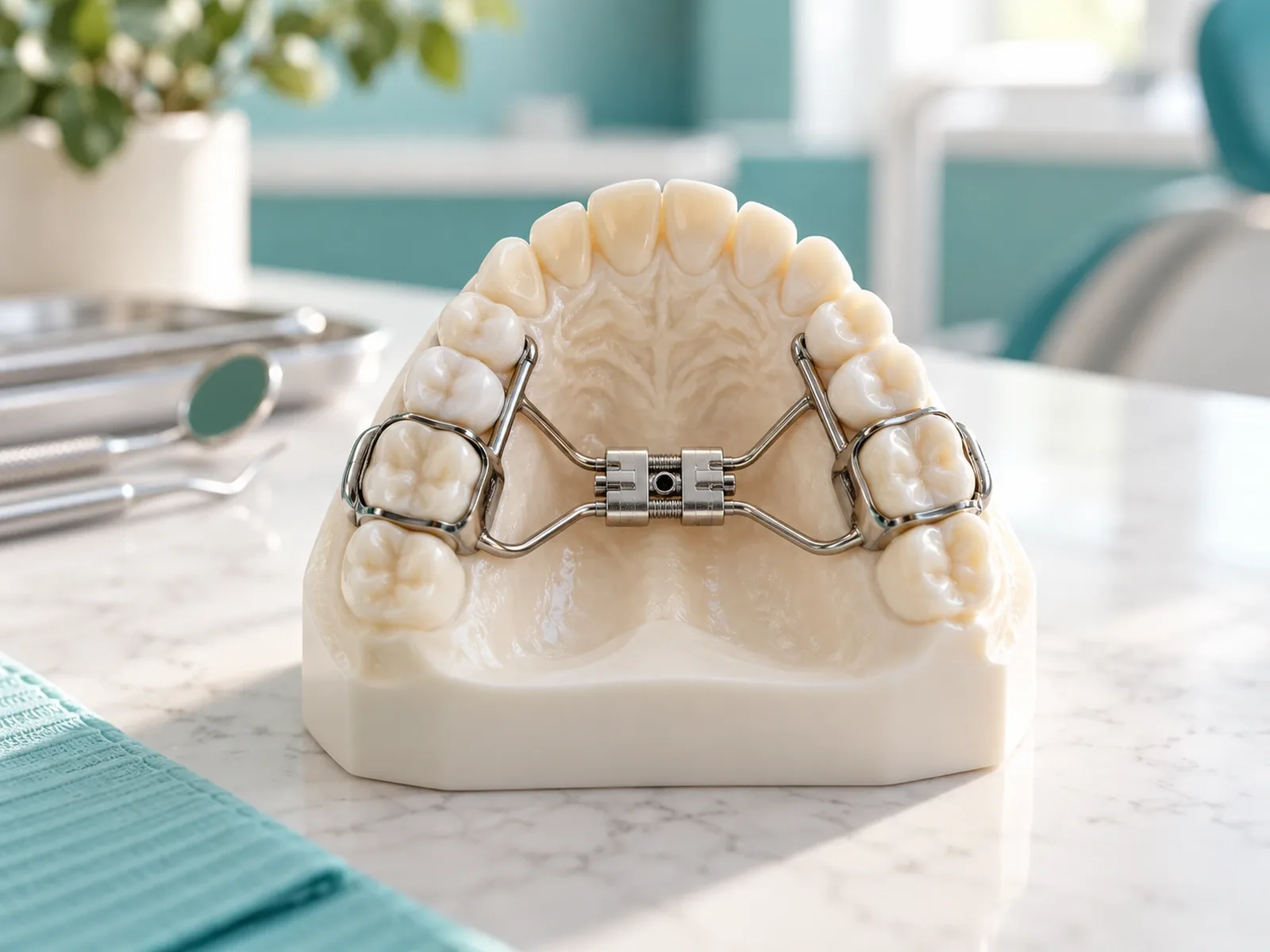
- A crossbite where the upper jaw is too narrow and the lower jaw shifts to one side to close. A palatal expander may be considered while the upper jaw can still be widened.
- Severely protruding front teeth that are at real risk of being chipped or knocked out in a fall.
- Severe crowding where guiding eruption now could avoid more involved treatment later.
- A permanent tooth blocked from coming in because of a baby tooth that has not been lost or a neighbor that has drifted into its space.
- A habit that is actively reshaping the bite and has not responded to simpler approaches.
Early treatment is not a way to guarantee your child will never need braces, extractions or jaw surgery later. In most cases a second phase of alignment is still expected once the permanent teeth are in. If someone proposes early treatment, it is fair to ask what the specific goal is, what happens if you wait, and whether a later phase is still likely.
What early evaluation does not replace
Orthodontic monitoring does not replace routine children's dental care. Cavities, gum health, sealants and fluoride continue on their own schedule. Nor does an evaluation by a general dentist replace an orthodontist’s assessment when the findings call for it. Part of a good evaluation is knowing when to refer, and we will tell you plainly if your child's situation would be best handled by an orthodontist.
Sources and further reading
- American Association of Orthodontists: Evaluation by age seven
- American Association of Orthodontists: Early treatment
General information, not a diagnosis. Read how we create and review our dental guides.