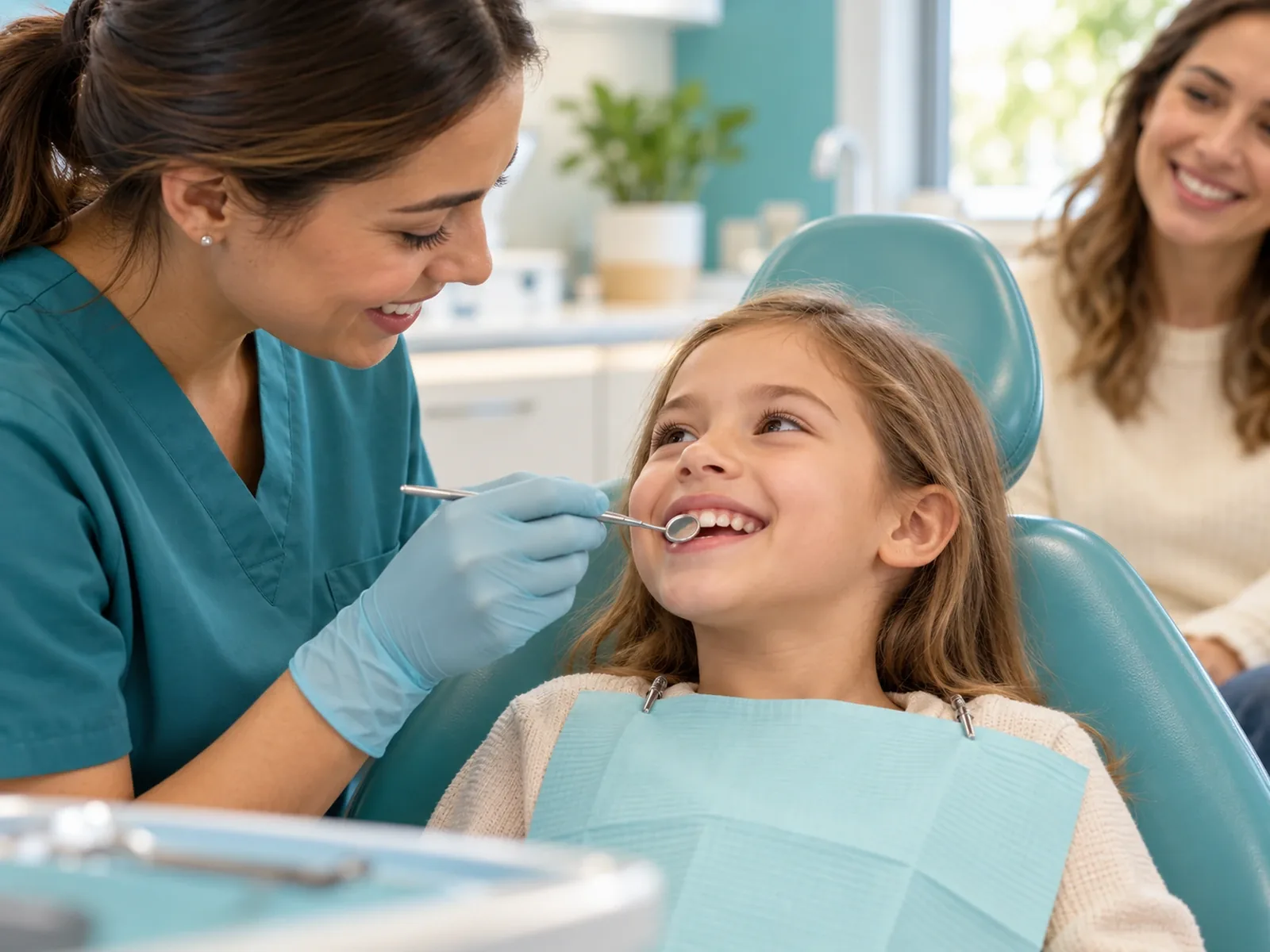
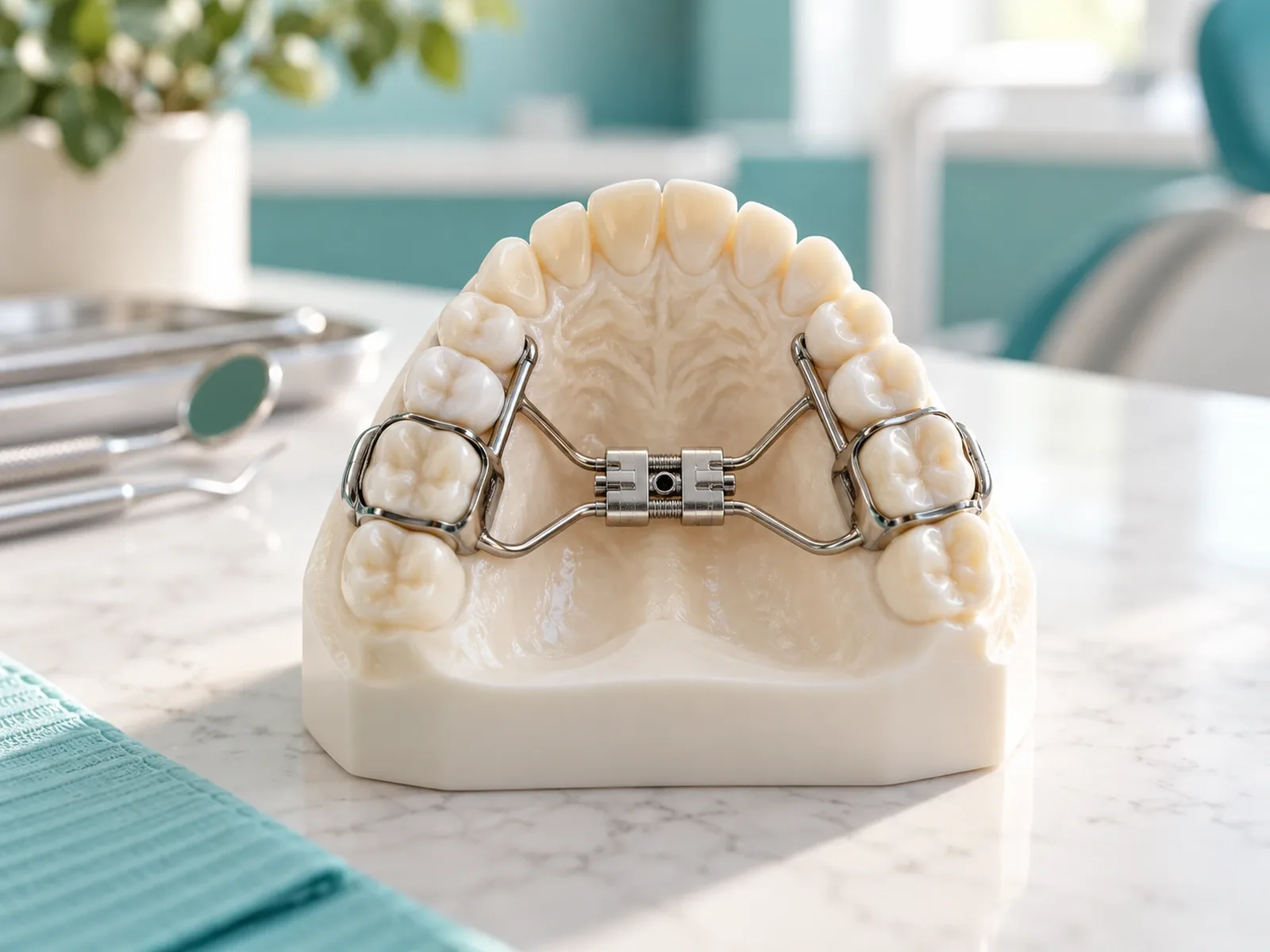
A palatal expander is an orthodontic appliance that gently widens the upper jaw. It is used in selected children whose upper jaw is too narrow for the lower one, most often because the upper back teeth bite inside the lower back teeth, a condition called a crossbite. Expansion creates room and lets the jaws fit together properly.
It is important to say what an expander is not. It is not a way to make room in every crowded mouth, not an alternative to braces, and not a treatment for breathing or sleep problems. It is a tool for a specific finding, a narrow upper jaw, and its success depends on diagnosing that finding correctly and using the appliance at the right stage of growth.
This page explains how expansion works, who it is for, what the weeks of treatment actually feel like, what happens afterwards and where the limits lie. It is part of our orthodontics service at Cleburne Dental and most often forms part of Phase I treatment in children.
How expansion works
The upper jaw is made of two halves joined down the middle by a seam, the mid-palatal suture. In childhood that seam is still flexible. An expander, usually anchored to the upper back teeth with bands or a bonded frame, has a small screw in the middle. Turning the screw a tiny amount each day pushes the two halves apart by a fraction of a millimeter. The body fills the widening seam with new bone over the following months.
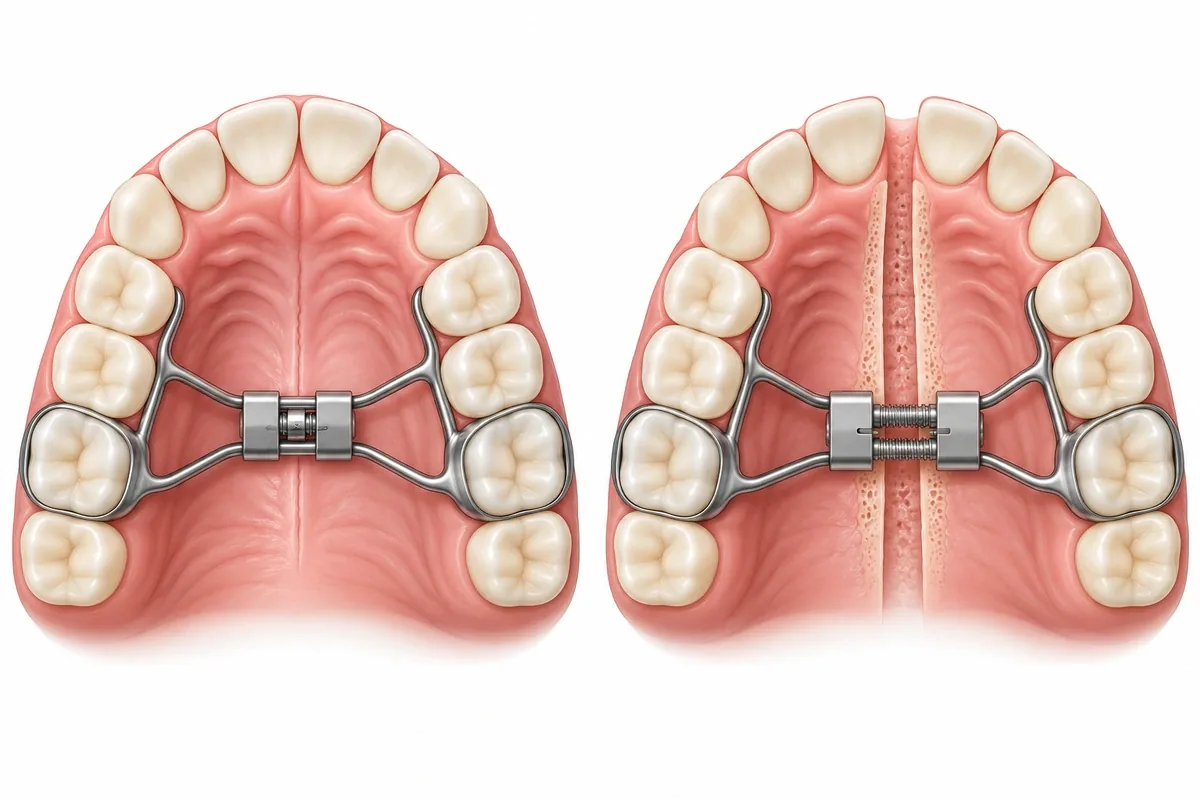
Because the seam fuses in the early to mid teens, expansion of the jaw bone itself is most predictable before then. After fusion, the same appliance tends to tip the teeth outward rather than widen the bone, which is why adult expansion is a different and more limited discussion.
Who an expander is for
Dr. Zohdi considers expansion when the assessment shows a true narrowing of the upper arch, such as:
- A posterior crossbite on one or both sides, especially when the lower jaw slides sideways to close. The shift can lead to uneven jaw growth over time if left alone.
- An upper arch so narrow that permanent teeth are blocked or have no realistic path to erupt.
- A narrow, high-arched palate contributing to severe crowding where creating width is preferable to removing teeth.
Crowding by itself does not establish the need for an expander. Many crowded smiles have a normal-width jaw and are better treated by other means. Age alone does not decide either; what matters is the stage of growth and the anatomy, which is why an early orthodontic evaluation comes before any appliance is chosen.
What to expect during treatment
Fitting. Separators may be placed between the back teeth for a few days to make room for the bands. The expander is then cemented or bonded in place. The first few days feel strange: the tongue bumps against it, speech is slightly off, and swallowing takes thought. These settle quickly.
Turning. A parent turns the screw with a small key on the schedule demonstrated at the fitting, often once a day for a few weeks. Each turn produces a feeling of pressure across the bridge of the nose or behind the front teeth that fades in minutes. Follow the exact schedule. Do not add turns to speed things up, skip planned checks, or keep turning through pain, bleeding or a loose appliance; call instead.
The gap. As the two halves of the jaw separate, a space opens between the upper front teeth. Parents are often alarmed; it is the clearest sign the expansion is working at the bone level. The gap closes on its own or with later alignment.
Eating and cleaning. Soft foods help for the first week. Food collects between the appliance and the roof of the mouth; rinsing vigorously after meals and using a water flosser or a syringe of water to flush under the frame keeps the tissue healthy. Avoid sticky and very hard foods that can loosen the bands.
Checks. Visits during active expansion confirm the crossbite is correcting and the tissue is healthy, and tell you when to stop turning.
After the turning stops
Reaching the intended width is not the end. New bone needs months to fill and harden in the widened seam. The expander is left in place, no longer turned, as a holder during this period. If it were removed early, the jaw would narrow again.
Once the result is stable, the appliance is removed and a retainer or the next stage of treatment takes over. For many children that next stage comes later, once the permanent teeth are in, as a course of braces or aligners to finish alignment. Ask how stability will be assessed and whether a second phase is expected; see our retainers page for how holding appliances work.
Be cautious about broad health promises
Widening the upper jaw also widens the floor of the nose, and some studies report changes in nasal airflow after expansion. That is a long way from a cure. Expansion should not be presented as a guaranteed treatment for snoring, sleep apnea or mouth breathing. Those concerns involve the tonsils and adenoids, nasal passages, weight, muscle tone and more, and deserve their own medical and dental evaluation. If breathing or sleep is your main worry, say so; the right answer may involve a pediatrician or an ear, nose and throat doctor alongside any dental care.
Risks and alternatives
Expansion is well tolerated by most children. Possible problems include sore spots or inflamed tissue under the appliance, a band coming loose, the gap between the front teeth, and, if expansion is pushed too far or too late, tipping of the back teeth rather than true widening, with thinning of the gum on the outside of those teeth. Relapse is possible without adequate holding time.
Alternatives depend on the finding. A mild crossbite of a single tooth may be corrected with a small removable plate or limited braces. Some crowding is better handled by holding space, by extractions when permanent teeth arrive, or simply by waiting. Observation is a legitimate choice when the finding is borderline.
Sources and further reading
- American Association of Orthodontists: Early treatment
- American Association of Orthodontists: Evaluation by age seven
General information, not a diagnosis. Read how we create and review our dental guides.