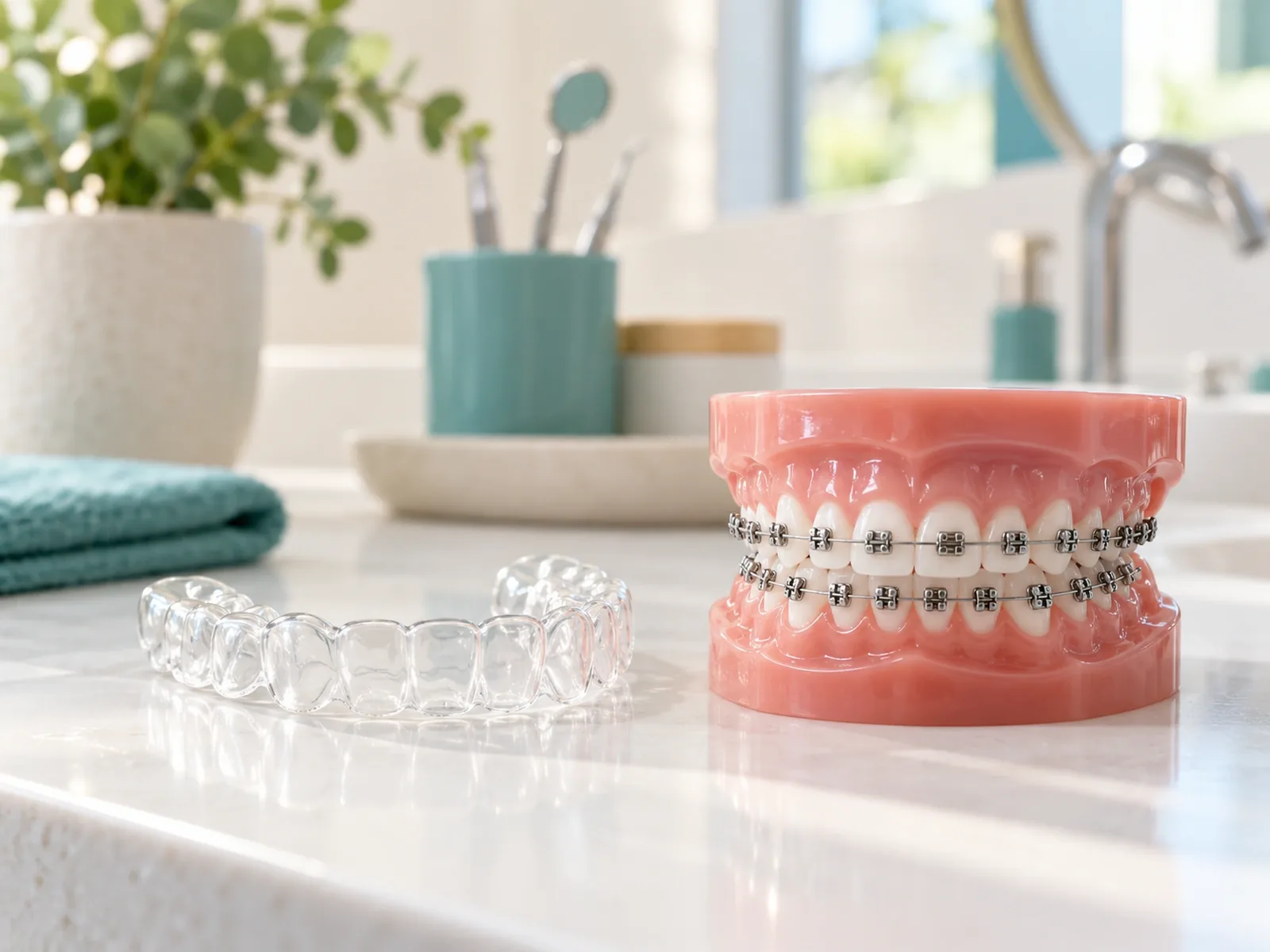

Traditional braces are small brackets bonded to the front of each tooth, linked by a thin wire. Over many months the wire is changed and adjusted so the teeth move, a little at a time, into positions that line up and bite together properly. Because the appliance stays on, you never have to remember to put it in. What you do have to do is keep it clean, protect it from damage and show up for adjustments.
The brackets themselves are the least interesting part of treatment. What matters is the plan behind them: which teeth need to move, how far, in what order and what the bite should look like at the end. That plan comes from an assessment of your teeth, gums and jaw relationships, not from the fact that braces were requested.
This page walks through how braces treatment is planned at Cleburne Dental, what happens at the visits, how to live comfortably with the appliance and why the last step, retention, is part of the treatment rather than an afterthought. For the wider picture of appliance choices, start with our orthodontics overview.
Who braces tend to suit
Braces can address most alignment and bite problems, including crowding, spacing, rotated teeth, teeth that sit too high or low, and bites where the upper and lower teeth do not meet correctly. They are often chosen when:
- Several teeth need to rotate or move up and down (vertical movements), which fixed appliances control well.
- A bite correction needs elastics or other attachments that work most predictably on brackets.
- A child or teen is unlikely to wear a removable tray for the required hours each day.
- The patient simply prefers not to think about taking an appliance in and out.
None of these rules out clear aligners for every patient. The right appliance depends on the movements required and the routine you can realistically keep. If you are weighing both, our braces versus aligners comparison lays out the everyday tradeoffs.
What the first assessment looks at
Before anyone talks about brackets, Dr. Zohdi looks at the whole mouth. The assessment usually covers:
- Alignment and spacing. How crowded or spaced the teeth are, and whether any are rotated or tipped.
- The bite. How the upper and lower teeth meet from the front and sides, and whether the jaws are in proportion with each other.
- Tooth and gum health. Active decay or gum inflammation needs attention before teeth are moved. Moving teeth through inflamed gums can make bone and gum problems worse.
- Records. Photographs, a digital scan or models of the teeth, and X-rays when indicated, so root positions, unerupted teeth and bone levels are known.
From these findings comes a recommendation, which might be braces, aligners, watching and waiting, or a referral. If the plan would involve removing teeth to make space, or treating a jaw-size difference, that should be explained at the start. Braces being proposed does not by itself mean extractions are planned.
What happens at the visits
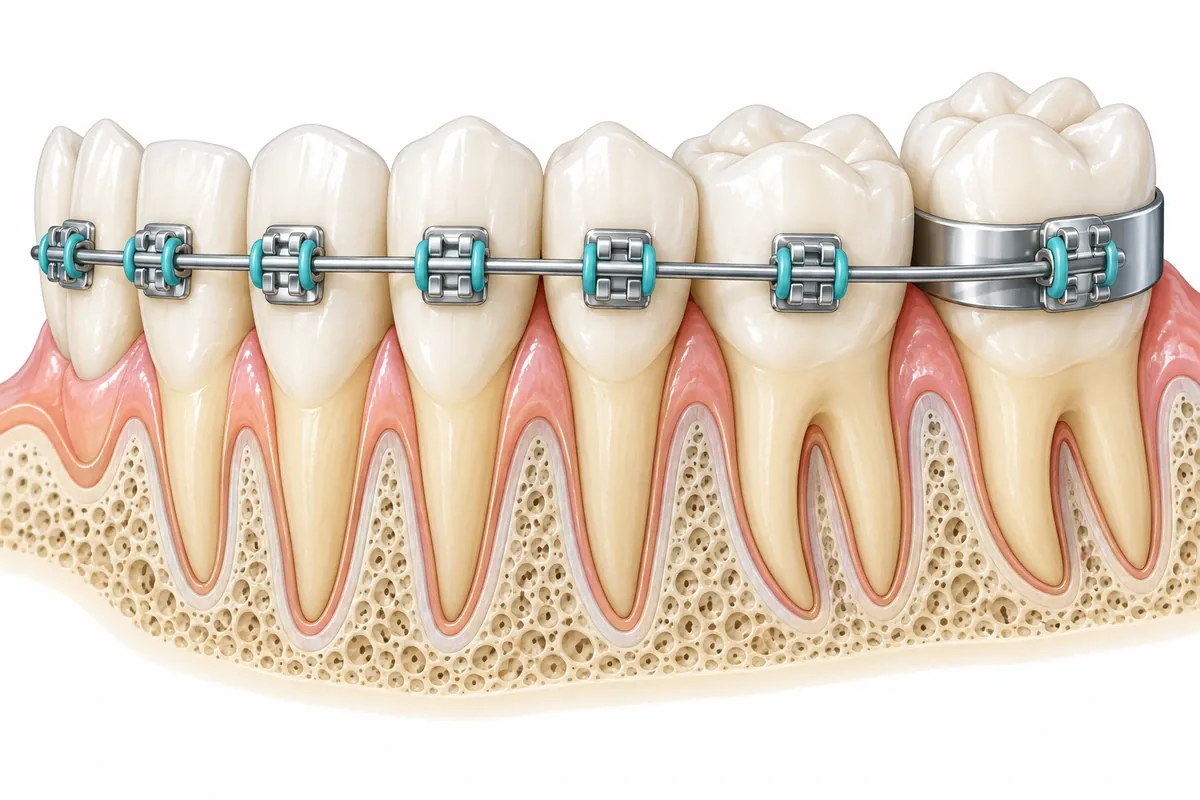
Placement. The teeth are cleaned and dried, and each bracket is bonded in place with a dental adhesive. Bands may be fitted around back molars. The first wire is threaded through and secured with small elastic ties or built-in clips. Placement is not painful, but it is a longer appointment and your mouth will feel crowded afterwards.
The first week. Teeth are usually tender for a few days as they begin to respond to the wire. Soft foods, over-the-counter pain relief as directed, and orthodontic wax over any bracket rubbing the cheek make this stage easier. The irritation fades as the lips and cheeks toughen up.
Adjustments. Every several weeks you return so the wire can be changed, bent or tightened, and so ties, springs or elastics can be added. Each adjustment can bring a day or two of renewed pressure. These visits are also when progress is checked against the plan.
Elastics and auxiliaries. If your plan includes rubber bands between the upper and lower teeth, they are doing bite-correcting work the wire cannot do alone. They only work when worn as prescribed. Skipping them is one of the most common reasons treatment runs long.
Removal. When the teeth and bite reach the planned positions, the brackets are lifted off, the leftover adhesive is polished away, and impressions or a scan are taken for your retainers.
Living with braces day to day
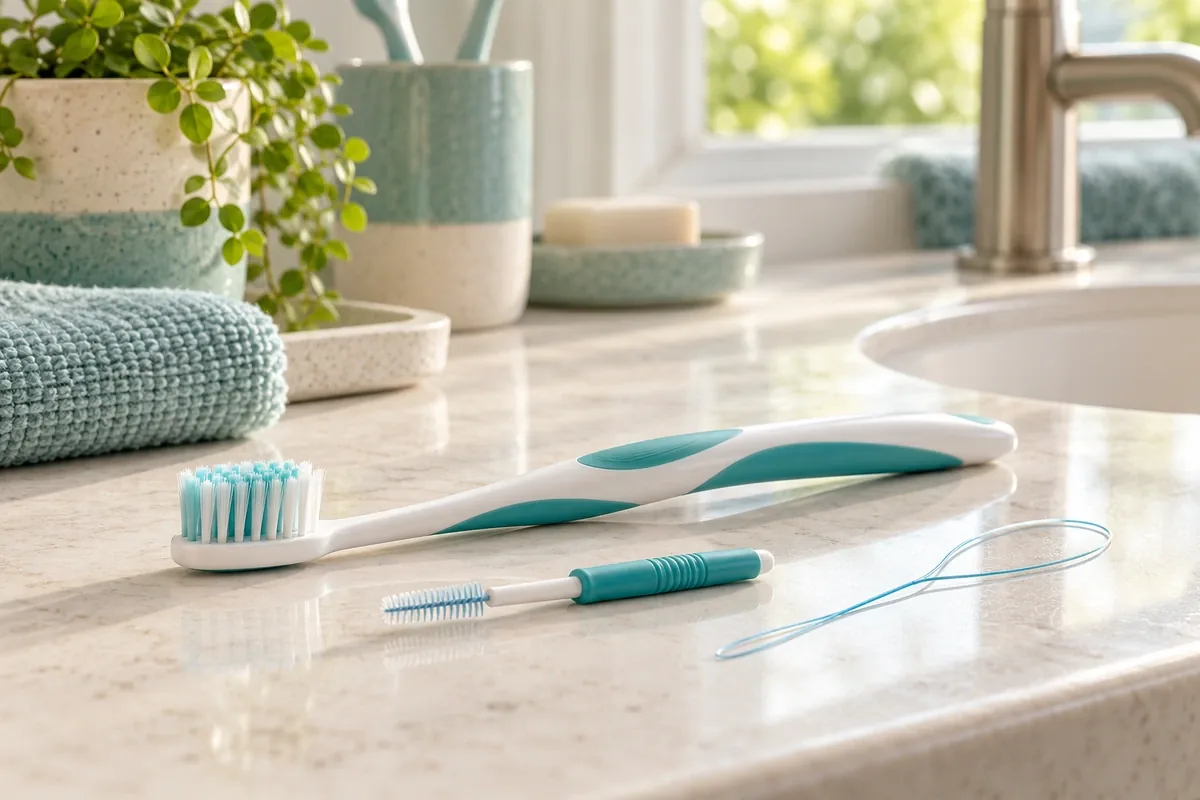
Cleaning takes more time with braces, and it matters. Plaque that sits around brackets can leave permanent white marks on the enamel and inflame the gums. A good routine looks like this:
- Brush after meals, angling the bristles above and below each bracket as well as across it.
- Use a small interdental brush to clean under the wire and around each bracket.
- Floss once a day with a floss threader or an orthodontic flosser that slides under the wire.
- Keep your regular exams and cleanings; braces do not replace them.
Some foods damage braces. Hard foods (ice, nuts, hard candy, crusty bread) can snap a wire or pop a bracket. Sticky foods (caramel, gummies, chewing gum) pull on brackets and are hard to clean away. Cut apples, carrots and corn off the cob into bite-sized pieces rather than biting into them. If you play contact sports, a mouthguard made to fit over braces protects both the appliance and the soft tissue of your lips.
When to call the office
Most discomfort with braces is mild and passes. Call during office hours if you notice:
- A bracket that has come loose or is sliding along the wire.
- A wire end poking the cheek that wax does not cover.
- Pain that is sharp, one-sided or getting worse rather than better after an adjustment.
- A tooth that feels noticeably loose or a change that makes eating difficult.
A loose bracket is not usually urgent, but it stops that tooth from moving and can let others drift, so it should be repaired rather than left until the next scheduled visit.
Benefits, limitations and risks
Braces can produce precise, well-controlled results across a wide range of problems. The limits are set by biology and anatomy rather than the appliance: teeth can only move through healthy bone, roots shorten slightly in some patients, and jaw-size differences in adults cannot be corrected by tooth movement alone.
Risks worth understanding before you start include enamel decalcification (white spots) from plaque around brackets, gum inflammation, some root shortening, and relapse if retainers are not worn. Good hygiene and keeping appointments reduce most of these. Adults with existing dental work or past gum disease have extra planning points, covered on our adult braces page.
Cost factors and treatment time
The fee for braces reflects the complexity of the movements, the expected length of treatment, the number of visits, repairs, and whether retainers are included. Rather than quoting a single figure, we explain what the estimate covers in our guide to orthodontic costs and how insurance and payment options typically apply.
How long braces stay on depends on what needs to move and how closely the plan is followed. Our page on orthodontic treatment time explains the factors that shorten or lengthen a case.
Retention is part of the treatment
Teeth look straight the day the braces come off, but the bone and gum fibers around them need months to settle, and teeth have a lifelong tendency to drift. Retainers, fixed or removable, hold the result while that settling happens and protect it afterwards. Ask how retention is handled before treatment begins, so there is no surprise at the end.
Sources and further reading
- American Association of Orthodontists: Adult treatment questions
- American Association of Orthodontists: Evaluation by age seven
- ADA MouthHealthy: Braces
General information, not a diagnosis. Read how we create and review our dental guides.