
Phase I orthodontics, sometimes called early or interceptive treatment, is active treatment started while a child still has a mix of baby and permanent teeth, typically between about seven and ten years old. Its purpose is narrow: fix one defined problem that is easier to correct now, during growth, than it would be later. It is not a head start on braces for every child.
Phase I is different from an early orthodontic evaluation. The evaluation is a look; it often leads to nothing more than watching. Phase I is a decision to act, and it should rest on a specific goal that can be named, measured and explained.
This page describes which problems tend to justify early treatment, what the appliances and the daily routine involve, how the first phase relates to later treatment, and the questions worth asking before you agree. It is part of our orthodontics service for families in Cleburne.
Problems that may justify an early phase
The value of Phase I comes from timing. A few problems respond better while the jaws are still growing or while there is still room to guide where permanent teeth come in:
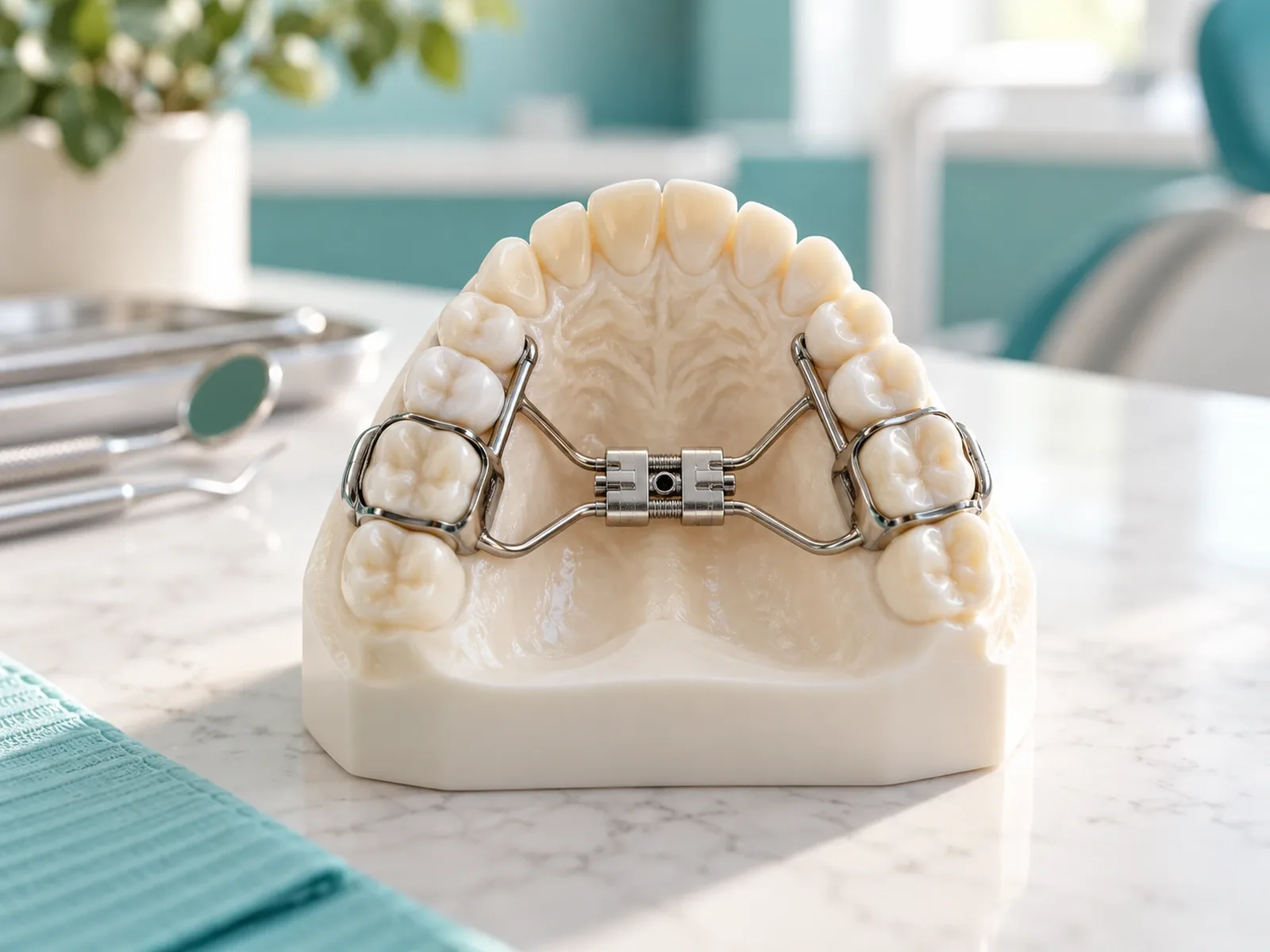
- Posterior crossbite. The upper jaw is too narrow, so the upper back teeth bite inside the lower ones and the jaw often slides to one side to close. Widening the upper jaw with a palatal expander is most effective before the mid-palate growth plate fuses in the early teens.
- Anterior crossbite. One or more upper front teeth bite behind the lower front teeth. Left alone this can wear the teeth, stress the gum of the lower tooth and lock the lower jaw forward.
- Severely protruding upper front teeth. Teeth that stick out well beyond the lip are at real risk of being chipped or knocked out in a fall. Bringing them back partway reduces that risk during the active years.
- Blocked or misdirected permanent teeth. A baby tooth that will not fall out, or a neighbor drifting into the space, can trap a permanent tooth. Making room or guiding eruption now can avoid a far more involved recovery later.
- Severe crowding. When there is clearly not enough room for the permanent teeth, holding or creating space early can simplify, though not eliminate, later treatment.
- Persistent habits. Thumb-sucking or tongue thrusting that is actively opening the bite and has not stopped with gentler measures.
Mild crowding, slight spacing and most ordinary bite variations do not belong on this list. They are watched, and treated once, later.
What early treatment can involve
The appliance follows the diagnosis. Depending on the goal, Phase I may use:
- A palatal expander to widen the upper jaw.
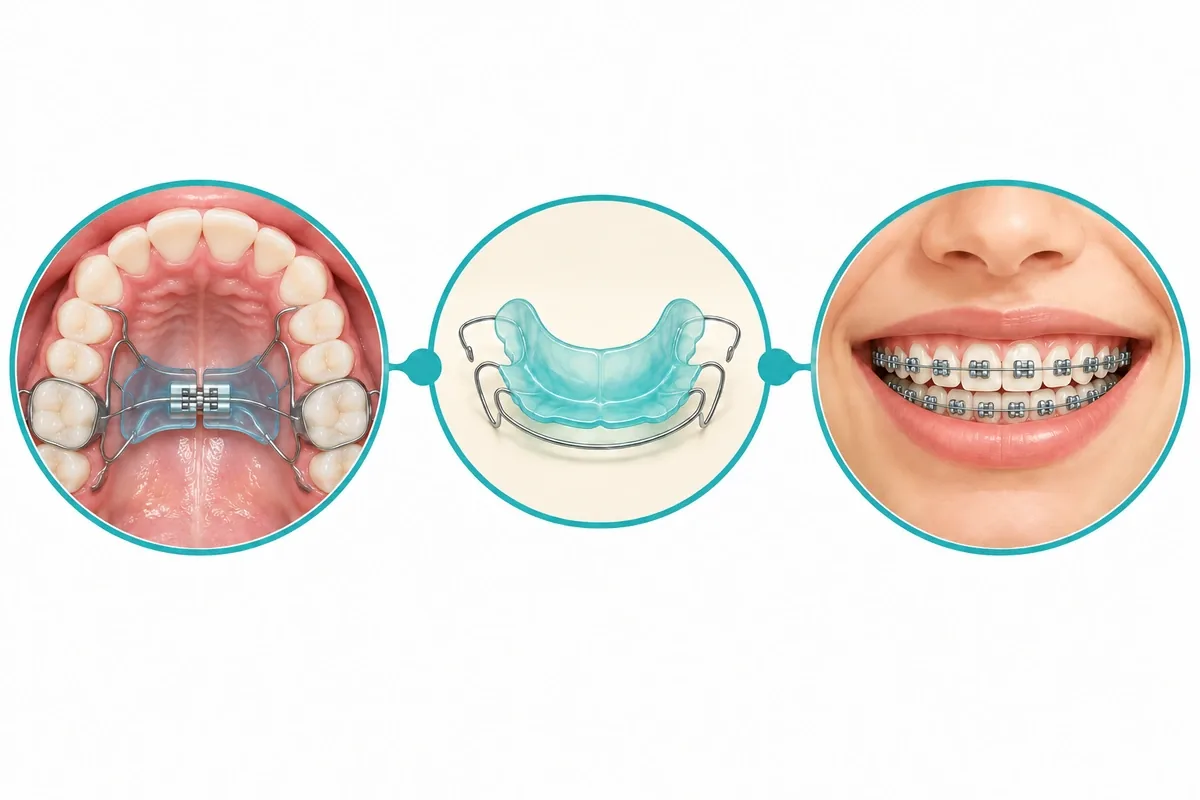
- Partial braces on the front teeth only (often called "2x4" braces: two molar bands and four front brackets) to correct a crossbite or pull protruding teeth back.
- A space maintainer to hold room for a permanent tooth after a baby tooth is lost early.
- A habit appliance that makes thumb-sucking or tongue thrusting physically difficult.
- Occasionally a removable plate or a functional appliance that influences how the jaws grow relative to each other.
Each appliance comes with its own instructions for wear, activation and cleaning. Instructions for one device do not transfer to another, so make sure you understand exactly what your child's appliance needs. Active Phase I treatment commonly runs for several months to about a year, followed by a holding retainer.
Your role and your child's role
Early treatment works when the family is on board. In practice that means:
- Keeping scheduled checks, which are usually spaced weeks apart during active treatment.
- Turning an expander on the schedule shown, if one is prescribed, and never adding turns.
- Helping with brushing around brackets or bands. Children of this age rarely clean well around appliances on their own.
- Avoiding hard and sticky foods that break brackets.
- Watching for a loose band, a poking wire or a sore spot and calling rather than waiting.
A child who will not tolerate the appliance, or a family schedule that cannot keep the visits, are legitimate reasons to choose observation instead. Say so at the planning stage; it is far better than abandoning treatment halfway.
How Phase I relates to later treatment
Here is the part that is most often misunderstood. Phase I addresses one problem. It does not align every tooth, and it cannot control the teeth that have not yet come in. Once the permanent teeth are through, usually around eleven to thirteen, many children still need a comprehensive phase of braces or aligners to finish the alignment and the bite. That is Phase II.
A second phase is not a failure of the first. The first phase was meant to make the second simpler, shorter or less likely to need extractions, or to protect teeth in the meantime. What matters is that the possibility of Phase II is explained before Phase I begins, along with how the two phases are handled financially. Our orthodontic cost guide covers the questions to ask about staged fees.
Between the phases there is usually a resting period of a year or more, with a retainer and periodic checks. Routine children's dental care continues throughout, because fluoride, sealants and cavity checks do not pause for orthodontics.
Risks, alternatives and monitoring
Early treatment carries the same general risks as any orthodontics: gum irritation, enamel marks from poor cleaning, broken appliances and some relapse. Two risks are specific to Phase I. The first is treating something that would have resolved with growth, which means time, cost and effort for little gain. The second is a long total time in appliances, if an early phase is followed by a long second phase; children can run out of patience by the time Phase II matters most.
Observation is the main alternative, and for many findings it is the better one. The decision should rest on how clear the problem is, how much growth remains and what waiting would realistically cost.
- What specific problem are we treating, and what will it look like when it is fixed?
- What happens if we wait, and when would you reassess?
- How long will the appliance be in, and how often are visits?
- Is a second phase likely, and how is it handled financially?
- What are the signs that the appliance is not working or needs attention?
A clinician who can answer all five plainly is proposing early treatment for a reason.
Sources and further reading
- American Association of Orthodontists: Early treatment
- American Association of Orthodontists: Evaluation by age seven
General information, not a diagnosis. Read how we create and review our dental guides.