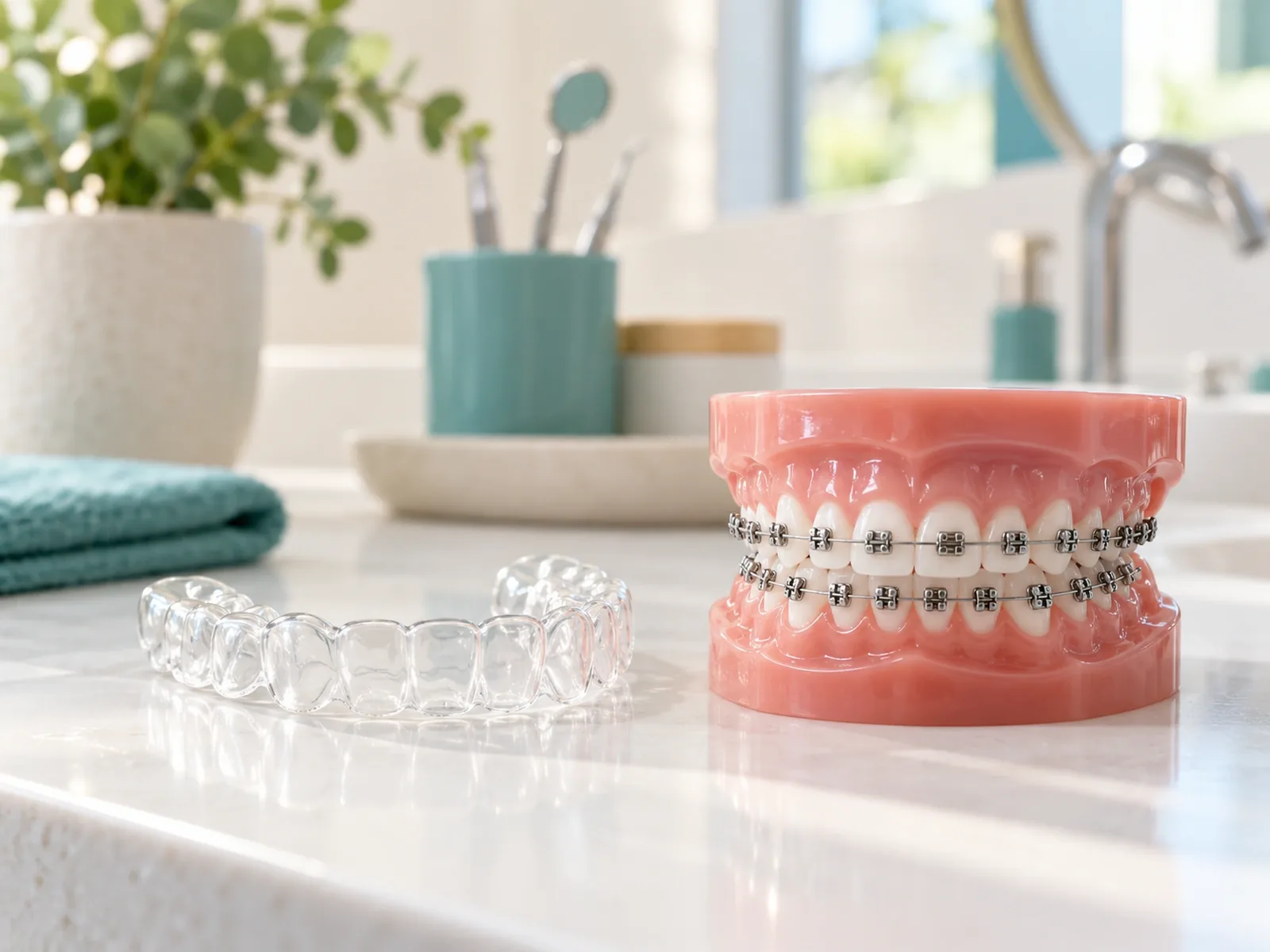

An orthodontic fee describes a treatment plan: the diagnosis, the appliance, every visit over many months, the fixes along the way and the retainers at the end. Two quotes for "braces" or "aligners" can describe very different plans. One may cover a comprehensive bite correction with retainers included; the other may cover six months of front-teeth alignment with everything else extra. Until you know what each number includes, you cannot compare them.
This page does not quote prices, because an honest figure depends on an examination. What it does is explain what drives the cost up or down, what a complete estimate should list, how limited and comprehensive plans differ, how early treatment for children is priced, how orthodontic insurance works and what to ask about payment arrangements. It is part of our orthodontics service at Cleburne Dental.
What actually drives the cost
The appliance brand is rarely the main factor. These are:
- Complexity of movement. Rotating canines, closing large spaces, correcting a deep bite or a crossbite takes more planning, more visits and more time than tipping a few front teeth.
- Treatment length. A longer case means more appointments, more wires or trays, and more chair time. What affects treatment time therefore also affects cost.
- Scope. Whether the plan addresses the whole bite or only the teeth that show when you smile.
- Appliance type. Ceramic brackets and aligners generally cost more to produce than metal brackets, but the difference is usually smaller than the difference between a simple and a complex case.
- Preliminary work. Fillings, gum treatment or extractions needed before teeth can move are separate from the orthodontic fee.
- Retention. Whether retainers, replacements and follow-up checks are built in.
What a complete estimate should list
Ask each office you consult the same questions, and write down the answers:
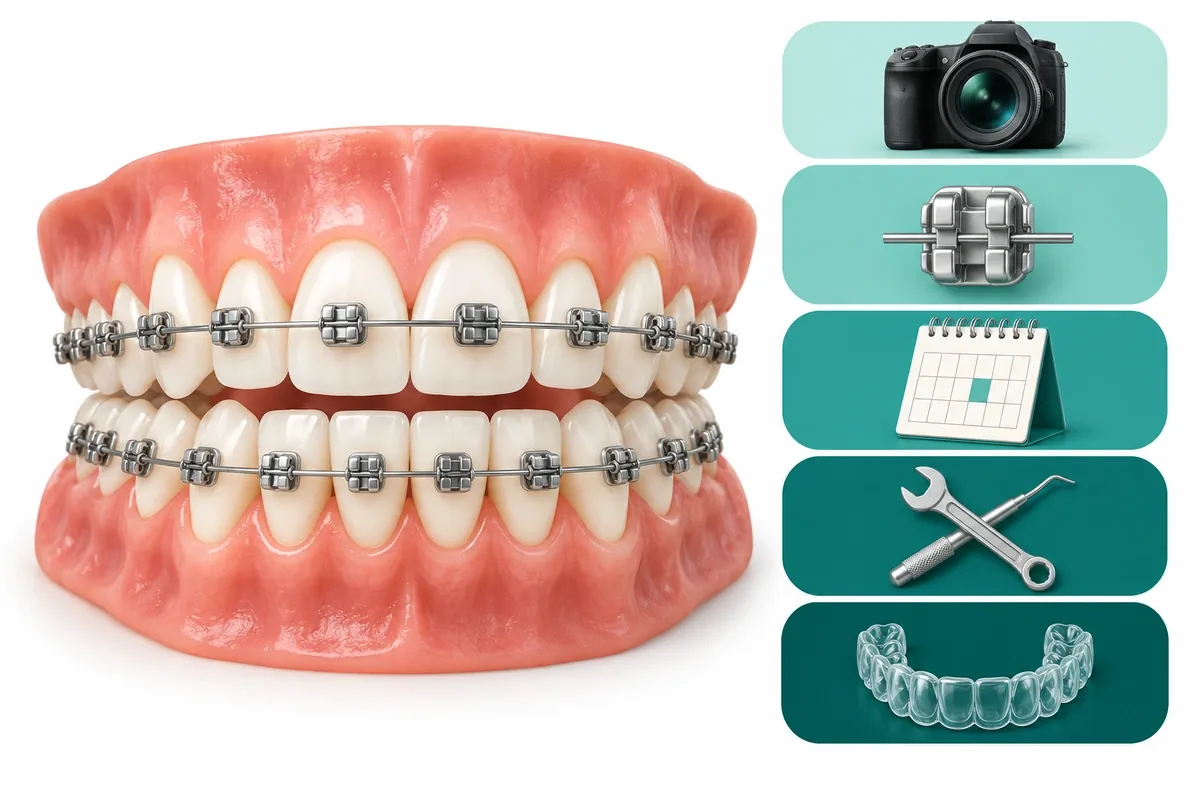
- Are records (photographs, scan or models, X-rays) included, or billed separately?
- Is appliance placement or delivery included?
- Are all monitoring and adjustment visits included for the expected length of treatment, and what happens if treatment runs long?
- For braces: are repairs of broken brackets or wires included?
- For aligners: how many refinements (extra sets of trays made from a new scan) are included, and what does an additional refinement cost?
- Are retainers included, how many sets, and what does a replacement cost?
- Are retention check-ups after treatment included, and for how long?
- Is the plan limited or comprehensive, and what does it deliberately leave unchanged?
A quote that answers all eight is comparable. A quote that answers three is a starting price.
Limited and comprehensive plans cost differently
A limited plan straightens the front teeth over a shorter period. It costs less because it does less. For an adult with a sound bite and a few crowded incisors, it can be exactly right.
A comprehensive plan corrects how all the teeth meet. It takes longer, uses more appliances and visits, and costs more.
The trap is comparing a limited quote from one office with a comprehensive quote from another and concluding that the first is a bargain. Ask what the lower-priced plan leaves unresolved. Sometimes the answer is "nothing that matters to you." Sometimes it is "the bite that keeps chipping your front teeth." Our braces versus aligners guide includes the questions to ask so you compare like with like.
Early treatment for children: two phases, two fees
If a Phase I plan is proposed for your child, understand that it addresses one developing problem and that a second phase of alignment is often still expected once the permanent teeth are in. Ask:
- Does this quote cover Phase I only?
- Is a Phase II likely, and roughly what would it involve?
- How are the two phases priced together? Some offices credit part of the first phase toward the second; others quote each separately.
- Are retainers and the observation period between phases included?
An early-phase quote should never be mistaken for the total cost of your child's orthodontic care.
How orthodontic insurance usually works
Orthodontic benefits differ from ordinary dental benefits in several ways:
- Separate lifetime maximum. Most plans with orthodontic coverage set a lifetime cap per person that is distinct from the annual dental maximum. Once it is used, it does not renew.
- Age limits. Some plans cover orthodontics only for dependents under a certain age; adult coverage is less common and worth confirming.
- Payment over time. Insurers typically pay in installments across the course of treatment rather than in one sum at the start.
- Changing coverage mid-treatment. If you change jobs or plans partway through, the new plan may not pick up where the old one left off. Ask how that risk is handled.
- Pre-treatment estimates. Most plans will provide a written estimate of what they will pay before treatment begins.
We can help you understand what your plan says; see our dental insurance page for how we work with coverage.
Payment arrangements
Orthodontic fees are commonly spread over the months of treatment. Before signing, make sure you know:
- The total fee, not just the monthly amount.
- Whether the monthly plan carries interest or fees.
- What happens if a payment is late or treatment finishes early or runs long.
- Whether a down payment is required at placement.
Third-party healthcare financing, such as the CareCredit and Wells Fargo Health Advantage programs this office has offered, lets you spread payments over longer terms; read the terms, including any promotional interest conditions, before committing. Current options are described on our payment and financing page. A low monthly figure on its own tells you nothing about the total.
Where costs hide
- Replacement retainers. Clear trays wear out every few years for the rest of your life.
- Lost or broken aligners. Ask what a replacement tray costs.
- Extended treatment. If the plan runs over because of missed wear or breakages, is there an additional monthly fee?
- Preliminary dental work. Fillings, cleanings and extractions are billed as dental care, not orthodontics.
- Restorative work afterwards. If orthodontics is preparing for crowns, veneers or implants, those are separate plans with their own costs; see smile makeover planning.
Sources and further reading
- American Association of Orthodontists: Adult treatment questions
- American Association of Orthodontists: Aligners
General information, not a diagnosis. Read how we create and review our dental guides.