How long braces or clear aligners take depends on what has to move and how far. Straightening a few crowded front teeth and correcting a bite where the back teeth do not meet are different jobs, and the second takes longer no matter which appliance is used. A good estimate comes from your own records, explains the stages and names the things that could stretch or shorten it. A promise of the same fast finish for everyone is marketing, not planning.
Patients often ask whether aligners are quicker than braces, or whether a particular brand finishes faster. The honest answer is that the appliance category is a minor factor. The major ones are the complexity of the case, the health of the tissues, growth, how closely the plan is followed, and how the teeth happen to respond.
This page walks through each of those factors, explains what the stages of treatment are, and offers practical advice on planning around school, work and life events. It is part of our orthodontics service at Cleburne Dental.
The stages of treatment
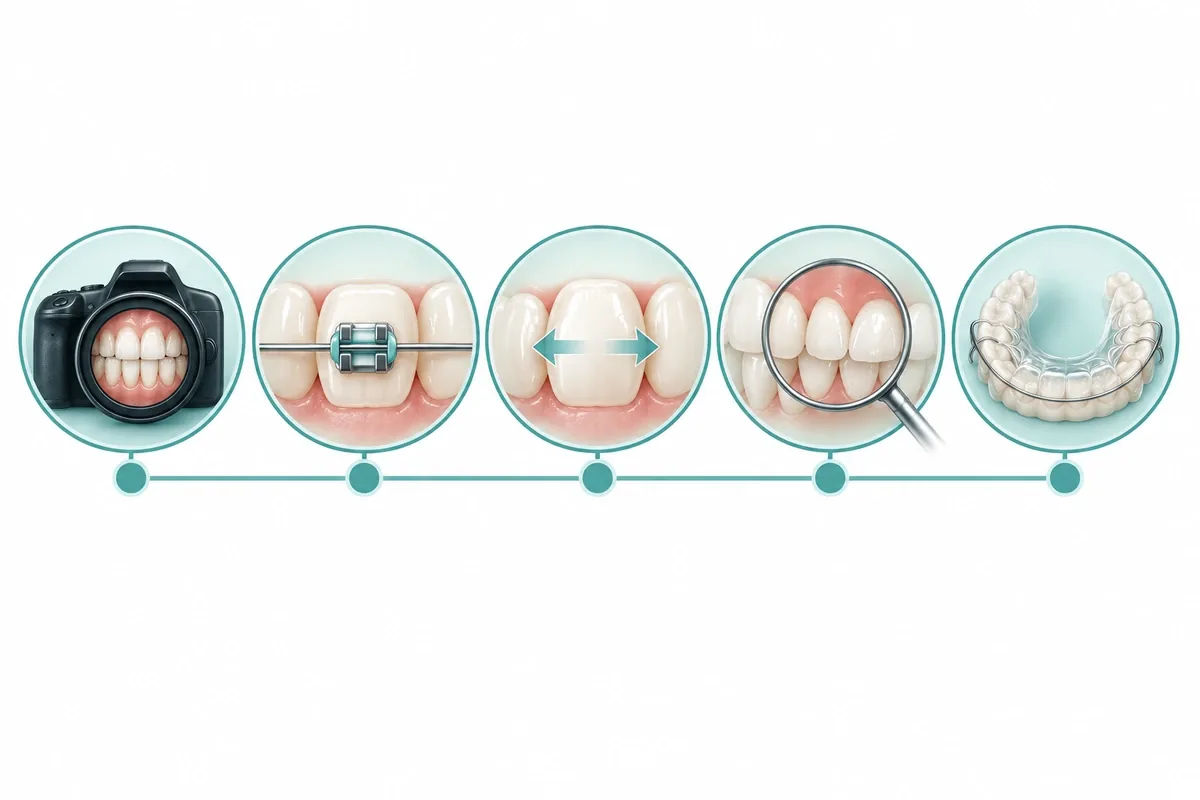
- Records and planning. Photographs, a scan or models and X-rays, followed by a plan. For aligners this includes a digital setup and fabrication of trays, which adds a few weeks before anything goes in the mouth.
- Preliminary dental care. Fillings, gum treatment or extractions needed before teeth can move safely. This can add weeks or months and is often left out of advertised timelines.
- Placement. Brackets bonded or the first trays delivered.
- Active movement. The longest stage: the teeth are guided toward their planned positions through wire changes or tray progression.
- Finishing. Fine adjustments to how the teeth meet, small rotations, closing last gaps. Weeks to a few months.
- Retention. Appliance off, retainers on. Active treatment ends; retention continues indefinitely.
When you are quoted a treatment time, ask which of these stages it covers. For a child in early treatment it may describe only one phase; see Phase I orthodontics.
Factor one: the diagnosis sets the scope
The amount and type of movement is the biggest single driver:
- Mild crowding or spacing in the front teeth, with a sound bite, is at the short end.
- Moderate crowding needing room to be created by expansion, reshaping or extractions sits in the middle.
- Bite corrections (deep bites, open bites, crossbites, large overjets) and impacted teeth that must be pulled into the arch are at the long end, because the movements are large and must be done slowly.
- Extractions add time: closing the spaces takes months of controlled movement.
- Growth can help or complicate. In a growing child, jaw growth can be used to correct a bite; in an adult, a jaw-size mismatch has to be camouflaged with tooth movement or addressed surgically, which changes the timeline.
A limited plan that deliberately leaves the back teeth alone is shorter than a comprehensive plan for the same mouth. Make sure you know which one is being estimated.
Factor two: the health of the tissues
Teeth move through bone, and bone responds more slowly in adults than in teenagers. Adults should expect the same movement to take somewhat longer. Gum disease, if present, must be stabilized before movement begins, and teeth with reduced bone support are moved with lighter forces, which also means more slowly. These are safety constraints, not inefficiencies.
Factor three: participation
This is the factor most within your control, and it is the one that most often makes a case run long.
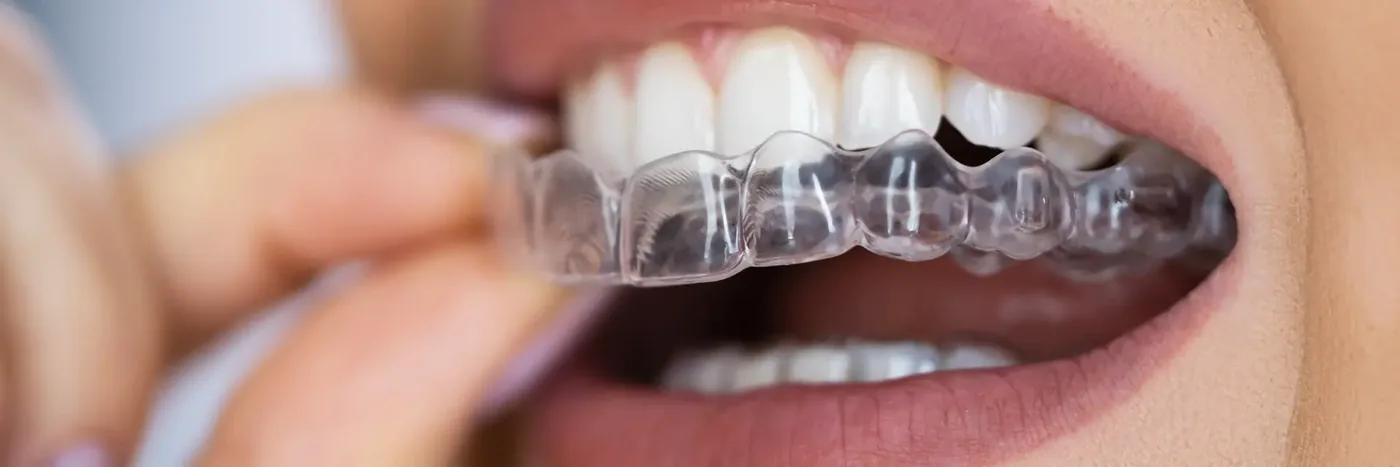
- Aligner wear. Trays move teeth only while they are on the teeth. Wear that falls short of the prescribed hours means the next tray does not fit, and the plan stalls until it does. Every lost day of wear is at least a lost day of treatment, and often more.
- Elastics. Rubber bands prescribed with braces or aligners do the bite-correcting work. Worn inconsistently, the bite correction simply does not happen, and that stage repeats.
- Breakages. A broken bracket stops that tooth from moving and can let its neighbors drift. Hard and sticky foods are the usual culprits.
- Missed visits. Wires are not changed, progress is not checked, problems are not caught. A missed six-week appointment can cost more than six weeks.
- Cleaning. Poor hygiene can force treatment to pause while gums recover or decay is treated.
Do not try to make up time by changing trays early or adding turns to an appliance. Teeth and bone can only remodel so fast; pushing harder causes pain, loosens teeth and risks root damage without reaching the goal sooner.
Factor four: biology and finishing
Even with perfect cooperation, teeth do not always follow the plan. A tooth may rotate more slowly than predicted, a root may be angled differently than expected, or a space may close unevenly. Monitoring exists to catch this. With aligners, the usual response is a refinement: a new scan and a new set of trays for the remaining movements. With braces, it is a wire change or a repositioned bracket.
Finishing deserves its own mention because it is where patients get impatient. The front teeth look straight; why is treatment continuing? Because the back teeth may not yet meet evenly, a canine may not be fully seated, or a midline may be slightly off. These details decide whether the bite is comfortable and stable for decades. Finishing is not a cosmetic delay.
Planning around life
Tell us early about anything on the calendar:
- A wedding, graduation or photos. Brackets can sometimes be removed briefly or aligners timed so you are between trays, but tissues set the pace; an event date cannot dictate how fast teeth move. Planning early gives the most options.
- College or a long trip. Aligner patients can often take several trays along with remote check-ins; braces patients need to plan adjustment visits around travel.
- Moving away. Ask how transfer works. Records and the treatment plan can be sent to a new office, and fees are usually prorated, but it is simpler to arrange before you leave than after.
- Sports seasons and instruments. Neither prevents treatment, but they affect appliance choice and protection; see sports mouthguards.
How braces and aligners compare on time
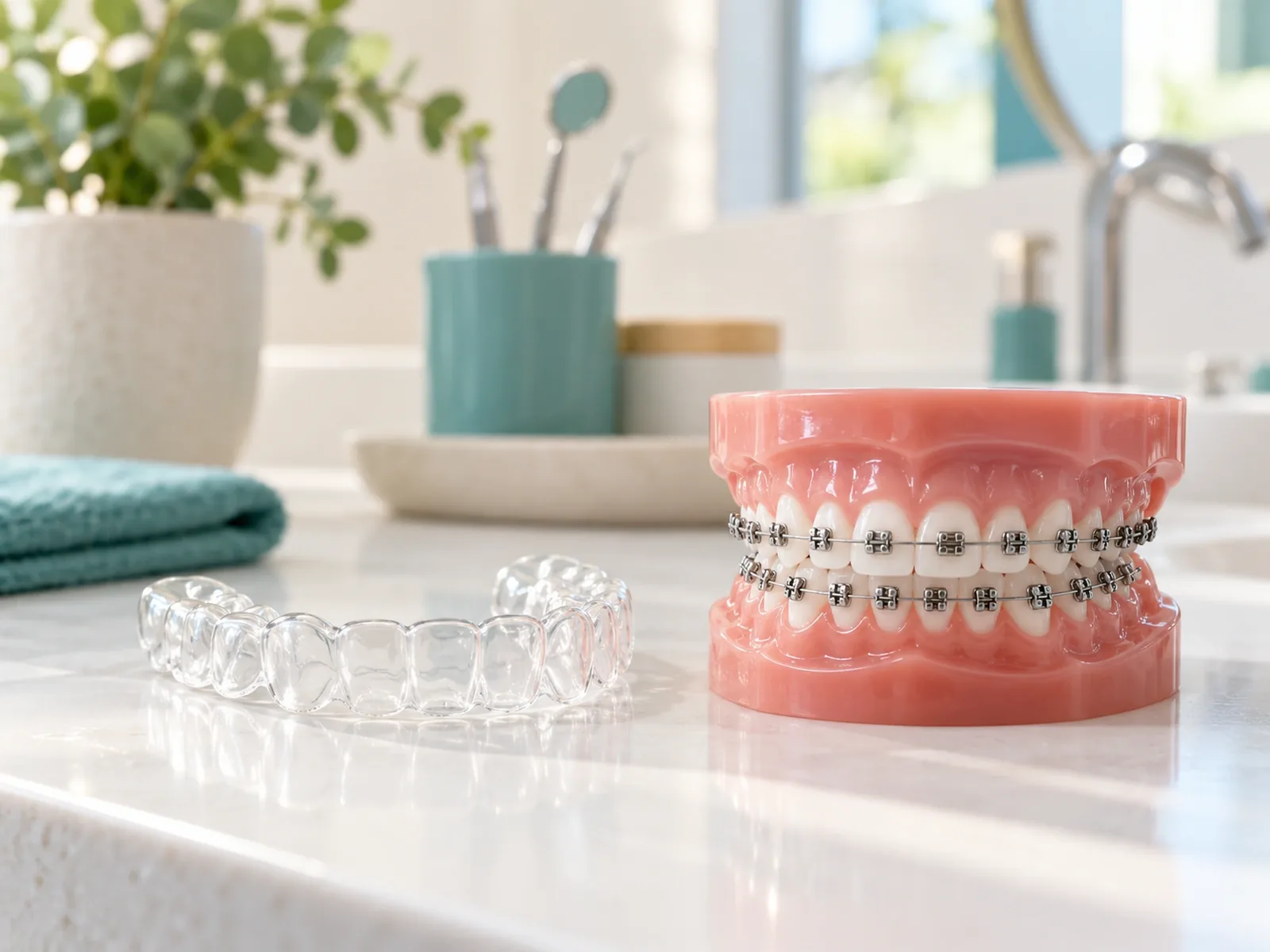
For simple cases the difference is small; for complex cases braces are often more efficient because they control more types of movement. Aligner cases that need movements trays handle poorly tend to need refinements, which add time. Our braces versus aligners comparison covers this in detail. Pages on traditional braces and clear aligners describe what each appliance's visits look like.
Time and cost
Longer treatment generally means more visits and more appliances, so the factors on this page also shape the fee. Ask whether the estimate covers treatment that runs longer than planned; our orthodontic cost guide lists the questions.
Sources and further reading
- American Association of Orthodontists: Aligners
- American Association of Orthodontists: Adult treatment questions
- ADA MouthHealthy: Braces
General information, not a diagnosis. Read how we create and review our dental guides.