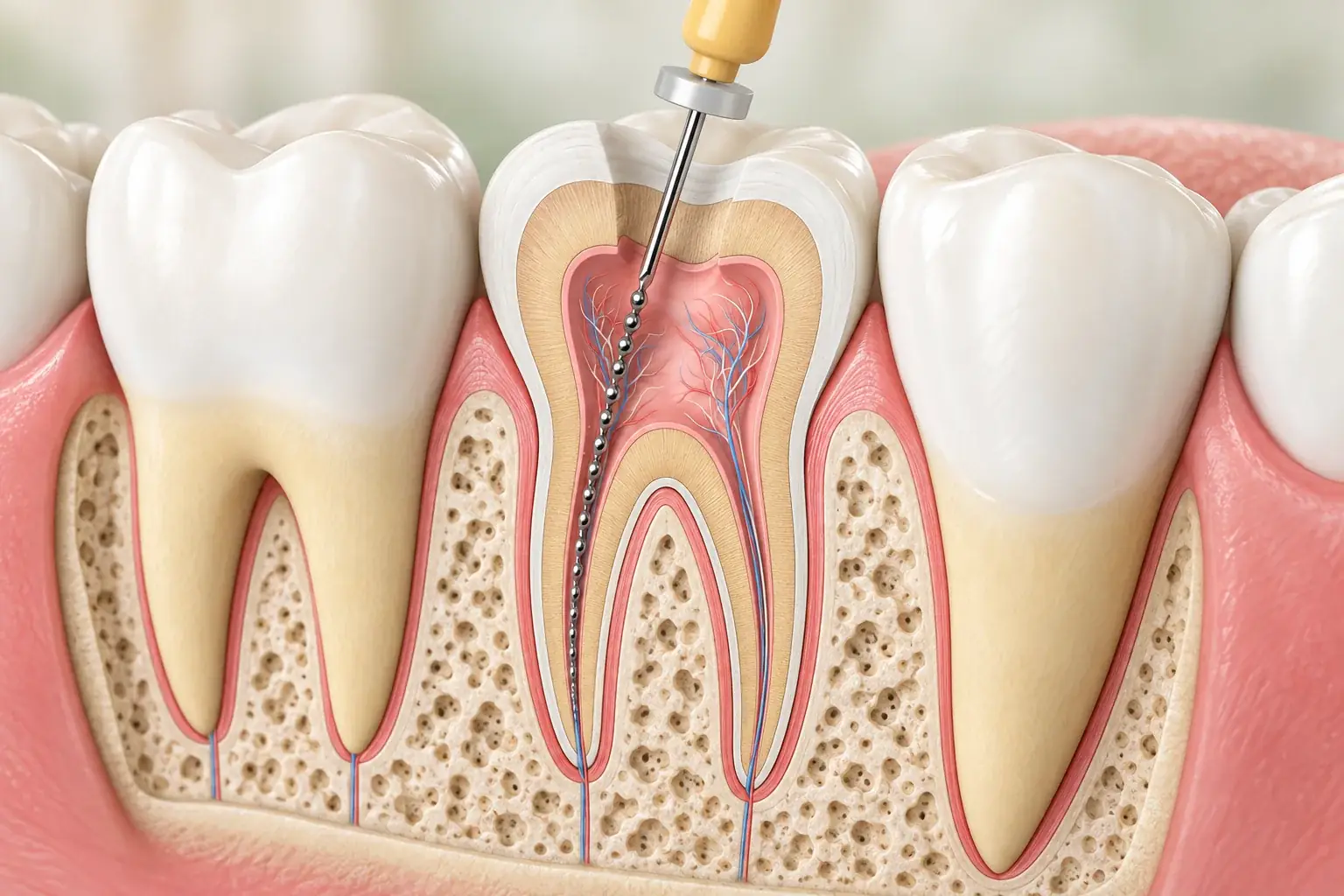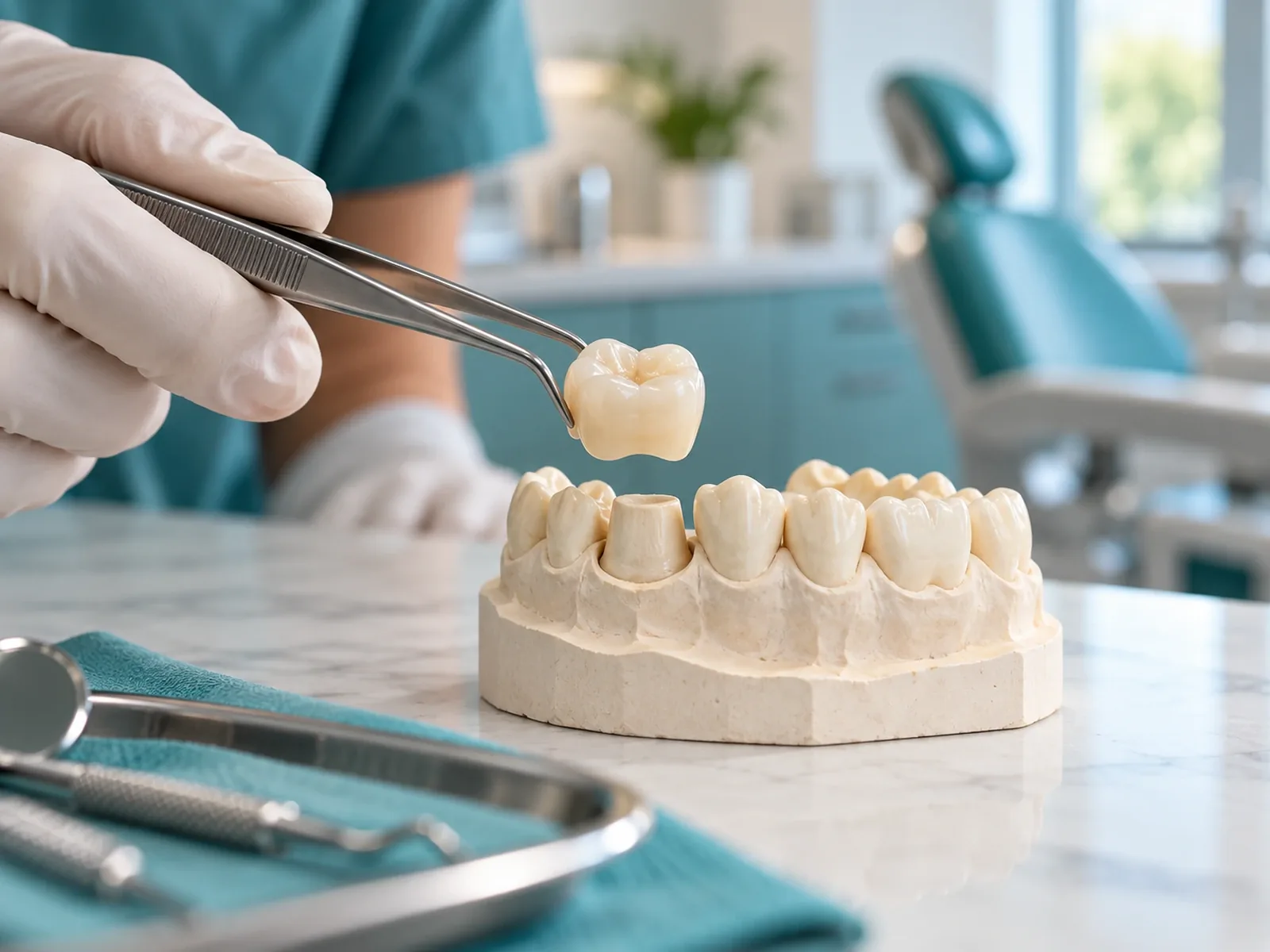

Searching for the cost of a root canal usually turns up a single number, and that number is almost never the cost of saving your tooth. The root canal is one procedure. Diagnosing the tooth, rebuilding its core and protecting it with a crown are separate steps, each with its own fee. A quote that mentions only the canal work can look much cheaper than one that lists everything, when the real totals are similar.
For the bigger picture — when a root canal is recommended, what the visit involves and the alternatives — start with our root canal treatment overview.
This page does not list prices, because the right figure depends on which tooth, how damaged it is and what your plan covers, and because a description of pain over the phone cannot establish any of that. What it does is explain what drives the fee, which items should appear on a complete estimate, how insurance usually treats root canals and crowns, and how to compare saving a tooth against removing it. At our Cleburne office, Dr. Zohdi provides a written estimate before treatment begins so you can make the decision with the whole picture in front of you.
What changes the fee for the root canal itself
Root canal fees generally scale with how complex the tooth is to treat:
- Which tooth. Front teeth usually have one canal, premolars one or two, and molars three or four, some of them curved and hard to locate. More canals mean more time, more materials and a higher fee. Our page on molar root canals explains why back teeth are more involved.
- First treatment or retreatment. Retreating a tooth that already had a root canal means removing old filling material, sometimes a post, and working through an existing crown. It takes longer and is priced separately from an initial root canal.
- Access through existing work. Treating through a crown or large filling adds steps, and the crown may need repair or replacement afterward.
- Anatomy and difficulty. Calcified canals, severe curves and limited jaw opening can turn a routine case into a long one, and some of these teeth are better treated by an endodontist, whose fees differ from a general dentist's.
- Number of visits. Infected teeth sometimes need a medication placed inside between two appointments.
If any of these apply to you, ask how they affect the estimate rather than assuming every root canal is priced the same.
What else belongs on the estimate
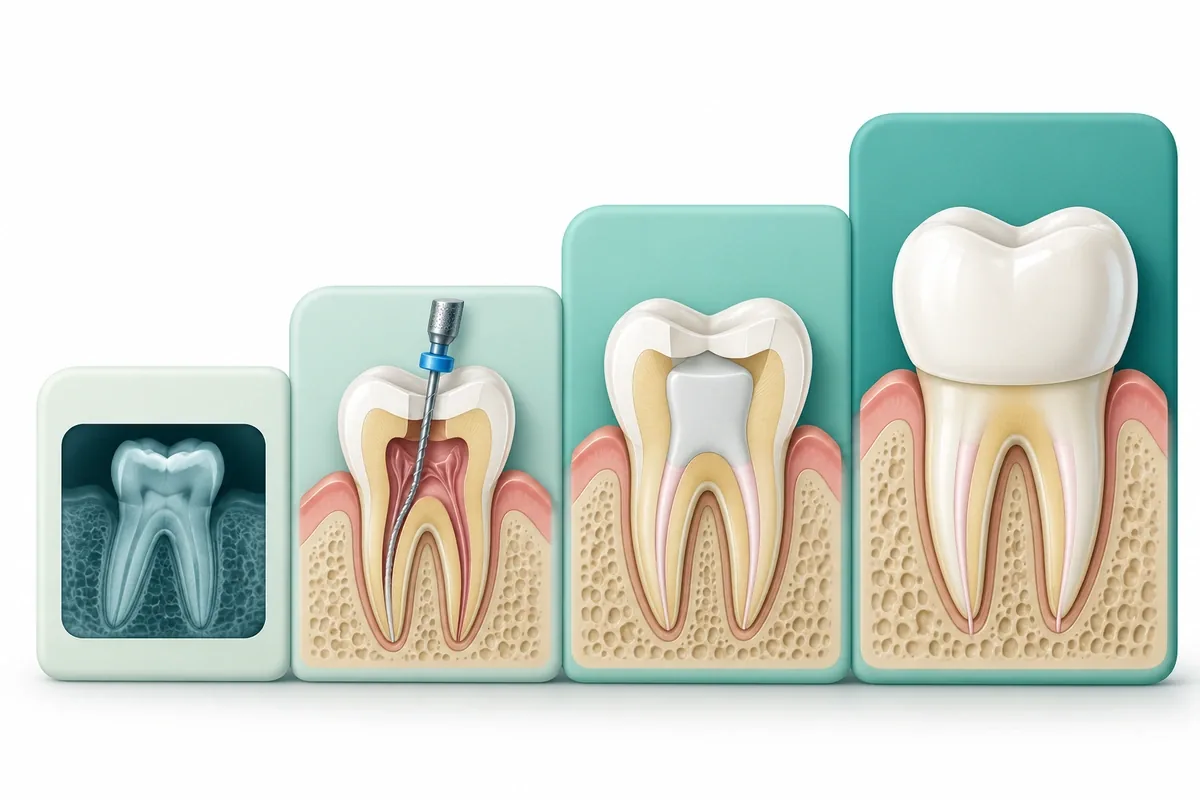
A complete plan for saving a tooth usually includes some or all of the following, and each may be a separate line:
- Examination and imaging. The exam, the X-rays needed to diagnose the tooth and, occasionally, a three-dimensional scan when the anatomy or diagnosis is unclear. Ask which images are necessary for your case.
- The root canal. The cleaning, shaping and sealing of the canals, including the temporary filling placed afterward.
- Core buildup. Filling material that replaces the hollowed-out center of the tooth so a crown has something to hold. Most root-treated back teeth need one.
- Post (only when needed). A small anchor placed in a canal when there is too little tooth left to retain the buildup. It is not routine, and it should not be on your estimate unless your tooth requires it.
- Final restoration. A crown for most back teeth; sometimes an onlay or, on a front tooth with minimal damage, a filling.
- Follow-up. Most offices include a check of the healing tooth in routine care, but ask.
If a crown is recommended, confirm whether its fee is in the total you are looking at. The single most common cost surprise after a root canal is discovering the crown was quoted separately. Also ask how the office handles a change of plan: if the tooth turns out to be cracked or unrestorable once it is opened, what happens to the fee already charged, and what does the extraction path cost?
How insurance typically treats root canals
Many dental plans cover a portion of root canal treatment and of the crown that follows, often at different percentages, and nearly all have an annual maximum that both procedures count against. A plan may also apply waiting periods, frequency limits on crowns or a rule that the crown must be deemed necessary rather than cosmetic.
Two cautions. First, a pre-treatment estimate from your insurer is an estimate, not a promise of payment; the final amount depends on your remaining benefits and the plan's review. Second, insurance decisions are about coverage, not about whether a tooth can be saved. A plan declining to cover a step does not mean the step is unnecessary. Our team helps verify benefits before treatment when time allows; see our dental insurance page for how that works and what to bring. When a tooth is painful and treatment cannot wait for a full benefits review, tell us about cost concerns up front so realistic options can be discussed.
Compare the whole plan, not the first fee
The honest comparison is not "root canal versus extraction." It is "root canal plus restoration" versus "extraction plus whatever replaces the tooth," because a gap left in the back of the mouth lets neighboring teeth drift and the opposing tooth over-erupt.
| Path | Typical steps | Typical timeline |
|---|---|---|
| Save the tooth | Exam, root canal, buildup, crown | Weeks |
| Extract and place an implant | Exam, extraction, often bone grafting and healing, implant surgery, healing, abutment and crown | Several months |
| Extract and place a bridge | Exam, extraction, healing, preparation of the two neighboring teeth, bridge | Weeks to months |
| Extract only | Exam, extraction | Days, but leaves a gap with long-term consequences |
For a tooth that can be predictably restored, saving it is usually the less expensive and less invasive route, which is why extraction's lower initial fee can be misleading. For a tooth that is cracked through the root or has very little structure left, extraction and replacement may genuinely be the better investment. Our guide to saving versus extracting a tooth lists the questions that separate the two, and our dental implant cost page explains what the replacement path includes.
A written estimate is part of informed consent
Before you agree to treatment, you should have in writing: the diagnosis, the procedures proposed and in what order, the alternatives including doing nothing, the expected number of visits and the fee for each step. You should also understand what could change the plan and how that would be handled.
Ask questions until it makes sense. "Why this tooth and not the one next to it?" "What happens if you find a crack?" "Is the crown in this number?" "What is my share after insurance?" None of those are awkward questions; they are the questions a careful patient asks, and Dr. Zohdi would rather answer them before treatment than after. If the total is more than you can manage at once, say so early. Our payment and financing page explains the arrangements available, and staging the work (root canal and buildup first, crown shortly after) can sometimes spread the cost without risking the tooth.
Sources and further reading
- American Association of Endodontists: What is a root canal?
- ADA MouthHealthy: Root canals
- American Association of Endodontists: Endodontic retreatment
General information, not a diagnosis. Read how we create and review our dental guides.