
A tooth that had a root canal five, ten or twenty years ago can start hurting again, swell, or show a dark area at the root tip on a routine X-ray without any symptoms at all. That is unsettling, especially if you went through treatment and a crown to save it. It is also more common than people expect, and it has a short list of likely causes that can usually be identified before any decision is made.
For the bigger picture — when a root canal is recommended, what the visit involves and the alternatives — start with our root canal treatment overview.
Retreatment is one of the options when something inside the canal system can be fixed and the tooth still has enough sound structure to be restored again. It is not the only option, and it is not always the right one. This page explains why treated teeth fail, what retreatment involves, how it compares with surgery and extraction, and what to expect for your existing crown.
Why a treated tooth can become a problem again
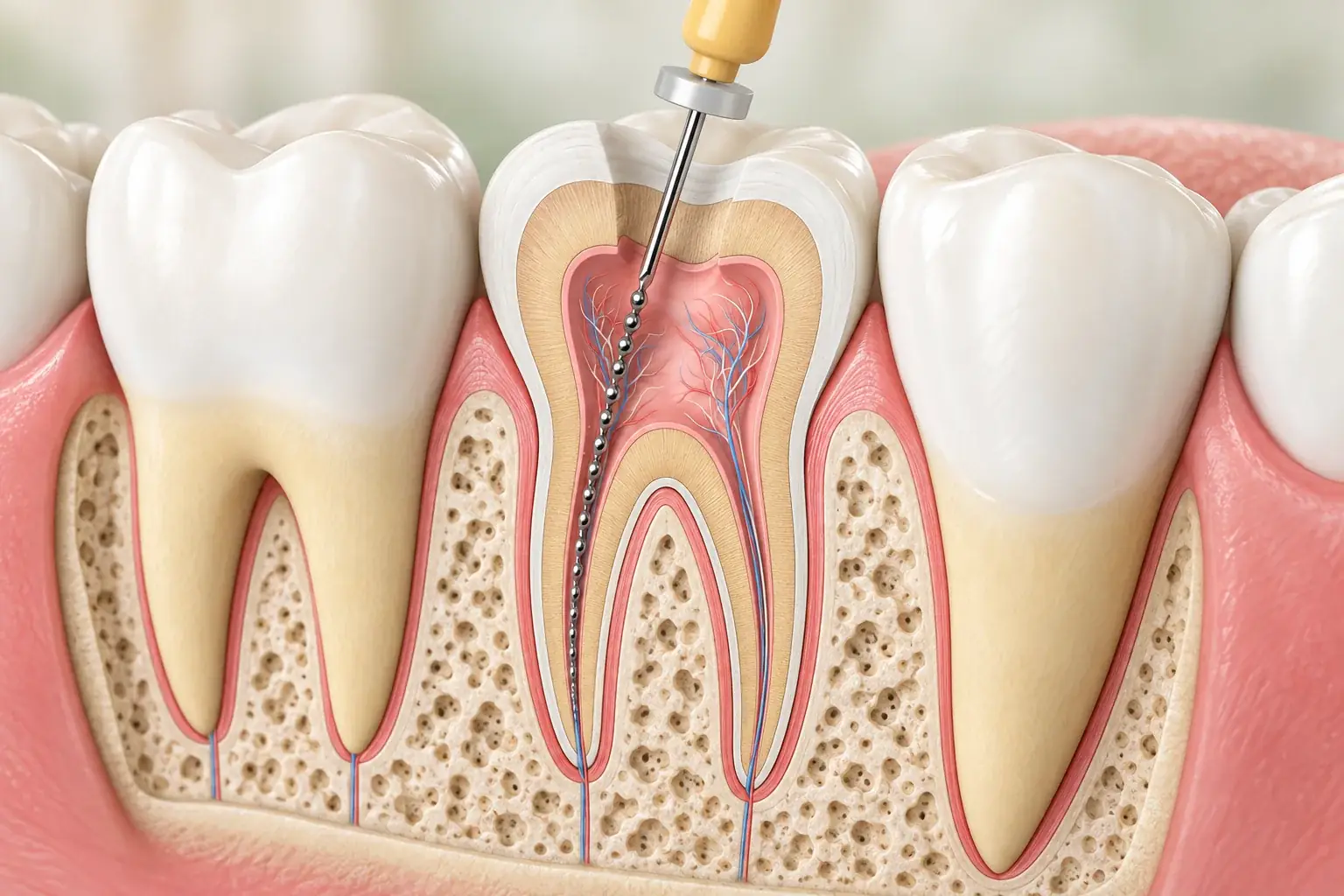
A root canal removes the pulp, cleans the canals and seals them. The tooth survives afterward because that seal keeps bacteria out. When a treated tooth develops new disease, one of a few things has usually happened:
- A canal was not found or not fully cleaned. Molars in particular have extra, very fine canals. Bacteria left in one can eventually cause infection at the root tip. Our molar root canal page explains why these teeth are harder to treat completely.
- The seal leaked. New decay at the edge of a crown, a cracked filling, a crown that came loose or a long delay between the root canal and the final restoration all let saliva and bacteria back into the canals.
- Complex anatomy. Curved, branching or calcified canals can be impossible to clean fully with the techniques available at the time.
- A crack. A vertical fracture in the root can mimic a failed root canal and often appears as a narrow, deep gum pocket on one side of the tooth. Unfortunately a cracked root is not something retreatment can fix.
- A new problem nearby. Gum disease around the root, a neighboring tooth or even sinus pressure can produce pain near a treated tooth that is actually healthy.
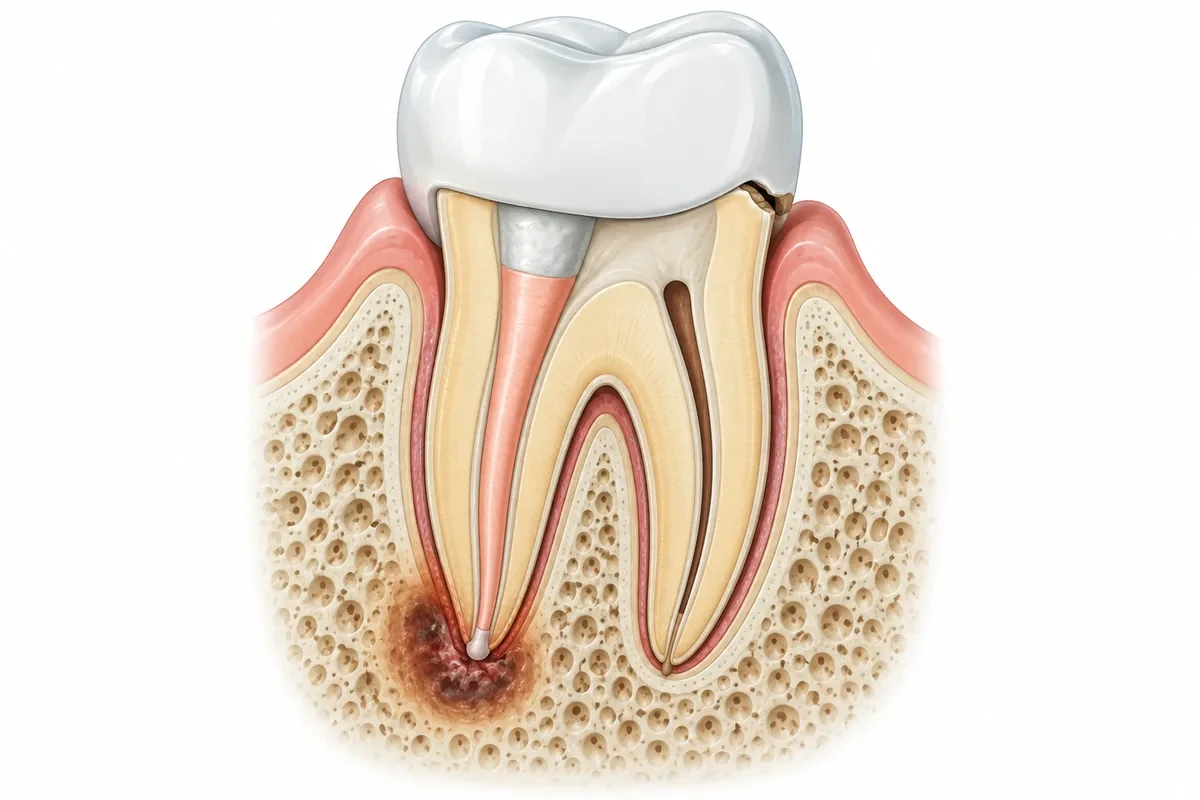
Sorting these out starts with history. If you have records or X-rays from the original treatment, bring them or ask the previous office to send them to us. Comparing an old image with a new one tells us whether a shadow at the root tip is shrinking (healing), unchanged (possibly scar tissue) or growing (active infection). Without that comparison, a single picture is much harder to interpret.
How the tooth is evaluated
Dr. Zohdi will examine the tooth and its neighbors, tap and press on them, measure the gums around the root, check how the crown or filling is sealing and take new X-rays. A three-dimensional scan is sometimes recommended because it can show a missed canal, the true size of an infection or a fracture line that a flat X-ray cannot.
The questions being answered are simple to state: Is this tooth really the source? What most likely went wrong? Can the problem be reached and fixed from inside the tooth? And will enough tooth remain afterward to hold a lasting restoration? The last question matters as much as the first; a tooth that can be re-cleaned but not rebuilt is not a good candidate.
If you have swelling, a pimple-like bump on the gum that drains, or a bad taste from the area, those are signs of infection and worth a prompt call even if the tooth itself does not hurt. Our dental abscess page explains which signs need same-day attention and which need the emergency room.
What nonsurgical retreatment involves
Retreatment follows the same logic as the original root canal, with the extra work of undoing what is already there:
- Numbing and isolation. The tooth is anesthetized and isolated with a dental dam, exactly as in a first root canal.
- Gaining access. An opening is made through the existing crown or filling. If the crown is sound and fits well it can often be kept and the opening repaired afterward; if it is leaking or decayed underneath, it is removed.
- Removing the old materials. Any post, core material and the rubber-like filling in the canals are taken out, which is the slow, careful part of the visit.
- Looking for what was missed. Canals are re-measured and the chamber is examined for extra canals, cracks or perforations.
- Cleaning and resealing. The canal system is disinfected again, sometimes with a medication left inside between two visits, then filled and sealed.
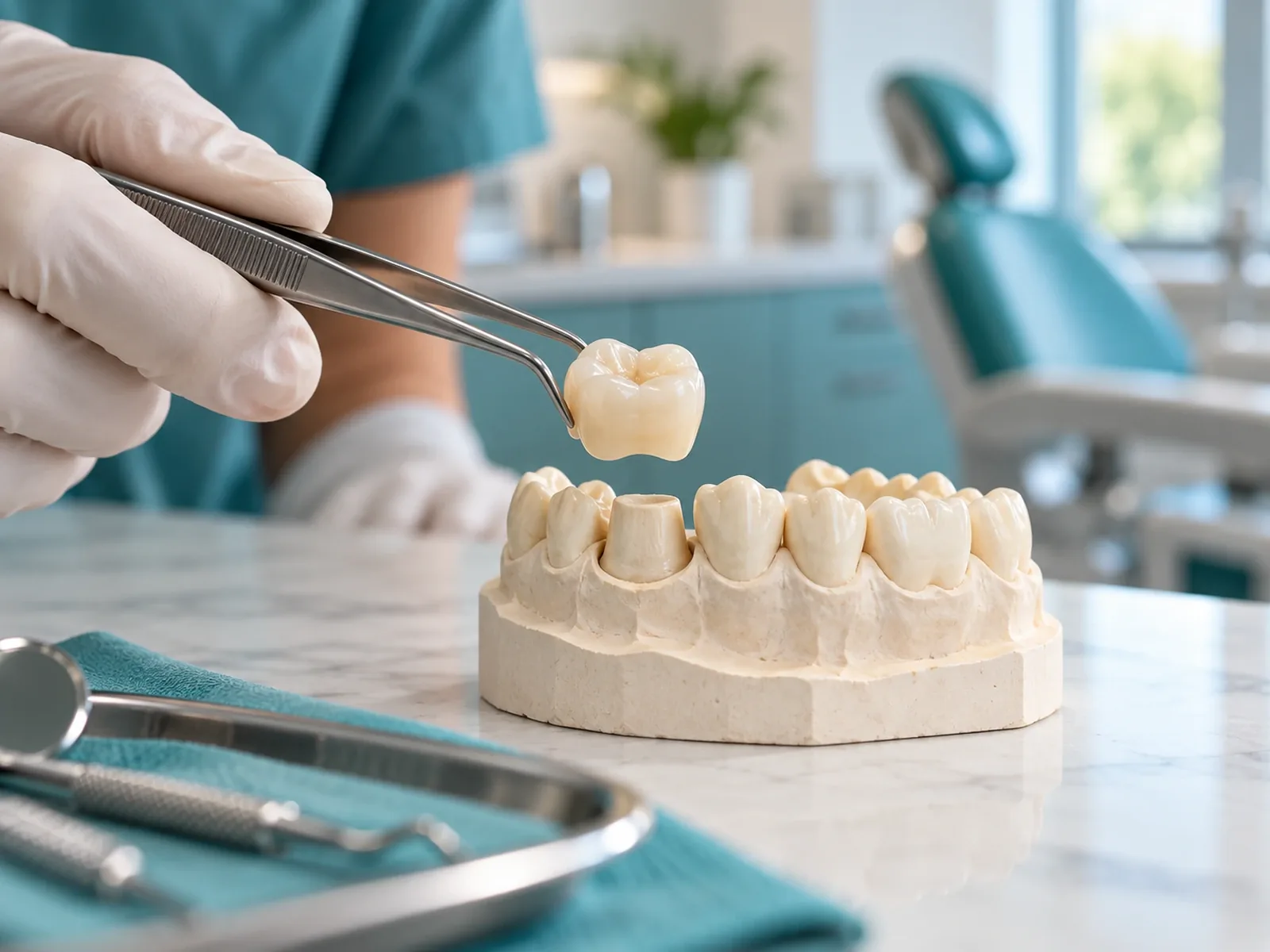
- Restoring the tooth. A new core, and often a new crown, completes the work. The retreatment fee and the restoration fee are usually separate items on the plan.
Retreatment often takes longer than the first root canal because of the removal step, and it is one of the situations where an endodontist with an operating microscope may be recommended, especially for a molar or when a post has to be removed. Providing root canal care in Cleburne does not mean every retreatment should be done here, and Dr. Zohdi will say so when referral gives you a better chance of keeping the tooth.
Comparing the alternatives
Retreatment, surgery, monitoring and extraction are not interchangeable. Which one fits depends on the cause.
| Option | When it tends to make sense | What it cannot do |
|---|---|---|
| Nonsurgical retreatment | A missed canal, leakage, or incomplete cleaning; the tooth is restorable | Fix a cracked root or a tooth with too little structure |
| Endodontic surgery (root-end treatment) | Infection persists after good retreatment, or the canals cannot be reached through the crown (for example, a large post) | Treat disease inside canals that were never cleaned |
| Monitoring | A small, stable, symptom-free finding, often old scar tissue | Resolve active infection or swelling |
| Extraction and replacement | A vertical root fracture, severe bone loss or an unrestorable tooth | Keep your natural root |
If extraction is the recommendation, it should come with a replacement discussion. Our guide to saving versus extracting a tooth lists the questions to ask, and our page on replacing a tooth after extraction covers implants, bridges and timing.
What happens to your crown
This is one of the most common worries, and the honest answer is "it depends on the crown." A well-fitting crown with no decay beneath it can usually be accessed through the top and patched with a filling afterward, which saves the cost of a new one. A crown with decay at its margin, a crown that was already loose, or a crown that has to be removed to reach a post generally needs to be replaced after the retreatment. You should know which situation you are in before treatment begins, and the estimate should show both the retreatment and any restorative steps. Our page on root canal cost explains how to read that estimate.
Recovery and follow-up
Expect the same kind of recovery as after a first root canal: some tenderness to biting for several days, managed with over-the-counter pain relief. Because retreated teeth often had infection present, healing in the bone is slower to show on X-rays and is checked over a year or more. A tooth that still hurts to bite on months later, or a gum bump that comes back, is a reason to return rather than wait. Our root canal recovery guide covers the day-to-day details.
Risks and realistic expectations
Retreatment has good outcomes when the cause is a fixable one, but no second procedure can promise the tooth will last forever. Risks include finding a crack once the tooth is open, not being able to remove all of the old material, perforating a thin root wall, and infection that persists despite thorough cleaning. If any of those appears during treatment, the plan may change, and the office should explain in advance how a change of plan would be handled.
Sources and further reading
- American Association of Endodontists: Endodontic retreatment
- American Association of Endodontists: Endodontic surgery
- American Association of Endodontists: Cracked teeth
General information, not a diagnosis. Read how we create and review our dental guides.