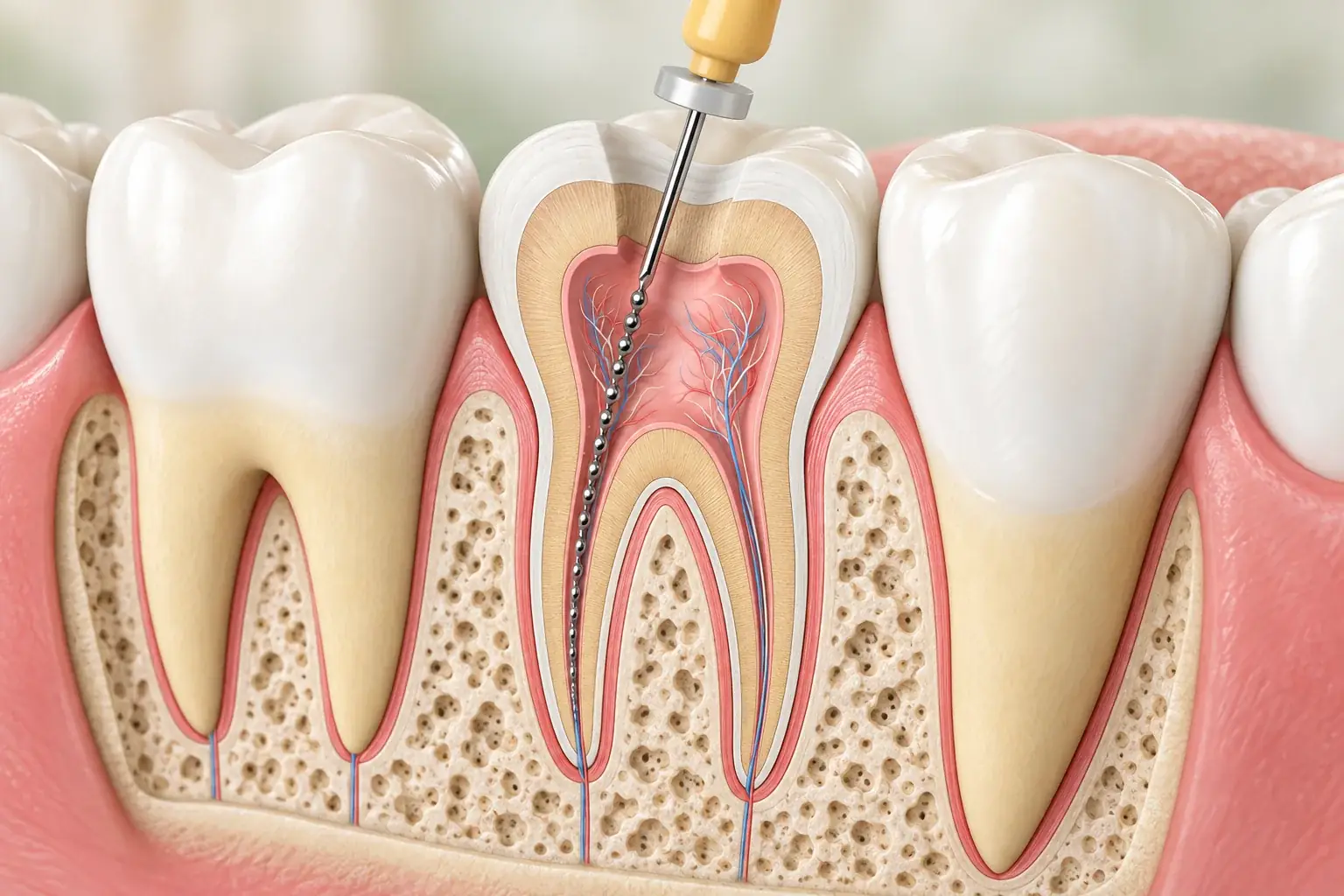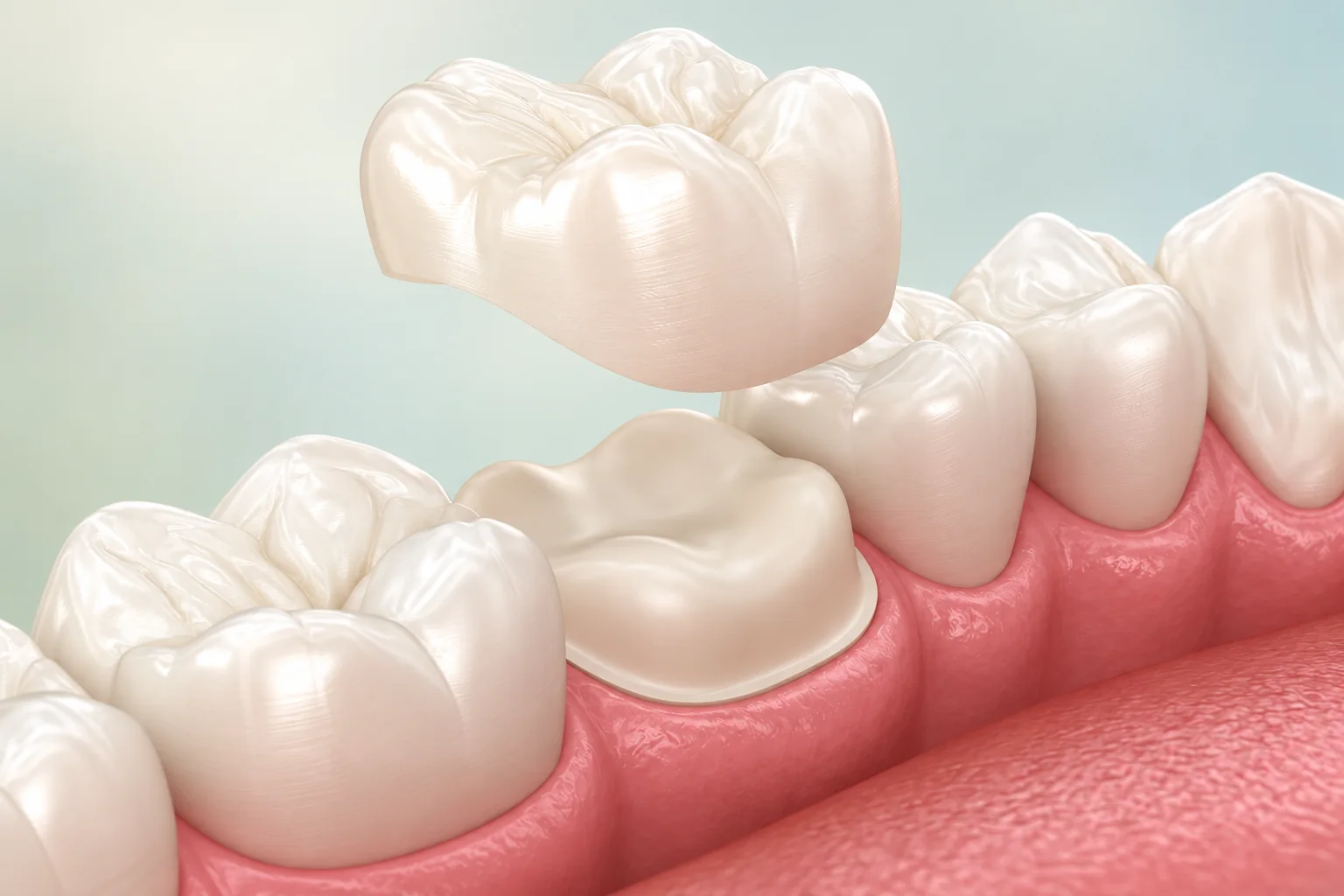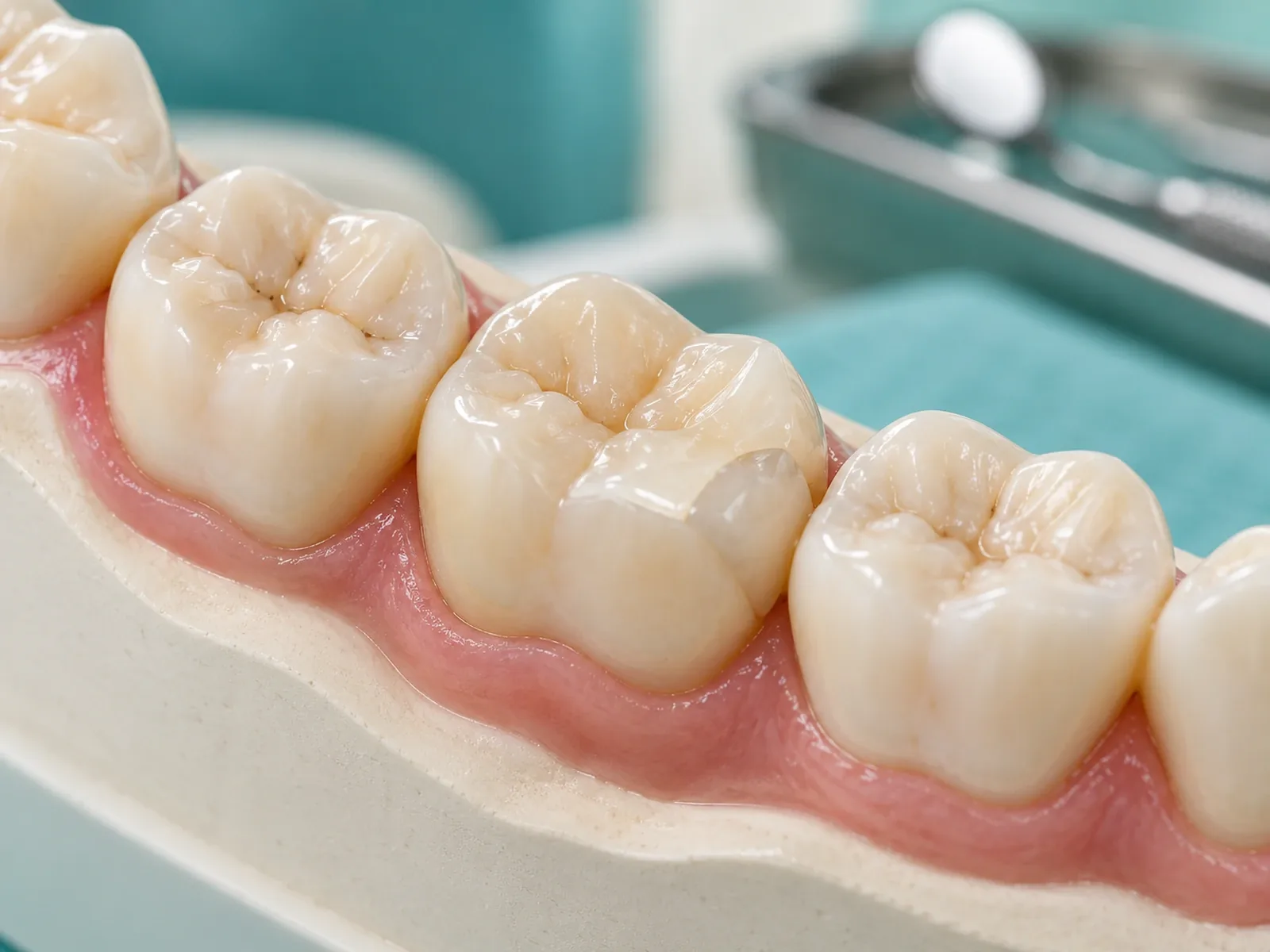
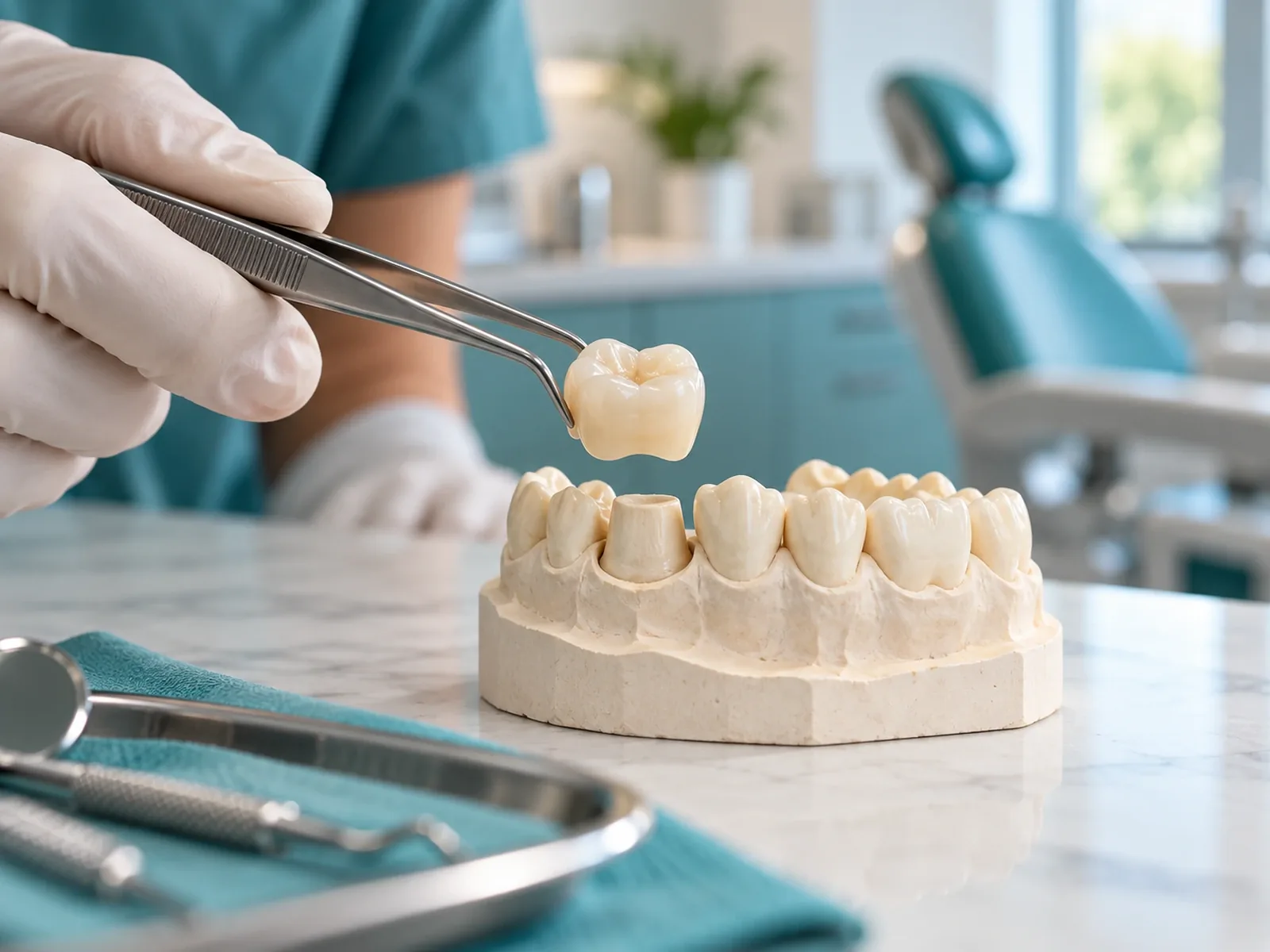
When people ask "do I need a crown after a root canal?" they are really asking two things: is the crown truly necessary, and why wasn't it included in the first place? Both deserve a straight answer. A root canal and a restoration are separate jobs. The root canal cleans and seals the canal system inside the tooth. The restoration rebuilds and protects the part of the tooth you chew with. Finishing one does not finish the other.
For the bigger picture — when a root canal is recommended, what the visit involves and the alternatives — start with our root canal treatment overview.
Whether that restoration should be a crown, an onlay or a filling depends on which tooth it is, how much sound structure is left after decay, old fillings and the access opening, whether there are cracks, and how hard the tooth works in your bite. For most back teeth the answer is a crown. For many front teeth it is not. This page explains the reasoning so you can understand the recommendation you are given.
Why back teeth usually need a crown
A molar or premolar that needs a root canal has typically already lost a lot of itself. There was a deep cavity or a large old filling that let bacteria reach the pulp, and the access opening for treatment removes more from the center of the tooth. What remains is often a ring of enamel and dentin around a hollow core.
Now add the job that tooth has to do. Back teeth absorb the bulk of chewing force, and the cusps on a hollowed-out tooth act like levers. Under a hard bite, one can flex and split. A crack confined to the top of the tooth may be repairable; one that runs down the root usually means extraction, and all the effort of the root canal is lost. A crown wraps around the whole tooth and ties those cusps together so the load is spread rather than concentrated on thin walls.
When a reasonable amount of healthy tooth remains, an onlay that covers the cusps but preserves more of the natural tooth can be an alternative. The choice is about geometry, not preference, and Dr. Zohdi will explain what he sees in your tooth specifically.
Why front teeth are often different
Front teeth (incisors and canines) are narrower, take mostly shearing rather than crushing force, and are usually accessed from the back surface through a small opening. If the rest of the tooth is sound, sealing that opening with a tooth-colored filling restores it adequately, and cutting the tooth down for a crown would remove healthy structure for no benefit.
A front tooth does move into crown territory when it has large existing fillings, a chip or fracture, or has darkened after the pulp died and whitening from inside is not a good option. Our page on tooth discoloration explains why a single dark tooth is usually an internal rather than a surface problem.
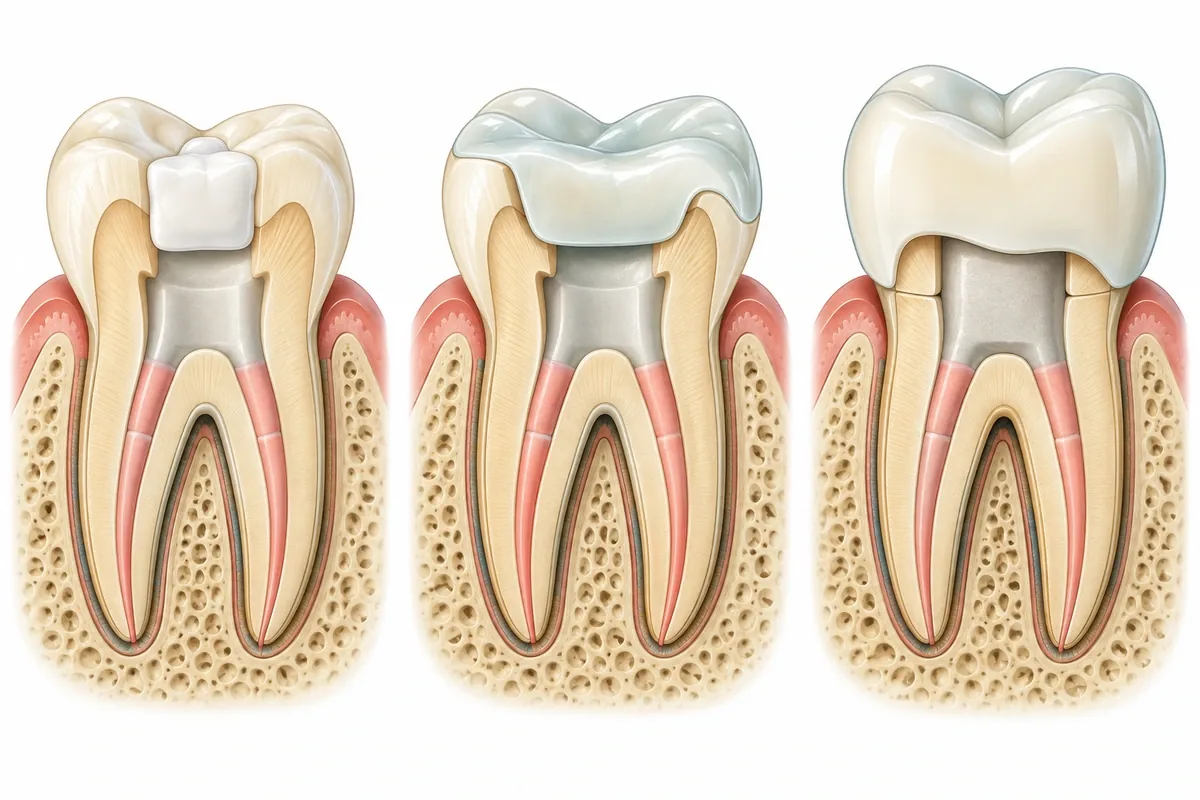
Buildup, post and crown: three different things
These terms get bundled together on treatment plans, and it helps to know what each one is for.
| Part | What it does | When it is used |
|---|---|---|
| Core buildup | Replaces missing tooth structure in the center so there is something for the crown to grip | Most root-treated back teeth, because the access opening and old decay leave a hollow |
| Post | A small rod cemented into one canal to anchor the buildup | Only when so little natural tooth remains that the buildup has nothing to hold on to |
| Crown | Covers and protects the prepared tooth above the gum line | Most back teeth; front teeth with significant structural loss |
Two misconceptions are worth clearing up. A post does not strengthen a tooth; it holds filling material in place, and placing one in a tooth that does not need it actually removes more root structure. And a crown does not make the tooth decay-proof; the edge where the crown meets the tooth can still decay if it is not kept clean.
The sequence matters too. The buildup is usually placed soon after the root canal, sometimes at the same visit, because it seals the canals more reliably than a temporary. The crown follows once the tooth is shaped and the restoration is made. If you are comparing a filling against a crown on a tooth that has not had a root canal, our guide to when a filling is enough and when a crown is considered applies the same logic.
The temporary filling is not the finished result
A temporary is a soft material that plugs the access opening between visits. It is good at that for a few weeks. It is not good at resisting chewing for months. Over time it wears, chips and lets saliva seep back toward the canals, and the unsupported tooth under it is at its most fragile.
Delaying the final restoration is one of the more common and more avoidable reasons a root-treated tooth is eventually lost. Before you leave the root canal visit, know when the restoration will be done and what to do if the temporary comes out. Our root canal recovery guide covers chewing precautions in the meantime. If a crown has been recommended and you are unsure about going ahead, come in and talk it through rather than letting the tooth sit; it is a short conversation, and the tooth is at risk while it waits.
What the crown visit involves
Restoring a root-treated tooth at our Cleburne office usually takes one or two appointments depending on how the crown is made:
- The tooth is numbed if needed (a root-treated tooth has no nerve inside, but the surrounding gum does).
- Any temporary is removed, the canals are checked, and the buildup is placed if it was not already.
- The tooth is shaped so the crown has room to fit, and an impression or digital scan is taken.
- A temporary crown protects the tooth while the final one is made, or the final crown is made and fitted the same day if that is how your crown is produced.
- The crown is checked for fit and bite, adjusted and cemented.
Afterward, brush and floss the crowned tooth as you would any other, with particular attention to the gum line where the crown meets the tooth. Keep routine exams so the margins can be checked, since a root-treated tooth can decay underneath a crown without ever hurting.
Include the restoration in the plan from the start
Because the root canal and the restoration are separate procedures, they are often separate fees. That is normal, but it should never be a surprise. When you are given an estimate for root canal treatment, ask whether it includes the buildup, any post and the crown, or whether those are quoted separately. Then compare the whole figure, not the first line. Our page on root canal cost walks through what belongs on that estimate. If the complete plan is more than you expected, say so before treatment starts so options and payment arrangements can be discussed with time to spare.
Risks and alternatives
A crown greatly reduces fracture risk but does not eliminate it, and it does not prevent decay at the margin or problems in the gum around it. A tooth can also still develop a new infection at the root tip years later, as our page on root canal retreatment explains. The alternative to restoring a treated tooth is not "leave it as is"; an unrestored tooth will eventually fail. The real alternative is extraction and replacement, which is more involved and usually more costly than finishing the tooth you already saved.
Sources and further reading
- American Association of Endodontists: What is a root canal?
- ADA MouthHealthy: Crowns
- American Association of Endodontists: Cracked teeth
General information, not a diagnosis. Read how we create and review our dental guides.