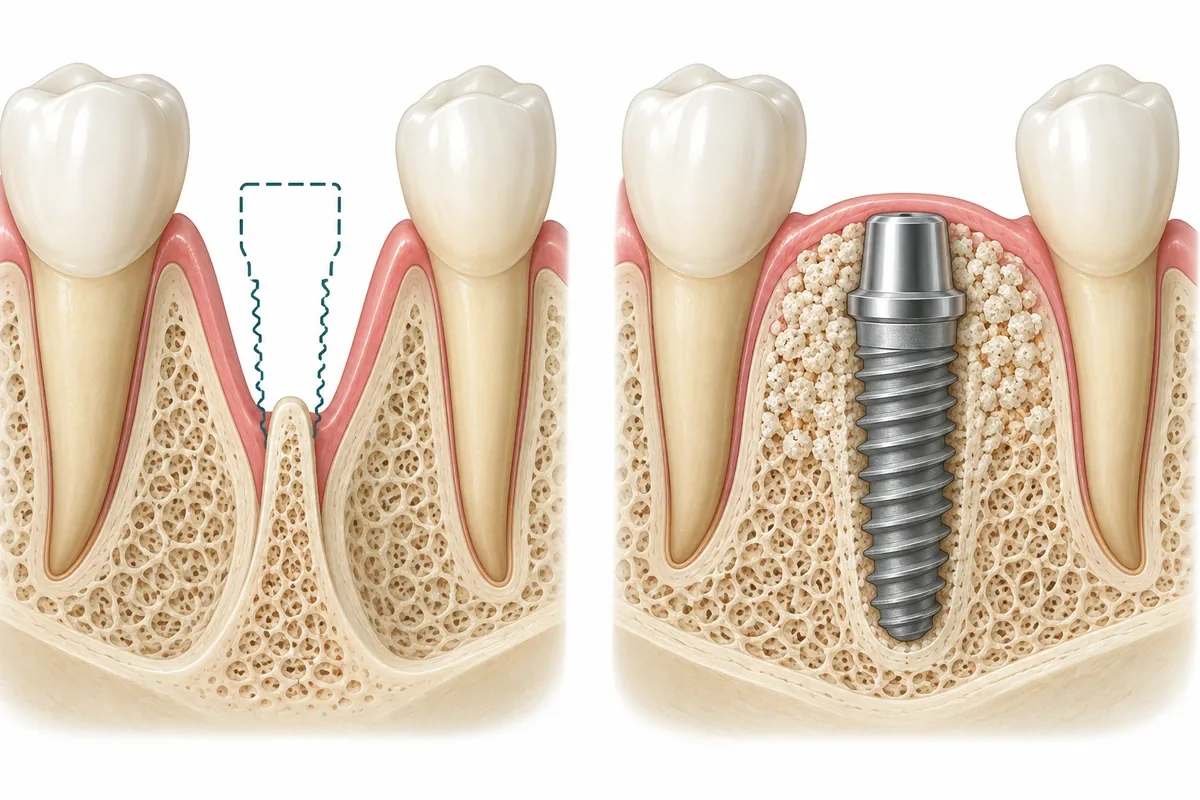
A dental implant needs a bed of bone around it, much as a fence post needs solid ground. When a tooth has been gone for years, or was lost to gum disease or infection, the ridge of bone that held it can shrink to a thin edge. There may still be bone, but not in the right place, not wide enough, or not tall enough to hold an implant where the crown needs to be.
Ridge augmentation is the procedure that rebuilds that ridge. Graft material is placed against the bone, protected while it heals, and over several months your body converts it into bone of its own. Once the ridge is restored, the implant can be placed in a position that looks natural, chews well, and can be kept clean.
This page explains how Dr. Zohdi decides when augmentation is needed, the main ways it is done, what healing looks like, and the alternatives worth weighing. It is one part of our broader bone grafting overview, which covers the other site-building procedures too.
Why the ridge shrinks in the first place
Bone stays strong only where it is being used. Once a tooth root is gone, the bone that surrounded it no longer carries chewing forces and gradually resorbs. The outer wall thins first, so ridges tend to lose width before height. Several things speed this up:
- Years of wearing a removable denture or partial that rests on the ridge
- Gum disease, which destroys bone before the tooth is lost
- A tooth that fractured or was infected for a long time
- A difficult extraction that removed part of the socket wall
- An extraction site that was never grafted (see socket preservation)
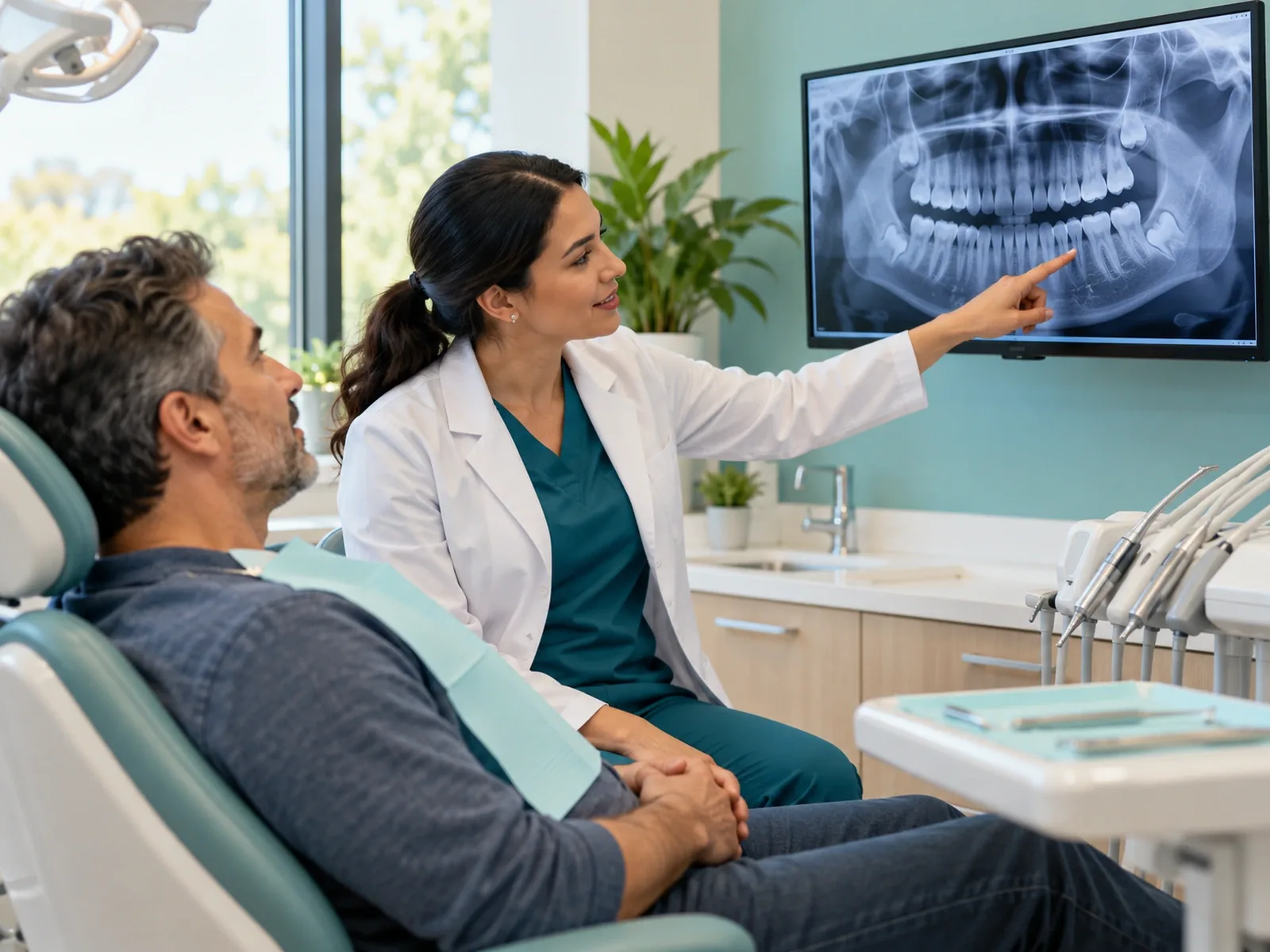
The amount of loss is impossible to judge from the outside. The gum tissue drapes over the ridge and hides its shape, which is why planning starts with imaging.
The final tooth guides the plan
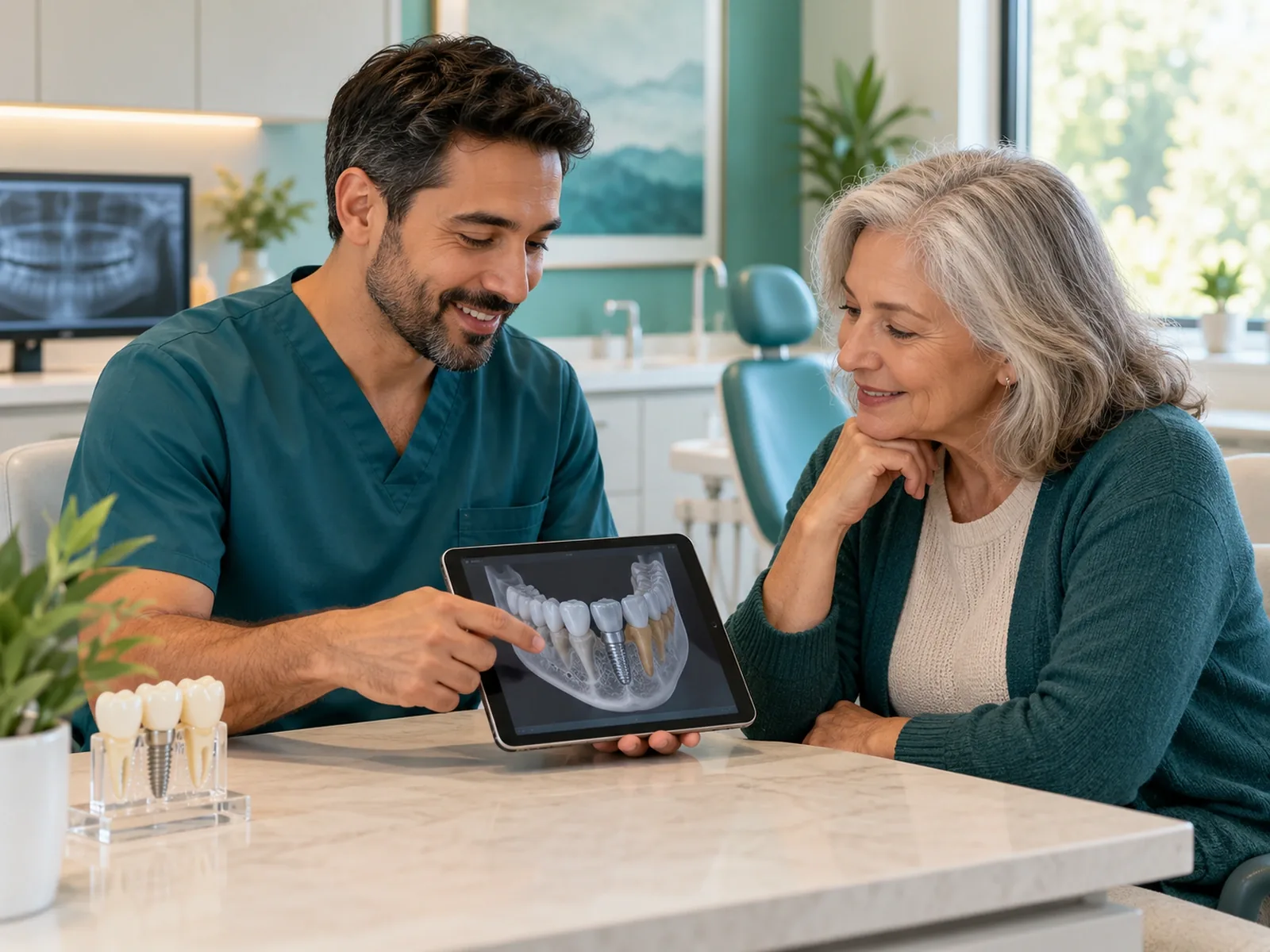
It is tempting to think of implant planning as finding a place to put the implant. Dr. Zohdi plans the other way around: first, where does the crown need to be so that it looks right and meets the opposing teeth properly? Then, is there enough bone to put the implant under that crown?
If an implant is simply tilted or shifted to fit the remaining bone, the result can be a crown that is too long, angled oddly, hard to clean, or overloaded when you chew. Rebuilding the ridge so the implant can sit in the right place is usually the better long-term decision.
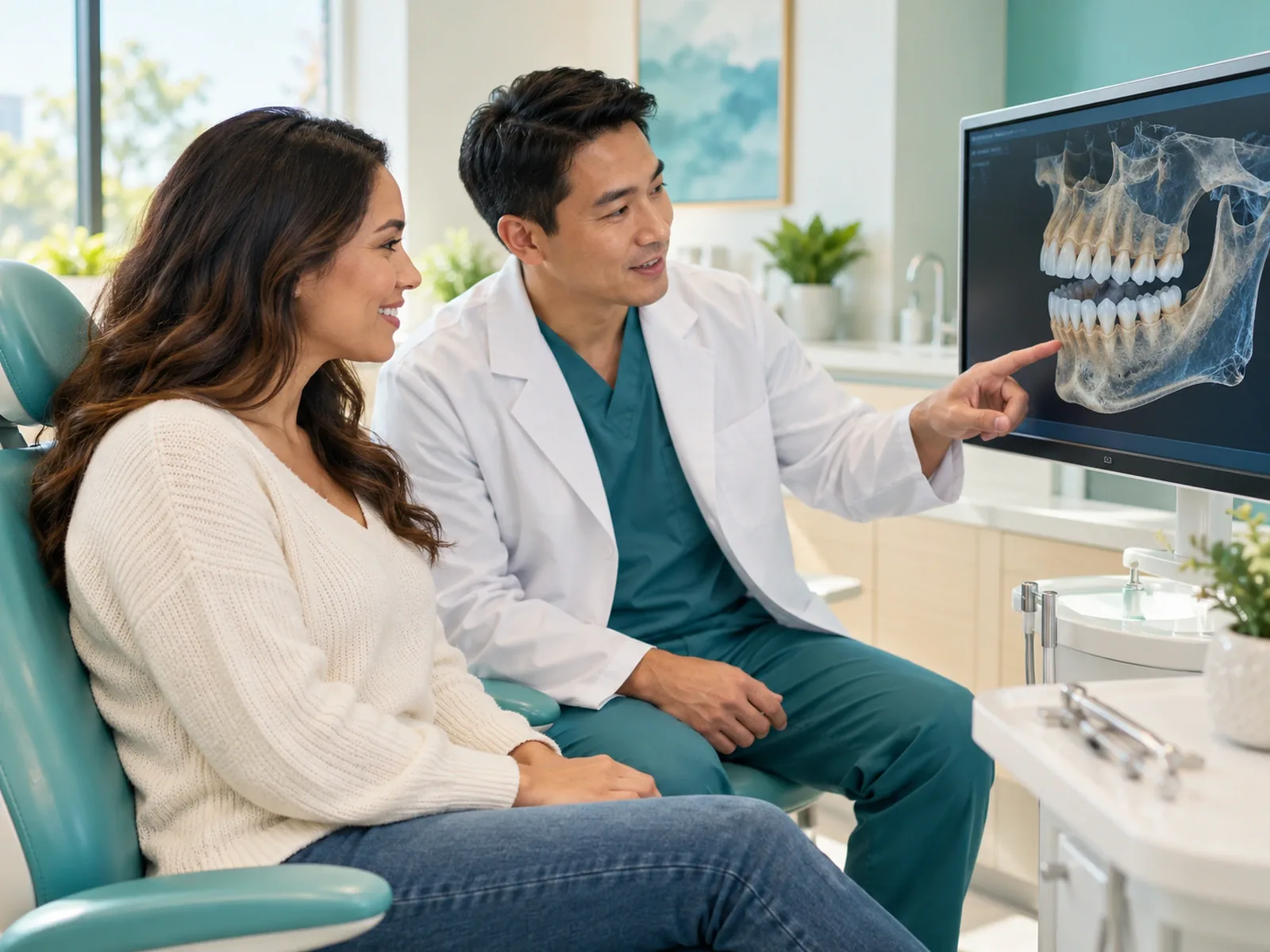
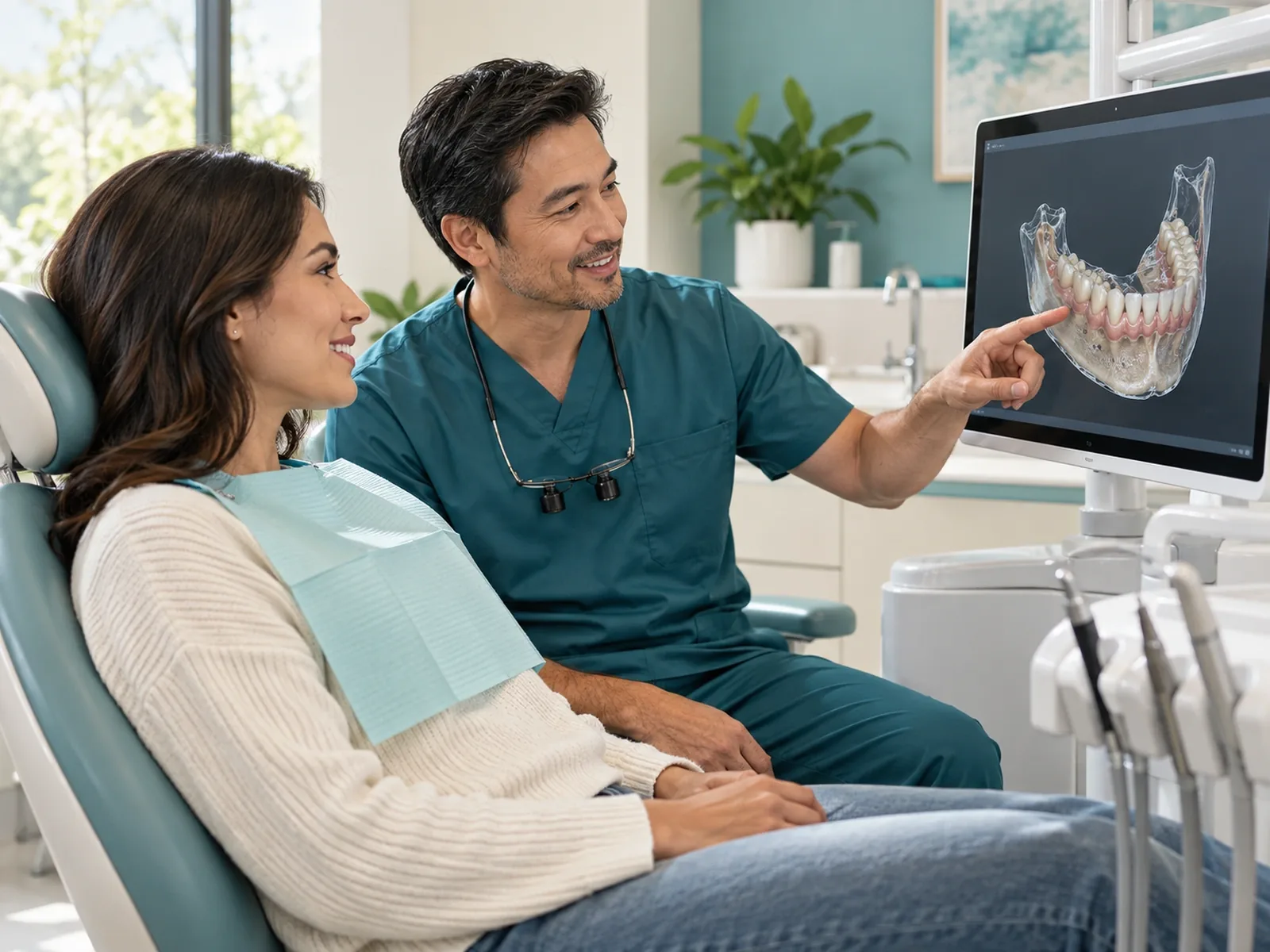
A three-dimensional scan shows the width and height of the ridge and the position of structures that must be protected: the nerve canal in the lower jaw, the sinus floor in the upper jaw, and the roots of neighboring teeth. From that scan, the deficiency is described as mostly a width problem, mostly a height problem, or both. Width is generally easier to rebuild than height.
Ways a ridge can be rebuilt
The right technique depends on the shape and size of the defect. The most common approaches are:
Particulate graft with a membrane (guided bone regeneration). Granules of graft material are packed against the ridge and covered with a membrane, which may be pinned in place. The membrane keeps faster-growing gum tissue out so bone can fill the space. This is the workhorse technique for moderate width defects.
Block graft. A small block of bone, either from a donor source or from another spot in your own jaw, is fixed to the ridge with tiny screws. Blocks are used for larger defects that need a rigid framework. Using your own bone means a second surgical site, which adds recovery.
Ridge splitting or expansion. When the ridge is narrow but still tall enough, it can sometimes be carefully split and spread, with graft material placed in the gap. In selected cases the implant goes in at the same visit.
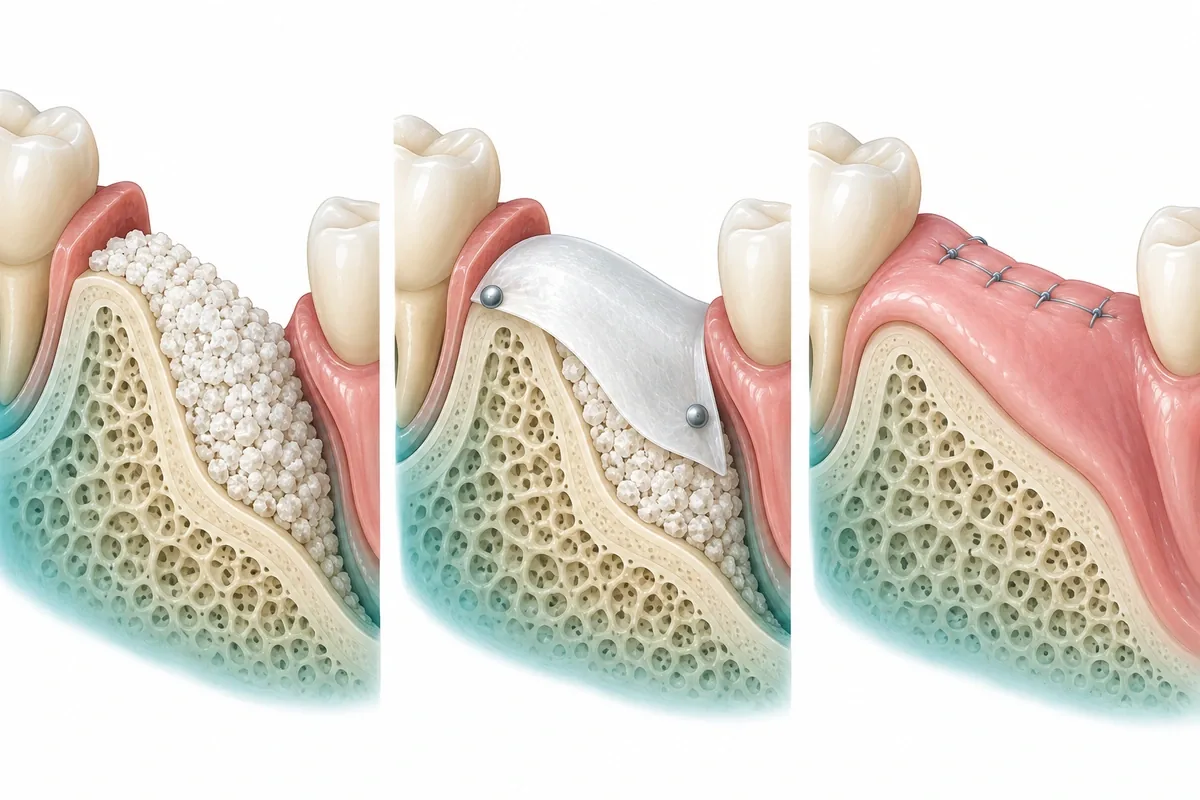
Graft materials fall into the same categories used in other bone grafts: your own bone, processed donor bone, animal-derived bone mineral, and synthetic materials. Each has tradeoffs in how fast it converts, how well it holds its shape, and whether a second surgical site is needed. Ask what is proposed for you and why.
Staged or combined with the implant?
Smaller defects can often be grafted at the same appointment the implant is placed. The implant is seated, the thin or missing bone beside it is built up with graft and a membrane, and both heal together. This saves months and a surgery.
Larger defects usually require a staged approach: graft first, wait for it to mature, then place the implant in a separate visit. The waiting period is typically measured in months and is confirmed by re-examining the site rather than by the calendar. Our page on bone graft healing explains what is checked and why comfort alone is not the signal.
Dr. Zohdi will tell you before surgery which approach is planned and what might change it, since bone sometimes proves softer or thinner than the scan suggested.
What to expect at the visit and afterward
Ridge augmentation is done with local anesthesia in our Cleburne office. You stay awake and comfortable, and you can signal for a pause at any time. The appointment is longer than a filling but shorter than most people expect.
Afterward, swelling and bruising for several days are normal, often peaking around the second or third day. You will be asked to:
- Use cold packs on the first day and keep your head elevated when resting
- Eat soft, cool foods and chew away from the site for the first couple of weeks
- Avoid pulling on your lip or cheek to look at the stitches, which can open the wound
- Keep the area clean with a prescribed rinse rather than brushing directly over it at first
- Not wear a temporary denture over the site until it has been adjusted to clear the graft
- Stop smoking, which is one of the strongest predictors of graft failure
Call (817) 641-6261 if swelling increases after day three, if you see the membrane or graft granules through an opening in the gum, or if you develop fever, drainage, or pain that is getting worse rather than better. Difficulty breathing or swallowing, or swelling spreading toward the eye or down the neck, needs emergency care; go to the emergency room or call 911.
Risks and limitations
Bone grafting is predictable, but it is still surgery, and the body does not always cooperate. Possible complications include infection, the wound opening early, the membrane becoming exposed, partial loss of the graft, and bone that heals with less volume than planned. Block grafts carry a small risk of the block loosening or of numbness near a donor site.
Even a graft that heals well may leave the site slightly short of ideal. In that case the options are another, smaller graft; a slightly different implant size or position; or a change in the restorative design. Ask before surgery what the fallback plan would be, so a less-than-perfect result is a detour rather than a dead end.
Cost factors and alternatives
The fee for ridge augmentation depends on the size of the defect, the technique, the materials, whether a membrane and fixation pins or screws are needed, and whether imaging is included. It is almost always a separate item from the implant, abutment, and crown, so ask for a written estimate that lists each stage. Insurance coverage for grafting varies widely; our insurance and financing pages explain how we help you work through it.
Grafting is not the only path. Depending on the site, reasonable alternatives include:
| Option | What it avoids | What it gives up |
|---|---|---|
| Narrower or shorter implant | A separate graft surgery | May limit crown size or long-term strength in some sites |
| Dental bridge on neighboring teeth | Surgery at the missing-tooth site | Requires shaping healthy neighboring teeth |
| Removable partial denture | Any surgery | Comfort, stability, and continued ridge shrinkage |
A good consultation compares total surgery, time, maintenance, and cost, not just whether grafting is technically possible. Our guide to implants when bone has been lost goes deeper on these tradeoffs, and the implant candidacy page covers the health factors that apply to every implant plan.
Sources and further reading
- American Academy of Periodontology: Dental implant procedures
- American Academy of Periodontology: Sinus augmentation
- FDA: Dental implants—what you should know
- ADA MouthHealthy: Implants
General information, not a diagnosis. Read how we create and review our dental guides.