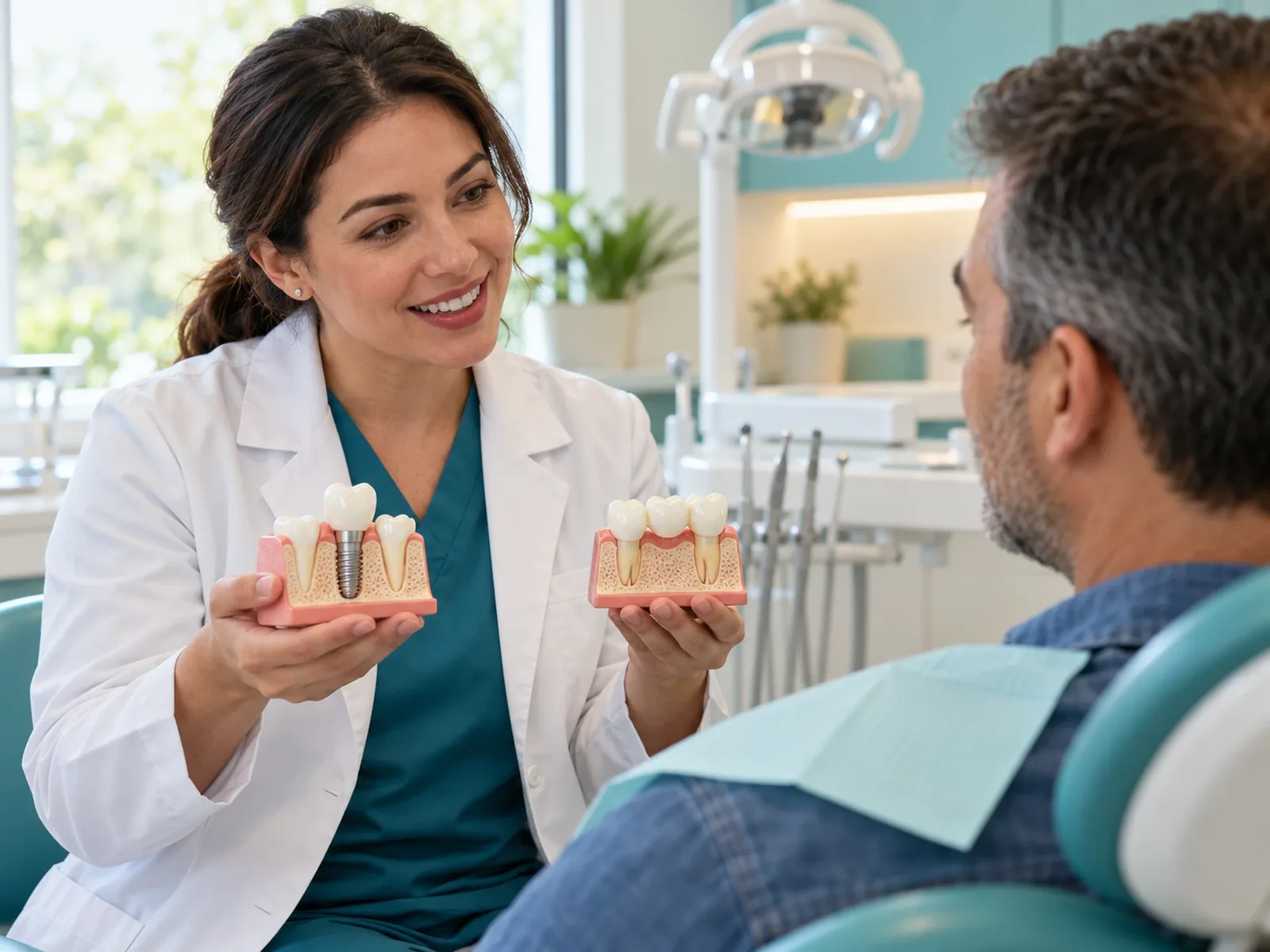

Most healthy adults who are missing a tooth can have a dental implant. That is the short answer, and it is genuinely true for a large share of the people who ask. But candidate is not a simple yes or no stamped on you by your age or by how long the tooth has been gone. It is a judgment about whether an implant can be placed safely, restored well and kept healthy in your particular mouth and body.
Three answers are possible. Yes, which is common. Yes, with preparation, where a graft, gum treatment or a medical conversation comes first. And another option would serve you better, which is not a failure; it is good planning.
This guide, part of our dental implant services, explains what Dr. Zohdi evaluates in each of those areas so you know what to expect at a consultation in Cleburne.
What a good candidate usually has
- Good general health, with any chronic conditions under control
- Enough jawbone to hold an implant, or a site that can be built up with grafting
- Healthy gums, with no active gum disease
- No tobacco use, or a willingness to stop for the treatment period
- A realistic plan for daily cleaning and regular follow-up visits
Most people meet most of these. The rest of this page is about the exceptions and the gray areas.
What the implant site needs
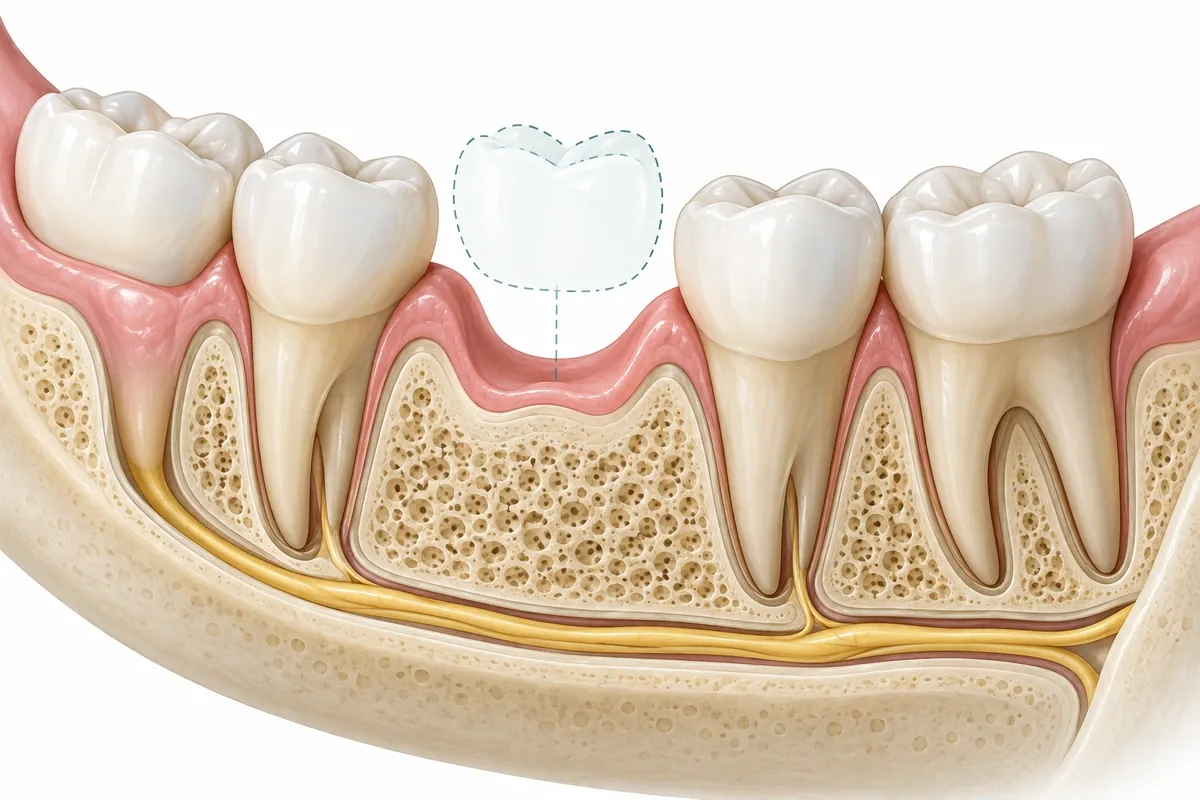
Bone. An implant needs enough bone height and width to sit fully inside it, with a margin on every side. Bone shrinks after a tooth is lost, so a long-missing tooth may have less than a fresh extraction site. A 3D scan measures this precisely. Where bone is short, grafting can rebuild it, and bone loss alone rarely rules out implants.
Nearby anatomy. The nerve canal in the lower jaw and the sinus floor in the upper jaw set limits on implant length and position. A sinus lift can add height in the upper back.
Gum. Thick, healthy gum protects the implant and shapes a natural-looking crown. Thin or inflamed tissue may need treatment or a soft-tissue graft.
Space. There must be room for a crown of normal size. Teeth that have drifted into the gap or over-erupted from the opposite jaw can leave too little, and may need reshaping or orthodontics first.
The neighbors. Decay, cracks or gum disease on adjacent teeth are treated first; an implant placed next to a failing tooth inherits its problems.
Medical history and medications
Bring a complete, current list of medications and supplements. The things that matter most:
- Diabetes. Well-controlled diabetes is compatible with implants. Poor control slows healing and raises infection risk, so we may ask about your recent HbA1c and coordinate with your physician.
- Medicines that affect bone. Bisphosphonates and other antiresorptive drugs (often prescribed for osteoporosis or some cancers) can, rarely, interfere with jaw healing. Oral forms taken for osteoporosis carry a lower risk than intravenous forms; the dose, duration and reason all matter. This calls for an individual discussion, not an automatic no.
- Blood thinners. Usually managed around the surgery rather than stopped. Never stop a prescribed anticoagulant on your own.
- Immune-suppressing conditions or drugs, and past radiation to the jaws. These raise the risk of healing problems and may change the plan or the timing.
- Uncontrolled conditions of any kind, including high blood pressure, are usually stabilized first.
Do not stop any prescribed medicine to become eligible. If a change is wise, it is made with your physician.
Smoking, grinding and gum disease history
Smoking reduces blood flow to the gums, slows healing and substantially raises the risk of an implant failing to integrate. It also raises the long-term risk of inflammation around the implant. Stopping before surgery and through healing improves the odds; the consultation is a good time to talk about it.
Grinding and clenching place heavy forces on an implant crown. They do not rule out implants, but they can change the design (more implants, shorter bridges) and usually call for a night guard afterward.
A history of gum disease is the strongest predictor of gum problems around implants later. It does not exclude you, but active disease must be treated first and you will need closer periodontal maintenance afterward.
Age: too young, or too old?
Teenagers and young adults. Implants do not move with growing bone, so an implant placed before the jaw has finished growing can end up sitting too low years later. We usually wait until growth is complete, often the late teens or early twenties, and use a temporary replacement in the meantime.
Older adults. There is no upper age limit. Healthy people in their seventies and eighties have implants placed routinely. What matters is overall health, medications and the ability to care for the result, not the number on your birth certificate.
Your ability to maintain the result
An implant has to be cleaned every day and checked regularly for the rest of its life. If arthritis, vision or another condition makes cleaning hard, say so early; the design can be adapted, or a removable implant-supported denture may be easier to keep clean than fixed teeth. Living far from the office or travelling often also affects the plan, because healing checks and follow-ups are part of the treatment.
What yes, with preparation looks like
Many patients hear this version. Common preparatory steps:
- Treating gum disease with scaling and root planing and confirming the gums are healthy
- A bone graft at the implant site, with a few months of healing
- Stopping smoking for the treatment period
- A medical review or lab test with your physician
- Orthodontics to open or close space
Each adds time, and each is explained in the treatment timeline guide.
What the consultation involves
Expect a conversation about your goals and health, an examination of your gums, teeth and bite, X-rays and usually a 3D scan, and a review of your medications. Dr. Zohdi will then tell you which of the three answers applies, why, and what the alternatives would be. You should leave understanding the reasons, not just the recommendation.
When another option is the better fit
If the risks are high, the preparation is extensive, or you would rather not have surgery, a dental bridge or a partial denture may give you a good result with less burden. That is a legitimate choice, and in some cases the better one. Reassessment later is also possible; health changes, and so do options.
Finding out where you stand
The only way to know which answer applies to you is an exam and imaging. Bring your medication list and your questions, and Dr. Zohdi will give you a clear, reasoned answer and a plan for whichever path fits. Request an appointment at our Cleburne office, 302 N Ridgeway Dr, or call (817) 641-6261.
Sources and further reading
- FDA: Dental implants—what you should know
- ADA MouthHealthy: Dental implants
- Mayo Clinic: Dental implant surgery
General information, not a diagnosis. Read how we create and review our dental guides.