"You don't have enough bone for implants." Many people hear some version of that sentence and assume the door is closed. Others see advertisements promising that bone is never a problem and assume there is nothing to think about. Both leave out the part that actually matters: what kind of bone loss you have, where it is, and what you want the new teeth to do.
Bone loss changes how an implant plan is built. It rarely decides the plan by itself. In some cases the missing bone can be rebuilt. In others, the implant plan can be redesigned to use the bone you still have. And in some, a bridge or a well-made removable option is the more sensible choice. The purpose of a consultation is to figure out which of those is true for you.
This page explains how Dr. Zohdi assesses bone loss, the pathways that exist, and the questions that make a consultation genuinely useful. It belongs to our bone grafting overview, which covers the individual procedures in more detail.
First, find out what kind of bone loss you have
"Bone loss" describes several different situations, and they are not treated the same way.
- Loss of width. The ridge is tall enough but has thinned to a narrow edge. This is the most common pattern after a tooth has been missing for a few years and is usually the most straightforward to rebuild.
- Loss of height. The ridge is wide but short. In the upper back jaw this often means the sinus has expanded downward; in the lower back jaw it means less distance to the nerve canal. Height is harder to regain than width.
- A contour defect. A dent or scoop on one side of the ridge, often where a tooth was lost to infection or a fractured root. The implant may fit, but part of it would be exposed without a graft.
- Generalized loss across an arch. Years of denture wear or advanced gum disease can shrink the whole jaw. Here the question shifts from a single site to how to support a full set of teeth.
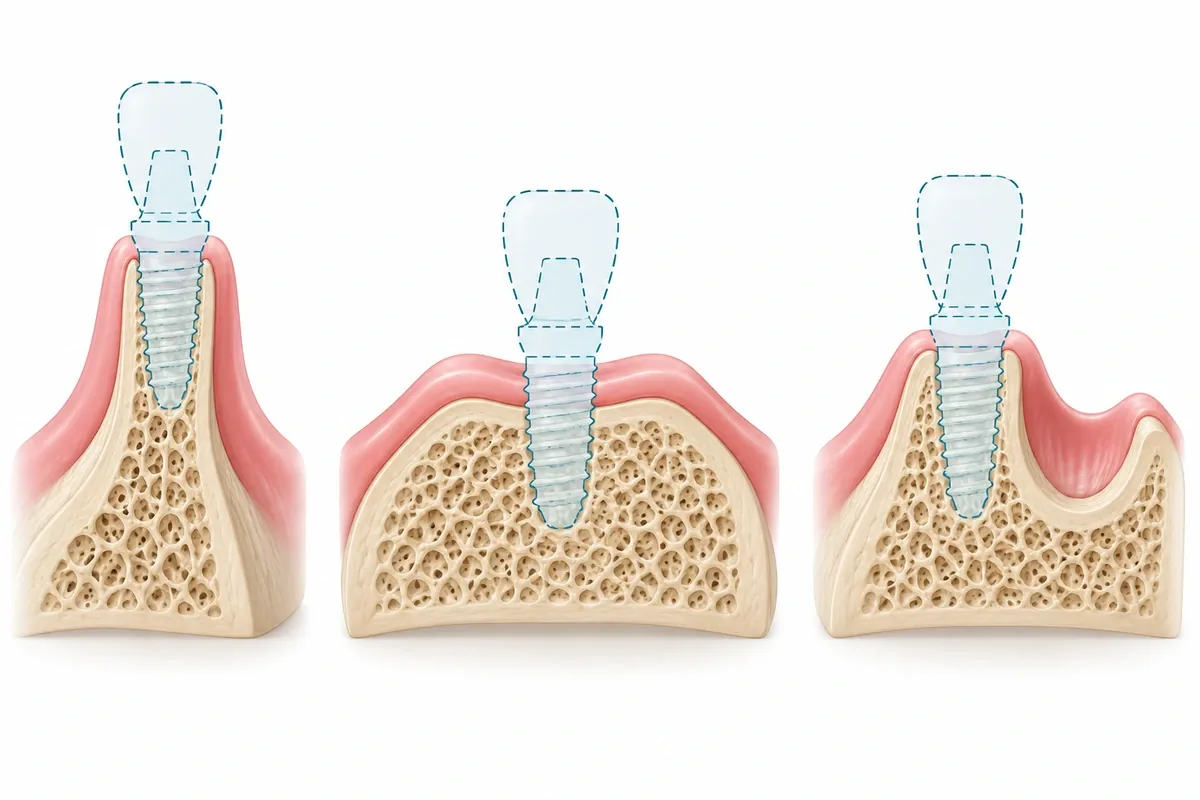
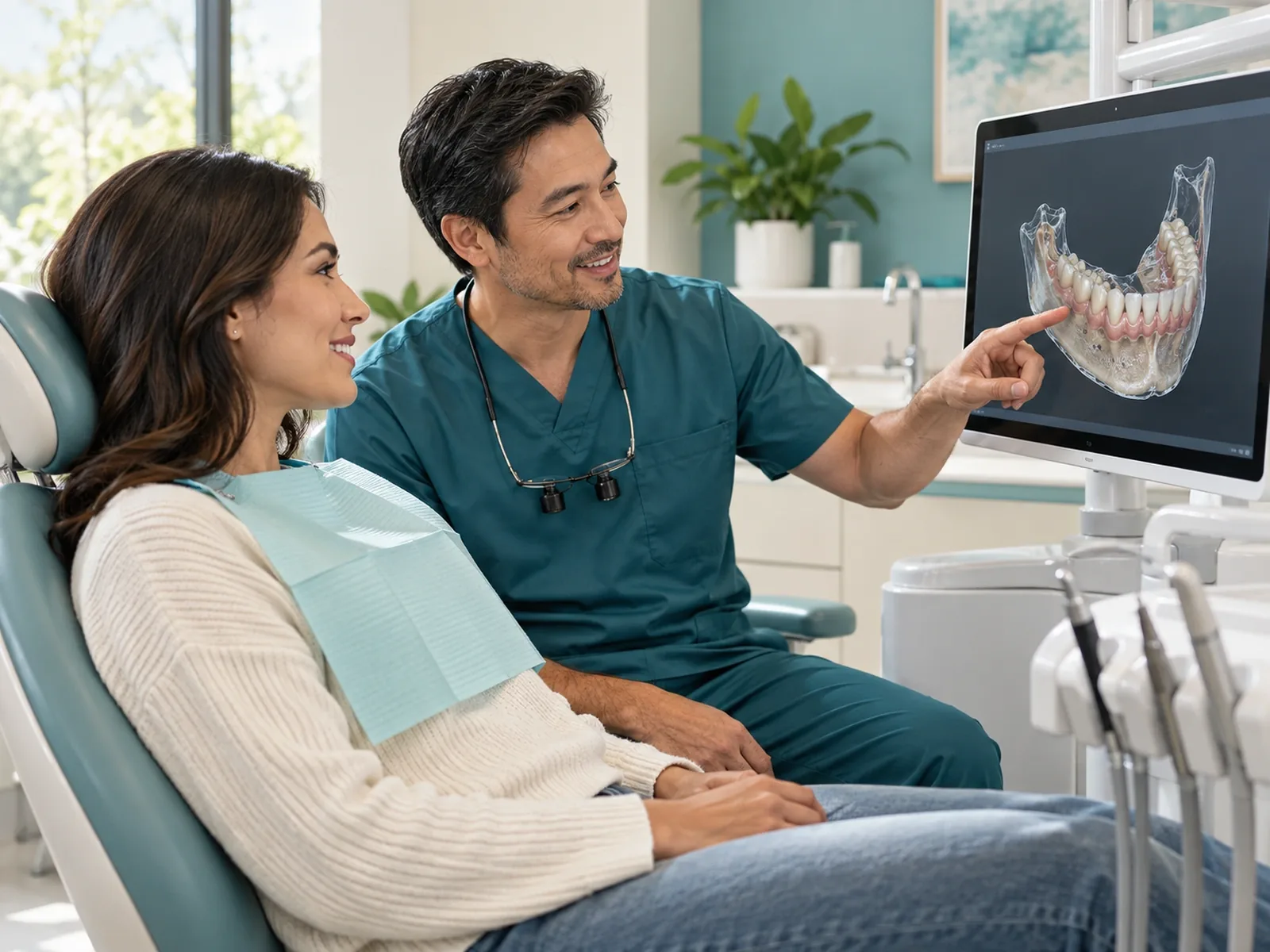
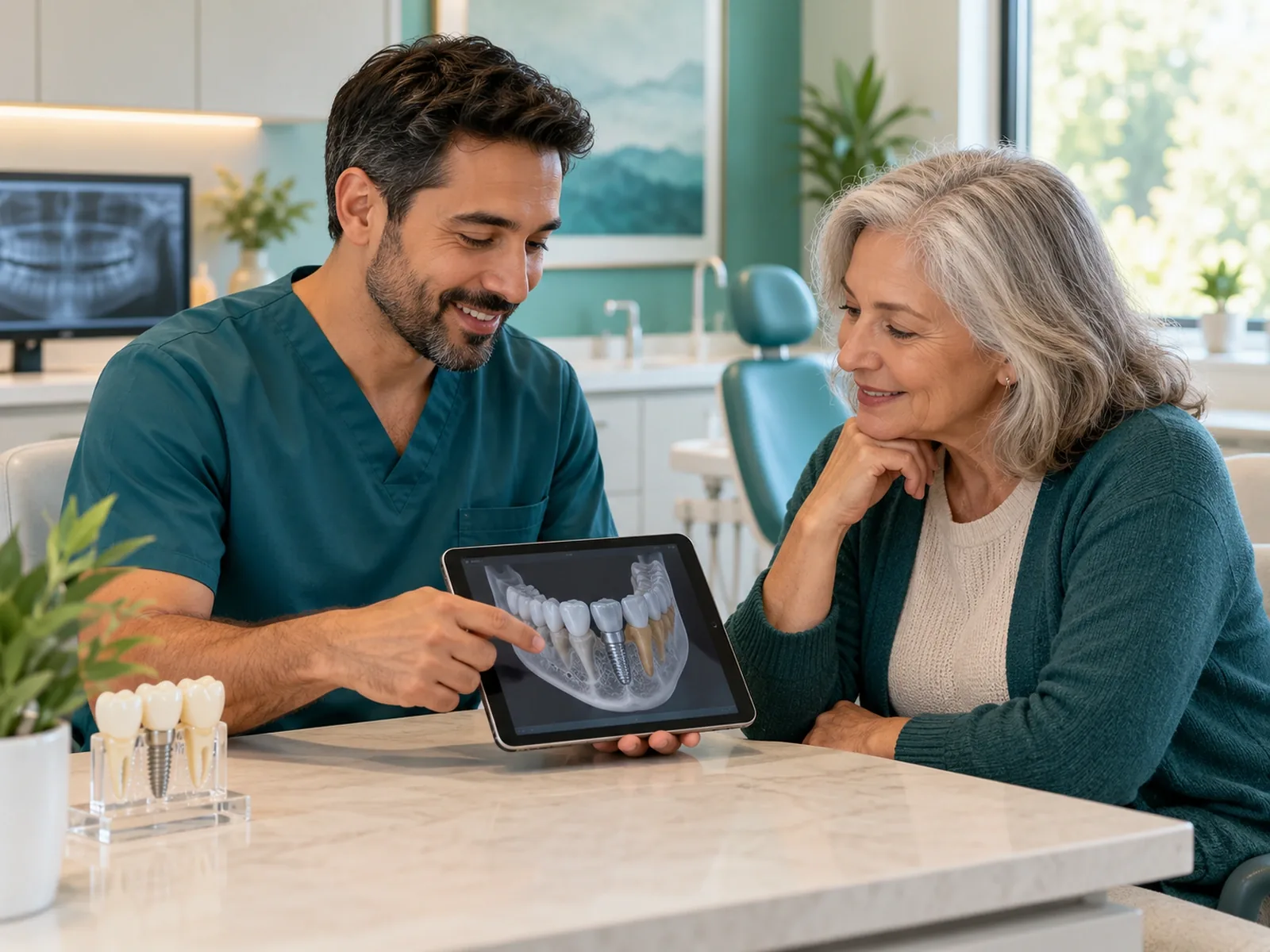
A two-dimensional panoramic X-ray cannot show width at all, which is why a diagnosis of "not enough bone" based on one is incomplete. A three-dimensional scan shows the exact shape of the ridge and the position of the nerve, sinus, and neighboring roots. Dr. Zohdi then connects those findings to where the final teeth need to be. The question is never just "is there bone here?" but "is there bone where the tooth belongs?"
Your health history is part of this picture. Our implant candidacy page covers the medical and lifestyle factors that apply to any implant plan, with or without bone loss.
Pathway one: rebuild the bone
When the deficiency is local and the rest of the plan is sound, grafting is often the most direct route.
- Socket preservation is done at the time of extraction to prevent loss before it happens.
- Ridge augmentation rebuilds width or height in a ridge that has already shrunk.
- A sinus lift adds height under the sinus for upper back-tooth implants.
Each adds its own surgery, healing period, risk, and cost. Grafting is predictable, but it is not a guarantee: a graft can heal with less volume than planned, and very large defects may need more than one procedure. Our page on graft healing explains how readiness is judged and what happens when a graft falls short.
Pathway two: change the implant plan instead
Sometimes rebuilding bone is possible but not necessary. The plan can be adjusted to work with the bone you have.
- Shorter or narrower implants that fit within the existing ridge. Modern designs make these reliable in many sites, though they have limits where chewing forces are highest.
- A different position. Shifting the implant slightly toward denser bone, as long as the crown can still be made to look and function correctly.
- Angled implants. Tilting an implant to avoid the sinus or nerve while still supporting the tooth above. This is a core strategy in full-arch implant plans, where a few well-placed implants support an entire row of teeth without grafting the whole jaw.
- Fewer implants, differently distributed. Replacing several missing teeth does not always require an implant for each one. An implant-supported bridge can span a gap where the bone in the middle is poor.
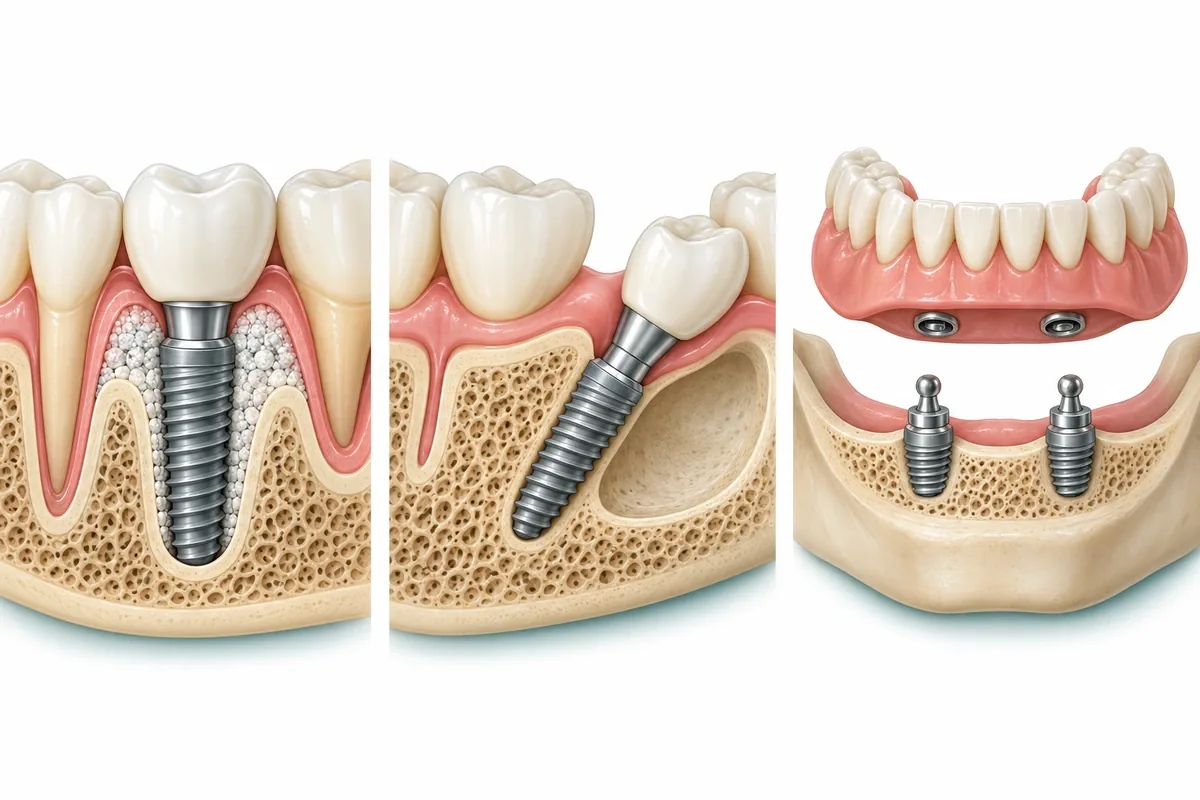
Be cautious of any approach advertised mainly as a way to avoid grafting. Avoiding a graft is a benefit only if the resulting plan is still stable, cleanable, and durable. Ask what tradeoffs come with it.
Pathway three: a replacement that is not a fixed implant
Choosing a non-implant option, or a simpler implant option, is not a failure. It is a reasonable decision when the surgery required would be extensive, when health or budget argues against it, or when you simply do not want more procedures.
| Option | Where it fits | What to weigh |
|---|---|---|
| Dental bridge on natural teeth | One or two missing teeth with sound neighbors | Requires shaping the neighboring teeth; does not stop ridge shrinkage |
| Removable partial denture | Several missing teeth, surgery not wanted | Relies on remaining teeth and the ridge; least stable option |
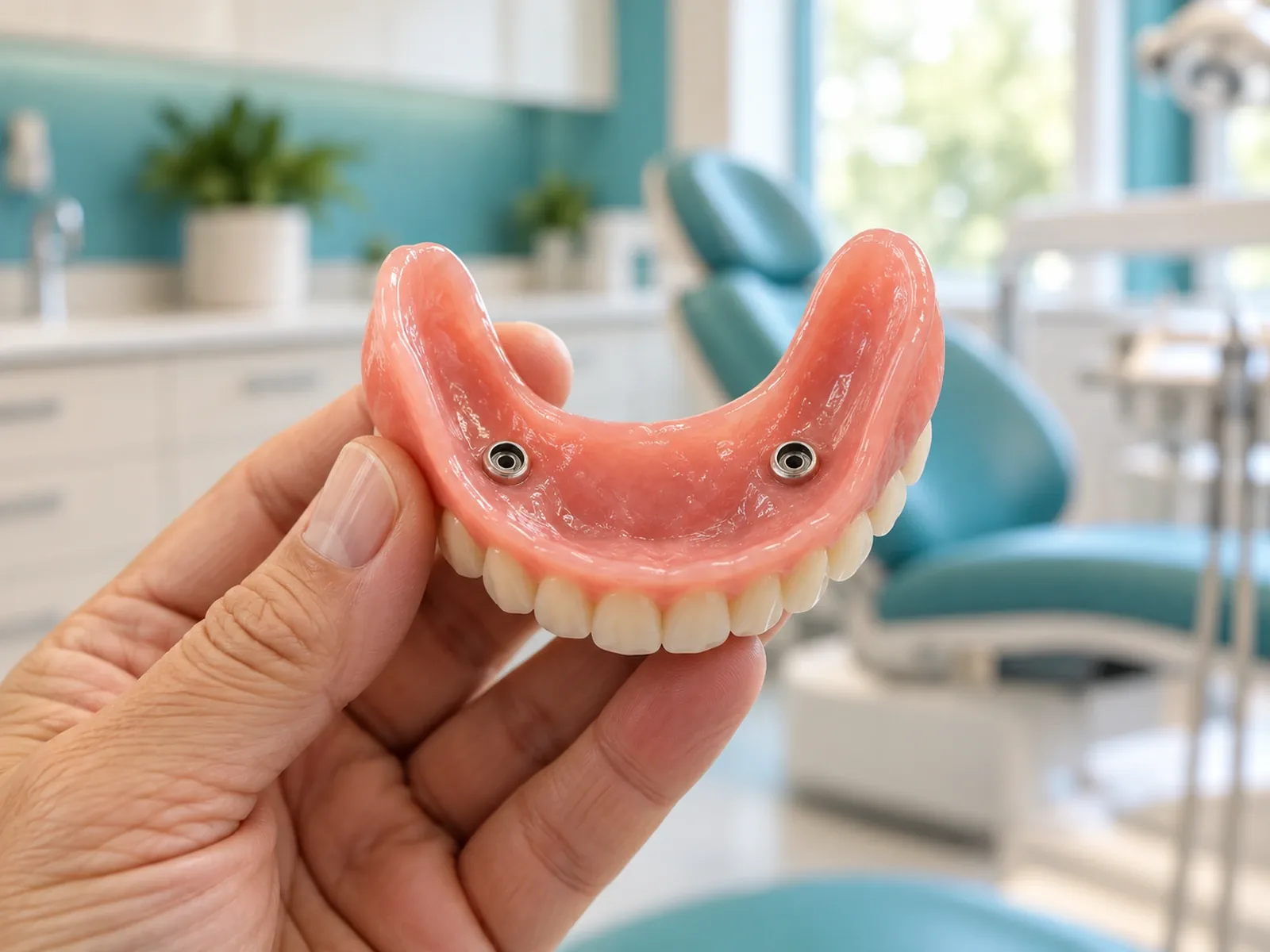
| Implant-supported denture | Most or all teeth missing, limited bone | Two to four implants add stability without rebuilding the whole arch |
| Fixed full-arch implant teeth | All teeth in an arch missing or failing | Angled implants can often avoid large grafts; higher cost and commitment |
An implant-supported denture deserves particular mention. For people with a thin lower ridge who struggle with a loose denture, two implants can transform daily life without the extensive grafting a fixed bridge might require. The comparison should include how many surgeries each path involves, how long it takes, how the result is cleaned and maintained, and what it costs over time, not just whether implants are technically possible.
If gum disease caused the bone loss
Periodontal disease destroys the bone around teeth while they are still in place. If that is why your bone is gone, two things have to happen before implants make sense. The disease itself has to be brought under control, because the same bacteria that cost you bone around teeth can cause bone loss around implants. And the remaining teeth need an honest prognosis: which ones are stable, which are questionable, and which should be removed.
Bone loss alone is not a reason to remove every remaining tooth. Each tooth is judged on its own support and its role in the plan. Our gum disease and periodontal care pages explain the treatment that typically comes first.
Cost factors
The cost of implants with bone loss depends on which pathway you take. Grafting adds a separate fee for each procedure and sometimes for imaging. Changing the implant plan may avoid those fees but can change the cost of the final restoration. Removable options are generally less expensive upfront but may need more adjustment and replacement over time. Ask for a written, itemized plan for each realistic pathway so you are comparing complete courses of care. Our insurance and financing pages explain how we help you work through coverage and payment.
Bring any previous X-rays, scans, and written treatment proposals to your Cleburne consultation. Then ask:
- What exactly is missing, in which direction, and at which sites?
- Where do the final teeth need to be, and does the bone support that?
- Is there more than one realistic pathway for me? How do they compare in surgeries, appointments, time, and cost?
- What will I wear while things heal?
- What is the plan if a graft does not heal as expected?
- How will the result be cleaned, and what maintenance will it need?
A good consultation separates what can be determined now from what will only be known after healing or after a tooth is removed.
Sources and further reading
- American Academy of Periodontology: Dental implant procedures
- American Academy of Periodontology: Sinus augmentation
- FDA: Dental implants—what you should know
- NIDCR: Gum disease
General information, not a diagnosis. Read how we create and review our dental guides.