Two or three weeks after a bone graft, most people feel fine. The stitches are gone, the gum has closed, and chewing on the other side has become a habit. It is natural to assume the hard part is over and the implant can go in any time. Underneath the gum, though, the graft is only at the beginning of its work.
A bone graft is a scaffold. Your body has to grow blood vessels into it, break down the graft material piece by piece, and lay down new bone in its place. That conversion takes months, and it cannot be felt from the outside. This page explains how healing actually proceeds, what Dr. Zohdi checks before clearing a site for an implant, how to protect the area in the meantime, and what happens if the result falls short.
If you are still deciding whether a graft is right for you, start with our bone grafting overview, which describes the procedures we offer in Cleburne. If you already have a graft from another office, your treating clinician should remain your first call about its recovery.
The stages of graft healing
Healing is a sequence rather than a single event. The names are less important than the idea that each stage has its own timeline.
- Clot and early inflammation (days). A blood clot forms around the graft granules. Mild swelling and tenderness are part of this phase, and they are the only part most patients notice.
- Soft-tissue closure (two to four weeks). The gum heals across the site. Stitches dissolve or are removed. The area starts to look and feel normal.
- Blood-vessel ingrowth (weeks to a couple of months). Tiny vessels grow between the granules, bringing in the cells that build bone. Without this step the graft cannot turn into living tissue.
- Replacement and remodeling (months). Bone-forming cells deposit new bone on the granules while other cells slowly dissolve the graft. Over time the mix of graft and new bone becomes dense enough to hold an implant.
- Maturation (continues after implant placement). Even once an implant is placed, the bone around it keeps remodeling for a long time.
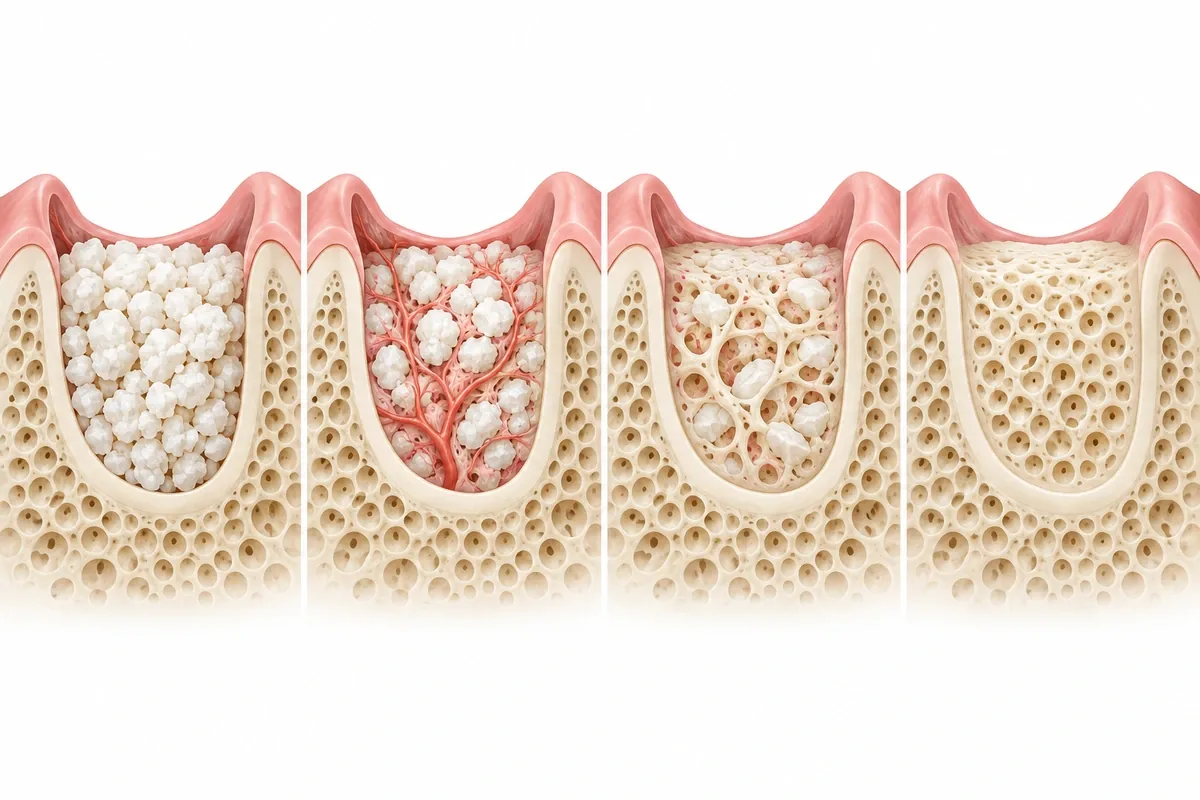
The visible milestone, soft-tissue closure, is stage two. The milestone that matters for implants is stage four, and there is no way to see it without imaging.
What changes the timeline
There is no single number of months that applies to every graft. Dr. Zohdi gives each patient an estimated range, and these are the factors that move it:
- The type of graft. A small socket preservation graft generally matures faster than a wide ridge augmentation or a sinus lift, which has to turn a large pocket of granules into bone.
- The size of the defect. Bone grows in from the edges, so a larger gap simply takes longer to fill.
- Location. The lower jaw is denser and has a different blood supply than the upper jaw. Sites with intact bone walls on several sides heal faster than sites with a missing wall.
- Graft material. Your own bone converts fastest. Processed donor bone, animal-derived mineral, and synthetic materials each remodel at their own pace, and some are chosen specifically because they hold their shape longer.
- Smoking and vaping. Nicotine narrows blood vessels and starves the graft of the blood supply it depends on. Smoking is one of the most common reasons grafts fail or heal slowly.
- Medical factors. Uncontrolled diabetes, certain osteoporosis or cancer medications, long-term steroid use, radiation to the jaws, and autoimmune conditions can all slow healing. Share your full medication list.
- Infection or early exposure. If the membrane comes loose or the wound opens, part of the graft may be lost and the timeline extended.
What Dr. Zohdi checks before the next step
Readiness is a clinical judgment based on several pieces of evidence, not a date on the calendar.
The examination. The gum should be firm, pink, and closed with no openings, drainage, or tenderness to pressure. The ridge is felt for shape and firmness.
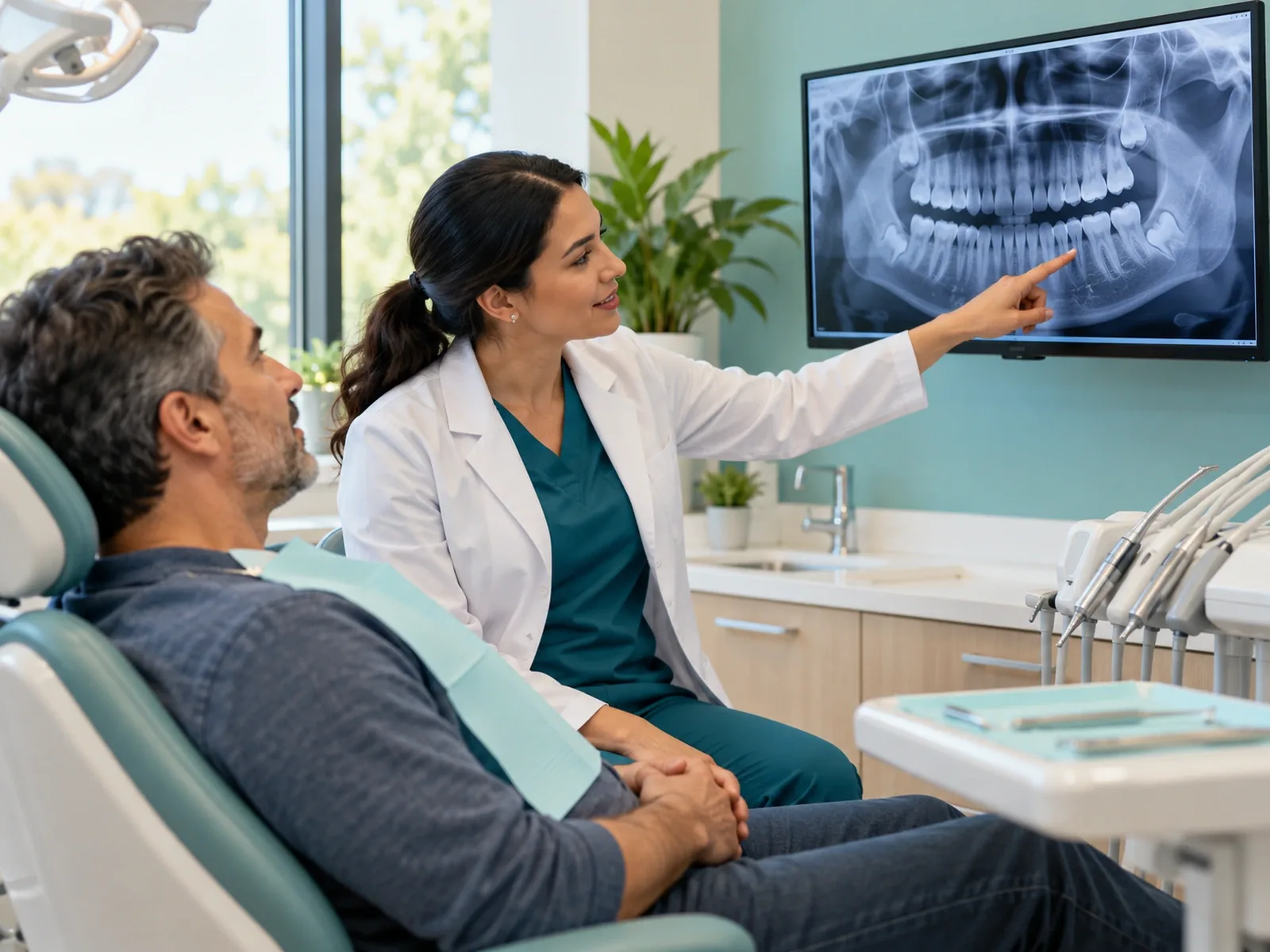
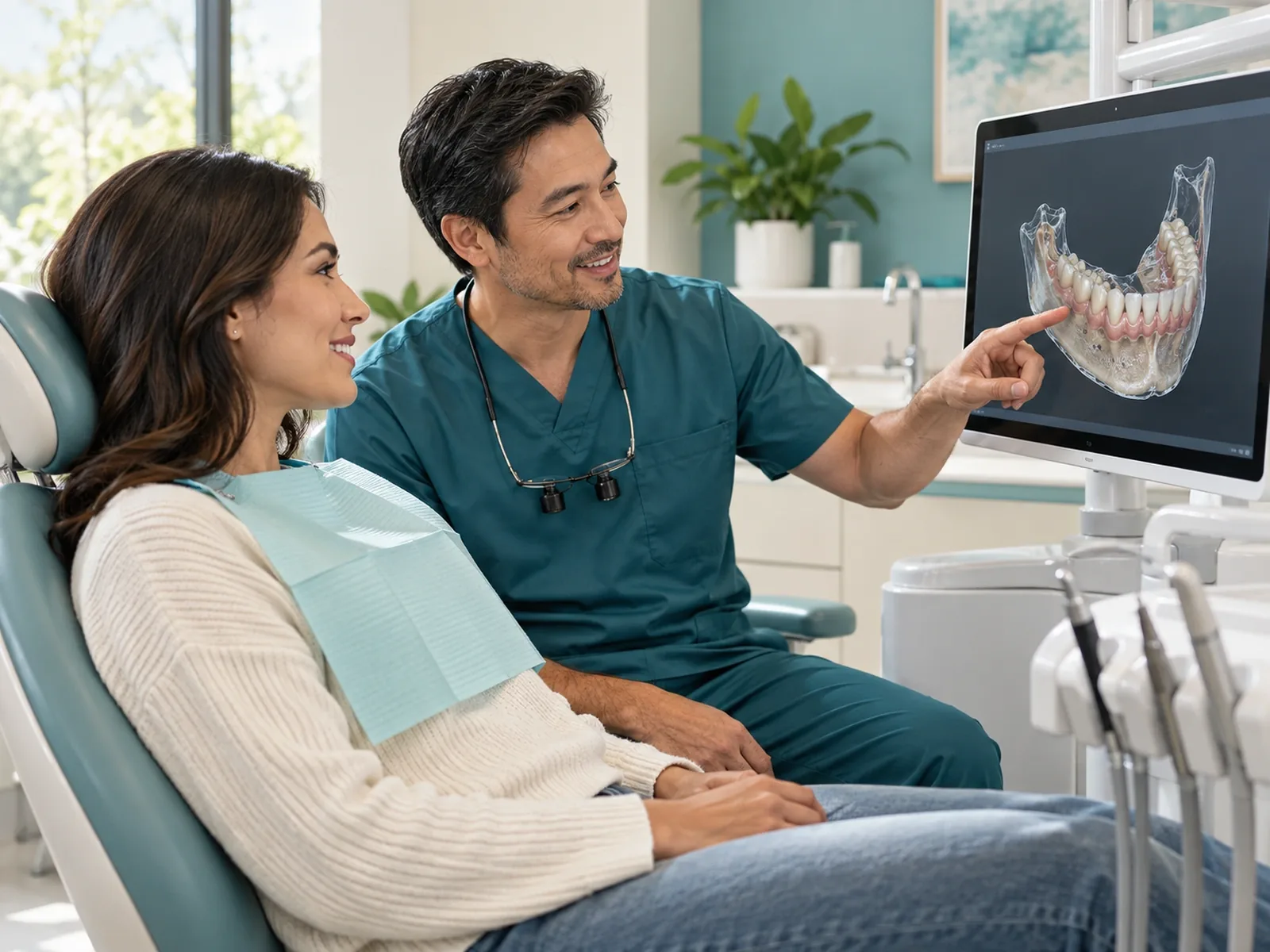
Imaging. A follow-up X-ray or a three-dimensional scan shows whether the graft has gained density and whether the volume achieved matches what the implant plan needs. On a scan, mature graft looks more like the surrounding bone than like scattered granules.
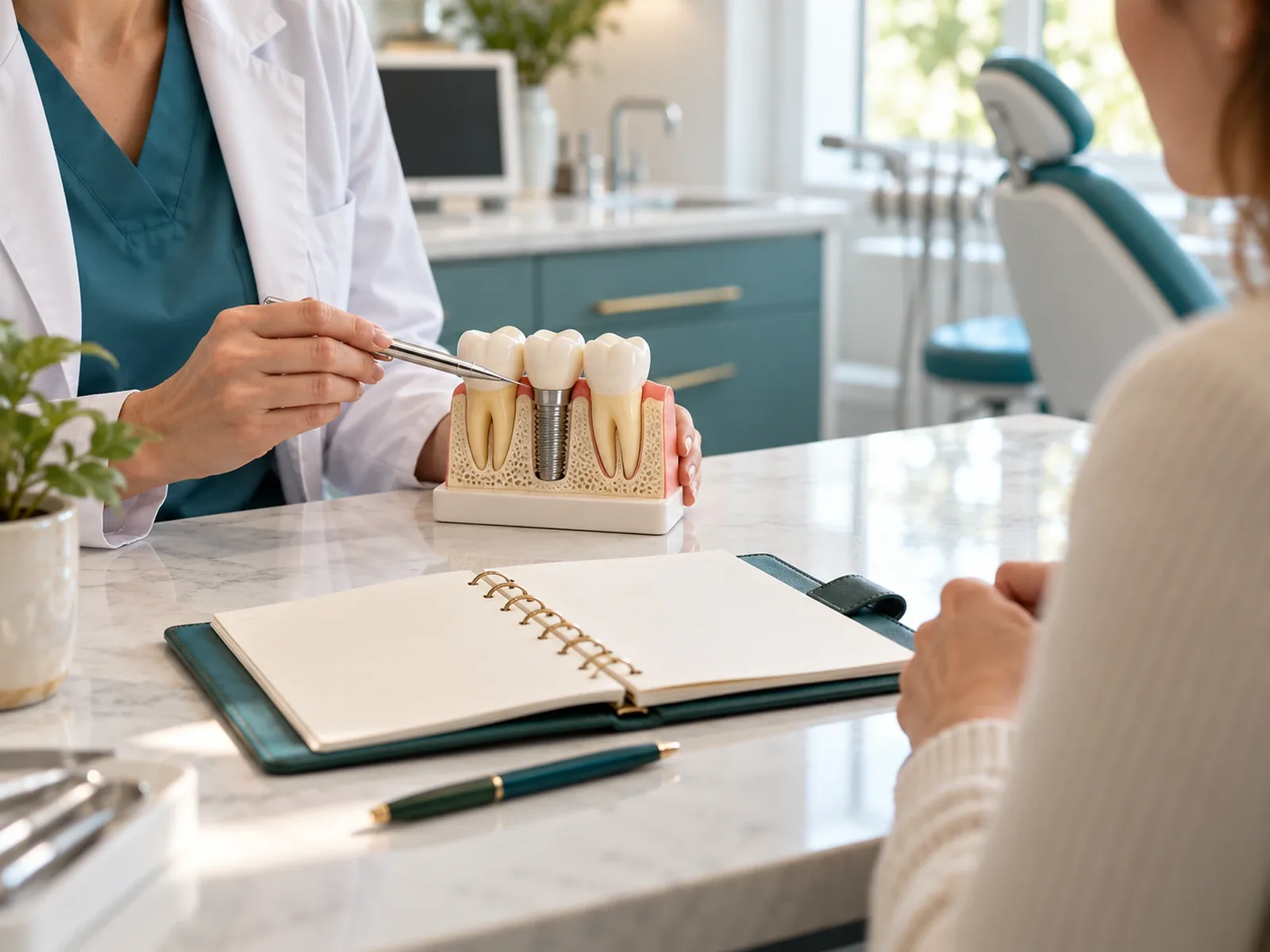
The whole plan. Readiness is also about whether the site now supports the implant position, size, and angle that the final crown requires. A graft can be well healed yet still a little short of the goal, in which case a small additional graft at implant placement may be the answer.
Your health today. Anything that has changed since surgery, such as a new medication or a new diagnosis, is reviewed before scheduling implant surgery.
Our implant treatment timeline page shows how graft healing fits into the complete sequence from consultation to final tooth.
Protecting the site while it heals
Most of what you can do to help happens in the first few weeks.
- Follow the written instructions you were given rather than general advice from the internet. Instructions differ by graft type; a sinus lift, for example, has rules about nose-blowing that a socket graft does not.
- Keep pressure off the area. Chew on the other side, and do not push on the site with your tongue, finger, or toothbrush.
- If you wear a temporary denture, flipper, or partial, it must be adjusted so it does not rest on the graft. A denture that was comfortable before surgery can press on the site afterward. Call us if it feels like it is touching the area.
- Keep the rest of your mouth very clean. Plaque near the site raises the risk of infection.
- Take prescribed medications as directed, and do not start supplements marketed to speed bone healing without asking first. Some interact with medications or affect bleeding.
- Avoid smoking and vaping completely, ideally for the entire healing period.
Changes that should prompt a call
Some symptoms are expected: mild swelling and bruising that peak around day two or three and then fade, soreness controlled by over-the-counter pain relievers, and, with granular grafts, a few small particles appearing in the mouth during the first week.
Call the office at (817) 641-6261 the same day if you notice:
- Pain or swelling that is getting worse after day three instead of better
- Fever, a bad taste, or drainage from the site
- Bleeding that does not stop with gentle pressure
- A visible opening in the gum, or the membrane or graft granules showing through
- A steady loss of graft particles rather than a few early ones
- For sinus lifts, graft material coming from the nose or a sudden change in sinus symptoms
Trouble breathing or swallowing, swelling that spreads quickly toward the eye or down the neck, or uncontrolled bleeding needs emergency care. Go to the nearest emergency room or call 911.
When healing does not match the plan
Sometimes the follow-up scan shows less bone than hoped, or the site is firm but not quite wide enough. That is disappointing, but it is rarely a dead end. The usual options are:
- More time. Some grafts simply need another few months before they are dense enough.
- A small additional graft placed at the same time as the implant to top up a minor shortfall.
- A second, separate graft when the deficit is larger.
- A revised implant plan, such as a different implant size, position, or number of implants.
- A different replacement, such as a bridge or a removable option, if further surgery is not something you want.
If your schedule changes, ask what the new findings show and how the options compare. A delay should always come with an explanation. Our guide to implants when bone has been lost covers these alternatives in more depth.
Sources and further reading
- American Academy of Periodontology: Dental implant procedures
- American Academy of Periodontology: Sinus augmentation
- FDA: Dental implants—what you should know
General information, not a diagnosis. Read how we create and review our dental guides.