
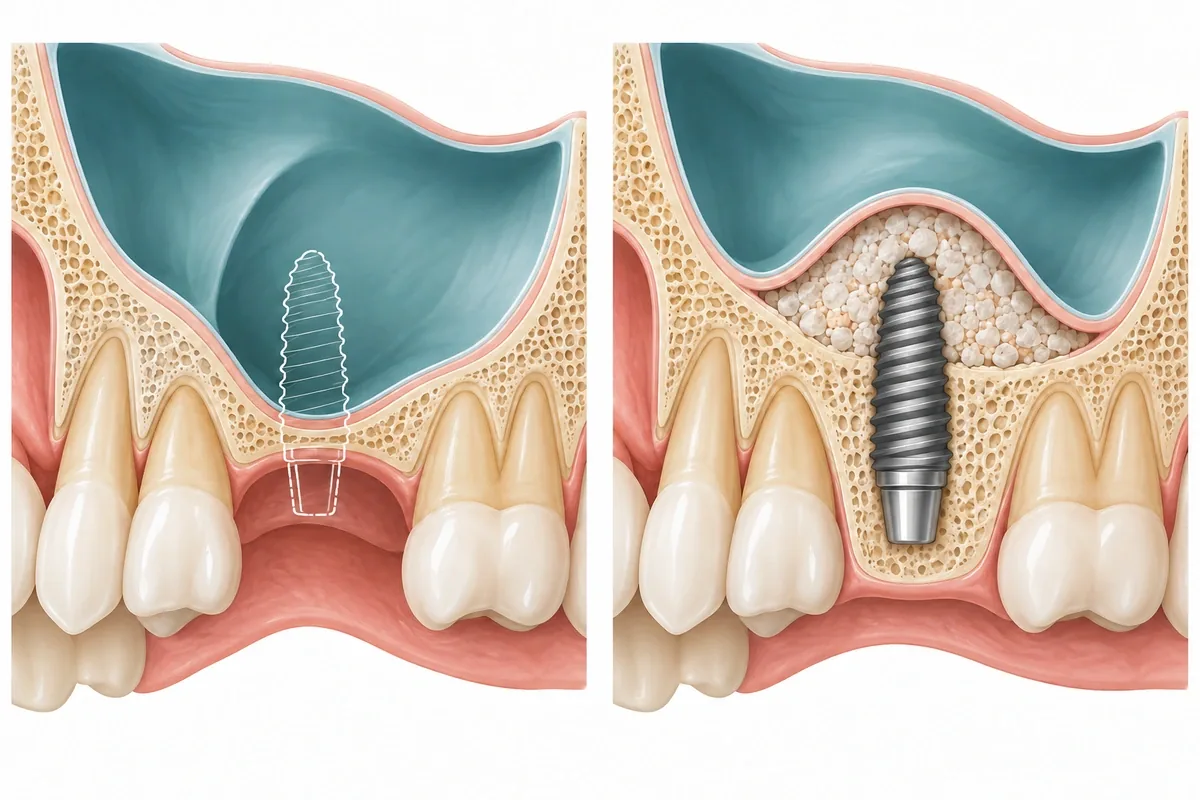
Above your upper back teeth, on each side, is an air-filled space called the maxillary sinus. The roots of the upper molars and premolars sit just below its floor, sometimes separated from it by only a thin shelf of bone. When those teeth are lost, two things happen at once: the ridge shrinks from below, and the sinus tends to expand downward into the space the roots used to occupy. The result can be a strip of bone too thin to hold an implant.
A sinus lift, also called sinus augmentation, solves that problem. The thin membrane lining the sinus floor is gently lifted, and bone graft material is placed in the space created beneath it. Over the following months the graft turns into solid bone, and an implant can be placed with full support around it.
Not every upper implant needs a sinus lift. Front teeth and most premolars are well away from the sinus, and some molar sites keep enough bone on their own. This page explains how the decision is made, the two main ways the procedure is done, what healing involves, and the alternatives. It is part of our wider bone grafting overview.
Why the sinus matters for upper implants
An implant needs bone along its entire length to be stable and to stay healthy. In the upper back jaw, the available height is the distance from the top of the ridge to the floor of the sinus. If that distance is too short, an implant long enough to be stable would poke into the sinus, and a short enough implant might not have enough support for chewing forces, which are highest on the back teeth.
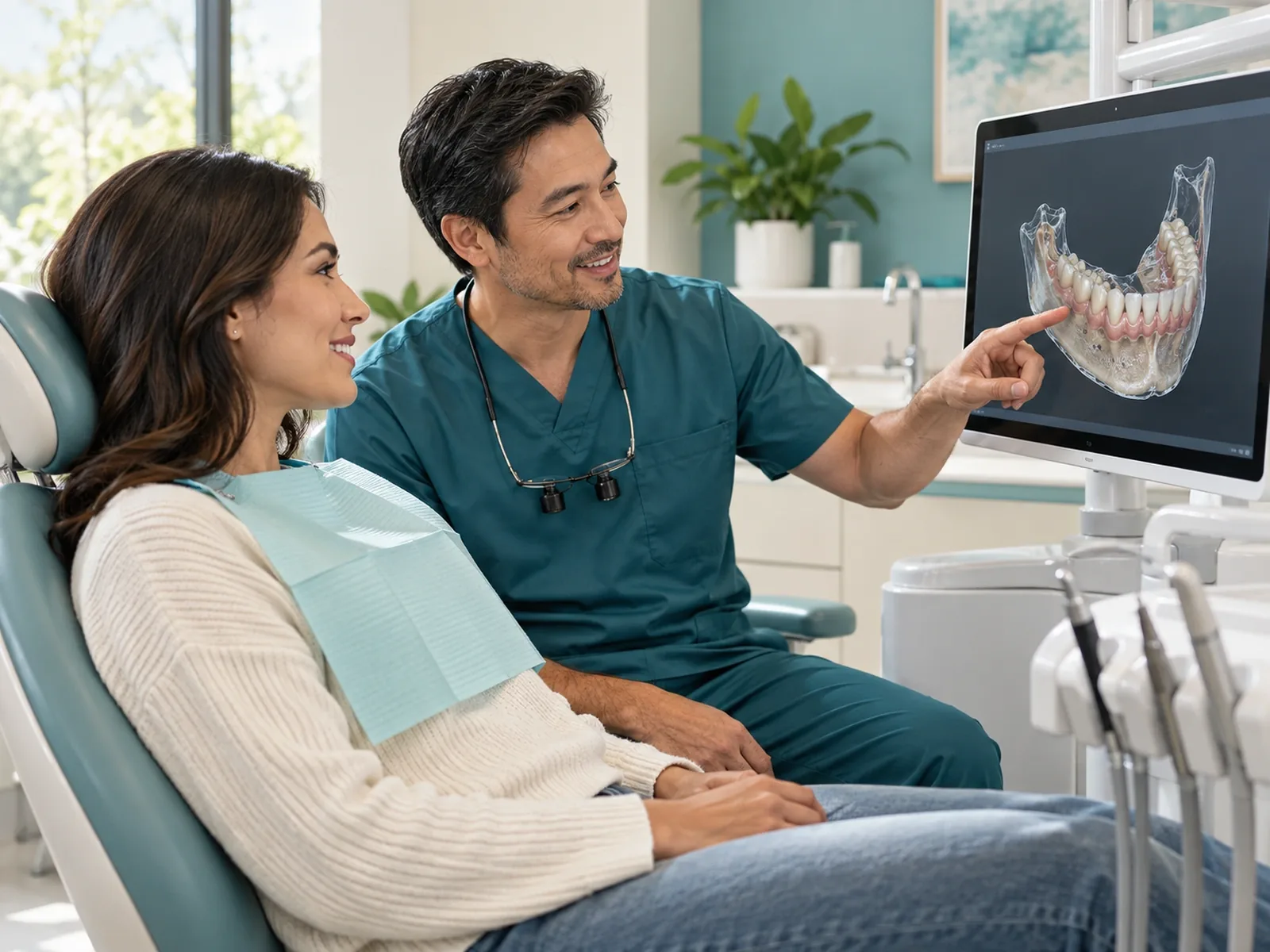
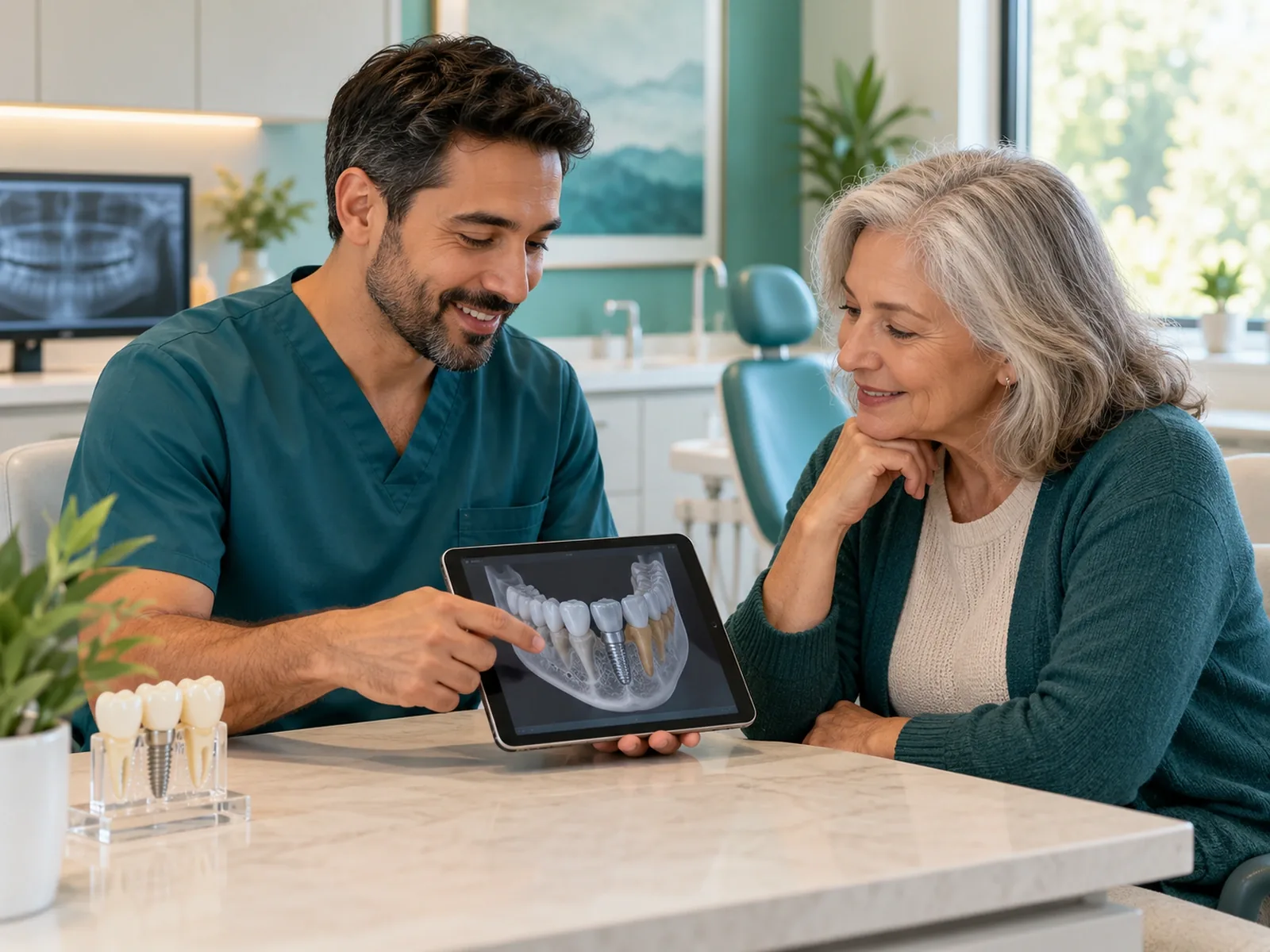
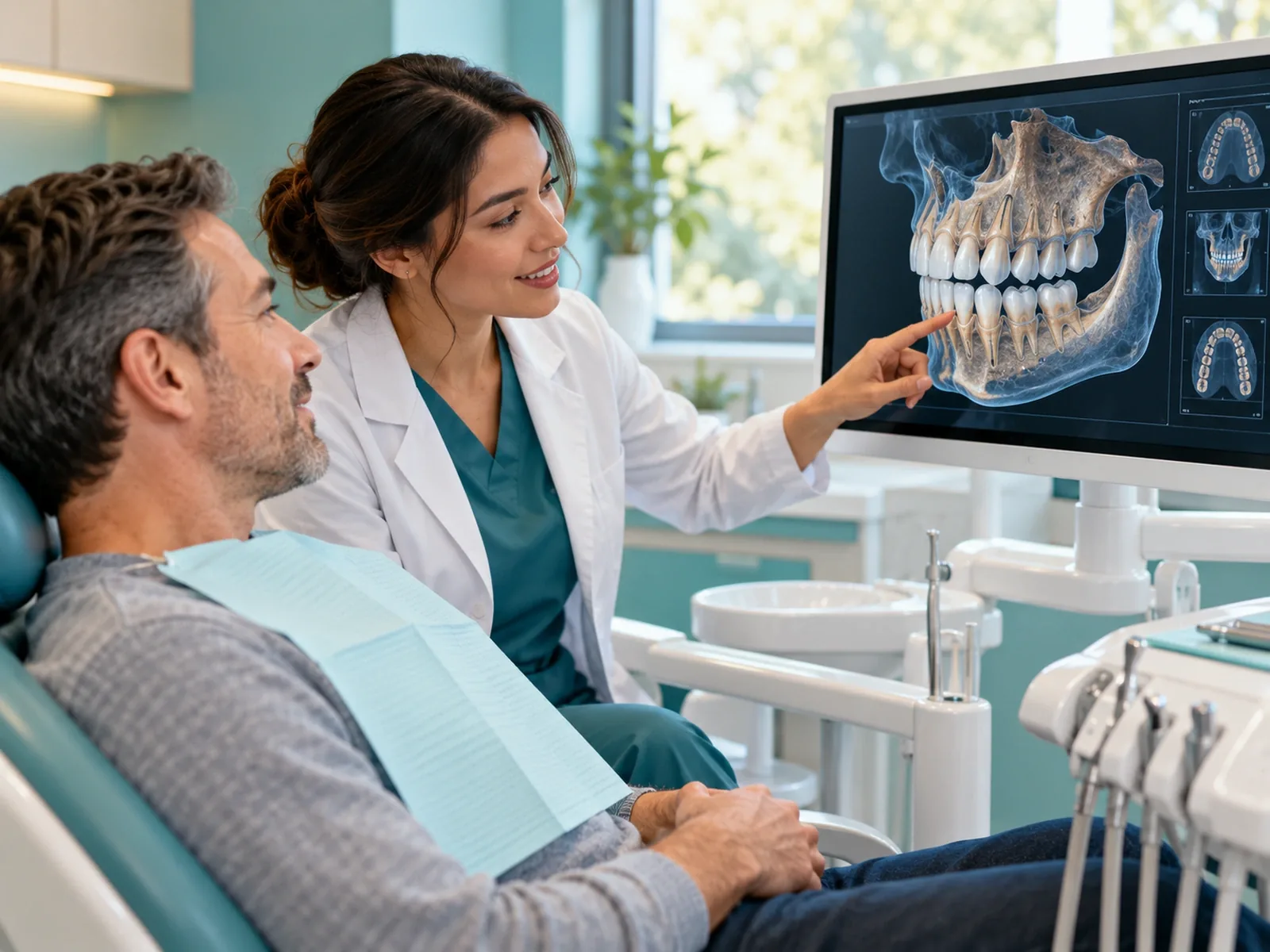
A three-dimensional scan shows exactly how much bone sits under the sinus, how thick the membrane is, whether there are internal walls (septa) inside the sinus, and whether the sinus itself looks healthy. From that, Dr. Zohdi can tell you whether a lift is needed, how much height needs to be gained, and which technique fits.
Tell us about any sinus history at the consultation: chronic congestion, recurrent infections, allergies, prior sinus surgery, or a deviated septum. An active sinus problem should usually be evaluated and treated, sometimes with an ear, nose, and throat physician, before a lift is done. The procedure does not treat sinus disease, and a diseased sinus heals less predictably.
Two approaches, chosen by how much height is needed
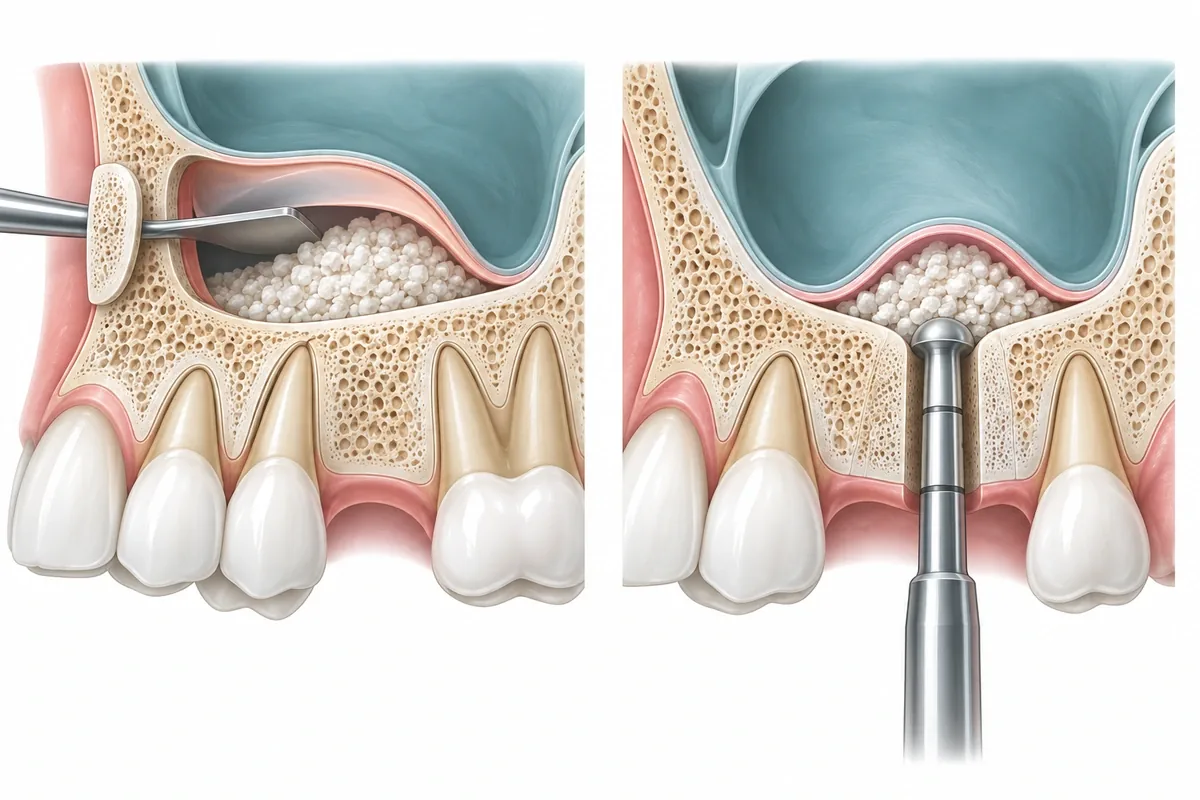
Through the implant site (crestal or internal lift). When only a modest amount of height is needed, the sinus floor can be reached through the same small opening used for the implant. Instruments gently tap or push the floor upward, graft material is added through the opening, and the implant is often placed in the same visit. Recovery is similar to an ordinary implant placement.
Through a side window (lateral lift). When more height is required, a small window is opened in the outer wall of the upper jaw, just above the ridge. The membrane is carefully peeled upward through the window, graft material is packed into the space beneath it, and the window is covered with a membrane. If the remaining bone is thick enough to hold an implant firmly, the implant may be placed at the same time; if not, the graft heals for several months first and the implant follows in a second visit.
Ask which approach is planned and why, and what the backup plan is if the membrane proves thinner or more fragile than the scan suggested.
What happens at the visit
A sinus lift is done with local anesthesia in our Cleburne office. You stay awake and can signal for a pause at any time; many patients are surprised at how uneventful it feels. The appointment typically runs longer than a filling but shorter than an afternoon.
- The area is numbed and, for a lateral lift, a small flap of gum is lifted to expose the bone.
- The sinus floor is accessed, either through the implant opening or through a small side window.
- The membrane is lifted slowly and carefully to create a pocket.
- Graft material is placed in the pocket. This may be donor bone, animal-derived bone mineral, synthetic material, your own bone, or a mix.
- If planned, the implant is placed.
- The site is covered and closed with stitches.
You will be given written aftercare instructions and a follow-up appointment, usually within a week or two.
Healing and aftercare
The sinus membrane and the gum heal over a few weeks. The graft takes much longer to become solid bone, generally several months, and a lateral lift takes longer than a small crestal lift. Readiness is confirmed by examination and imaging rather than by how the area feels; our page on bone graft healing explains what Dr. Zohdi checks.
Because the sinus is involved, aftercare has a few rules that other grafts do not:
- Do not blow your nose for the period Dr. Zohdi specifies. Pressure can push the graft or tear the healing membrane.
- If you need to sneeze, sneeze with your mouth open to let the pressure out.
- Avoid drinking through straws, forceful spitting, and vigorous rinsing.
- Avoid heavy lifting, bending over, and strenuous exercise for the first several days.
- Ask before flying or scuba diving in the weeks after surgery; pressure changes can matter.
- Take any prescribed antibiotics or decongestants exactly as directed.
- Do not smoke. It is one of the strongest predictors of graft failure and sinus complications.
Some mild nasal stuffiness, a little blood-tinged drainage from the nose, and swelling of the cheek for a few days are normal. Call (817) 641-6261 if you notice graft granules coming out of your nose, worsening swelling after day three, fever, foul-smelling drainage, or pain that is increasing. Trouble breathing or swallowing, swelling spreading toward the eye, or vision changes need emergency care; go to the emergency room or call 911.
Risks and limitations
The most common complication is a small tear in the sinus membrane during the lift. Small tears can usually be patched and the procedure continued; a large tear may mean stopping and allowing it to heal before trying again. Other possible problems include infection of the graft or sinus, swelling and bruising, bleeding, and graft material that heals with less volume than planned.
Even a well-healed lift does not guarantee implant success, and an implant placed into grafted bone still needs good hygiene and healthy gums to last. Dr. Zohdi will review the risks that apply to your specific anatomy as part of the consent discussion.
Cost factors
Sinus augmentation is a separate charge from the implants and crowns it supports, and the fee depends on the technique (a lateral lift is more involved than a crestal one), how much graft material is needed, whether a membrane is used, and whether imaging is included. If both sides need lifting, the costs are usually listed separately. Insurance coverage for grafting varies a great deal; ask for an itemized estimate for the entire implant plan, not just the lift. Our insurance and financing pages explain how we help.
Alternatives to a sinus lift
Depending on the amount of bone you have and what you want to replace, there are other routes to consider:
- Shorter or wider implants that fit within the existing bone. These work well in some sites but have limits in soft bone or where chewing forces are high.
- Tilted implants placed in front of the sinus, angled to support a bridge that reaches the molar area. This is a common strategy in full-arch implant plans.
- A dental bridge anchored on neighboring natural teeth, if suitable teeth are present.
- A removable partial denture, which avoids surgery but relies on the ridge and remaining teeth.
An alternative is not automatically better because it skips the lift. Each has its own tradeoffs in strength, maintenance, appearance, and cost. Our guide to implants when bone has been lost and our page on replacing several missing teeth go deeper on these comparisons.
Sources and further reading
- American Academy of Periodontology: Sinus augmentation
- American Academy of Periodontology: Dental implant procedures
- FDA: Dental implants—what you should know
General information, not a diagnosis. Read how we create and review our dental guides.