
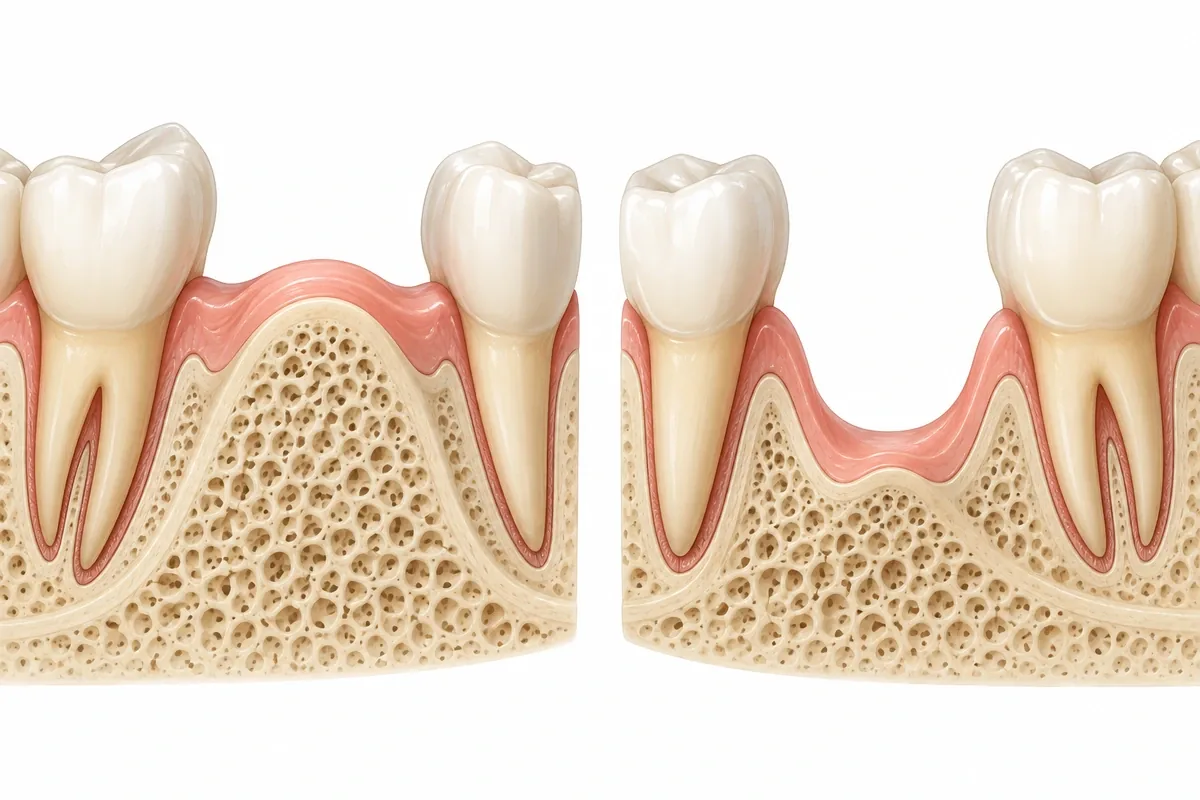
Pulling a tooth solves one problem and quietly starts another. The bone that held the root no longer has a job, and the body begins to resorb it. Most of that shrinkage happens in the first few months, and it is often greatest on the cheek side of the ridge, where the bone is thinnest. If you later want an implant in that spot, less bone can mean a harder, longer, or more expensive path.
Socket preservation is a way to get ahead of that. At the same visit the tooth is removed, graft material is placed into the empty socket and usually covered with a thin membrane. The graft acts as a scaffold while your own bone grows in, so the ridge keeps more of its original width and height. It is one of the procedures covered on our bone grafting overview, and the one that happens earliest in an implant journey.
It is not something every extraction needs. The decision should follow what you plan to do with the space afterward. Below we explain how Dr. Zohdi thinks through that decision at our Cleburne office, what the visit involves, and what the graft can and cannot promise.
Why bone shrinks after an extraction
Bone is living tissue that responds to use. The thin plate of bone on the outside of a tooth socket is nourished partly by the tooth's ligament. When the tooth goes, that blood supply goes with it, and the plate begins to thin and lose height. Over the first year the ridge can lose a noticeable share of its width, and it keeps changing slowly for years afterward.
Three things make the change more of a problem:
- An implant is planned. Implants need a certain thickness of bone around them to be stable and to keep the gum tissue healthy. A narrowed ridge may push the implant into a poor position or require a separate rebuilding step later.
- The tooth is in the smile zone. Front teeth sit in thin bone. Even a small collapse can leave a dark shadow or a long-looking crown, and gum tissue follows the bone down.
- A bone wall is already missing. Infection, a fracture, or a long-standing abscess can destroy part of the socket before the tooth is even removed. Those sites tend to shrink more.
If you plan to do nothing with the space, or you are heading toward a removable partial denture, the shrinkage may matter less. That is why socket preservation is a planning conversation, not an automatic add-on to every tooth extraction.
When it is worth discussing
Socket preservation tends to make the most sense when:
- You want a single-tooth implant but are not ready to place it on the same day as the extraction.
- The tooth is a front tooth or premolar where appearance matters.
- The socket has lost one of its walls to infection or a crack.
- You expect a gap of several months or more between the extraction and the implant, for health, scheduling, or budget reasons.
It is less likely to be recommended when the implant can be placed immediately into the fresh socket, when a bridge will span the gap and the ridge contour is not a concern, or when the site has so much bone that minor shrinkage will not affect the plan. Our guide to replacement options after an extraction walks through how the end goal shapes these choices.
Your health history matters too. Uncontrolled diabetes, heavy smoking, certain bone medications, and radiation to the jaws all affect how grafts heal. Bring your medication list to the consultation.
What happens at the visit
Socket preservation adds a few steps to an ordinary extraction, but it is done in the same appointment with the same local anesthesia.
- Gentle removal. Dr. Zohdi takes the tooth out as carefully as possible to keep the thin bone walls intact. Sometimes a root is sectioned into pieces so it can be lifted out without pressure on the walls.
- Cleaning the socket. Any infected tissue or leftover debris is removed so the graft sits against healthy bone.
- Placing the graft. The socket is filled with small granules of graft material. These may come from a human donor bank, be animal-derived, or be synthetic. Each is processed and sterilized; your own bone is rarely needed for a socket graft.
- Covering the site. A collagen membrane, a collagen plug, or both are placed over the graft to hold it in place and keep gum tissue from growing into the space before bone does. A few stitches close the area.
- Instructions and a check-up. You leave with written aftercare, and you come back in about a week or two so the site can be checked and any remaining stitches removed.
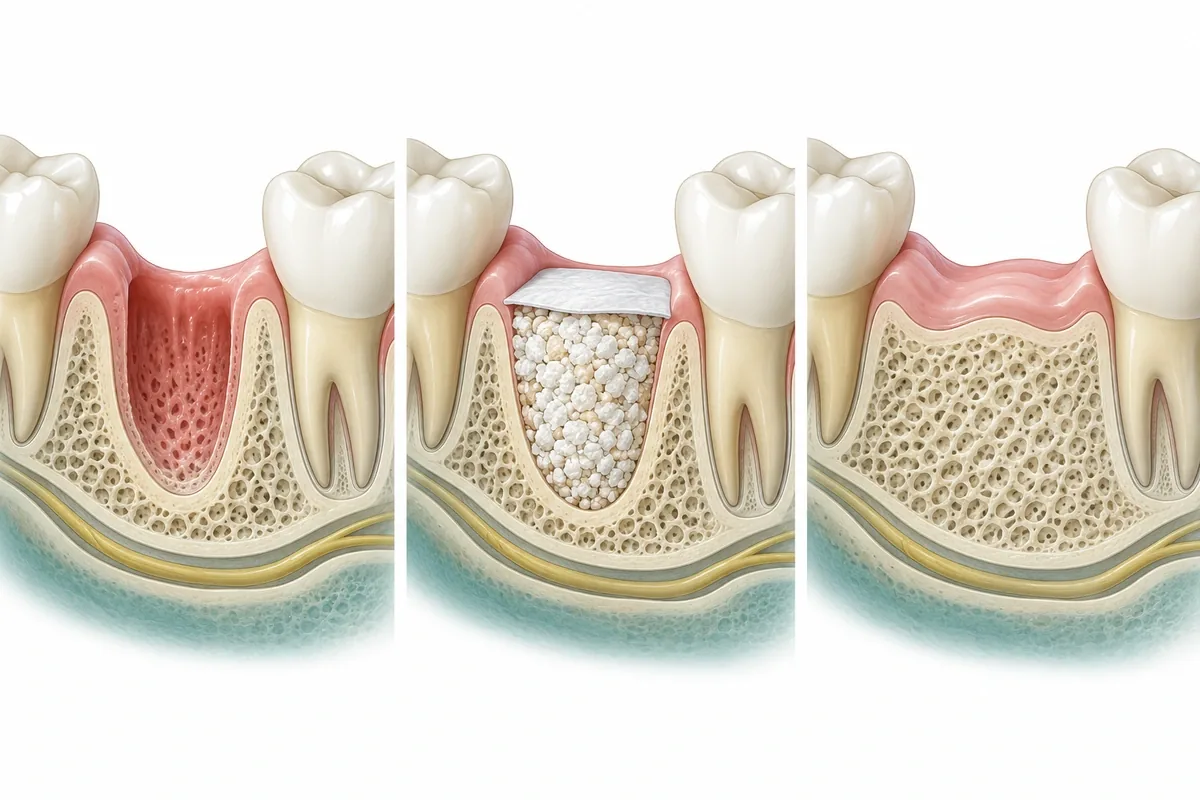
Ask what material is proposed and why. There is no single right choice; the decision depends on the size of the defect, how quickly you want to move to an implant, and personal or religious preferences about donor-derived products.
Healing and aftercare
Soft-tissue healing and bone healing run on different clocks. The gum usually closes over the site within two to three weeks, and the area feels normal well before the bone underneath is mature. For a socket graft, the bone is typically re-evaluated several months later, and the exact timing depends on the size of the site and your overall health. Our page on bone graft healing explains what Dr. Zohdi looks for before giving the green light for an implant.
In the first week:
- Keep pressure off the site. Avoid chewing on that side and do not probe it with your tongue or a toothbrush.
- Do not rinse forcefully, spit hard, or drink through a straw for the first few days; suction can dislodge the graft.
- Expect to notice a few small granules in your mouth. A little is normal with granular grafts; a steady loss or a visible gap in the membrane is not, and you should call.
- If you wear a temporary tooth or partial denture, it must not press on the graft. Tell us if it does so it can be adjusted.
- Avoid smoking. It reduces blood flow to the graft and is one of the most common reasons grafts fail.
Call the office at (817) 641-6261 for increasing pain after day three, swelling that gets worse instead of better, fever, a bad taste or drainage, or if the membrane comes loose. Trouble breathing or swallowing, or swelling that spreads rapidly toward the eye or neck, needs emergency care; go to the nearest emergency room or call 911.
What the graft can and cannot do
A socket graft is a way to hold ground, not to gain it. It limits the shrinkage that would otherwise happen; it does not make the ridge wider than it was with the tooth in place. If the socket was already damaged, some additional grafting may still be needed when the implant is placed.
Possible complications include infection, early loss of graft material, the membrane becoming exposed, and bone that heals less densely than hoped. These are uncommon, but they are real, and the consent conversation should cover them. If the result falls short, the options are usually more time, a small additional graft at implant placement, or a separate ridge augmentation.
Cost factors
Socket preservation is normally a separate charge from the extraction itself, and the fee depends on the size of the site, the materials used, and whether a membrane is needed. Dental insurance plans vary in how they treat grafts; some cover them only in certain situations, and some do not cover them at all. Ask for an itemized estimate that shows the extraction, the graft, and the planned implant steps so you can see the whole path, not just today's visit. Our insurance and financing pages explain how we help you sort through coverage.
Sources and further reading
- American Academy of Periodontology: Dental implant procedures
- American Academy of Periodontology: Sinus augmentation
- FDA: Dental implants—what you should know
- ADA MouthHealthy: Implants
General information, not a diagnosis. Read how we create and review our dental guides.