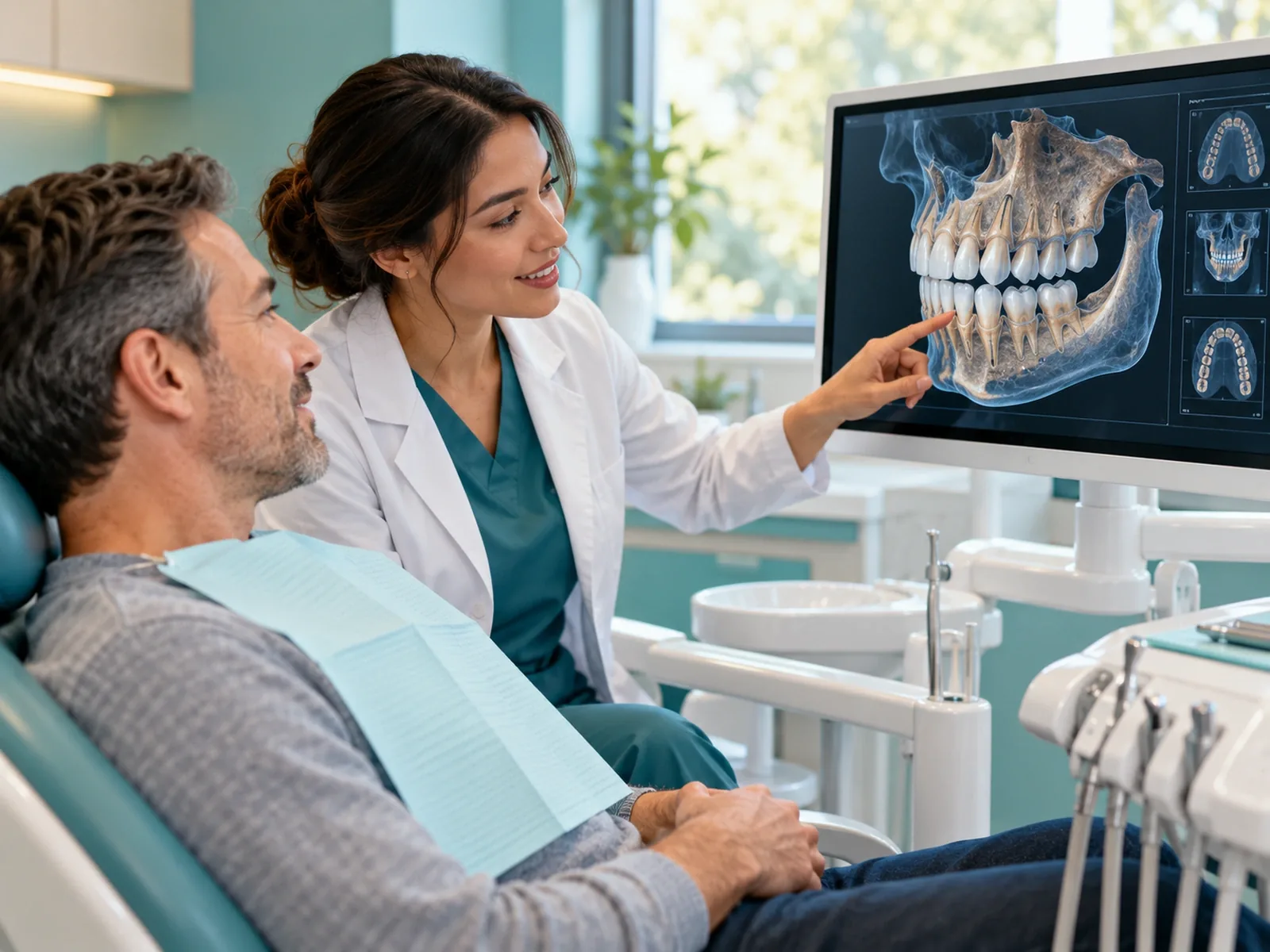
When several teeth are missing, the first instinct is often to count: three missing teeth, so three implants. In practice, the number of implants follows the design of the final teeth, not the other way around. Three neighboring teeth can often be replaced with a bridge on two implants. Three teeth missing in different parts of the mouth may need three separate crowns. And when the remaining teeth are in poor shape, the honest conversation is about the whole arch rather than the gaps.
The starting point is always the finished result: what the teeth need to do, how they will be supported, and whether you will be able to clean them. Once that is clear, the implant count, the surgery and the schedule fall into place.
This guide, part of our dental implant services, explains the main designs we use in our Cleburne practice, how we choose between them, and what the process involves.
Three ways implants can replace several teeth
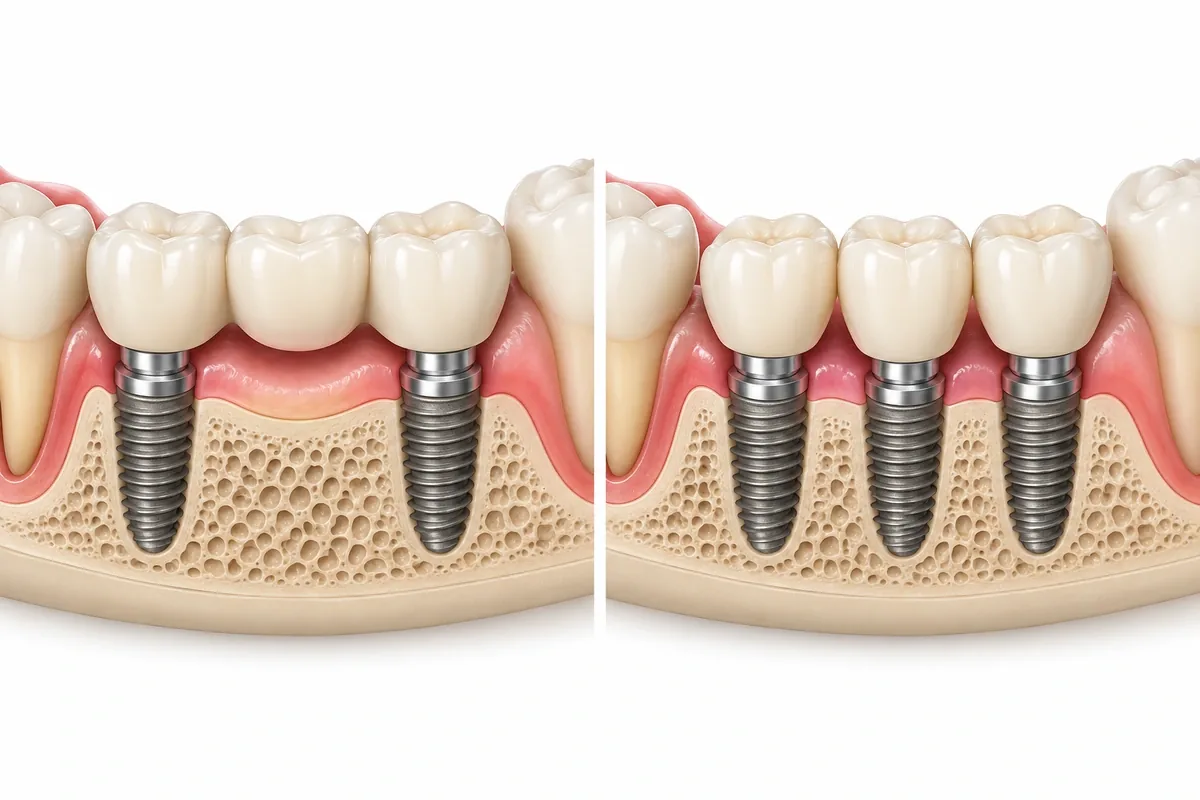
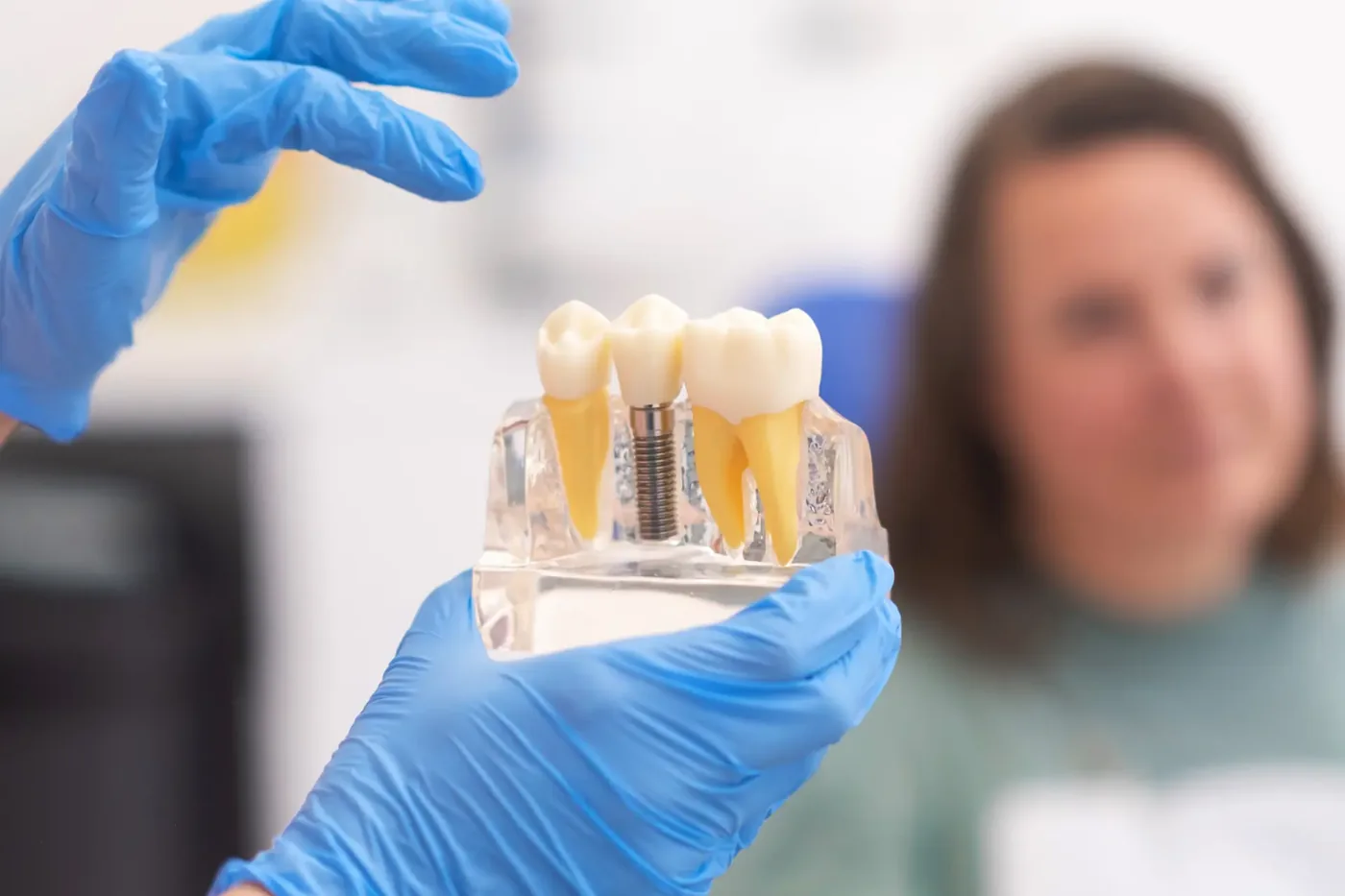
- Individual implant crowns. One implant and one crown per missing tooth. Each tooth is independent, which makes cleaning simple and means a problem with one does not affect the others. It uses the most implants and is often chosen when the gaps are scattered or when the bone is good everywhere.
- An implant-supported bridge. Two or more implants carry a row of connected teeth, with one or more false teeth suspended between them. It replaces more teeth with fewer implants and fewer surgical sites. You clean beneath the suspended teeth with floss threaders or a water flosser.
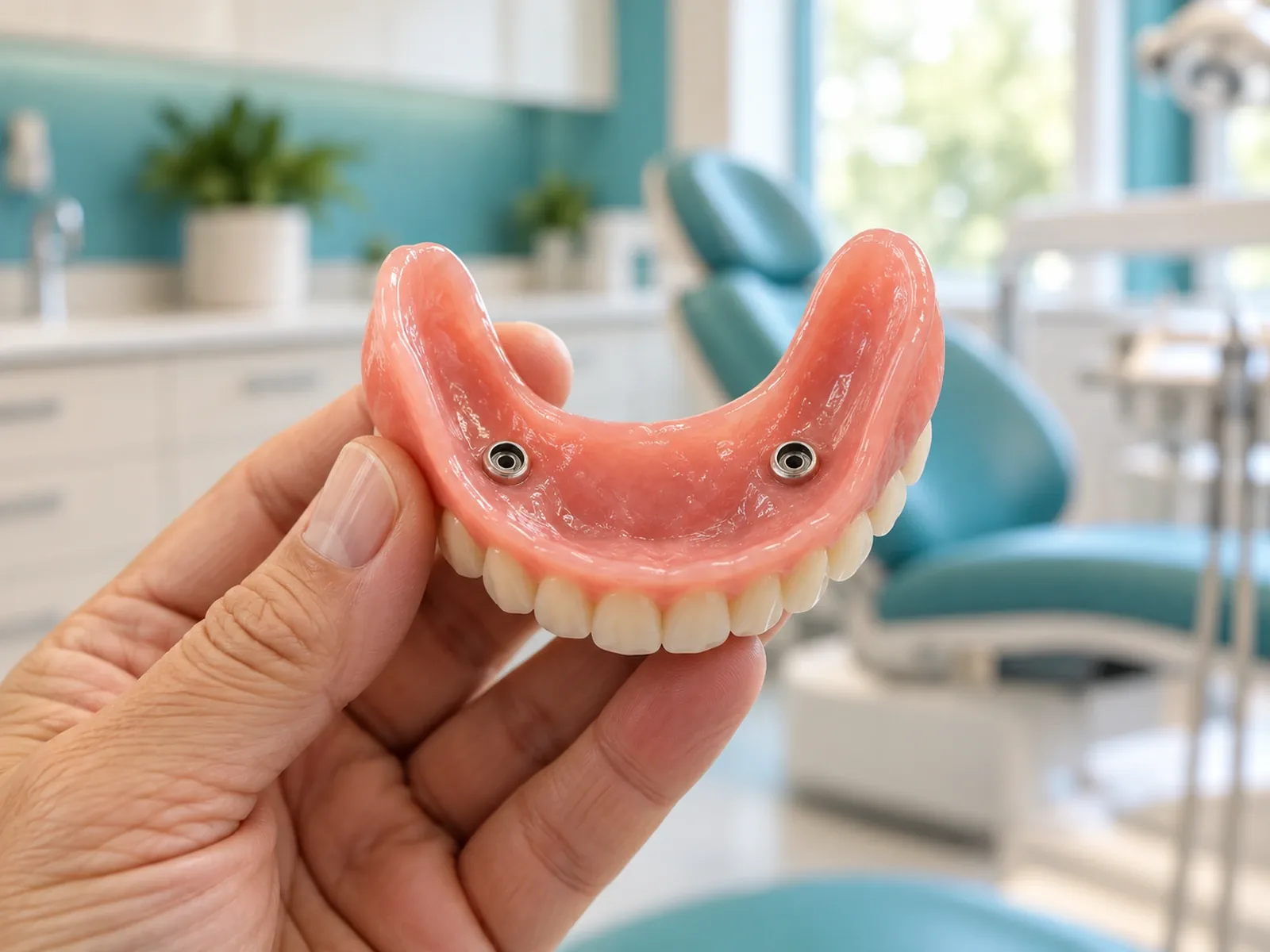
- An implant-retained removable partial. A partial denture that snaps onto one or more implants for added stability and comes out for cleaning. Useful when many teeth are missing, when bone is limited, or when cost needs to be spread out.
None of these is better in the abstract. Each fits a different pattern of missing teeth, a different budget and a different mouth.
Adjacent gaps are planned differently from scattered gaps
A row of neighboring missing teeth is the natural case for an implant bridge. Implants are placed at the ends of the span, and sometimes in the middle for longer spans, and the connected teeth share the load. The main planning questions are how long the span can safely be, whether the bone at the chosen positions is adequate, and whether the bite forces in that part of the mouth (back teeth take far more) call for an extra implant.
Teeth missing in separate areas are usually treated as separate problems. Each site is assessed on its own: bone, gum, neighbors, nearby anatomy. One site may be ready for an implant now while another needs a bone graft first. The plan sequences them so you are never without a way to chew.
A mix is common: a span on one side and a single gap on the other. The design for each part is chosen independently, then the whole thing is checked against your bite.
Several missing teeth is not the same as a full arch
If you have lost many teeth and the ones remaining are loose, decayed or heavily restored, it is fair to ask whether keeping them is wise. But a plan for several missing teeth should never assume that every remaining tooth has to go. Healthy teeth are worth keeping; they help you feel your bite, they preserve bone, and they make the implant work smaller and less expensive.
When a whole arch does need replacing, or when the remaining teeth genuinely cannot be saved, full-arch implant treatment raises a different set of design questions: fixed or removable, four implants or six, what happens on the day of surgery. A bridge replacing three teeth is not a scaled-down version of that; it is a different procedure with its own planning.
What Dr. Zohdi evaluates
- The outlook for your remaining teeth. Gum disease, large fillings, cracks and root canal history all affect whether a tooth can serve as a long-term neighbor to implant work. Teeth with active gum disease are treated before implants are placed.
- Bone volume and position at each site. A 3D scan shows where implants can go and whether grafting is needed. Upper back teeth often sit near the sinus; lower back teeth sit above a nerve. Those structures determine implant length and position.
- Restorative space. Teeth that have drifted or over-erupted into a gap can leave too little room for a crown. Sometimes the opposing tooth needs reshaping or orthodontics first.
- Bite forces. Clenching, grinding and a heavy bite argue for more implants, shorter spans and sometimes a night guard after treatment.
- Your ability to clean the result. A beautiful bridge you cannot keep clean will not last. Hand dexterity and your willingness to use floss threaders or a water flosser factor into the design.
The implant candidacy guide explains the medical and lifestyle factors in more detail.
Fixed or removable: what the choice means day to day
| Individual crowns or implant bridge (fixed) | Implant-retained partial (removable) | |
|---|---|---|
| Stays in during eating and sleeping | Yes | Removed at night and for cleaning |
| Feels most like natural teeth | Yes | Close, with some bulk |
| Implants needed | More | Fewer |
| Cleaning | Brushing, floss threaders or water flosser | Remove, brush the partial, clean the implants |
| Common later maintenance | Chipped porcelain, loose screw | Worn attachment inserts, relines |
| Cost | Higher | Lower |
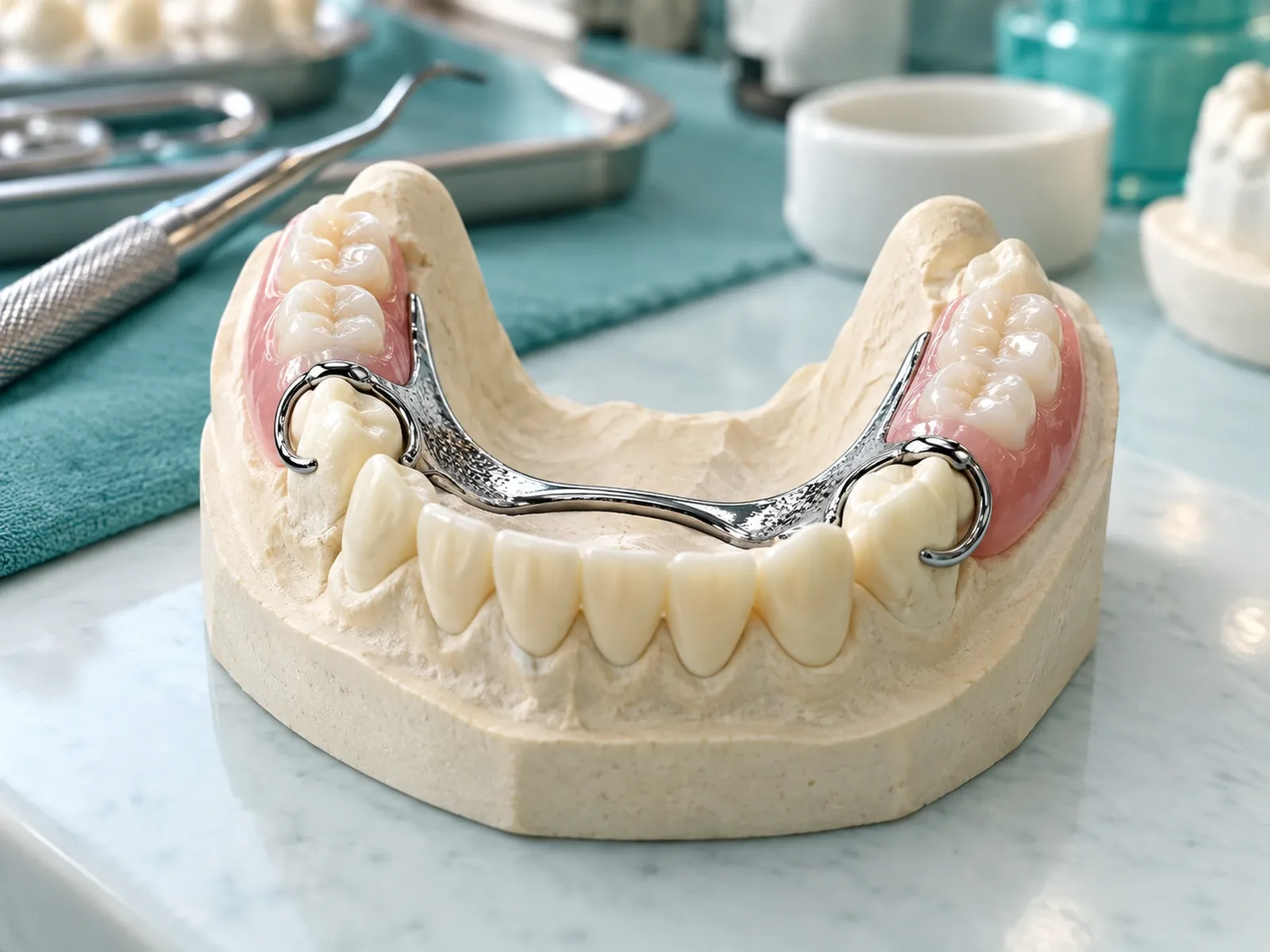
A conventional partial denture without implants remains an option as well, and can be a sensible first step while you plan.
What treatment may involve
A typical sequence for a multi-tooth case:
- Planning. Examination, imaging, impressions or digital scans, and a design of the final teeth. For visible areas we may make a mock-up so you can see the proposed result.
- Preparatory work. Treating gum disease, extracting teeth that cannot be saved, and grafting where bone is short. Each of these has its own healing time.
- Implant placement. Often all sites in one visit under local anesthesia, sometimes staged. Healing caps or cover screws are placed.
- Healing. Several months while bone integrates with the implants. The sites are checked along the way.
- Impressions and laboratory work. A try-in of the framework or teeth to check fit, bite and appearance before the final is finished.
- Delivery and adjustment. The final crowns, bridge or partial is fitted, the bite is refined, and you are shown exactly how to clean it.
Ask early what you will wear in the meantime. A temporary partial or a bonded temporary can cover visible spaces; chewing may need to shift to another side while implants heal. The timeline guide covers how stages depend on one another.
Recovery and healing
Recovery after multiple implants is similar to a single implant, scaled up slightly: a few days of soreness and swelling, a soft diet, and careful cleaning. If extractions or grafting were done at the same time, expect more swelling and a longer soft-diet period. The recovery guide lists the warning signs that need a call.
What affects the cost
The estimate depends on the number of implants, the type of restoration, whether grafting or extractions are needed, the materials used and the temporary teeth. Fewer implants carrying a bridge is usually less expensive than one implant per tooth, but not always the better long-term value if a span is too long for the bite. Ask for an itemized plan. Our implant cost guide explains what each line means.
Risks and long-term maintenance
The risks are the same as for any implant surgery: infection, failure to integrate, injury to nearby structures, and later gum problems or mechanical wear. With connected teeth there is one more consideration: if a single implant under a bridge fails, the bridge may need to be remade. That is one reason an extra implant is sometimes recommended for long spans. Plan on regular check-ups where the gum around each implant is measured, the bite is checked and the bridge is cleaned professionally. See the implant care guide for the daily routine.
Planning your replacement
If you are missing several teeth, the most useful first step is a planning visit where Dr. Zohdi can map your bone, assess your remaining teeth and sketch out the designs that would work for you. You will leave with a clear comparison of individual implants, an implant bridge and removable options, with the costs for each. Request an appointment at our Cleburne office, 302 N Ridgeway Dr, or call (817) 641-6261.
Sources and further reading
General information, not a diagnosis. Read how we create and review our dental guides.