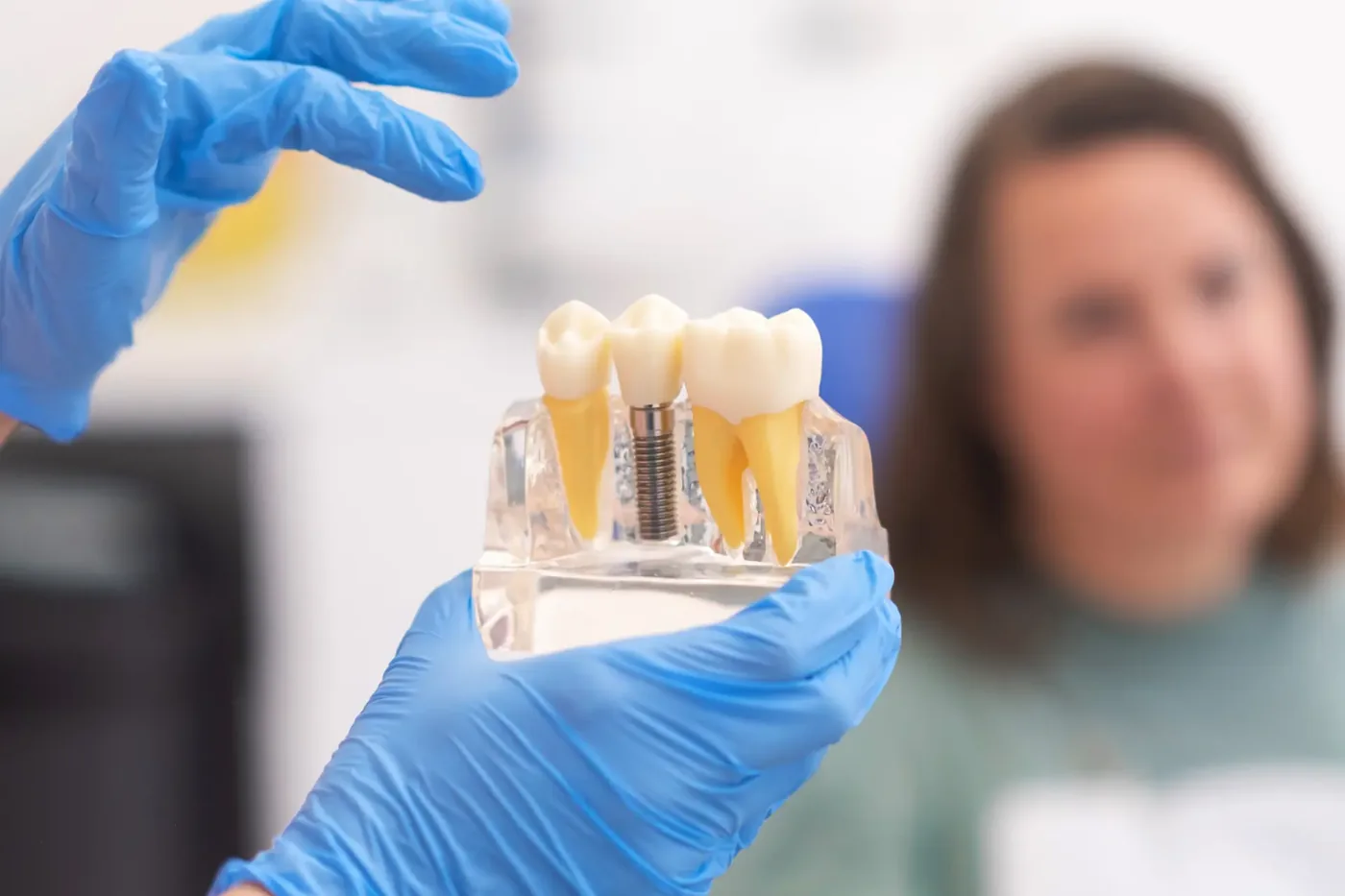
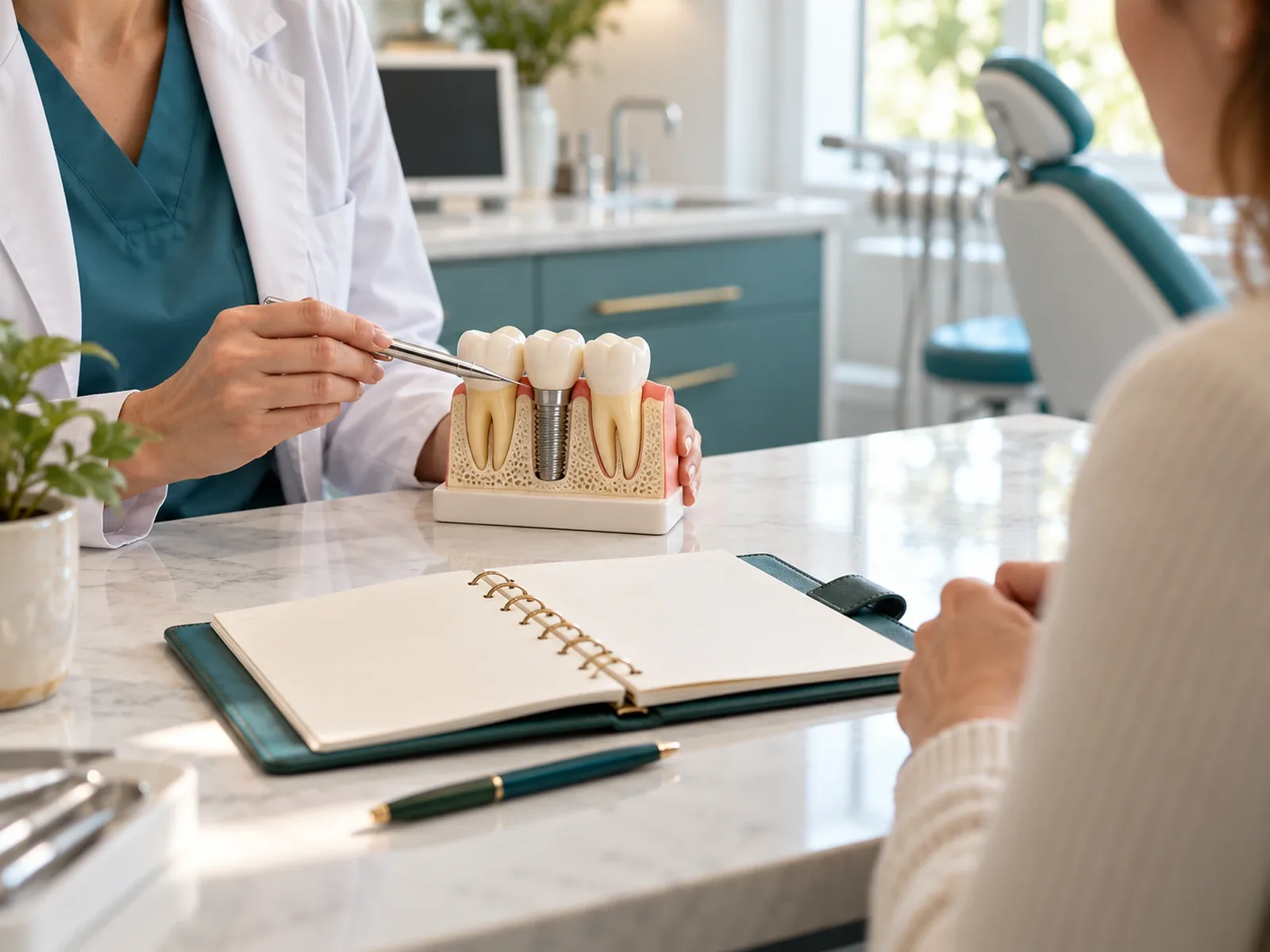
The honest answer to how long dental implants take is: usually several months from the first visit to the final tooth, and sometimes close to a year or more when extractions or bone grafting come first. The surgery itself is short, often an hour or so for a single implant. The length comes from healing, which cannot be rushed, because the bone has to grow onto the implant before it can safely carry a tooth.
A long plan does not mean a long time without a tooth. Temporary teeth cover visible gaps for most of the process. And a short surgical visit does not mean a short treatment. Understanding the stages, and what has to be true before each one can begin, is more useful than any single promised date.
This guide, part of our dental implant services, lays those stages out the way we plan them at our Cleburne office.
The stages at a glance
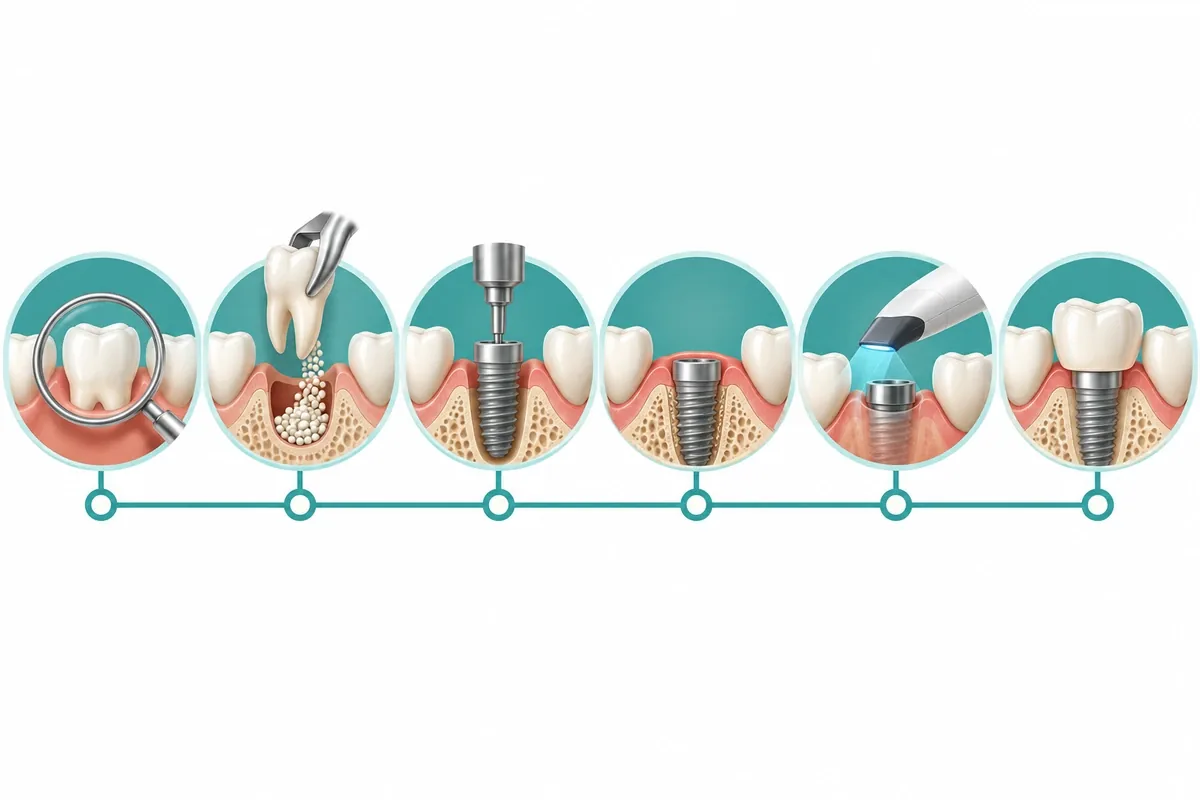
| Stage | What happens | Typical timing |
|---|---|---|
| Consultation and planning | Exam, imaging, design of the final tooth | 1 to 2 visits |
| Extraction (if needed) | Tooth removed, with or without a graft | Same day as the implant, or 2 to 4 months before |
| Bone graft (if needed) | Site rebuilt | Adds roughly 3 to 6 months of healing; sinus lifts can take longer |
| Implant placement | Implant placed under local anesthesia | 1 visit |
| Healing (osseointegration) | Bone bonds to the implant | Commonly 3 to 6 months |
| Impressions | Position recorded for the lab | 1 visit |
| Final crown or bridge | Fitted and adjusted | 1 to 2 visits |
These are typical ranges, not promises. Your plan will be specific to your findings.
Planning before placement
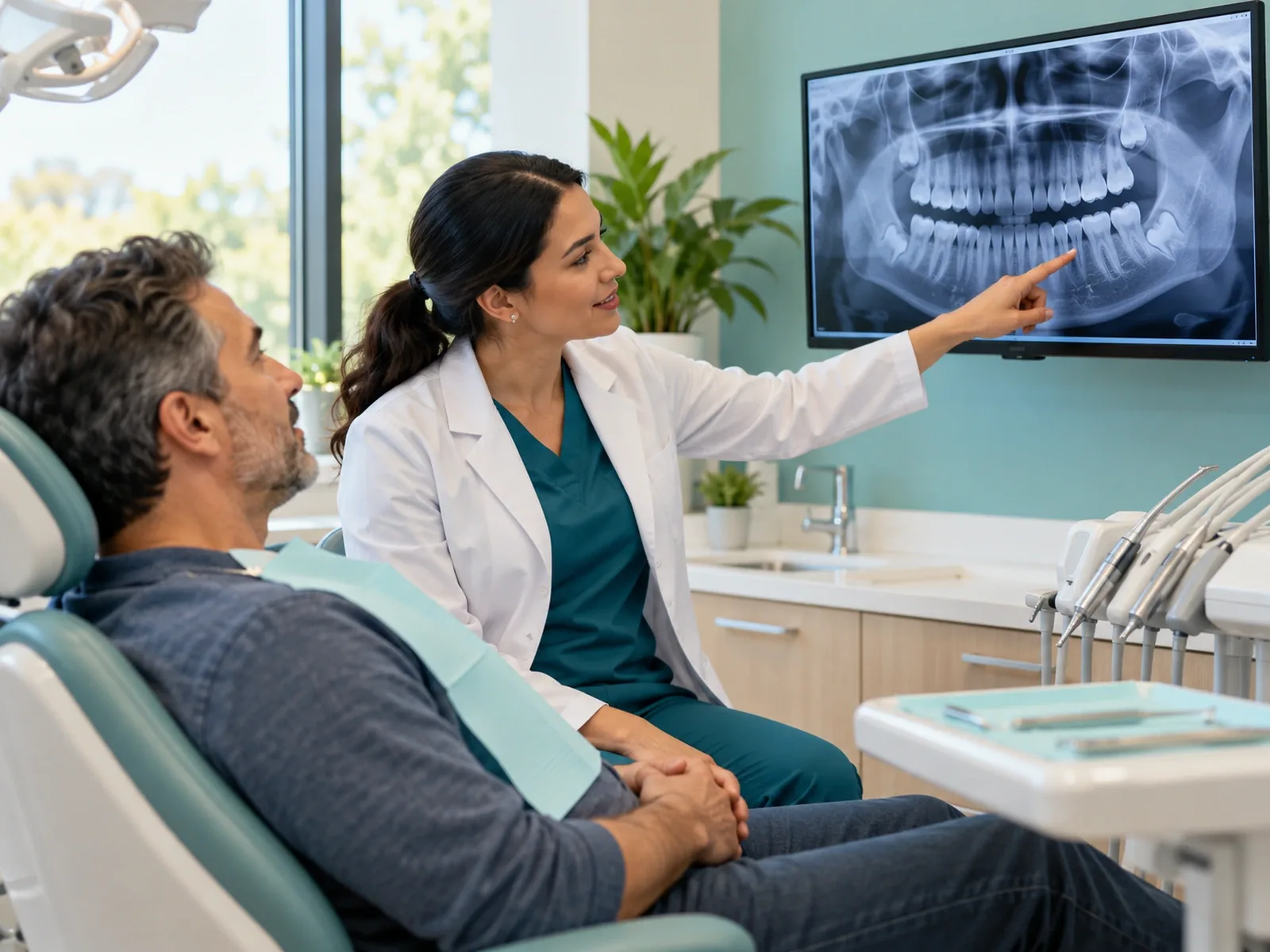
The planning stage decides almost everything that follows. An examination, X-rays and usually a 3D scan show the bone, the nerve and sinus positions and the space available. From that, Dr. Zohdi designs the final tooth first and then works backward to where the implant must go to support it.
Planning also identifies anything that has to happen before surgery: gum disease to treat, a tooth that must come out, a site too thin to hold an implant. Each of those introduces its own step and its own healing. Knowing about them at the start is what keeps the rest of the schedule realistic. The candidacy guide explains what is assessed.
When the tooth is still in your mouth
If the tooth has not yet been removed, there are two broad paths:
- Immediate placement. The tooth is extracted and the implant placed in the same visit. This saves months, but it requires an infection-free site, intact bone walls and enough bone beyond the root tip to anchor the implant. Not every socket qualifies.
- Delayed placement. The tooth is removed, often with a socket preservation graft, and the site heals for a few months before the implant is placed. Slower, but more predictable when infection or thin bone is present.
Whether a tooth is attached to the implant on the day of surgery is a separate decision from whether the implant is placed on the day of extraction. Immediate can refer to either, so ask which is meant.
Grafting adds healing time
Bone grafts need time to mature before an implant can be placed into them or alongside them. A small graft placed at the same time as the implant adds little to the schedule. A larger graft to rebuild a shrunken ridge is usually done first and healed for several months. A sinus lift for an upper back tooth can need the longest wait. The bone graft healing guide explains how readiness is judged.
Healing is a checkpoint, not a calendar date
After placement, the bone around the implant remodels and bonds to its surface. Lower-jaw bone is denser and usually integrates faster; upper-jaw bone is softer and typically needs longer. Smoking, diabetes and grafted bone all extend the safe waiting period.
At the end of the expected healing period Dr. Zohdi checks the implant's stability, the gum health and an X-ray before giving the go-ahead for the crown. If the implant is not yet firm, waiting a few more weeks is the right call. Feeling comfortable is not the test; stability is.
The temporary phase
Ask early what you will wear while the implant heals and what it is designed for:
- A removable flipper covers a visible gap. It is not for chewing on and must be kept clear of the surgical site.
- A bonded temporary glued to the neighbors looks natural and stays put, though it can come loose.
- An immediate temporary crown on the implant itself is possible only when the implant is very stable at placement. It is shaped to stay out of the bite and is for appearance, not chewing.
- No temporary is often fine for back teeth.
A temporary tooth that looks finished still needs protection from chewing forces. For full-arch cases, the same principle applies on a larger scale; see what same-day implant teeth actually means.
Making and fitting the final teeth
Once the implant is cleared, we take an impression or digital scan of its exact position. The laboratory makes the abutment and crown, which typically takes two to three weeks. At delivery the crown is tried in, the bite and the contacts with neighbors are adjusted, and it is secured. Front teeth sometimes get a trial crown first to shape the gum, which adds a visit or two. Larger cases with several implants need a framework try-in before the final is finished.
Build some flexibility into your calendar for this phase. If the fit, shade or bite needs revision, it is far better to send the crown back than to accept a compromise.
What can speed things up or slow them down
Faster: a healthy, infection-free site with good bone; a lower back tooth; no grafting needed; not smoking; immediate placement where it qualifies.
Slower: grafting or a sinus lift; an upper front tooth where gum shaping matters; smoking or poorly controlled diabetes; a healing problem or infection; a crown that needs remaking; scheduling gaps on either side.
Tell us about travel, work demands and important dates before you start. We can often plan surgery and healing around them, but a wedding or a holiday cannot decide when bone is ready. The recovery guide covers the first weeks after surgery in detail.
Getting a stage-by-stage plan
A good treatment plan tells you not just how long, but why, and what has to be true before each step. Dr. Zohdi will map your stages, your temporary teeth and your follow-ups so you can plan around them. Request an appointment at our Cleburne office, 302 N Ridgeway Dr, or call (817) 641-6261.
Sources and further reading
- FDA: Dental implants—what you should know
- ADA MouthHealthy: Dental implants
- Mayo Clinic: Dental implant surgery
General information, not a diagnosis. Read how we create and review our dental guides.