
"Why are my teeth yellow?" sounds like one question, but it has several possible answers, and each one leads to a different treatment. Pigment sitting on the surface of the enamel is a cleaning and whitening problem. Color built into the tooth itself is a different and slower problem. And one tooth that has darkened on its own may not be a cosmetic problem at all.
Choosing a product before knowing the cause is how people end up frustrated: weeks of whitening strips that lightened every tooth except the one that bothered them, or abrasive powders that made enamel thinner and teeth more yellow. An examination sorts this out quickly, usually with nothing more than a good look, a few questions and sometimes an X-ray.
This page explains the main types of discoloration, how to tell them apart, and which treatments fit each one.
Surface stains: pigment on the outside
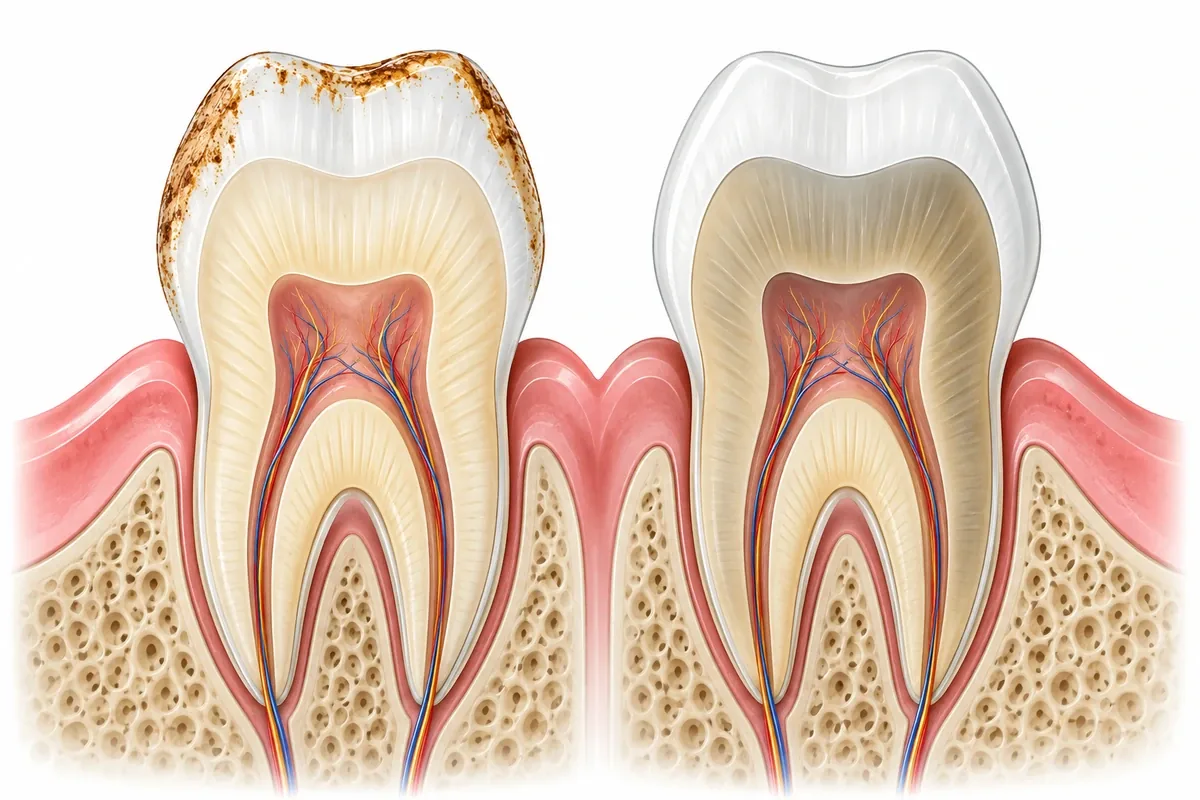
Extrinsic stains sit on or in the thin film that coats enamel. The usual sources are coffee, tea, red wine, cola, dark berries, soy sauce, curry and tobacco. Plaque and hardened tartar also take up pigment and can make the gum line look brown or gray. Some mouth rinses containing chlorhexidine, and certain iron supplements, cause a brown stain that looks alarming but is only on the surface.
Surface stain usually looks even across many teeth, is darkest where plaque collects, and improves noticeably after a professional cleaning. Cleaning and bleaching are different procedures, though: a cleaning removes deposits; teeth whitening lightens the enamel beneath.
What does not work well is scrubbing. Charcoal powders, baking soda pastes and hard brushing wear enamel, and thinner enamel lets the yellower dentin underneath show through more, so teeth end up darker with time. Tell us which products you have been using, including whitening rinses and strips, so our advice fits your actual routine.
Internal discoloration: color within the tooth
Intrinsic discoloration lives in the dentin, the layer under the enamel, or in the enamel structure itself. Common causes include:
- Aging. Enamel thins and dentin darkens and thickens over decades, so teeth gradually look more yellow even with excellent hygiene.
- Genetics. Some people simply have thicker, more yellow dentin or more translucent enamel.
- Medication during tooth development. Tetracycline-class antibiotics taken in childhood can leave gray or brown horizontal bands. These lighten slowly and sometimes incompletely with bleaching.
- Fluorosis. Too much fluoride while teeth were forming leaves chalky white flecks or, in heavier cases, brown mottling. Whitening can make white spots stand out more before they blend.
- Developmental enamel defects. Illness or nutritional problems in early childhood can leave patches of enamel that formed differently and take stain readily.
- Old amalgam fillings. Silver fillings can cast a gray shadow through the tooth around them.
Internal color responds unevenly to whitening. Yellow and light brown tones generally lighten; gray tones resist. When bleaching cannot reach the goal, dental bonding can mask a small discolored area, and porcelain veneers can cover broader or darker discoloration. Our comparison of whitening and veneers explains how to choose.
A single dark tooth is a different question
When one tooth changes color while its neighbors stay the same, treat it as a question for the dentist, not for a whitening kit. The most common causes are:
- Injury. A blow to the tooth, sometimes years earlier and sometimes forgotten, can damage the nerve. The tooth may turn gray, pink or dark yellow long after the event, often with no pain at all.
- Decay. A brown or gray area near the gum line or beside an old filling can be a cavity that has spread under the enamel.
- A failing restoration. Dark edges around a filling or crown can be stain, a leaking margin or decay; appearance alone cannot distinguish them.
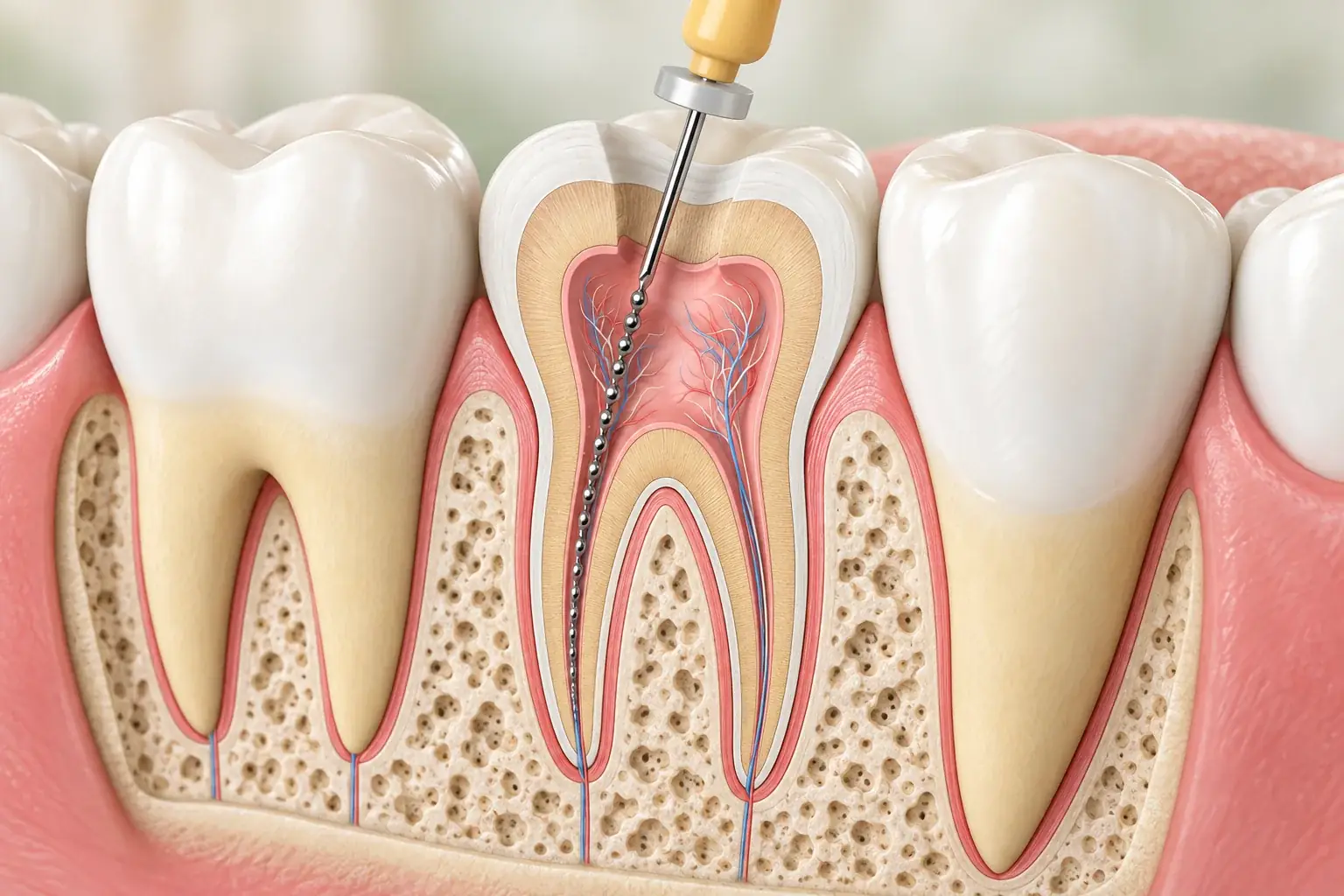
- A tooth that has had root canal treatment. These teeth sometimes darken over time and can often be lightened from the inside.
At our Cleburne office, Dr. Zohdi will ask when you first noticed the change, whether the tooth has ever been bumped, and whether it is sensitive. Testing the nerve and an X-ray when justified usually gives a clear answer. A tooth with a dead nerve generally needs root canal treatment before any cosmetic step, after which internal bleaching, bonding or a crown can address the color. Older photographs that show when the tooth began to look different are genuinely helpful; bring them.
Matching the treatment to the cause
| What you see | Most likely cause | Usual first step |
|---|---|---|
| Even yellowing across many teeth | Diet, tobacco, age | Cleaning, then whitening |
| Brown line along the gums | Tartar, chlorhexidine rinse, iron | Cleaning; review products |
| Gray or brown horizontal bands on all teeth | Childhood medication | Extended whitening trial; veneers if needed |
| Chalky white flecks or spots | Fluorosis, early enamel defect | Exam; bonding or microabrasion may help |
| One tooth darker than its neighbors | Nerve injury, decay, old restoration | Examination and testing before any cosmetics |
| Dark edges around a filling or crown | Stain, leaking margin or decay | Examination; replace if the margin is failing |
Treatment for an unhealthy tooth always comes before elective appearance changes. And because crowns, fillings and veneers do not bleach, ask which visible surfaces are natural teeth and which are restorations before you set expectations for whitening.
Preventing new stain
Once the cause is handled, a few habits keep teeth looking the way you want: rinse with water after staining drinks or use a straw, brush twice a day with a fluoride toothpaste that is not highly abrasive, clean between teeth, avoid tobacco, and keep regular cleanings so surface stain is polished away before it settles in.
Taking the next step
If you are not sure what kind of discoloration you have, a short visit answers the question and prevents wasted effort on products that cannot work. Request an examination at our Cleburne office, and we will tell you whether a cleaning, whitening, bonding or treatment of the tooth itself is the right next step. For the full range of options, see our cosmetic dentistry overview.
Sources and further reading
General information, not a diagnosis. Read how we create and review our dental guides.