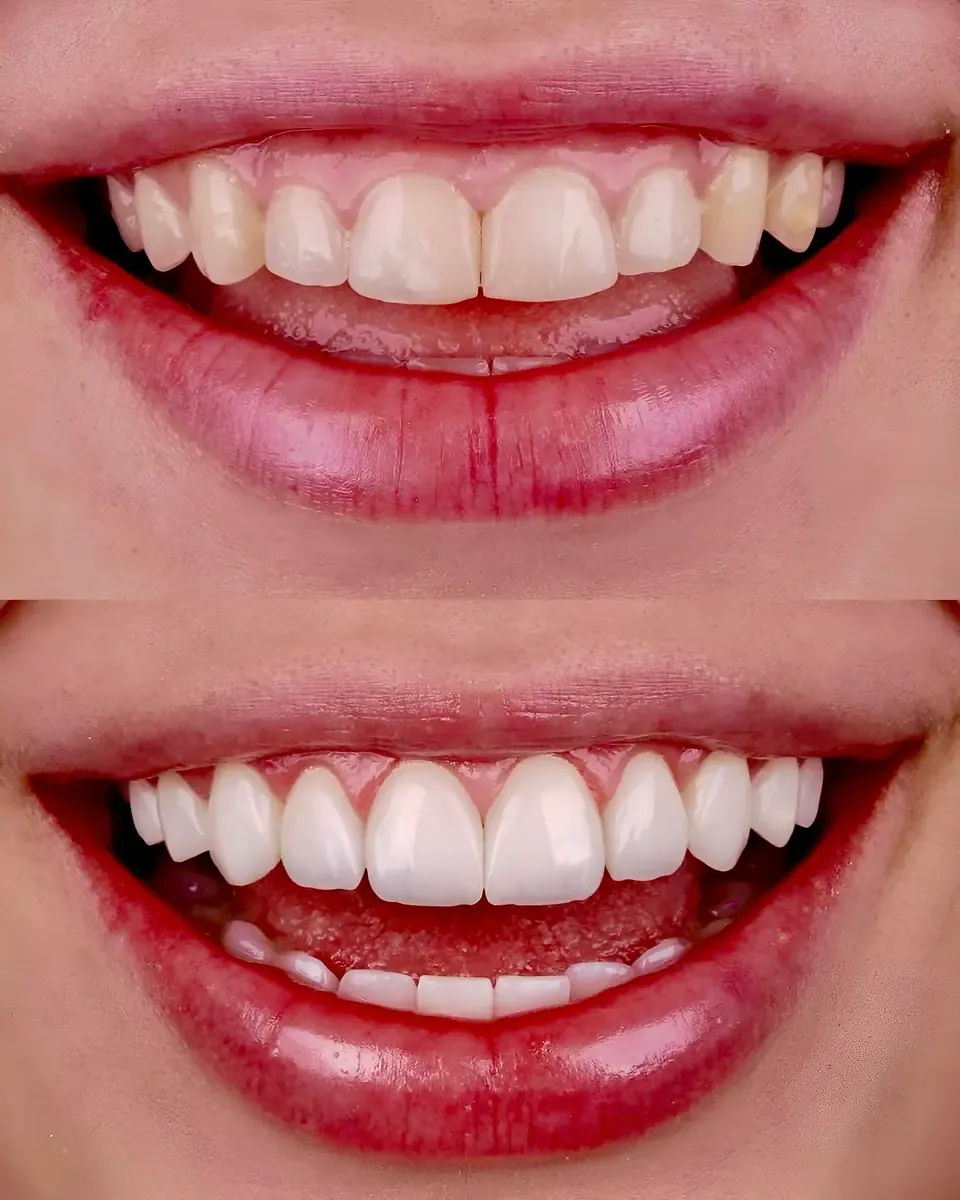
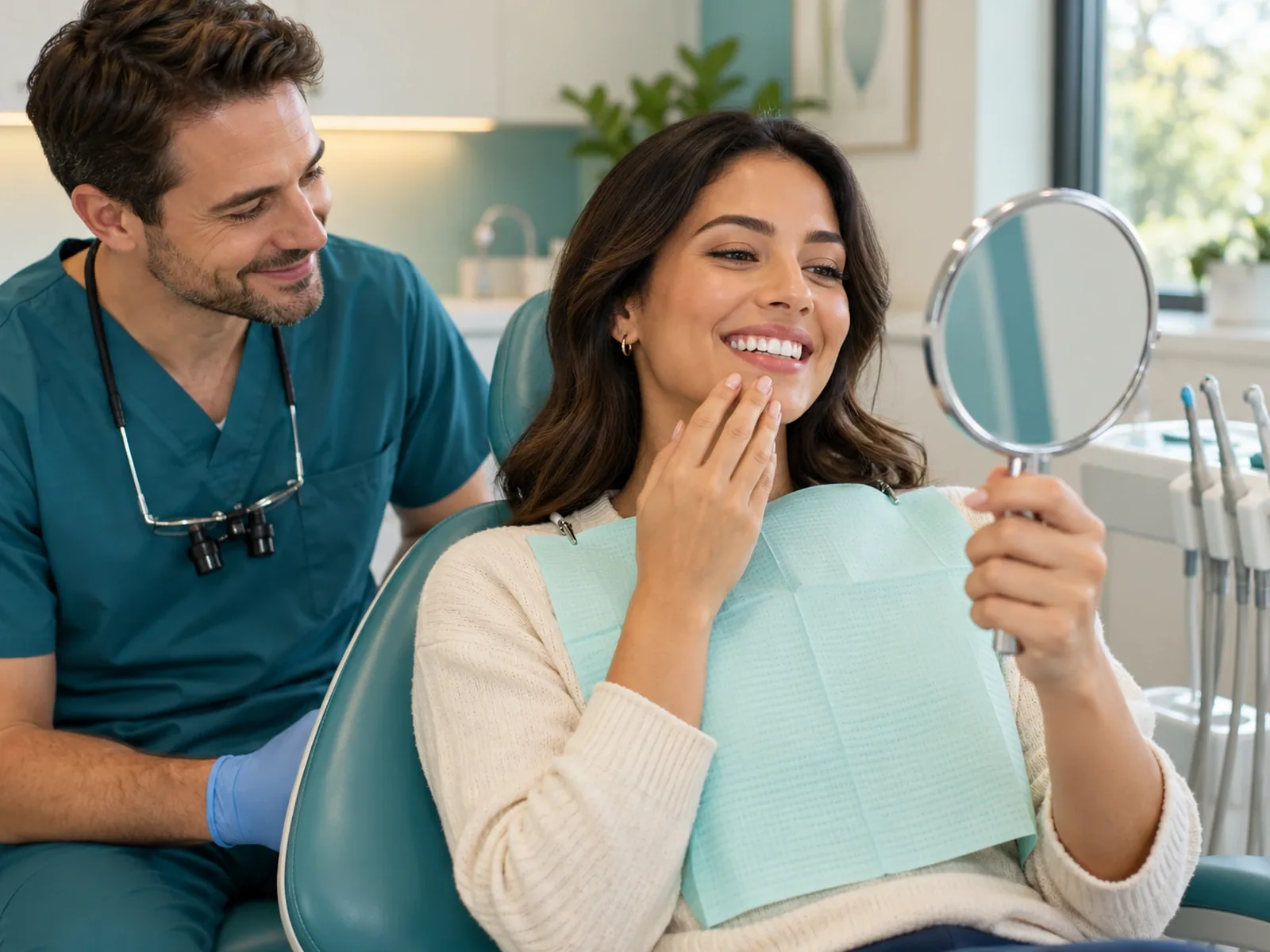
Whitening and veneers both make teeth look brighter, which is why they are so often confused. They are not interchangeable. Whitening changes one thing, the color of your natural enamel, and leaves everything else untouched. Veneers replace the visible front surface of selected teeth with porcelain, which changes color, shape, length and spacing at the same time and usually involves removing a thin layer of enamel permanently.
That difference points to the right way to decide. Ask yourself what you actually want to change. If it is color alone, whitening is almost always the place to begin. If it is shape, proportion, worn edges or a kind of discoloration that bleaching will not touch, veneers enter the conversation.
This page walks through that decision, including the cases where trying whitening first makes a later veneer plan smaller or unnecessary.
When color is the main concern
If you are happy with the size and position of your teeth and simply wish they were lighter, start with an evaluation for teeth whitening. Professional whitening lightens the yellow and brown tones that come from coffee, tea, wine, tobacco and age, and it does so without altering tooth structure. If you do not like the result, you have lost nothing but some time.
Whitening does have limits. Results depend on the source of the discoloration, and our guide to tooth stains explains why. Gray tones and horizontal banding from childhood medication lighten slowly and often incompletely. White spots from early enamel defects can stand out more after whitening, not less. And a single tooth that has turned dark on its own needs a diagnosis, especially if it has a history of injury or a large filling, because it may need treatment rather than cosmetics.
Whitening should never postpone care for decay or a cracked tooth. It is an elective finishing step, not a substitute for a healthy mouth.
When shape and surface also matter
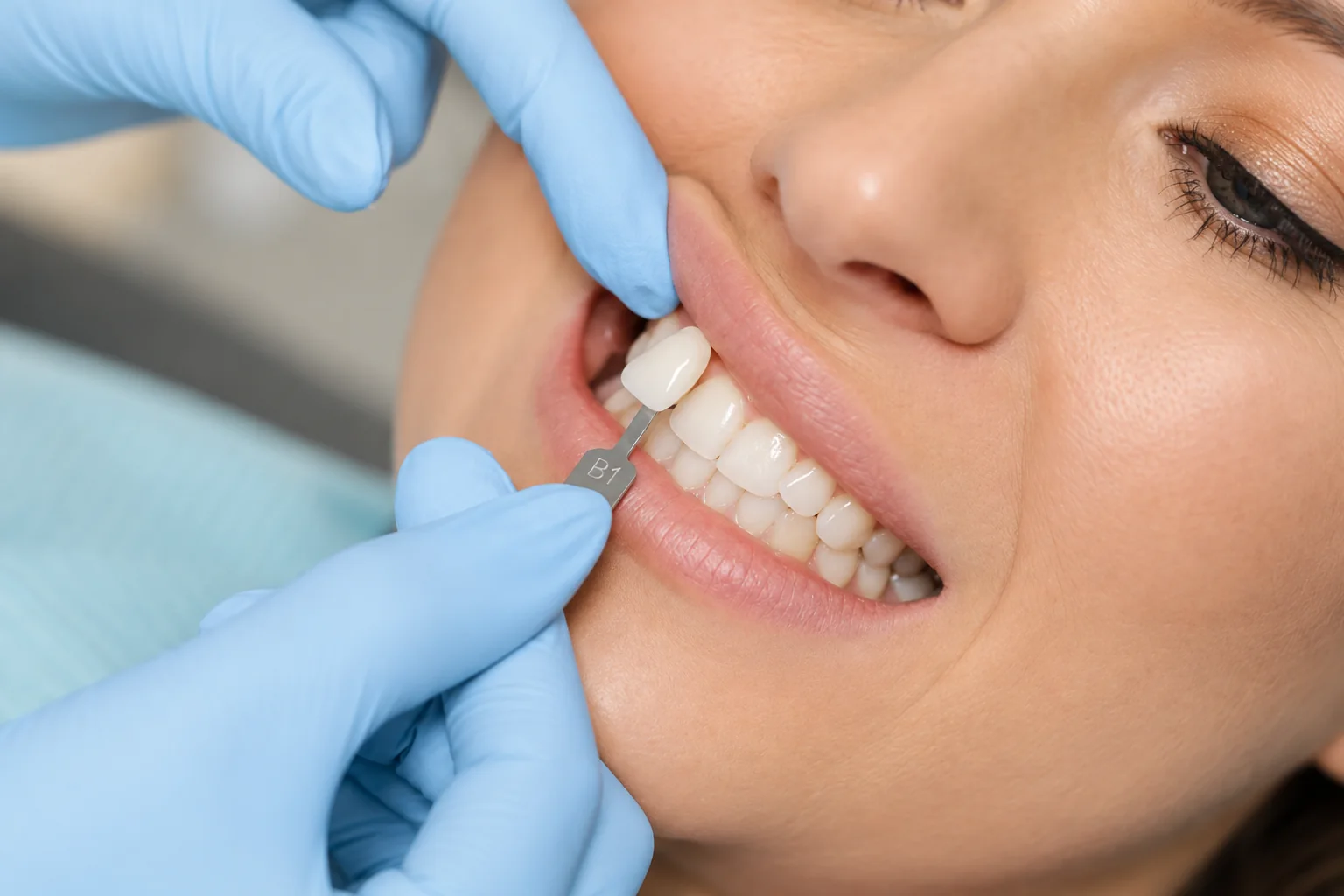
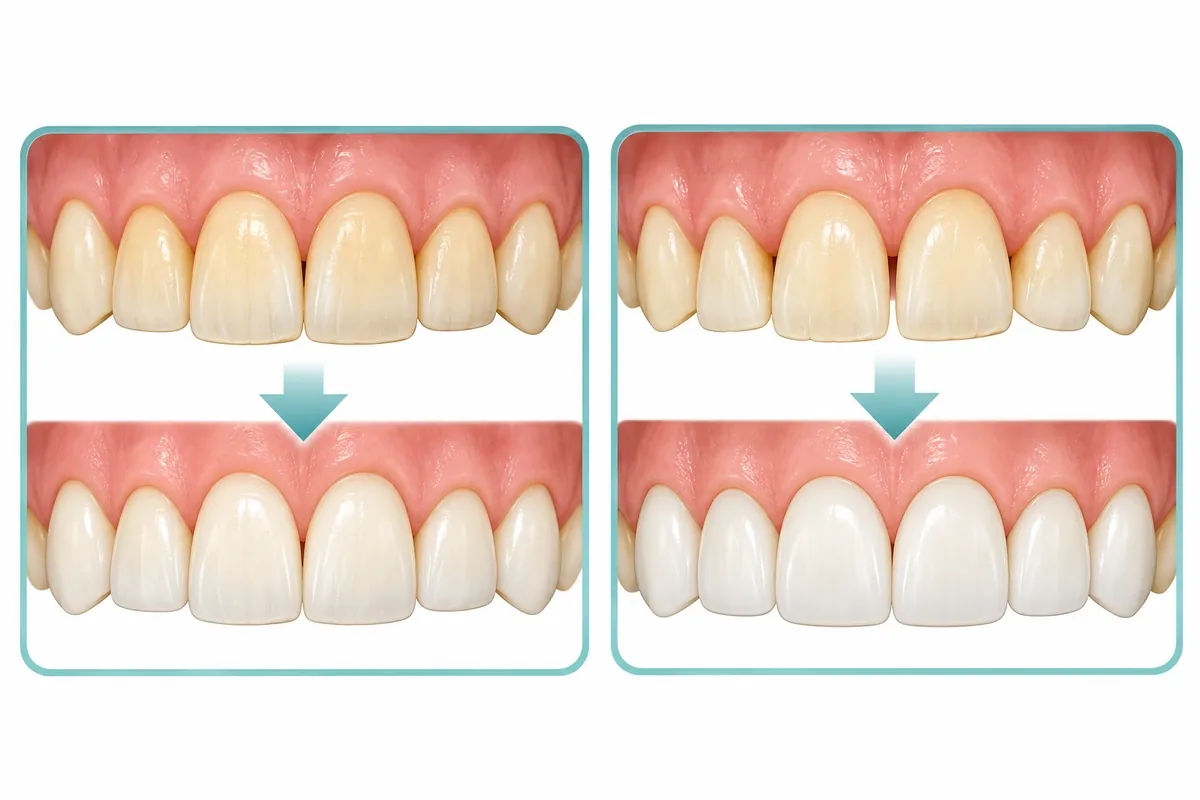
Porcelain veneers are worth considering when the list of concerns is longer than color: chipped or worn edges, teeth that look too small or uneven, a gap you want closed, or discoloration that whitening has already failed to shift. Because porcelain can mask dark color in a very thin layer and be shaped precisely, it solves several problems in one restoration.
The commitment is larger. Most veneers require enamel preparation that cannot be undone, and every veneer will eventually need replacement. That is why the examination should also consider alternatives rather than treating whitening and veneers as the only two choices:
- A small chip or short edge may be a job for dental bonding rather than a veneer.
- Crowding or rotation is a position problem; clear aligners move the teeth instead of covering them.
- Teeth that look short because of a low gum line may need a gum lift rather than longer porcelain.
A quick comparison
| Whitening | Veneers | |
|---|---|---|
| What changes | Color of natural enamel only | Color, shape, length, small gaps, surface texture |
| Enamel | Fully preserved | Thin layer usually removed, permanently |
| Reversible | Yes, teeth simply return toward their old shade over time | No |
| Visits | One in-office session or one to two weeks at home | Two to three visits over a few weeks |
| Maintenance | Occasional touch-up whitening | Daily care, periodic exams, eventual replacement |
| Works on restorations | No | Replaces the visible surface, so existing color is covered |
| Cost | A fraction of the cost of veneers | Higher, and per tooth |
Plan around existing crowns and fillings
Bleach does not lighten crowns, veneers, bonding or tooth-colored fillings. If you have any of these on front teeth, whitening the natural teeth around them can expose a mismatch that was invisible before. That is not a reason to skip whitening, but it is a reason to plan.
The usual sequence is to whiten first, wait about two weeks for the shade to settle, and only then match or replace any restorations. Ask whether a proposed replacement is needed for health, for appearance, or both. Replacing a sound crown purely to match a new shade is a legitimate choice, but it should be yours, made with the information in front of you.
Why trying whitening first often makes sense
At our Cleburne office, Dr. Zohdi frequently suggests whitening before committing to veneers, for three reasons. First, a lighter shade sometimes satisfies the original concern on its own, and the patient decides veneers are no longer needed. Second, when veneers are still wanted, whitening lightens the underlying teeth so thinner porcelain can achieve the target shade, which means less enamel removal. Third, it sets the final shade for the teeth that will not receive veneers, so the new porcelain can be matched to them rather than guessed.
The one caution is timing. Whitening right before veneer preparation can weaken the bond, so we build a pause into the plan.
Taking the next step
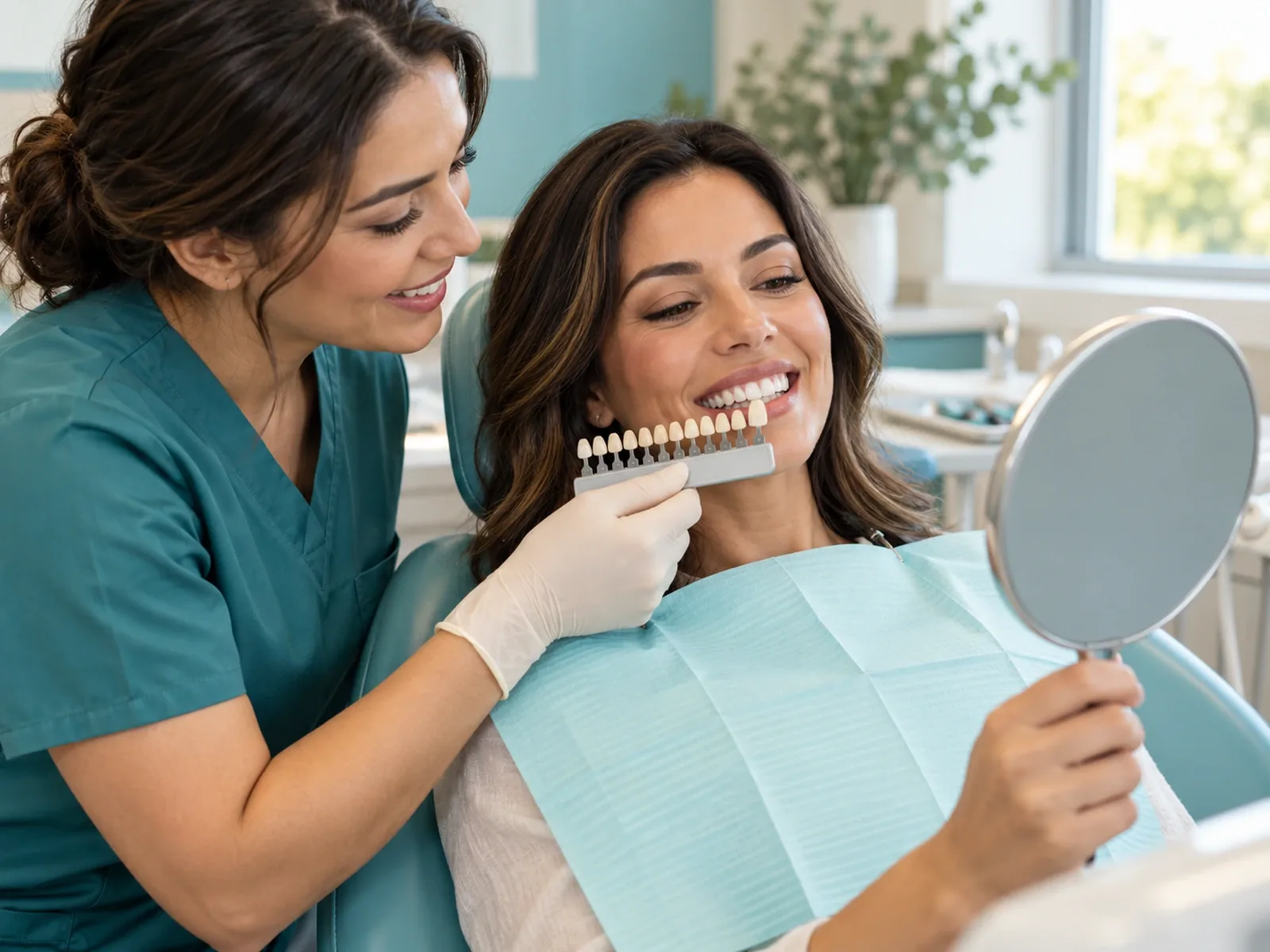
The best way to settle this question is a short visit where we separate color from shape, position and tooth health. Request a cosmetic evaluation at our Cleburne office and Dr. Zohdi will tell you plainly whether whitening alone is likely to get you where you want to be. If a bigger change is right for you, our smile makeover planning page explains how we sequence it, and the cosmetic dentistry overview covers every option in between.
Sources and further reading
General information, not a diagnosis. Read how we create and review our dental guides.