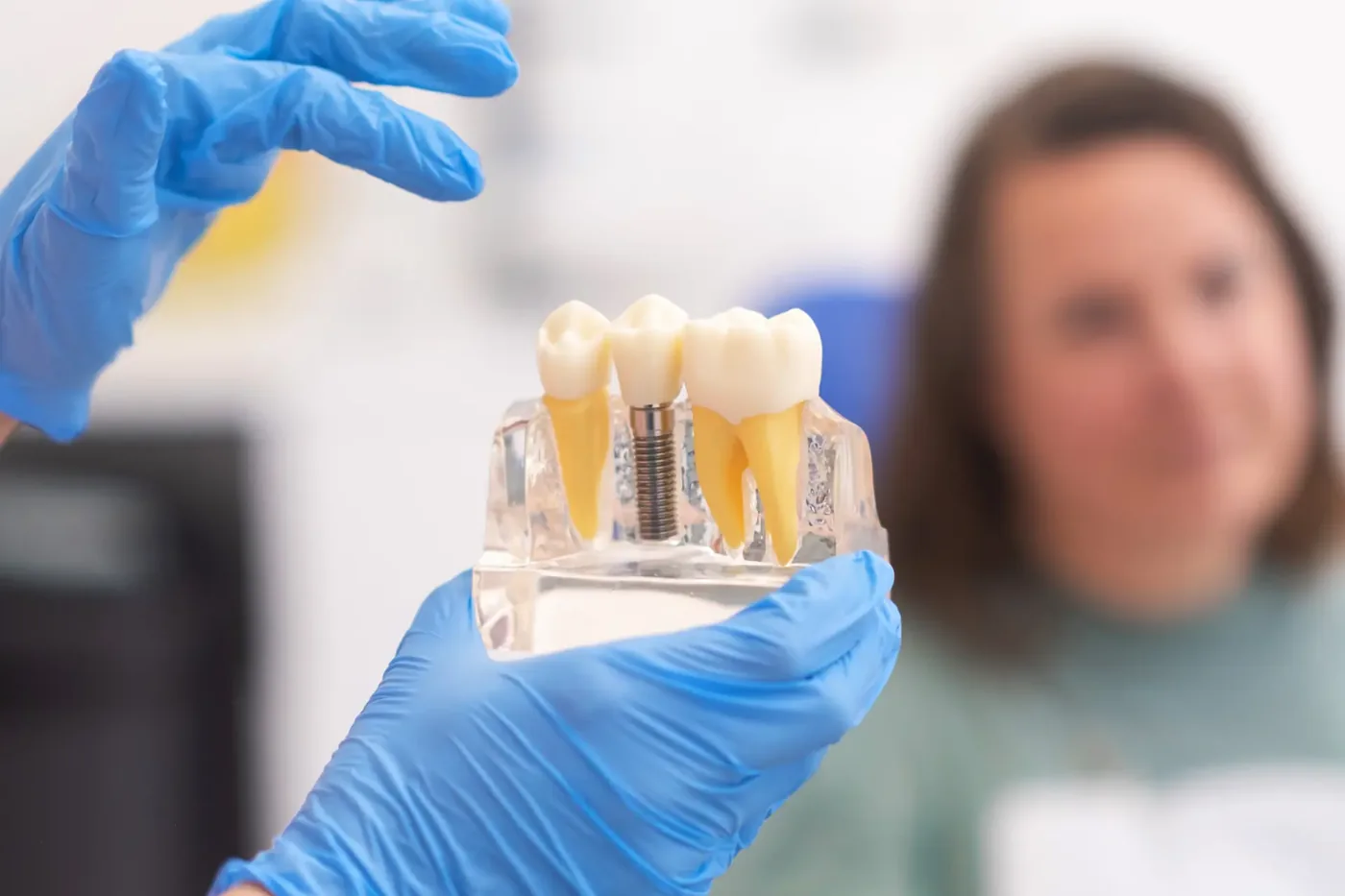
A dental implant cannot get a cavity, and that leads some people to assume it needs no care. It does. The gum and bone around an implant are living tissue, and they can become inflamed and break down in much the same way as the tissues around a natural tooth. The crown or bridge on top can wear, chip or loosen. With a sensible daily routine and regular check-ups, implants last for many years; without them, they are at real risk.
The right routine depends on what kind of replacement you have. A single crown, an implant bridge and a removable implant denture each create different spaces to clean.
This guide, part of our dental implant services, explains the daily care for each, what we check at maintenance visits, and the warning signs that should prompt a call to our Cleburne office.
What can go wrong with an implant
Peri-implant mucositis is inflammation of the gum around an implant, caused by plaque. The gum looks red or swollen and may bleed when brushed. At this stage it is reversible with better cleaning and a professional clean.
Peri-implantitis is what mucositis can become if ignored: inflammation that has started to destroy the bone supporting the implant. Bone lost this way does not grow back on its own, and advanced cases can lead to a loose implant. Prevention is far easier than treatment.
Mechanical problems include a loosened screw, a chipped or worn crown, a cracked bridge framework or a worn attachment on a removable denture. These are usually repairable, but a loose crown left loose can damage the implant connection.
A history of gum disease, smoking, diabetes and heavy grinding all raise the risk of the first two. Your personal risk shapes how often we want to see you.
Daily care for a single implant crown
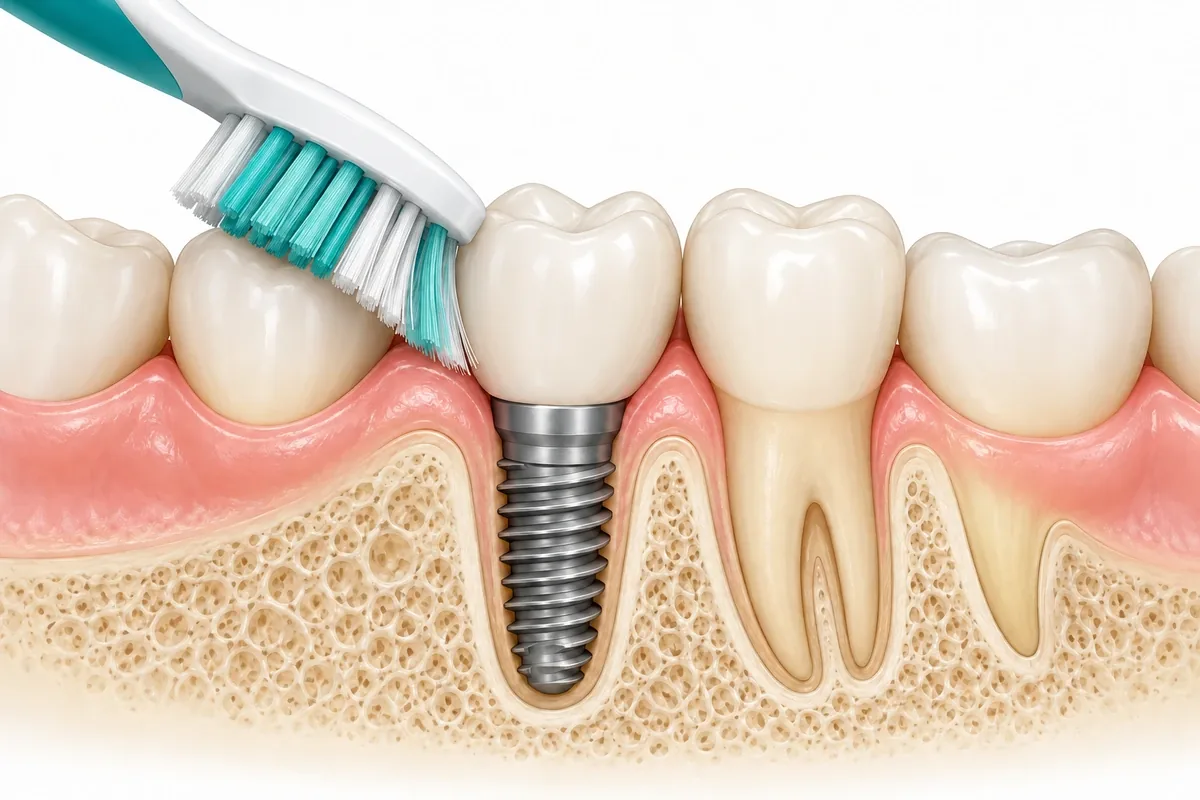
- Brush twice a day with a soft or electric brush, angling the bristles toward the gumline where crown meets gum. That junction is where plaque collects.
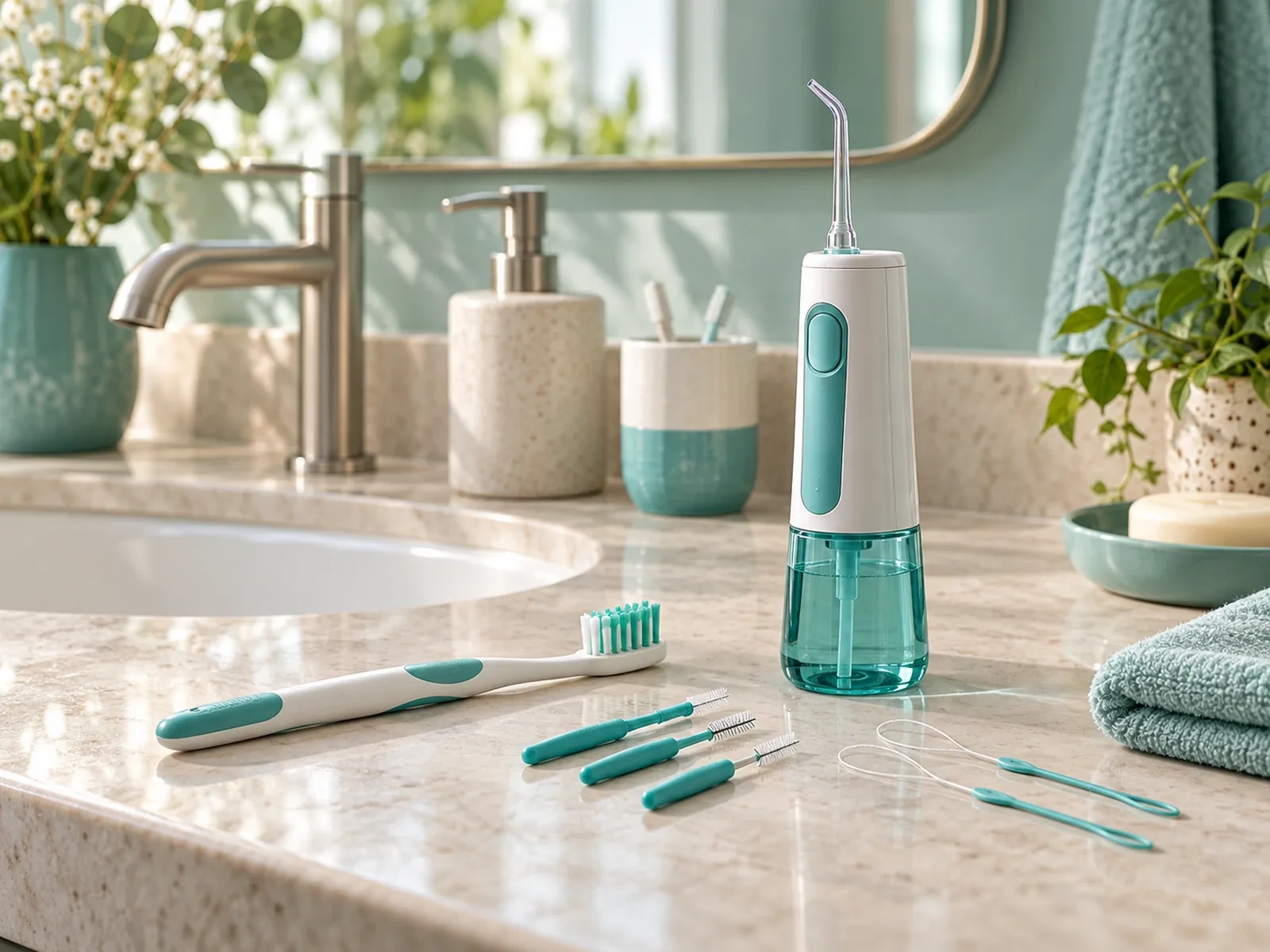
- Clean between the implant crown and its neighbors once a day with floss, a floss threader or an interdental brush sized for the space. Interdental brushes with plastic-coated wire are kinder to implant surfaces.
- A water flosser is a good addition, aimed along the gumline on a low or medium setting.
- Use a low-abrasive toothpaste. Avoid gritty whitening pastes and baking-soda scrubs that can scratch the crown and the exposed implant collar.
- Avoid chewing ice, pens or very hard candies, which can chip porcelain.
Cleaning an implant bridge
A bridge has artificial teeth suspended between implants, and food and plaque collect beneath them.
- Pass floss or a tufted super floss under each suspended tooth daily using a threader.
- Use interdental brushes in the spaces between the bridge and the gum where they fit.
- A water flosser is especially useful for bridges; run it under the suspended teeth from both sides.
- Brush the implant posts where they emerge from the gum, not just the visible teeth.
If a bridge has been designed so you cannot get underneath it, tell us. The shape can often be adjusted. For a full-arch fixed bridge, which has its own technique, see full-arch cleaning and maintenance.
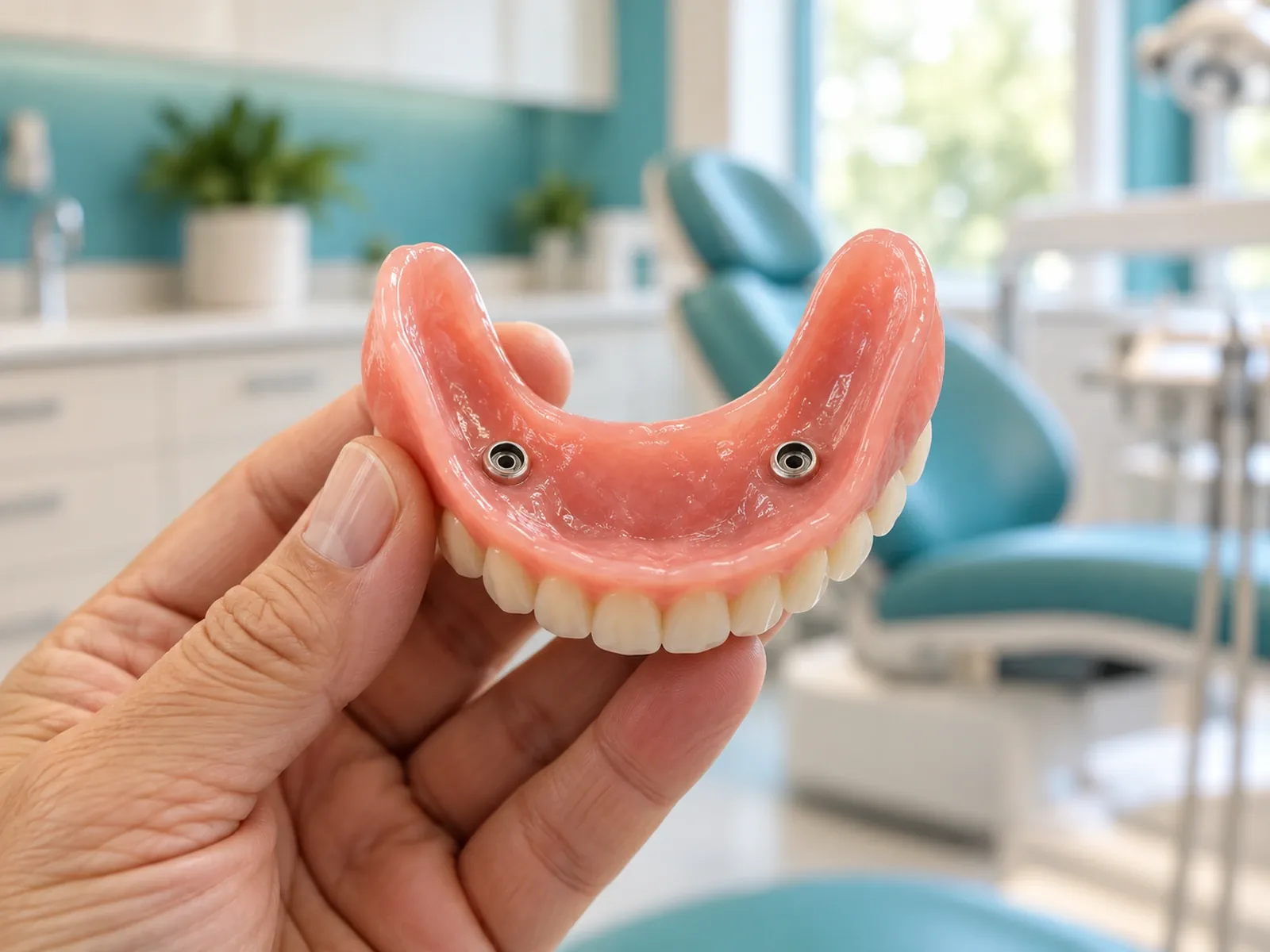
Cleaning an implant-supported denture
- Remove the denture at night and after meals as instructed.
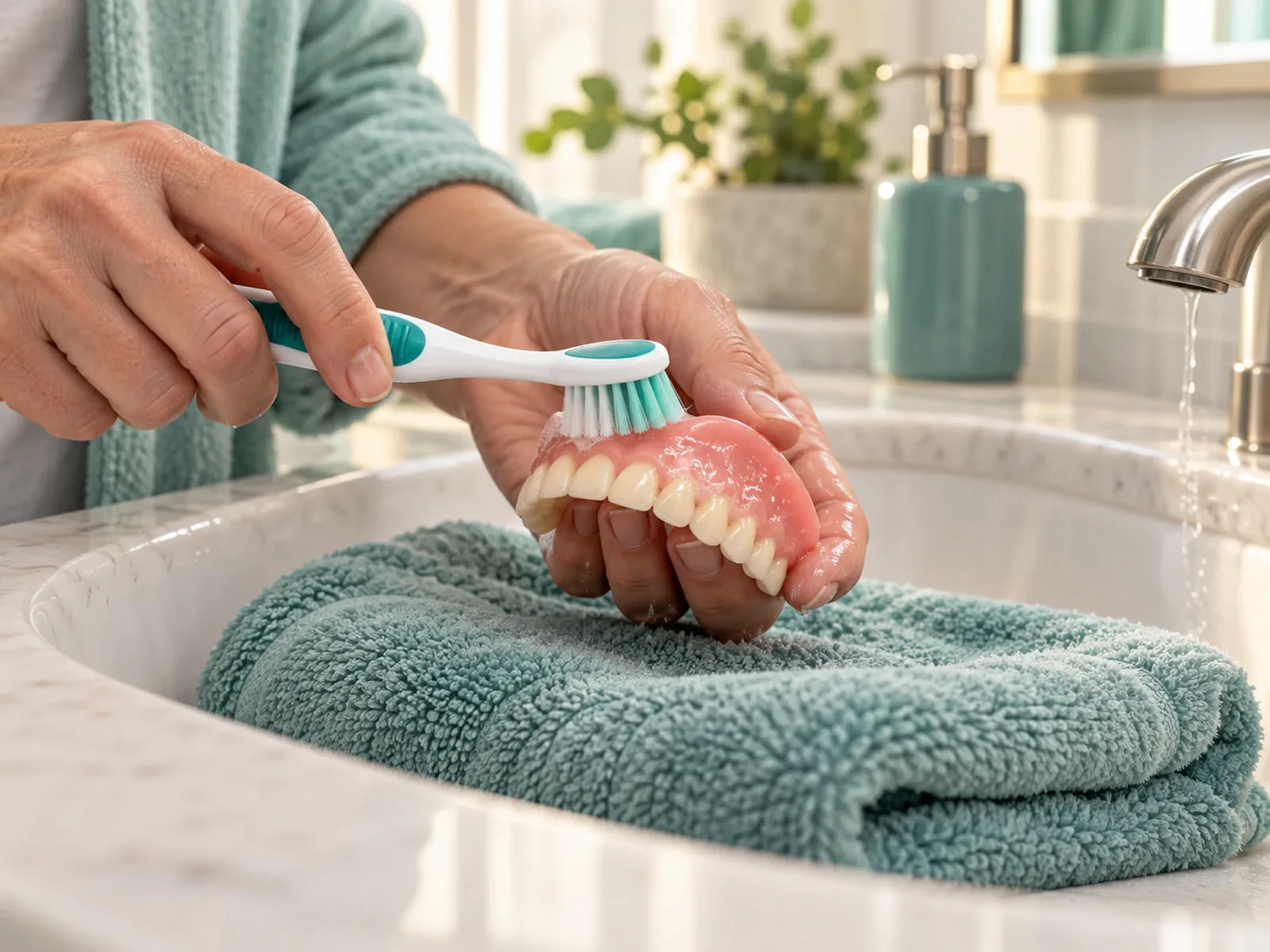
- Brush the denture inside and out with a denture brush and non-abrasive cleaner; soak as directed. Pay attention to the housings where the attachments sit.
- Brush the attachments on the implants in your mouth with a soft brush. Plaque here leads directly to gum inflammation.
- Clean the gums and palate with a soft brush or cloth.
- Expect the nylon inserts in the denture to wear and need replacing periodically. See the implant-supported dentures guide and denture care guide for more.
Tools worth having
- Soft manual or electric toothbrush
- Low-abrasive toothpaste
- Floss plus a threader, or pre-threaded floss for bridges
- Interdental brushes in the size that fits your spaces (we will show you)
- A water flosser if you have a bridge or find flossing difficult
- For dentures: a denture brush and cleaner
Ask us to demonstrate on your actual restoration and then show us your technique. The goal is effective, gentle plaque removal with a few tools you use every day, not a drawer full of gadgets.
What we check at maintenance visits
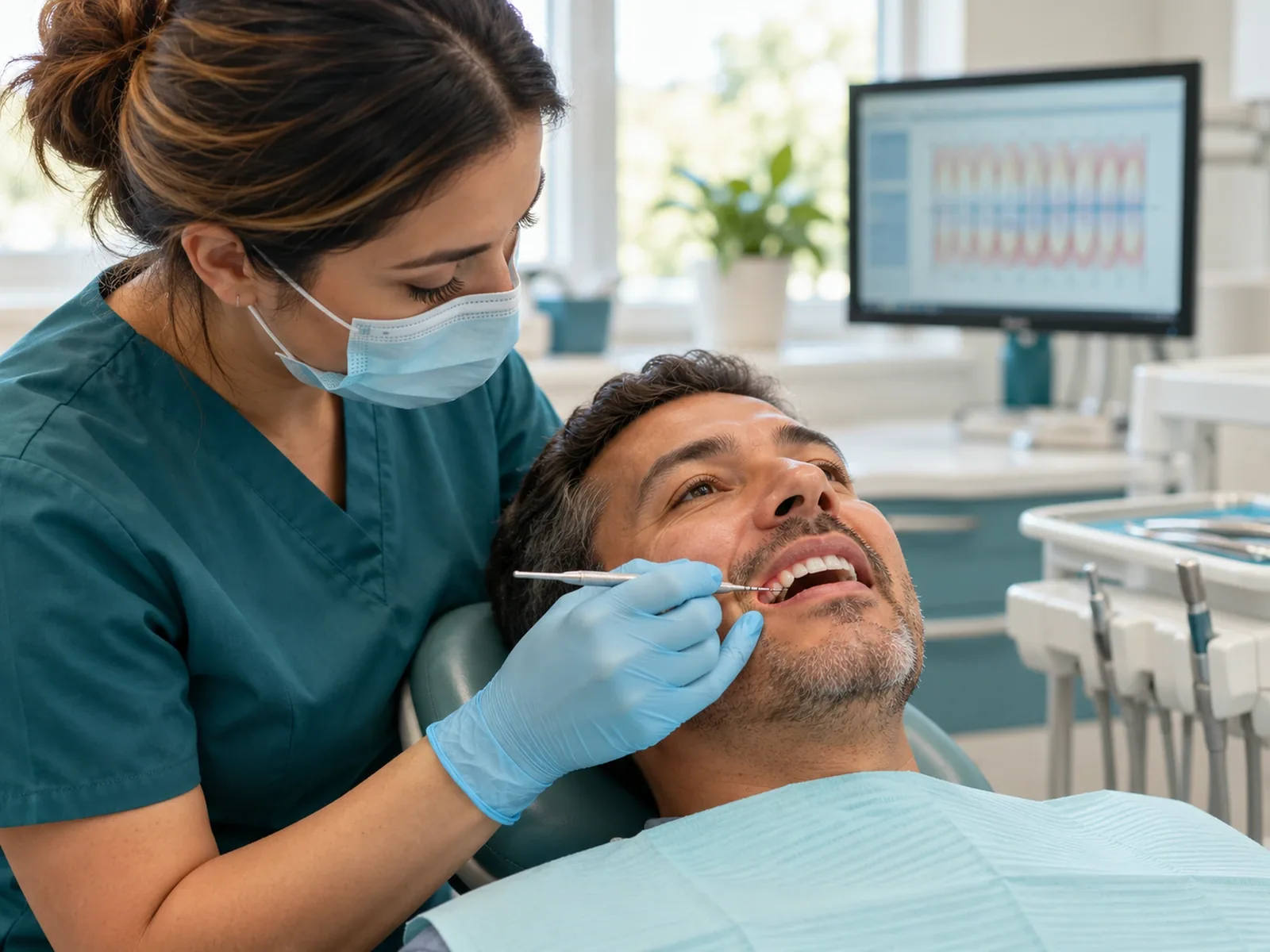
Implant maintenance is more than a polish. At each visit we:
- Look at the gum around each implant for redness, swelling or bleeding, and measure the pocket depth around it to track changes over time.
- Check whether the crown, bridge or attachments are tight and intact.
- Check your bite, because a crown that has become high puts extra force on the implant.
- Take an X-ray when there is a reason to, typically at the first anniversary and then periodically, to confirm bone levels are stable.
- Clean the implant and crown with instruments and polishing agents that will not scratch titanium or ceramic.
- Review your home technique and adjust it if the gum is not as healthy as it should be.
Most patients are seen every six months. If you have a history of gum disease or early signs of inflammation, we may recommend every three or four months, in line with periodontal maintenance.
Warning signs: call rather than wait
Problems around implants often develop without the sharp pain a natural tooth would give, because an implant has no nerve. Contact us at (817) 641-6261 if you notice:
- Bleeding when you brush or floss around the implant
- Redness, swelling or tenderness of the gum around it
- A persistent bad taste or odor from the area
- The gum pulling back to expose the metal collar
- A crown, bridge or denture attachment that feels loose, clicks or has shifted
- A change in how your teeth meet
- Any looseness of the implant itself
A loose crown is not the same as a loose implant, but you cannot tell from the outside. Do not try to tighten or glue anything yourself; the parts are precise and easily damaged.
Habits that protect your implants
- Do not smoke. It is the single biggest controllable risk for gum problems around implants.
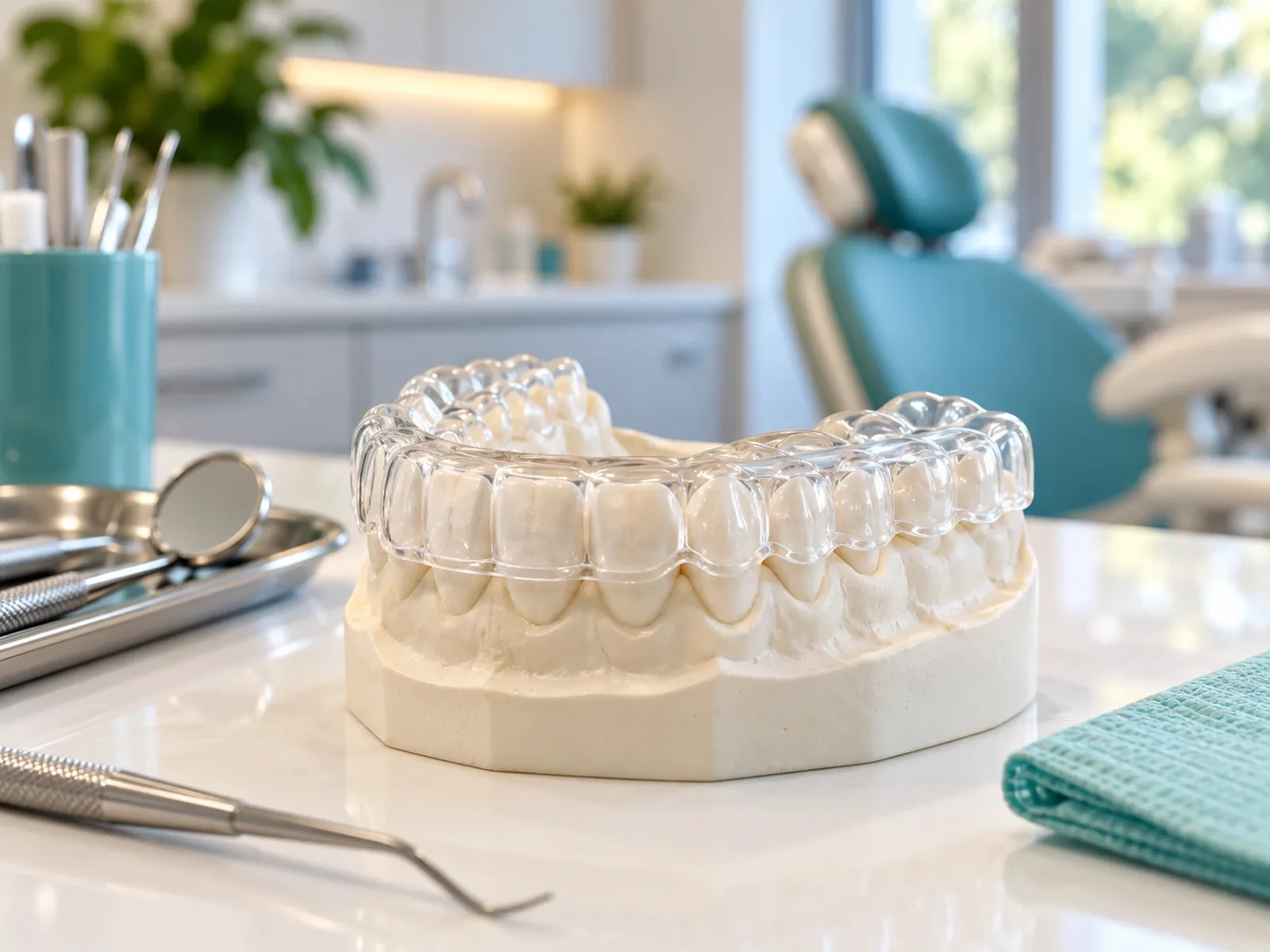
- Wear a night guard if you grind. Implants have no shock-absorbing ligament, so clenching loads them directly. Ask whether a night guard is appropriate for you.
- Keep diabetes and other conditions well controlled. Healing and resistance to infection depend on it.
- Keep your natural teeth healthy. Gum disease elsewhere in the mouth is a reservoir for the bacteria that affect implants.
- Do not skip maintenance visits because the implant feels fine. Feeling fine is not the test.
Keep a record of your implant system
Ask us to note the implant brand, size and the type of abutment and crown in your records, and keep a copy for yourself. If you move, travel or need care elsewhere, that information lets another dentist order the right parts and tools. Replacement components for established systems remain available for decades, but only if the system is known.
Keeping your implant healthy
If you are not sure your cleaning technique is reaching everywhere, or you have noticed a change around an implant, a maintenance visit is the right next step. Dr. Zohdi and our hygiene team will check the tissue and the restoration, clean it properly and show you exactly how to care for it at home. Request an appointment at our Cleburne office, 302 N Ridgeway Dr, or call (817) 641-6261.
Sources and further reading
- FDA: Dental implants—what you should know
- ADA MouthHealthy: Dental implants
- Mayo Clinic: Dental implant surgery
General information, not a diagnosis. Read how we create and review our dental guides.