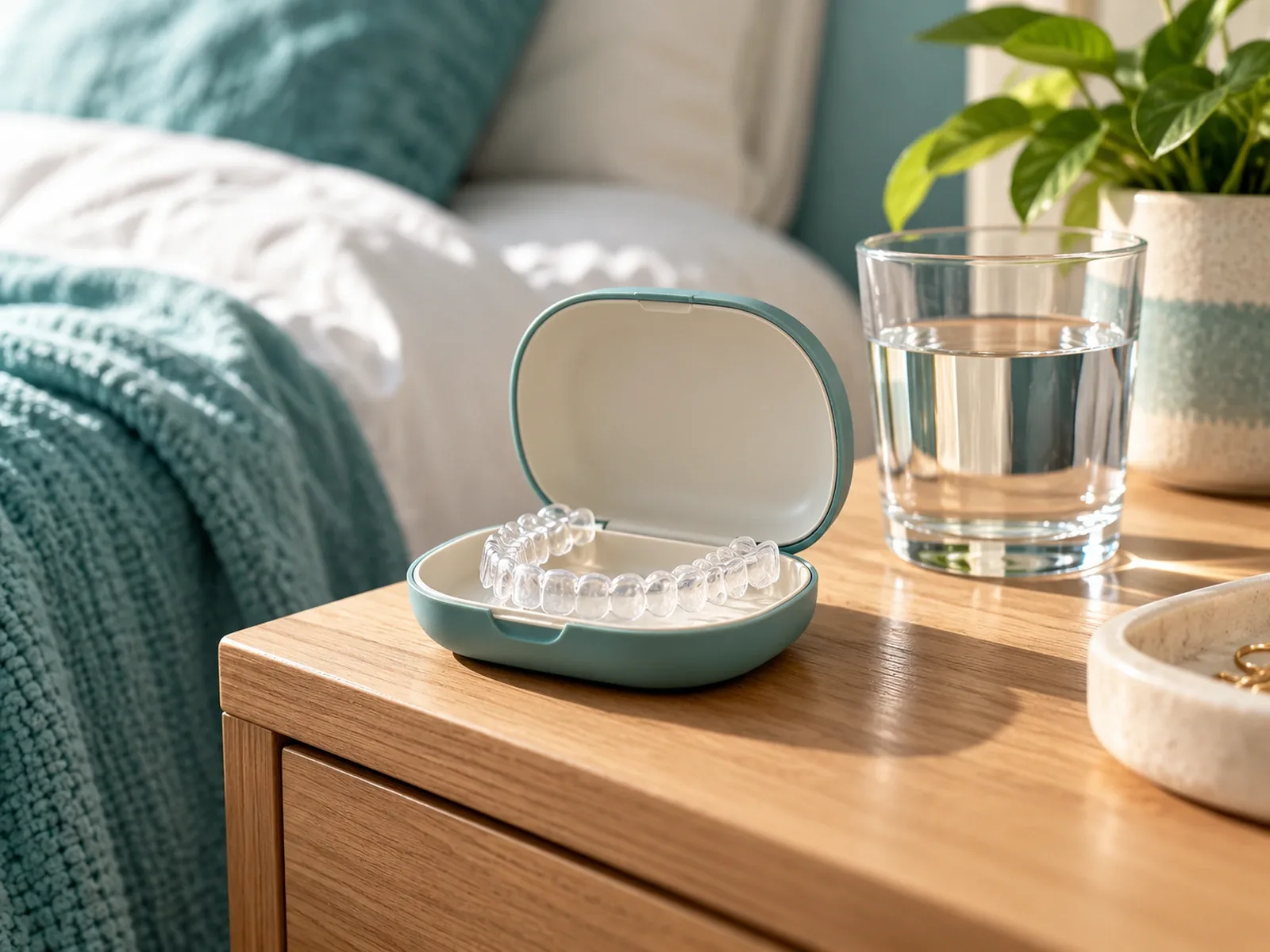
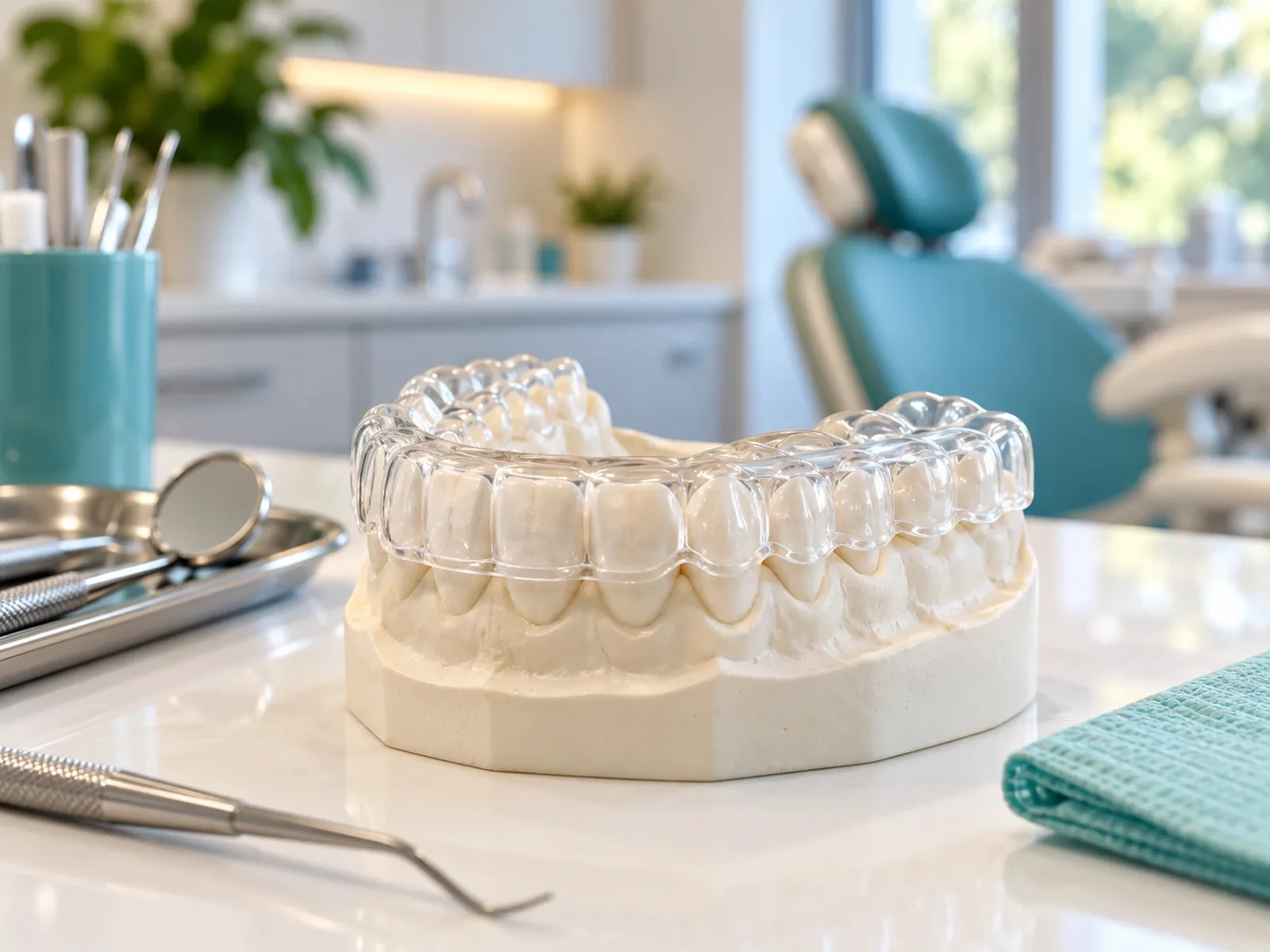
A night guard, sometimes called an occlusal guard or splint, is a removable appliance worn over the upper or lower teeth while you sleep. Its job is to absorb the forces of grinding and clenching so they wear down a replaceable piece of acrylic instead of your enamel, fillings, crowns or veneers. For someone who grinds, it is one of the most cost-effective pieces of dental protection available.
For the bigger picture — how jaw pain, clenching and worn teeth fit together and what we check first — start with our TMJ and teeth-grinding overview.
It also gets asked to do things it cannot. A night guard does not stop you from grinding, it is not a reliable treatment for jaw pain, and a standard guard does nothing for snoring or sleep apnea. This page explains what a guard is actually for, why fit and design matter more than people expect, how a custom guard compares with a drugstore one and with the other appliances it is often confused with, and how to look after it.
Who benefits from a night guard
A guard is usually recommended when the dentist sees evidence that grinding or clenching is damaging the teeth or dental work, or when someone has invested in restorations that need protecting. Typical situations include:
- flattened, chipped or cracked teeth with wear patterns that match between upper and lower,
- fillings, crowns or veneers that keep chipping or breaking,
- new cosmetic or restorative work on a known grinder,
- morning jaw-muscle soreness or tension headaches that fit a grinding pattern, or
- a bed partner who hears grinding at night.
The decision should follow an evaluation of why the teeth are wearing, since acid erosion and grinding can look alike. Our bruxism page explains how that assessment works. A guard that is prescribed without a reason is an expensive piece of plastic; one prescribed for the right reason can spare you a great deal of dental work over the years.
Custom versus over-the-counter
Store-bought "boil-and-bite" guards are softened in hot water and molded by biting. They are inexpensive and better than nothing in a pinch, but they have real drawbacks. They fit loosely and shift, they are thick and bulky, many people chew through the soft material within months, and the soft surface can actually encourage chewing and clenching in some users. Because nobody checks how the teeth meet on them, they can also put uneven pressure on a few teeth.
A custom guard is made from an impression or digital scan of your teeth. It is usually a hard or dual-layer acrylic, relatively thin, and fits closely enough to stay put without clasps. At the delivery visit Dr. Zohdi adjusts the biting surface so that the opposing teeth touch it evenly, which spreads the force and avoids loading one tooth. That adjustment is what separates a protective appliance from a piece of plastic in your mouth.
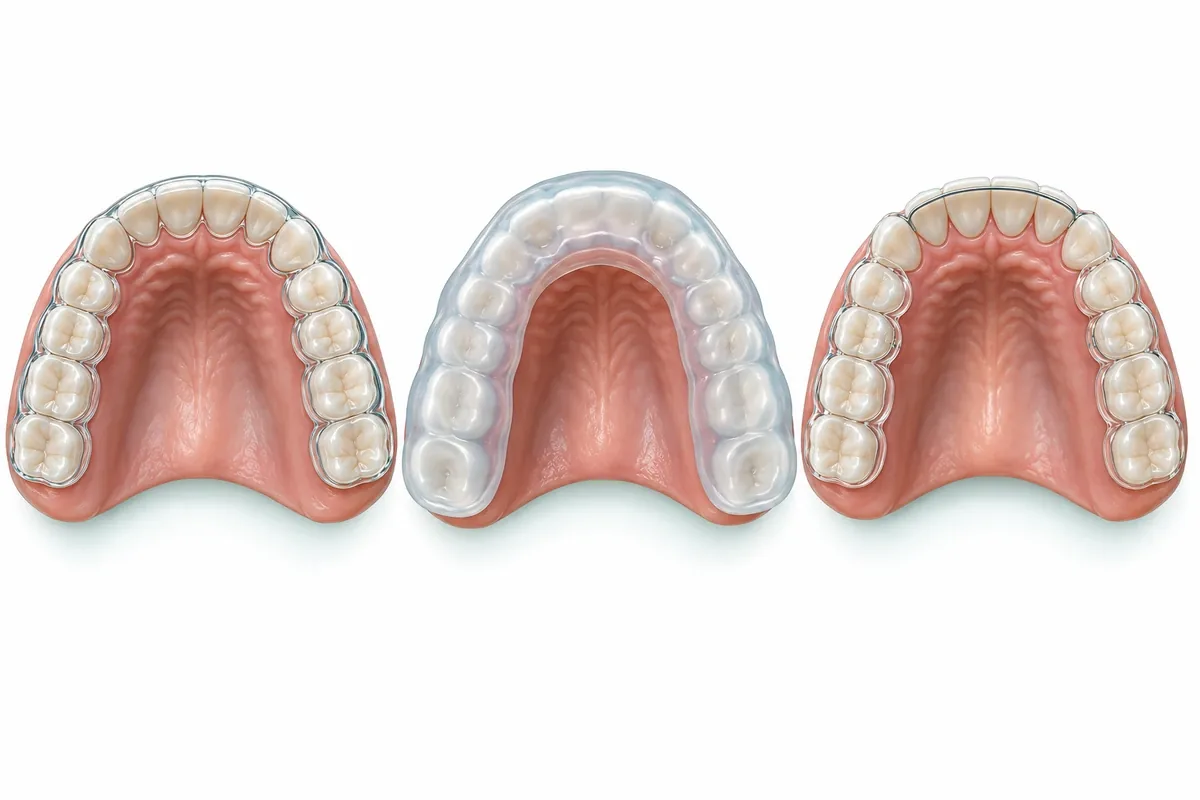
Design choices
Not every guard is the same, and the differences are deliberate:
| Feature | Options | Why it matters |
|---|---|---|
| Material | Hard acrylic, soft, or dual-layer (soft inside, hard outside) | Hard surfaces wear slowly and let the jaw slide; very soft guards can be chewed and may increase clenching in some people |
| Arch | Upper or lower | Chosen for comfort, which teeth need protecting, and any missing teeth or dental work |
| Thickness | Thin to moderate | Thick enough to last, thin enough to be comfortable; more is not automatically better |
| Coverage | Full arch | Partial-coverage appliances worn long term can let unprotected teeth shift and are generally avoided for nightly use |
Which combination suits you depends on how hard you grind, the state of your teeth and restorations, and what you can tolerate wearing. If you already own a store-bought guard, bring it; seeing how it has worn tells us a lot about the forces involved.
What a night guard cannot do
Being clear about limits protects you from disappointment and from spending money on the wrong device:
- It does not stop grinding. Most people continue to grind on the guard. The point is that the guard wears instead of your teeth.
- It is not a cure for jaw pain. Some people with muscle-related jaw pain feel better with a guard; others do not. Persistent pain, locking or limited opening needs its own assessment, covered on our jaw pain and clicking page, and a guard should never be sold as the fix for every jaw symptom.
- It does not treat sleep apnea or snoring. A grinding guard holds the teeth apart; a sleep apnea appliance holds the lower jaw forward and is prescribed only after a physician's diagnosis. If you snore heavily, stop breathing during sleep or are exhausted during the day, read our sleep apnea page and ask about an evaluation.
- It does not replace a retainer. A guard is not designed to hold teeth in position after braces, and a retainer is not built to withstand grinding. Our page on orthodontic retainers explains how the two are coordinated when you need both.
- It is not a sports mouthguard. Night guards are thin and rigid; a sports mouthguard is thicker and designed to absorb impact.
What to expect at the visits
Getting a custom guard at our Cleburne office is straightforward:
- Evaluation. The teeth, restorations, muscles and bite are checked and the reason for the guard is confirmed.
- Impression or scan. A mold or digital scan of your teeth, and a record of how they meet, is sent to the lab.
- Delivery and adjustment. The guard is tried in, the fit is refined and the biting surface is adjusted so the teeth meet evenly.
- Follow-up. After a few weeks of wear, the fit and your symptoms are reviewed and the surface is adjusted again if needed.
It takes most people several nights to a couple of weeks to get used to sleeping with a guard. Increased saliva at first is normal. What is not normal is pain in a tooth, a bite that feels different in the morning after the guard comes out and does not settle within a few minutes, or a guard that will not seat fully. Report those rather than pushing through.
Caring for your night guard
- Rinse it with cool water when you take it out and brush it gently with a soft toothbrush. Mild soap is fine; toothpaste can be abrasive on acrylic.
- Never use hot water, bleach or a dishwasher. Heat distorts the material and the guard will no longer fit.
- Let it dry and store it in its ventilated case, away from pets, who are strangely fond of chewing them.
- Inspect it occasionally for cracks, thinning or rough spots.
- Bring it to every dental visit so the fit, wear and cleanliness can be checked, and have the fit re-evaluated after any new filling, crown or tooth movement.
A well-made guard lasts years for a light grinder and less for a heavy one; visible wear-through or cracking means it is time for a new one. Do not try to trim, reshape or glue a guard yourself.
Sources and further reading
General information, not a diagnosis. Read how we create and review our dental guides.