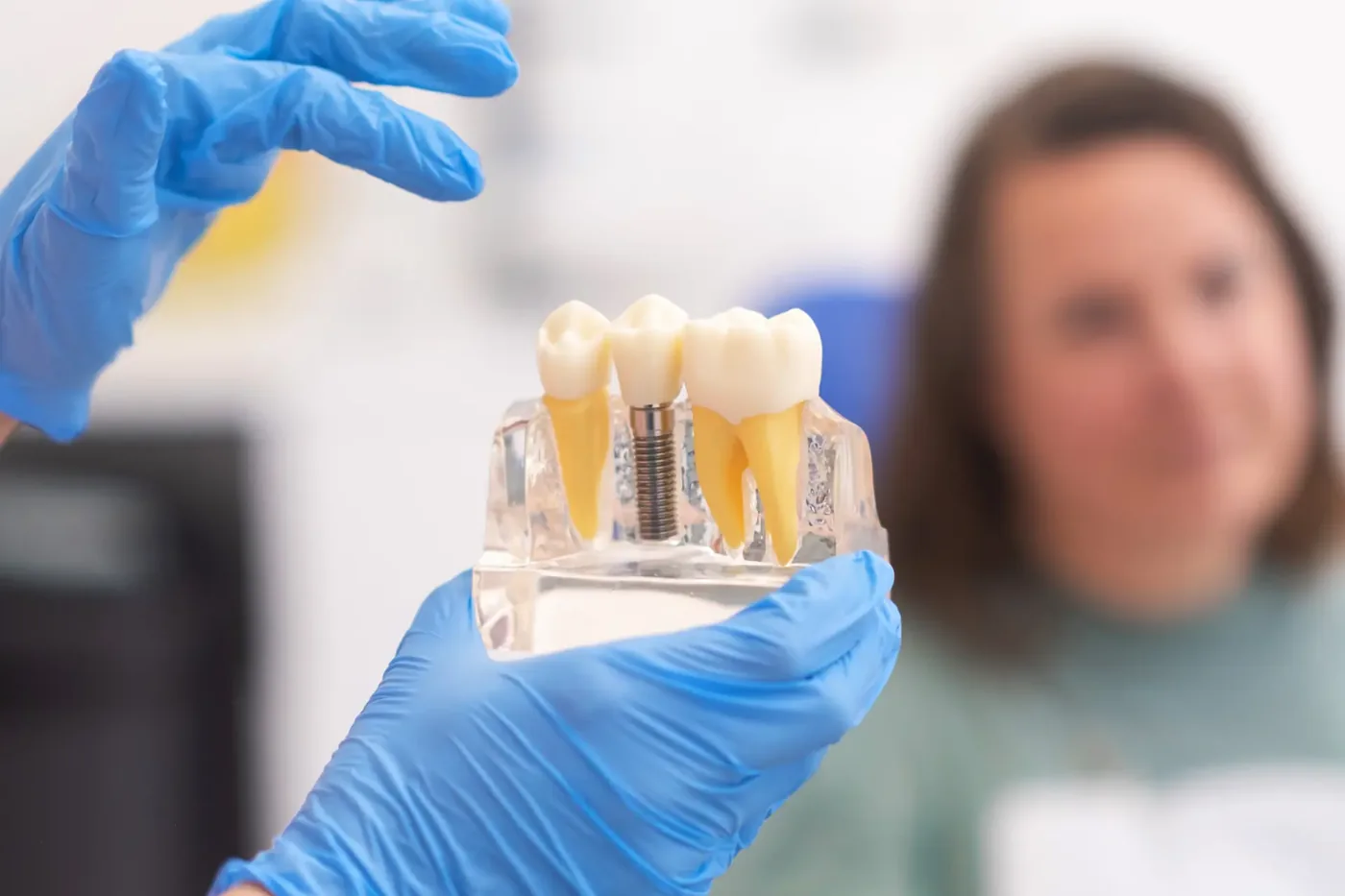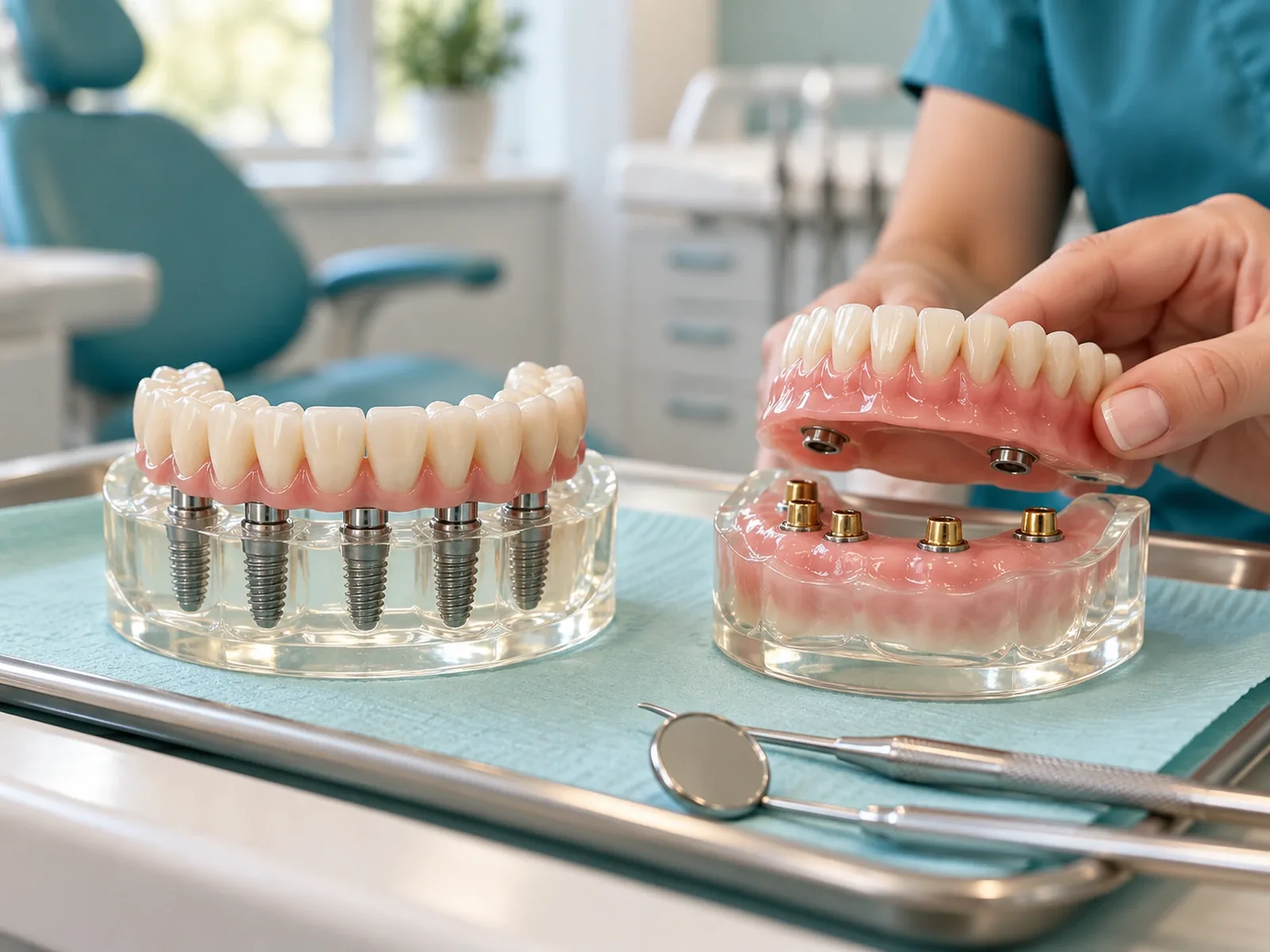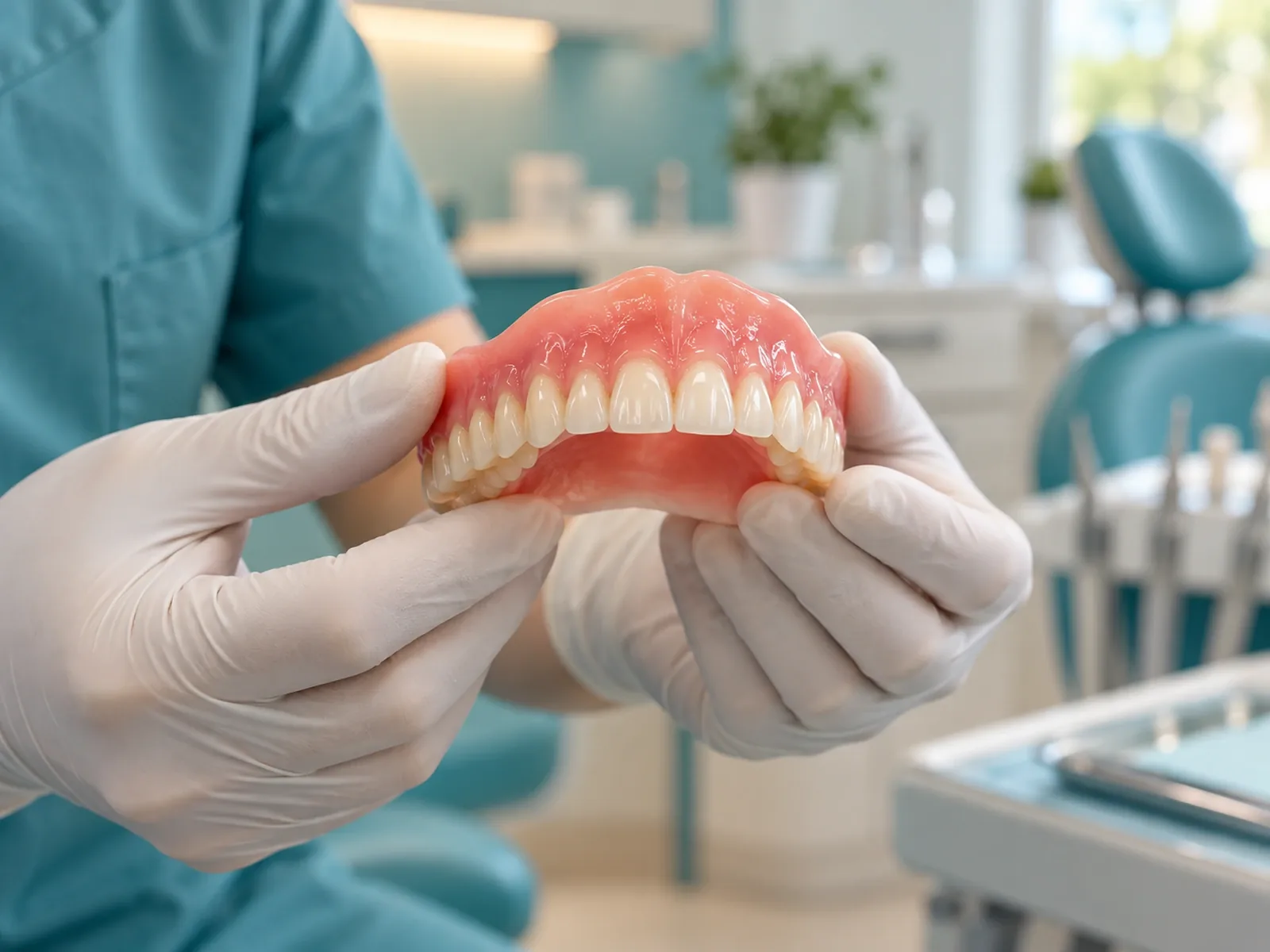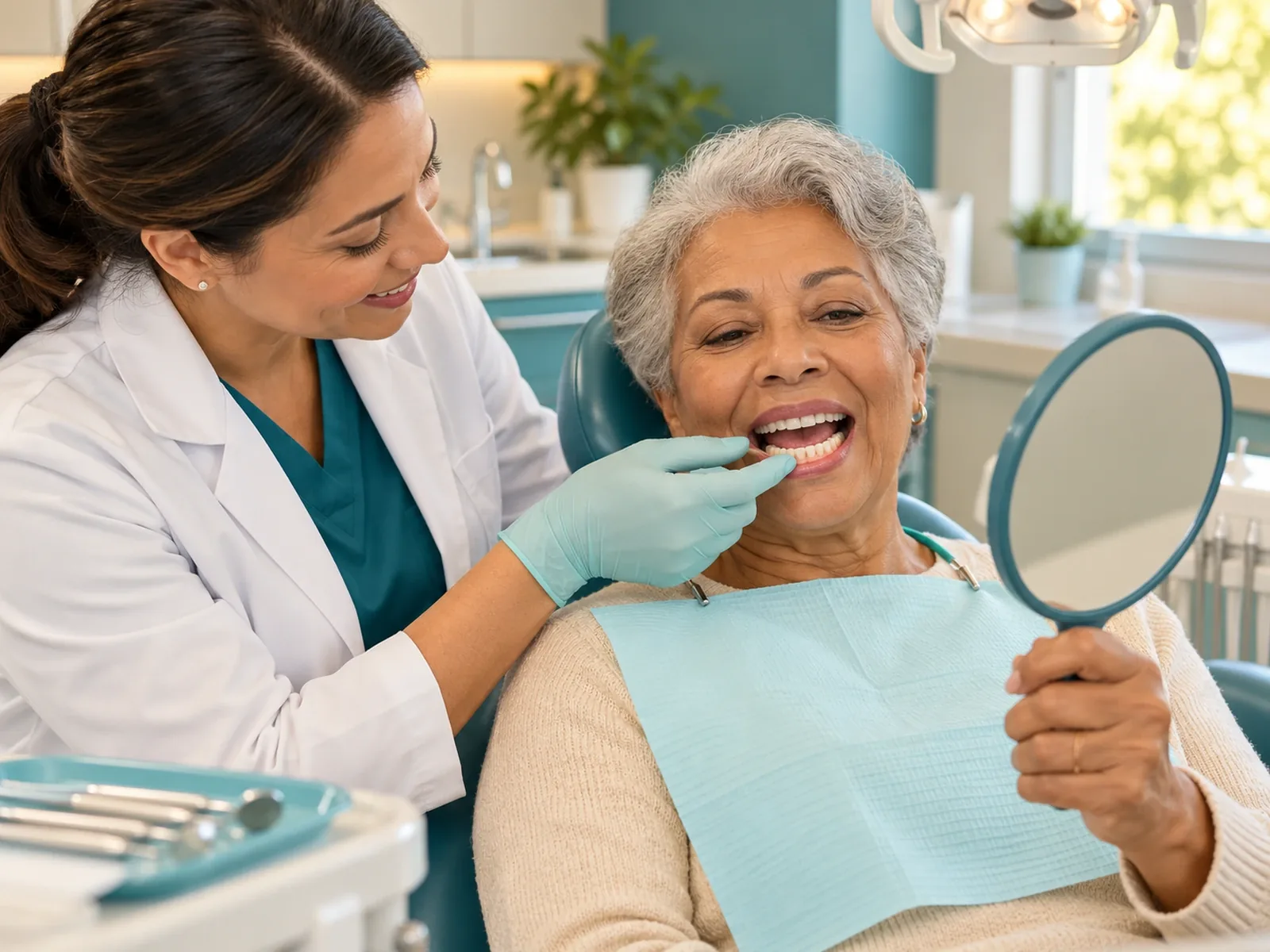
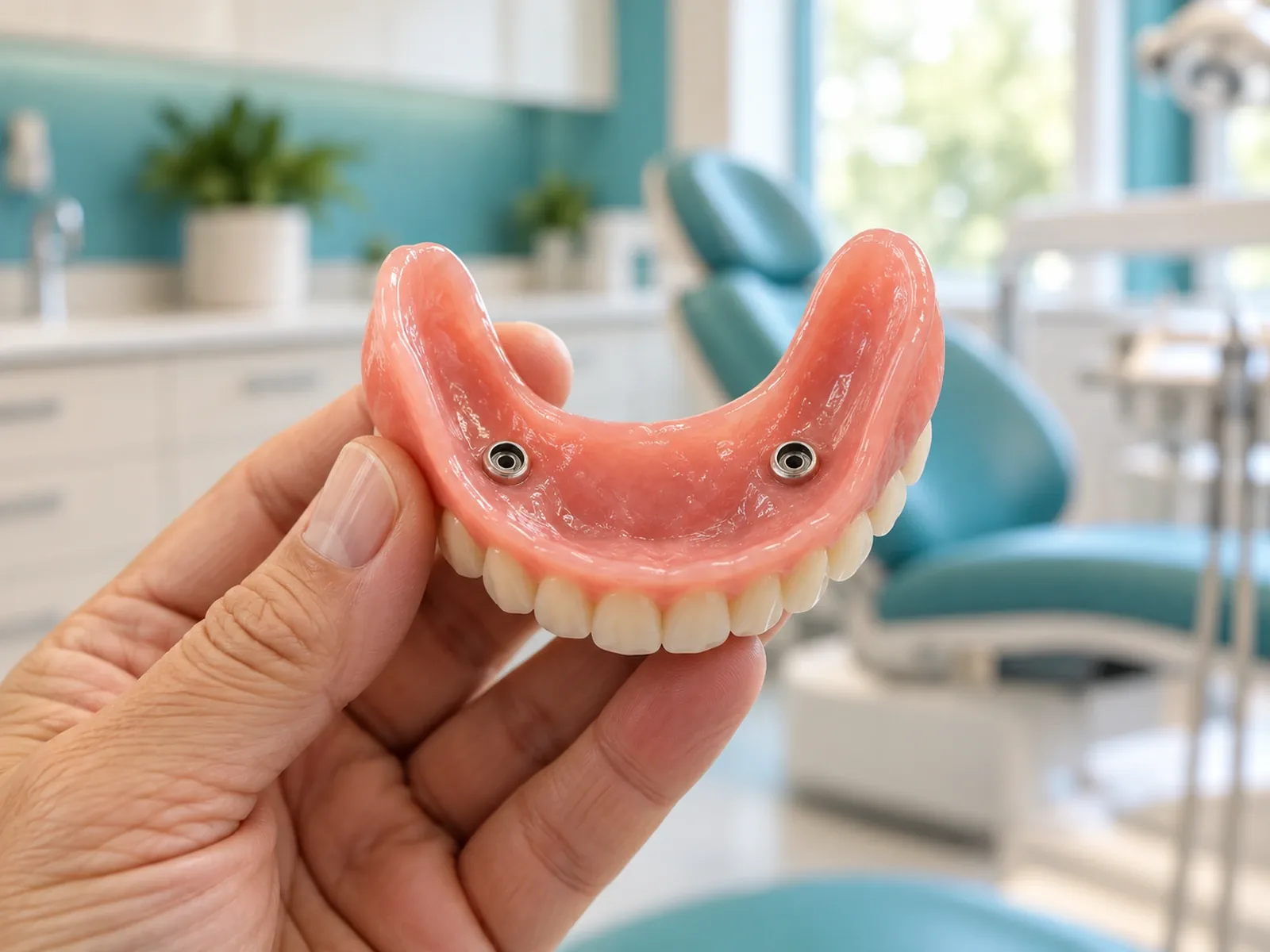
An implant-supported denture is a removable set of teeth that clips onto dental implants instead of resting only on the gums. Patients often call it a snap-in denture. The implants hold it steady, so it does not lift when you bite into an apple or slide when you talk, yet you still take it out at night and to clean it.
That removability is the main thing that sets it apart from fixed implant teeth, which stay screwed in place and are cleaned in the mouth. Each approach has its own trade-offs in stability, cost, cleaning and maintenance.
This guide, part of our dental implant services, explains how an implant-supported denture works, who it tends to help most, and what living with one involves, so you can weigh it properly before a consultation at our Cleburne office.
How an implant-supported denture works
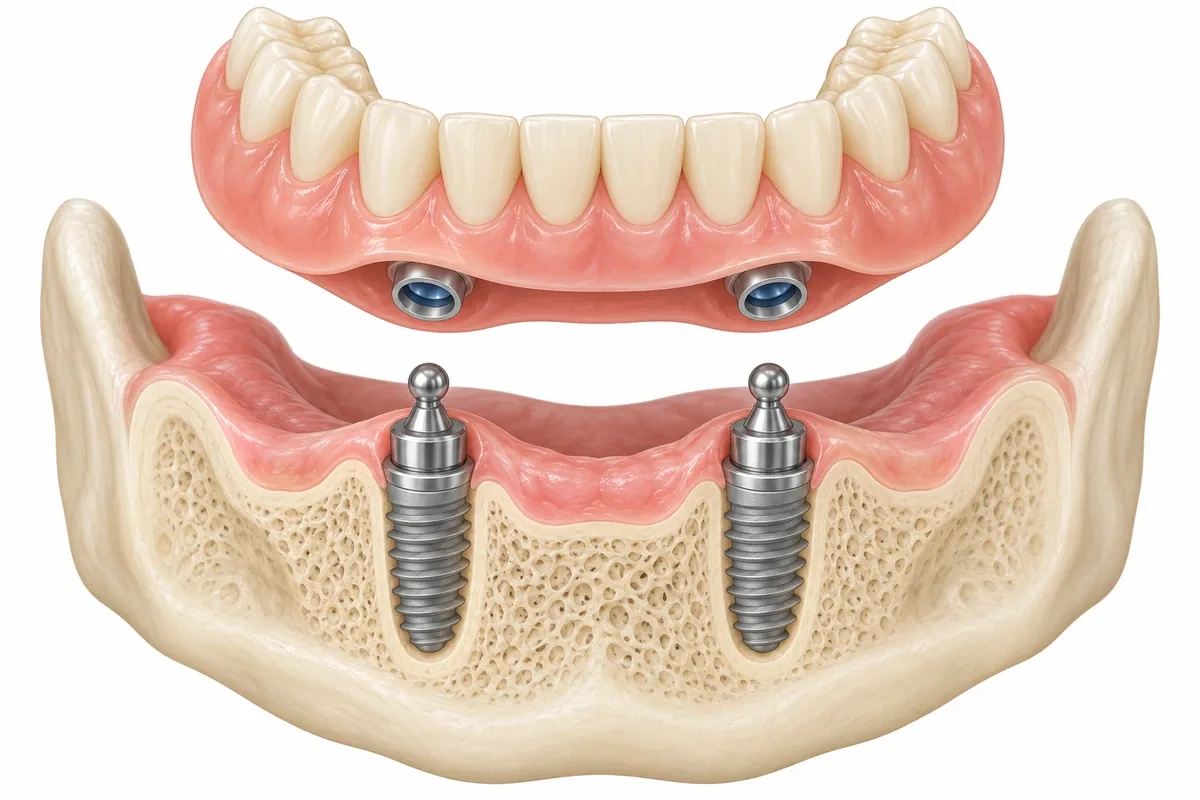
The system has two halves. Small attachments are fitted to the implants, and matching housings are set into the underside of the denture. Press the denture down and the two halves click together.
The two common designs are:
- Stud (locator-style) attachments. A low, rounded post on each implant and a nylon insert in the denture. Simple, low-profile and easy to service; the nylon inserts wear and are swapped out at routine visits.
- A bar. A metal bar connects the implants, and clips inside the denture grip it. A bar spreads load well and can be very secure, but it takes more vertical room and needs careful cleaning underneath.
Dentists also distinguish between implant-retained dentures, where the implants mainly stop the denture from lifting and the gums still carry most chewing force, and implant-supported dentures, where more implants or a bar take most of the load. With two implants in the lower jaw, the denture is retained; with four or more and a bar, it is closer to fully supported. The difference affects how the denture feels, how many implants you need and how the tissue underneath behaves over time.
Why someone might consider this option
The most common reason is a lower denture that will not stay still. The lower jaw offers little for a conventional denture to grip: the ridge shrinks over the years, the tongue pushes, and there is no palate for suction. Even two implants can change the experience of eating and speaking.
Other reasons include sore spots from a denture that rocks, frustration with adhesive, a desire to eat a wider range of foods, and wanting more stability than a conventional complete denture offers without the cost of fixed full-arch teeth.
Implants do not fix everything. A worn-out denture, an inaccurate bite or inflamed tissue still needs attention. Sometimes a reline or a new conventional denture is the right first step, and implants come later.
Upper and lower jaws are planned differently
The lower jaw usually does well with two implants placed toward the front, where bone is densest. The upper jaw is softer and its bone is often thinner, so it typically needs four implants to hold a denture reliably. One appeal of an upper implant denture is that, with enough implants, the palate can be left open, which improves taste and the feel of food. Do not assume the two jaws need the same number of implants or the same attachment system.
Candidacy and planning
Dr. Zohdi evaluates:
- Bone. Enough height and width at the planned sites, confirmed on a 3D scan. Bone that has shrunk over years of denture wear may need grafting first.
- Space. Attachments and housings need vertical room inside the denture. Too little room means a weak, thin denture that can crack.
- Gum and medical health. Tissue should be healthy before surgery; medical conditions and medications are reviewed as for any implant.
- Your existing denture. A well-made, recent denture can sometimes be converted by adding housings. An old, thin or ill-fitting denture is usually replaced with a new one designed from the start to hold attachments.
- Dexterity. You will insert and remove the denture daily and clean around small attachments. If hands or vision make that hard, we talk about design changes or help at home.
The implant candidacy guide covers the general factors in more depth.
What treatment involves
- Planning and records. Examination, imaging, impressions and a design of the final denture.
- Any extractions or grafting. With healing time where needed. If you are moving from natural teeth to a denture, an immediate denture may be made for the healing period.
- Implant placement. Under local anesthesia, usually in a single visit. Your current denture is hollowed out and relined with a soft material so it does not press on the surgical sites.
- Healing. Several months while bone integrates. You keep wearing the relieved denture.
- Attachments and the final denture. Once the implants are stable, the attachments are fitted and either your denture is modified to receive the housings or a new denture is delivered.
- Follow-up. Adjustments to sore spots and bite, and a demonstration of insertion, removal and cleaning.
The timeline guide explains why stages are checkpoints and how healing time varies.
Daily care and long-term maintenance
- Take the denture out at night unless told otherwise. Tissues need rest, and wearing a denture around the clock is linked to irritation and fungal infection under it.
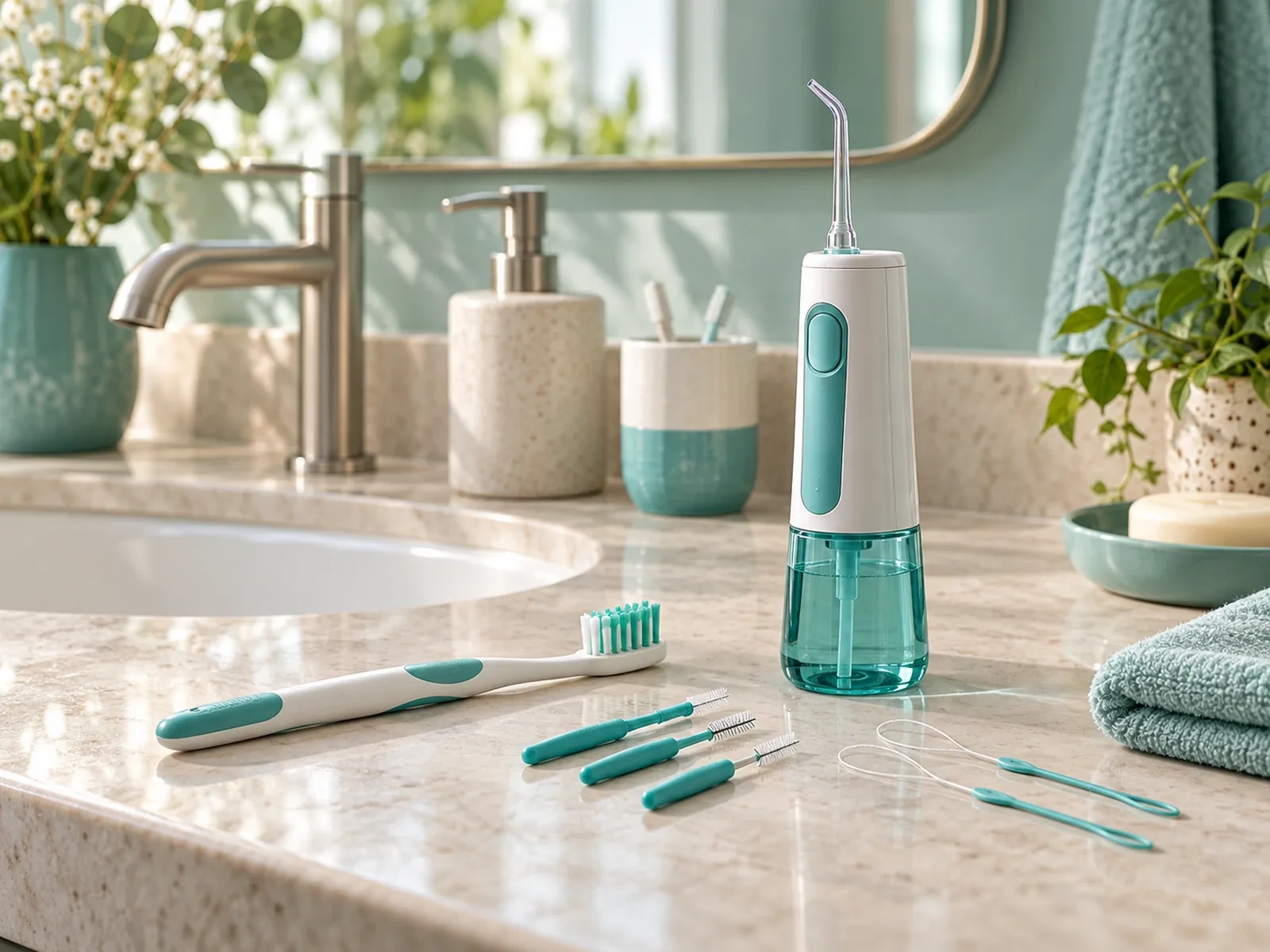
- Brush the denture inside and out with a soft brush and non-abrasive cleaner; soak it as directed.
- Clean around each implant attachment in your mouth with a soft brush. Plaque on the attachments leads to inflammation of the gum around the implant.
- Expect the nylon inserts to wear. A denture that feels looser after a year or two usually needs new inserts, a quick visit rather than a problem.
- Expect relines. The gum under the denture keeps changing, and the denture base will need refitting periodically to stay comfortable.
- See us regularly so the implants, attachments and tissue can be checked. The implant care guide and denture care guide have detailed routines.
Comparing the options
| Conventional complete denture | Implant-supported denture | Fixed full-arch implant teeth | |
|---|---|---|---|
| Stability | Relies on suction and fit | Clips to implants | Screwed to implants |
| Removable | Yes | Yes | No (removed only by the dentist) |
| Implants | None | Usually 2 (lower) to 4 (upper) | Usually 4 to 6 |
| Cleaning | Out of the mouth | Out of the mouth, plus attachments | In the mouth, under the bridge |
| Ongoing maintenance | Relines, replacement | Inserts, relines, replacement | Professional cleaning, repairs |
| Cost | Lowest | Middle | Highest |
When you compare estimates, use the complete plan for each: extractions, grafting, the denture itself, attachments and expected maintenance, not the surgical fee alone. Our implant cost guide shows how to read an estimate.
Risks
Implant risks apply: infection, failure to integrate and later inflammation around the implants. Denture-specific issues include fractured acrylic where the housings sit, worn inserts, and sore spots as the ridge changes. Most are manageable with routine maintenance, but they should be in the conversation before you choose a design.
Finding out what would work for you
If your denture moves, hurts or holds you back from eating what you like, an implant-supported denture may be a practical middle ground between a conventional denture and fixed teeth. Dr. Zohdi can assess your bone, your current denture and your goals and show you what the options would look like. Request an appointment at our Cleburne office at 302 N Ridgeway Dr, or call (817) 641-6261.
Sources and further reading
General information, not a diagnosis. Read how we create and review our dental guides.