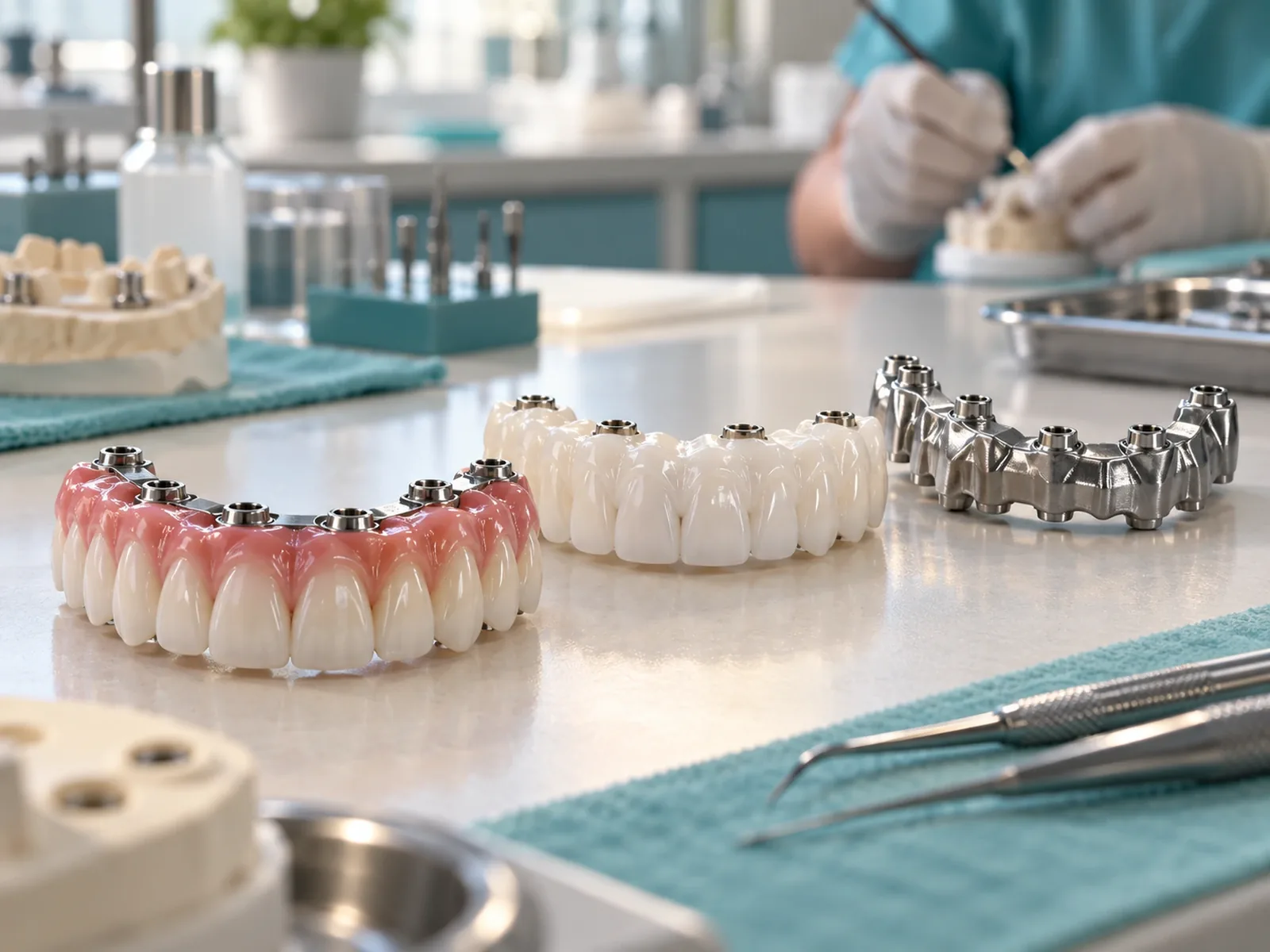

Many patients expect a fixed full-arch implant bridge to be the end of dental upkeep. The teeth cannot decay, so what is there to clean? The answer is: the parts you cannot see. Between the underside of the bridge and your gums is a narrow space where food and plaque collect, and around each implant is a cuff of gum that can become inflamed just as it would around a natural tooth. Left alone, that inflammation can progress to bone loss around the implant, which is the main long-term threat to a full-arch bridge.
The good news is that this is very manageable with a daily routine you can learn in a few visits, plus professional maintenance on a schedule set for your risk. This guide explains both, and the warning signs that mean you should call rather than wait. It applies to fixed bridges; if your implant teeth come out for cleaning, see implant-supported dentures instead. For the broader picture, start with our full-arch dental implants overview.
Why the underside matters so much
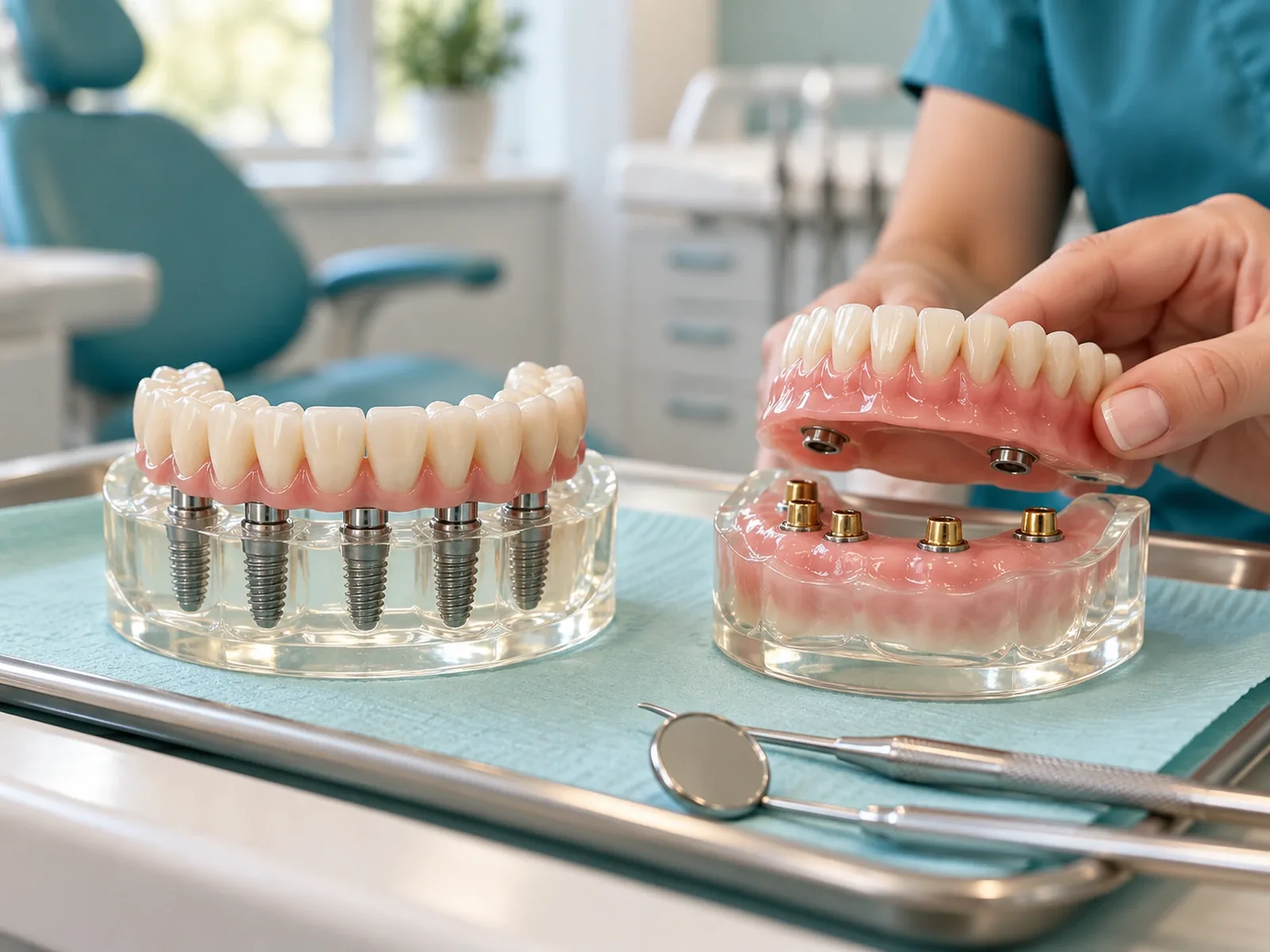
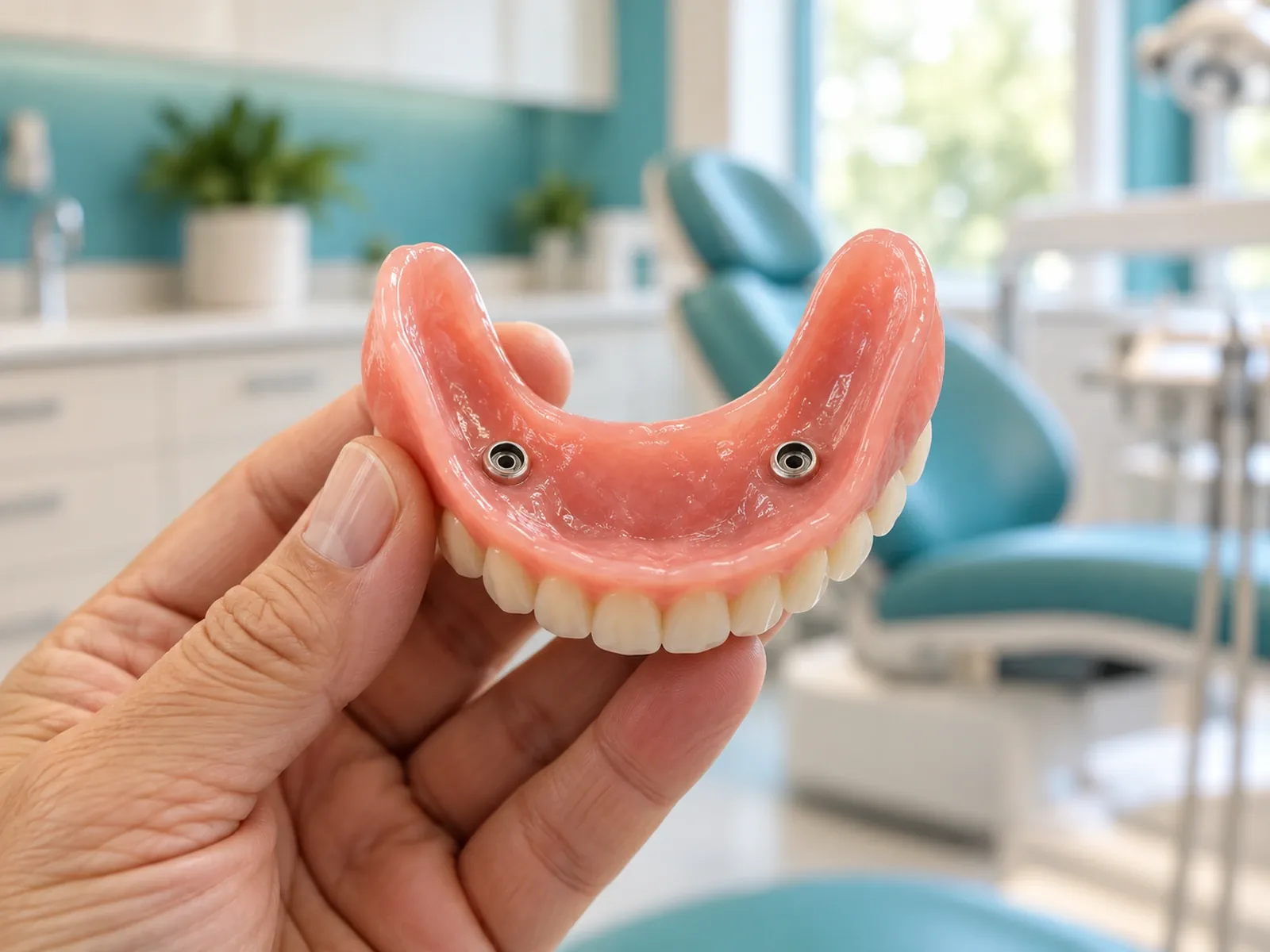
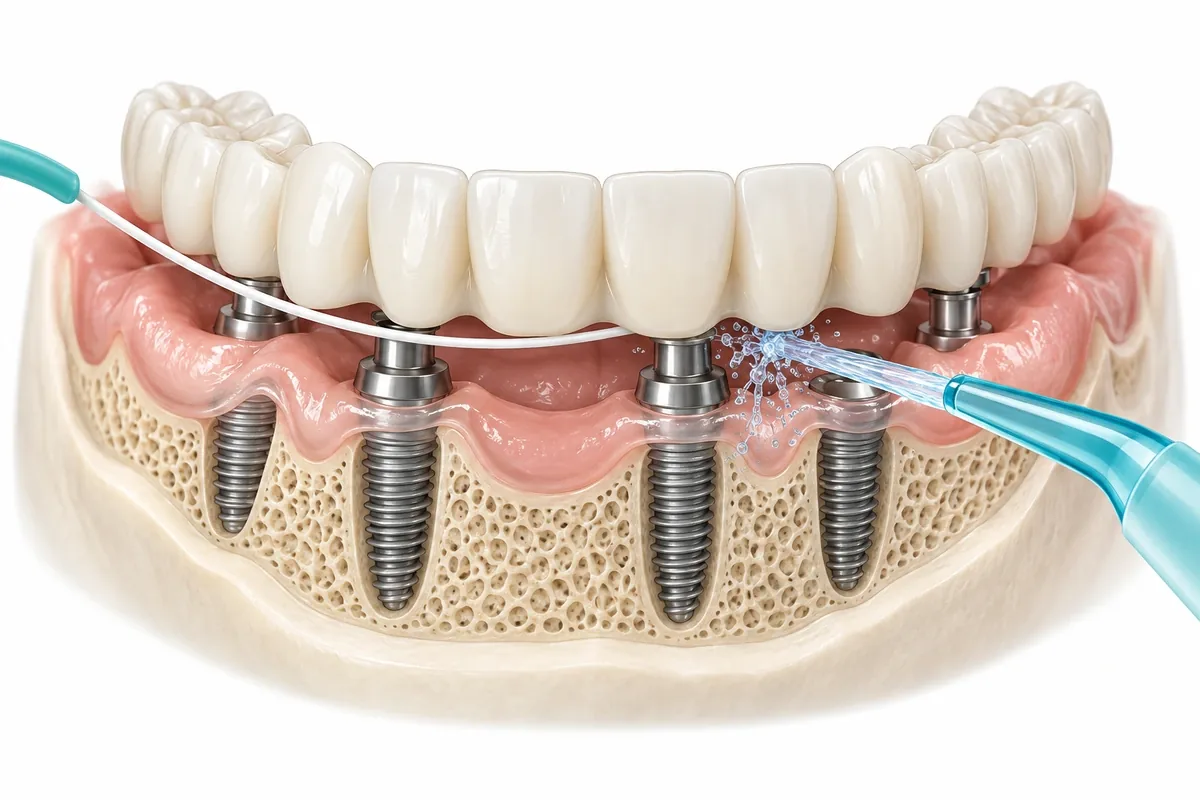
Natural teeth emerge from the gums one at a time, with gaps you can floss. A full-arch bridge is one solid piece sitting a small distance above the ridge, supported by four to six implants. That creates a continuous tunnel between bridge and gum, open at the cheek side and the tongue side. Food packs into it during meals, and plaque films the implant surfaces inside it.
Gum inflammation around an implant is called peri-implant mucositis. It is reversible with better cleaning and a professional visit. If it progresses to bone loss, it is called peri-implantitis, and it is harder to treat and can eventually loosen the implant. The daily routine exists to stop the first stage from ever starting.
The daily routine, step by step
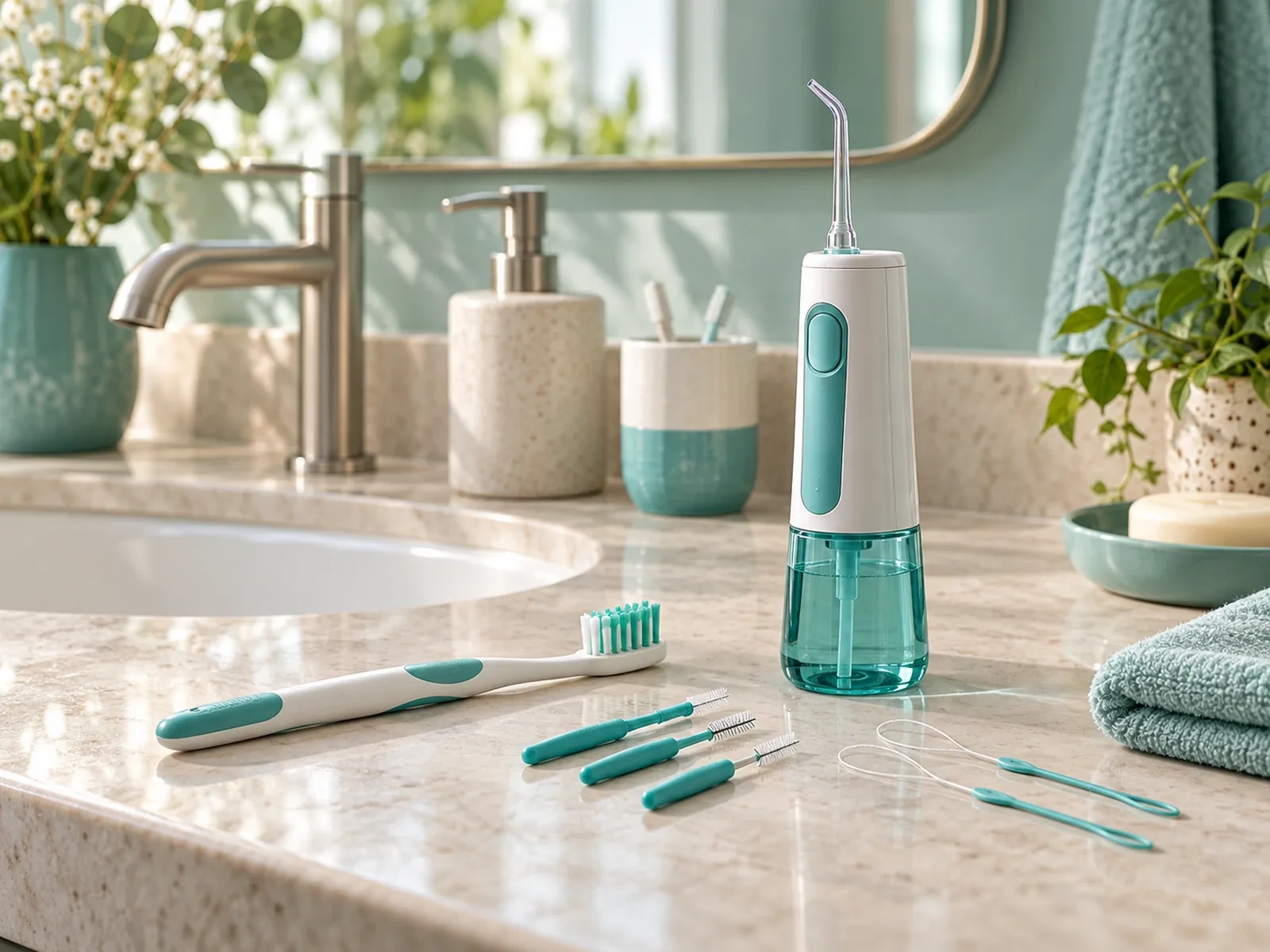
Your exact tools depend on how your bridge is shaped and how much space there is beneath it. Dr. Zohdi and our hygienist will choose them with you and watch you practice. A typical routine looks like this:
- Brush the bridge twice a day with a soft or electric toothbrush, angling the bristles toward the gum line on both the cheek and tongue sides. Low-abrasive toothpaste protects acrylic and glazed surfaces.
- Clean under the bridge once a day. Use a floss threader or a stiff-ended floss designed for bridges to pass floss beneath the bridge, then draw it along the underside and around each implant. Where there is room, a small interdental brush does the same job faster.
- Use a water flosser daily, aiming the tip at the gum line and under the bridge, especially around each implant. It flushes out what the brush and floss loosen. It is a strong addition to the routine, not a replacement for flossing underneath.
- Rinse with water or a non-alcohol mouthrinse if recommended, and check in the mirror for redness or swelling around the implants.
The whole routine takes a few extra minutes a day. Doing it before bed matters most, because saliva flow drops overnight.
If arthritis, tremor or vision make threading floss difficult, tell us. Adapted tools, a different brush head, or a change in the bridge's underside shape at the next remake can all help. A routine that works for you beats a perfect routine you skip. Our general guide to caring for dental implants covers habits that protect any implant.
What a professional maintenance visit does
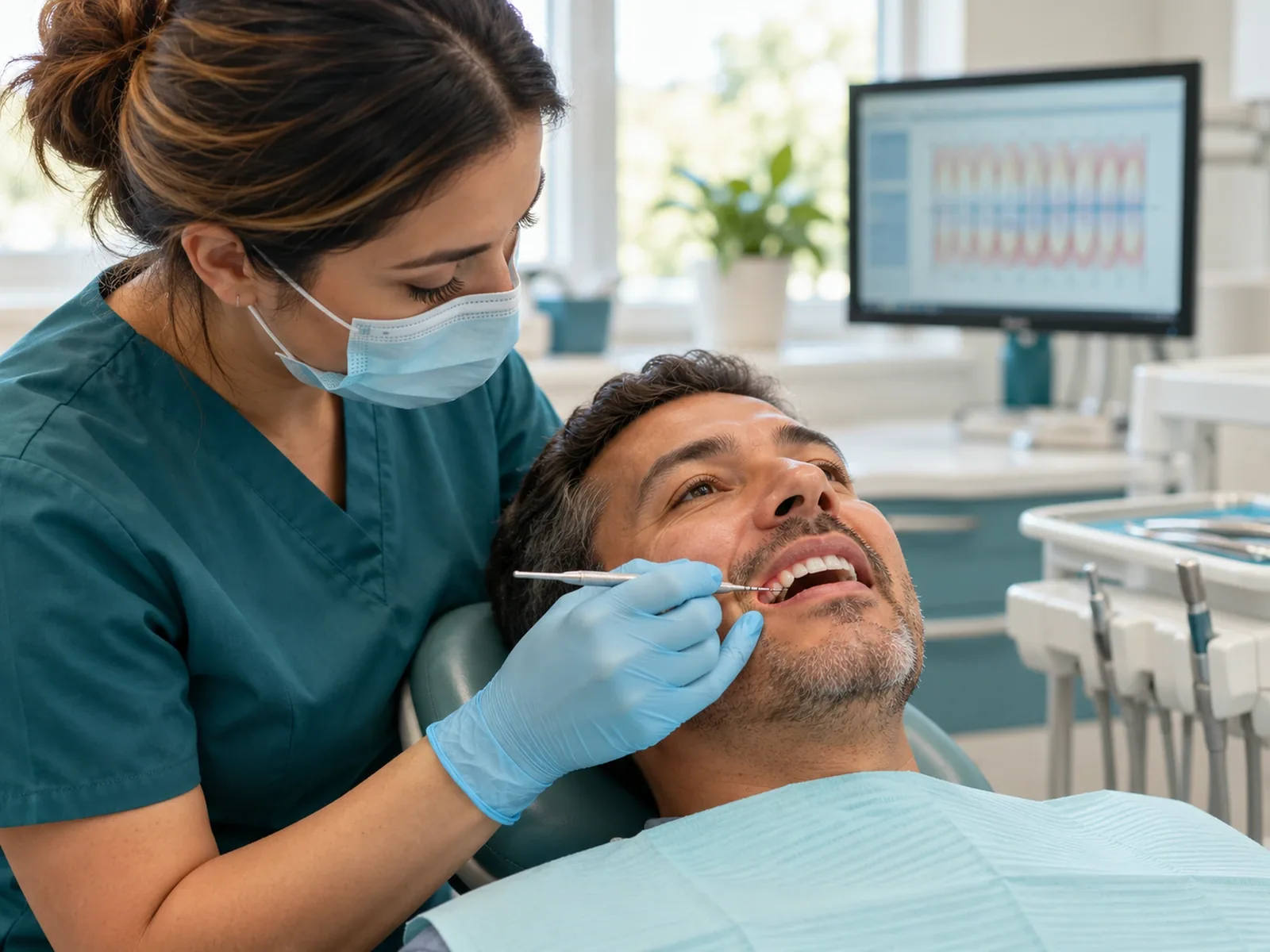
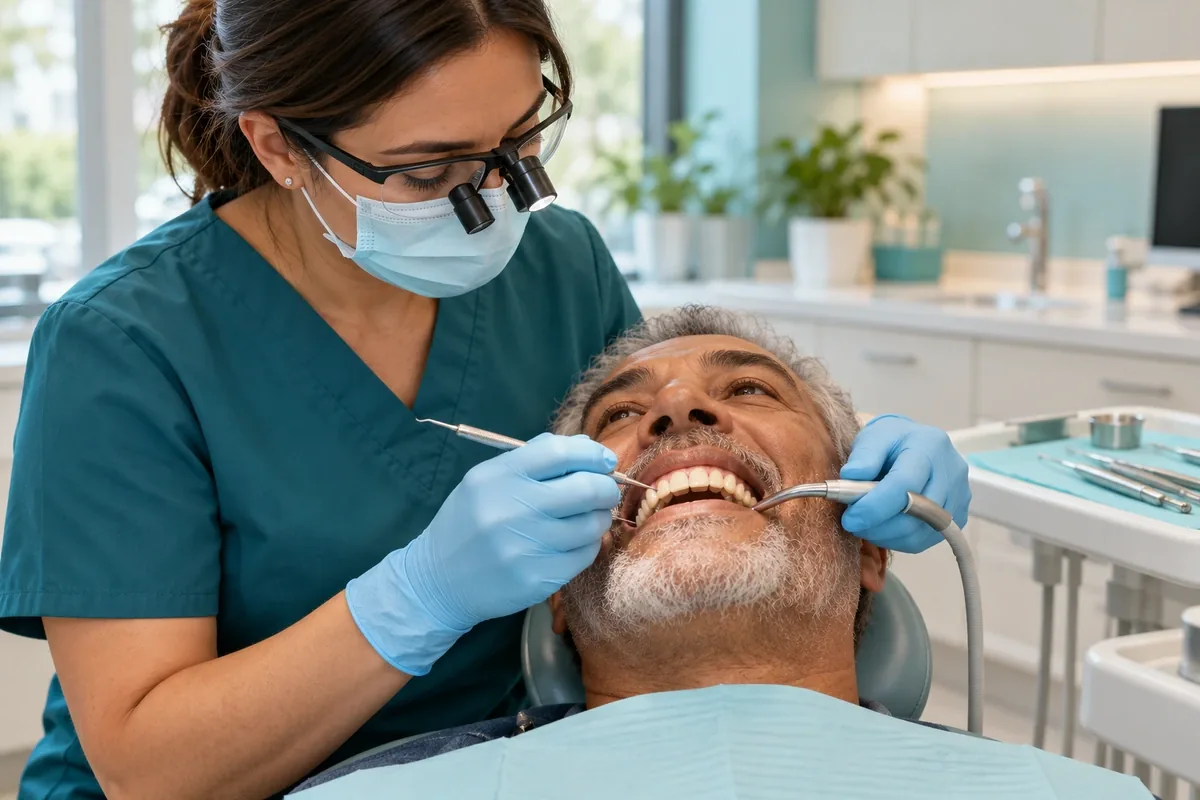
Maintenance visits for a full-arch bridge are not the same as a routine cleaning. They typically include:
- Checking the gums around each implant for bleeding, swelling and pocket depth, and comparing with previous visits.
- X-rays at intervals to monitor the bone level around each implant.
- Checking the bite to make sure no part of the bridge is taking more force than it should, which protects both the material and the implants.
- Checking the screws and fit by looking and listening for any movement, click or gap at the gum line.
- Cleaning around the implants and under the bridge with instruments chosen so they do not scratch the implant surface.
- Reviewing your home routine and adjusting tools if something is not reaching.
On some schedule, which depends on your bridge design and how clean the area is staying, the bridge may be unscrewed so that the implants and the underside can be cleaned and inspected directly, then reattached with new screws if needed. This is normal, not a sign of a problem. Removal is not needed at every visit, and it should not be assumed impossible when a problem arises.
How often you need maintenance depends on your gum history, how much plaque you tend to build, whether you smoke, and how the area looks at each visit. A past history of gum disease generally means closer monitoring, similar to the approach described in our periodontal maintenance guide. We will set a schedule with you and adjust it as the years go on.
Changes that deserve a call
Call us at (817) 641-6261 if you notice any of these, even if nothing hurts:
- Bleeding when you brush or floss under the bridge that does not settle within a week of better cleaning
- Swelling, redness or tenderness around an implant
- A persistent bad taste or odor coming from under the bridge
- Food trapping in a spot that did not used to trap food
- A click, a slight rock, or any feeling that the bridge moves
- A chipped or cracked tooth on the bridge
- A change in the way your teeth meet when you bite
Movement is the most important one. A loose screw is a quick fix; a bridge that keeps rocking on a loose screw can bend or fracture the screw, which is a much bigger repair. Do not test it by biting harder, and never try to tighten, remove or glue any part of the bridge yourself.
Planning for wear over the years
A full-arch bridge is built to last a long time, and it is also expected to need attention along the way. Teeth on an acrylic bridge wear and are refreshed after some years; zirconia bridges wear less but can chip; screws are replaced; a night guard may be made if you grind. Our guide to full-arch materials explains what each construction needs.
Keep a record of your implant system and the parts used. If you ever need care while traveling or move away from Cleburne, that information lets another dentist order the right components. We can give you a card or a copy of your records with those details.
Let us show you on your own bridge
The best cleaning instruction happens with your bridge, your tools and a mirror, not a diagram. Dr. Zohdi and our team will demonstrate the routine, watch you try it, and set a maintenance schedule that fits your risk. If you have a full-arch bridge and want a refresher, have noticed a change, or are planning treatment and want to know what you are signing up for, request a maintenance visit at our Cleburne office.
Sources and further reading
- FDA: Dental implants—what you should know
- American Academy of Periodontology: Dental implant procedures
- American Academy of Periodontology: Peri-implant diseases
General information, not a diagnosis. Read how we create and review our dental guides.