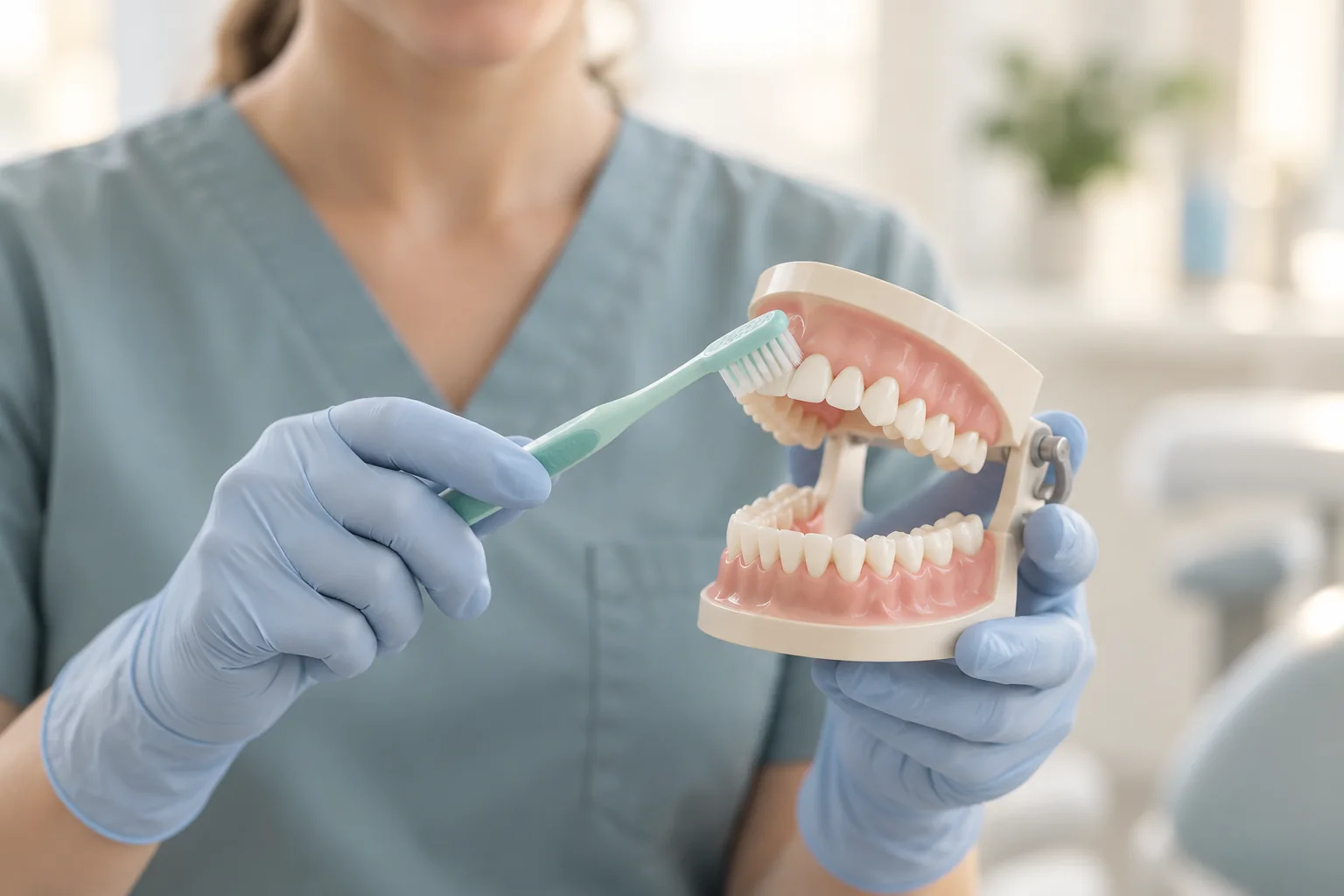

Periodontal maintenance is the care that follows treatment for periodontitis. Once scaling and root planing or periodontal surgery has brought the disease under control, the task changes from treating to protecting. Maintenance visits re-measure your gums, clean below the gumline where bacteria regrow fastest, and catch any site that starts to slip before more bone is lost.
Many patients are surprised that they do not simply go back to “regular cleanings.” The reason is that gum disease is managed rather than cured. The bone and attachment that were lost do not grow back, and the bacteria that caused the problem are still part of your mouth. Feeling better after treatment is a good sign, but it does not mean the long-term risk has gone away.
This page explains what a maintenance visit at Cleburne Dental involves, why the interval is usually shorter than the twice-a-year rhythm you may be used to, and how to make the most of the time between visits. For the overall picture, see our gum disease and periodontal care overview.
How maintenance differs from a routine cleaning
The two visits can look similar from the chair, but they have different jobs. A routine cleaning is preventive care for a mouth without a history of bone loss. Periodontal maintenance is therapeutic follow-up for a mouth that has already lost support. If you are not sure which category you fall into, our guide on why a routine cleaning and periodontal treatment are different walks through it.
| Routine cleaning | Periodontal maintenance | |
|---|---|---|
| Who it is for | People with healthy gums or gingivitis only | People treated for periodontitis |
| Where it cleans | Mainly above and just below the gumline | Into the pockets, along the root surfaces |
| What is measured | Screening of the gums | Full pocket chart compared with previous visits |
| Usual interval | About every six months | Often every three to four months, set by your risk |
| Goal | Prevent disease from starting | Stop treated disease from returning |
The key difference is comparison over time. Your dentist is not just asking whether the teeth look clean today, but whether the numbers at each site are the same as last time, better, or worse. A single pocket that deepens by a millimeter or begins bleeding again is a signal, even if everything else looks fine.
What happens at a maintenance visit
A maintenance appointment is usually longer than a routine cleaning. A typical visit includes:
- Health update. New medications, changes in blood sugar, a new diagnosis, or a change in smoking habits all affect your gums, so we ask every time.
- Pocket measurements. The slim probe measures the gum at several points around each tooth. Bleeding on probing is recorded, because bleeding is the earliest sign that a site is becoming active again.
- Checks for mobility, recession, and bite. Loose teeth, receding gums, and heavy bite contacts can all speed up bone loss.
- Cleaning below the gumline. Deposits are removed from the pockets and root surfaces, not only from the visible tooth. Local anesthetic is available for sensitive areas if you want it.
- X-rays when due. Bone levels are checked periodically so slow changes are not missed.
- Home-care review. The hygienist looks at which areas are collecting plaque and adjusts your technique or tools.
- Decision about the interval. Based on today’s findings, your next visit is set.
Dr. Zohdi reviews the chart and examines any site that has changed. If a tooth looks worse, you will hear about it that day, along with the options.
Your interval should follow your risk
There is no single schedule that suits everyone. Research on periodontal patients points to a few months, rather than six, as the window in which bacteria below the gumline recolonize to harmful levels, which is why most people start maintenance every three to four months. From there the interval is adjusted.
Factors that keep the interval shorter include deeper remaining pockets, a history of rapid bone loss, smoking, diabetes that is hard to control, dry mouth, crowded teeth or restorations that trap plaque, and difficulty cleaning at home. Factors that may allow a longer interval include shallow stable pockets, little or no bleeding at several visits in a row, and good daily plaque control.
Some patients alternate visits between our office and a periodontist. If that applies to you, we coordinate so the records stay in one place and the schedule makes sense.
If you have missed maintenance
Life gets in the way. If it has been a year or more, the right step is an evaluation, not an assumption. We re-measure, compare with your last chart, and tell you honestly where things stand. Many people need only a thorough maintenance visit and a tightened interval; some sites may need re-treatment. Bring any records from previous periodontal care if you are new to us. Our page on returning to the dentist after a long break covers what that first visit back feels like.
Home care between visits
Office visits remove what has built up; daily cleaning decides how much builds up. After gum treatment, the spaces between teeth are often larger than before, and ordinary floss may not clean them well. Ask us to size the right tool for each space rather than relying on a general instruction to floss more.

Useful tools include:
- Interdental brushes in the size that fits each gap snugly without forcing
- Floss or a floss holder for tight contacts
- A soft-bristled or electric toothbrush, angled toward the gumline with light pressure
- A water flosser as a supplement for areas that are hard to reach, not as a replacement for brushing
- Fluoride toothpaste, and a prescription-strength version if exposed roots are at risk of decay
Report any change between visits: persistent bleeding gums, a new gap, a bad taste, swelling, or a tooth that feels different when you bite. These may call for an earlier visit, and acting on them early is the whole point of being in maintenance.
Cost and insurance considerations
Periodontal maintenance is billed as periodontal therapy, not as a preventive cleaning, and dental plans handle it differently. Some cover a set number of maintenance visits per year, some alternate coverage between maintenance and routine cleanings, and some apply a deductible or a lower percentage. We check your benefits before the visit and explain any out-of-pocket amount in advance. See our dental insurance page for how we handle benefits generally.
Risks of skipping it, and alternatives
The main risk of stopping maintenance is quiet recurrence. Periodontitis does not usually hurt until it is advanced, so a mouth that feels fine can be losing bone. The result over years can be loose teeth, infection, and tooth loss that then needs replacement. There is no true alternative to monitoring; a routine cleaning every six months leaves the pockets unchecked. What can change is the interval and the mix of providers, and both are decided with you based on findings, not habit.
Sources and further reading
- American Academy of Periodontology: Nonsurgical treatment
- American Academy of Periodontology: Patient questions
- NIDCR: Gum disease
General information, not a diagnosis. Read how we create and review our dental guides.