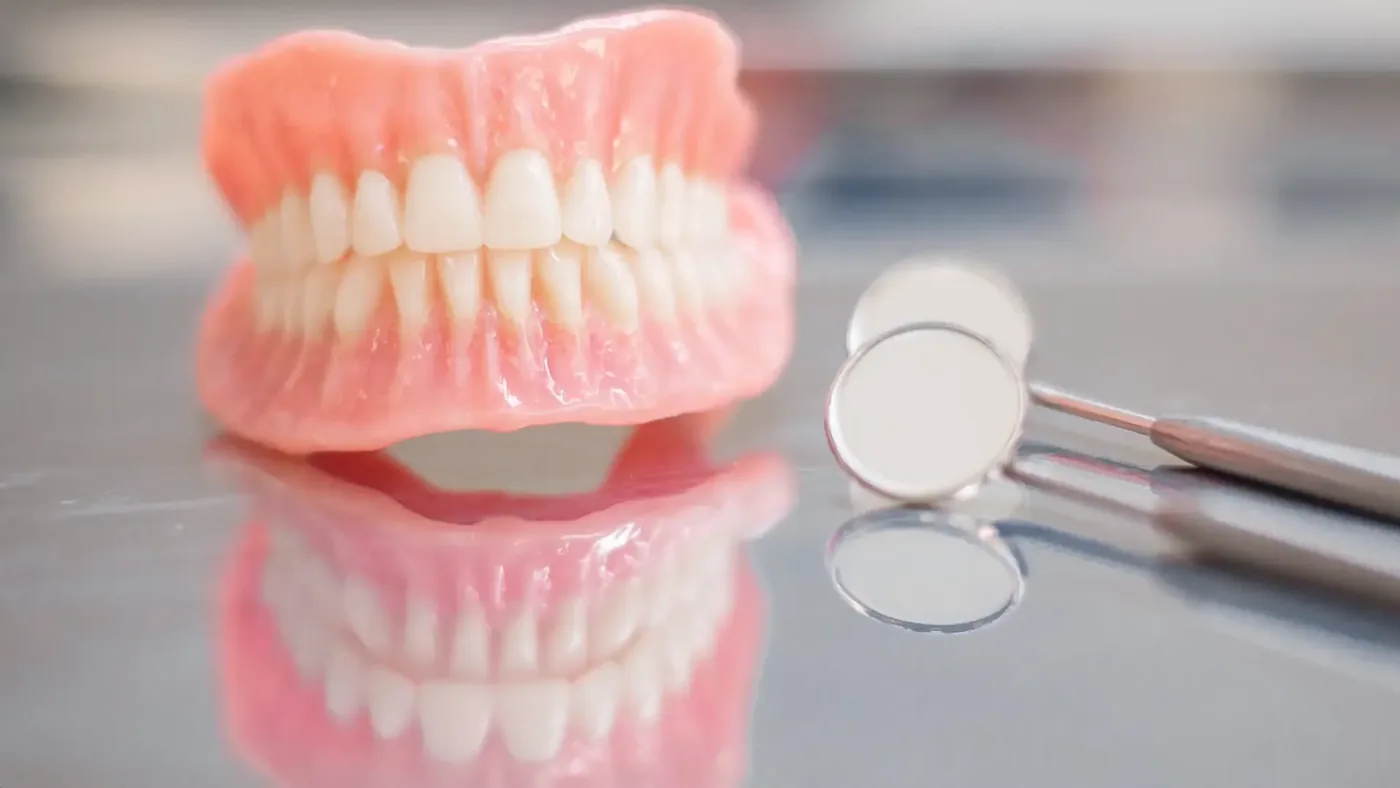

A denture that once fit well can start to rock, drop when you talk, or trap food underneath, even though nothing about it has visibly broken. The reason is usually not the denture. It is the mouth. Once teeth are gone, the bone that held them slowly remodels and the ridge becomes lower and narrower. The denture keeps its original shape, so a gap opens up between the two.
A reline addresses exactly that gap. The inside surface of the denture is replaced with new material shaped to your gums as they are today. When the rest of the denture is sound, a reline can make it feel close to new. When it is not, a reline is money spent on the wrong problem, which is why we examine the whole denture and the mouth before recommending one.
This page explains the signs a reline may help, what we check first, the difference between hard, soft and temporary relines, what a reline cannot do, and how it compares with the alternatives. It is one of several guides linked from our dentures overview.
Signs your denture may need a reline
- You need more adhesive than you used to, or it stops working by afternoon.
- Food collects under the denture during meals.
- The denture rocks when you press on one side, or drops when you laugh or talk.
- Sore spots appear, disappear and show up somewhere else.
- Your lower face looks shorter or your lips seem to have less support than before.
- An immediate denture placed after extractions has loosened as the gums healed.
Any of these is a reason to be seen. None of them is a reason to live with a loose denture or keep adding adhesive.
What we check before recommending a reline
Looseness is a symptom, and a reline is only one of several possible treatments. At the exam at our Cleburne office, Dr. Zohdi looks at:
- The gums and ridge. Are the tissues healthy, or red and swollen from an ill-fitting base? Inflamed tissue has to settle before an accurate reline can be made, sometimes with a short period of tissue conditioning.
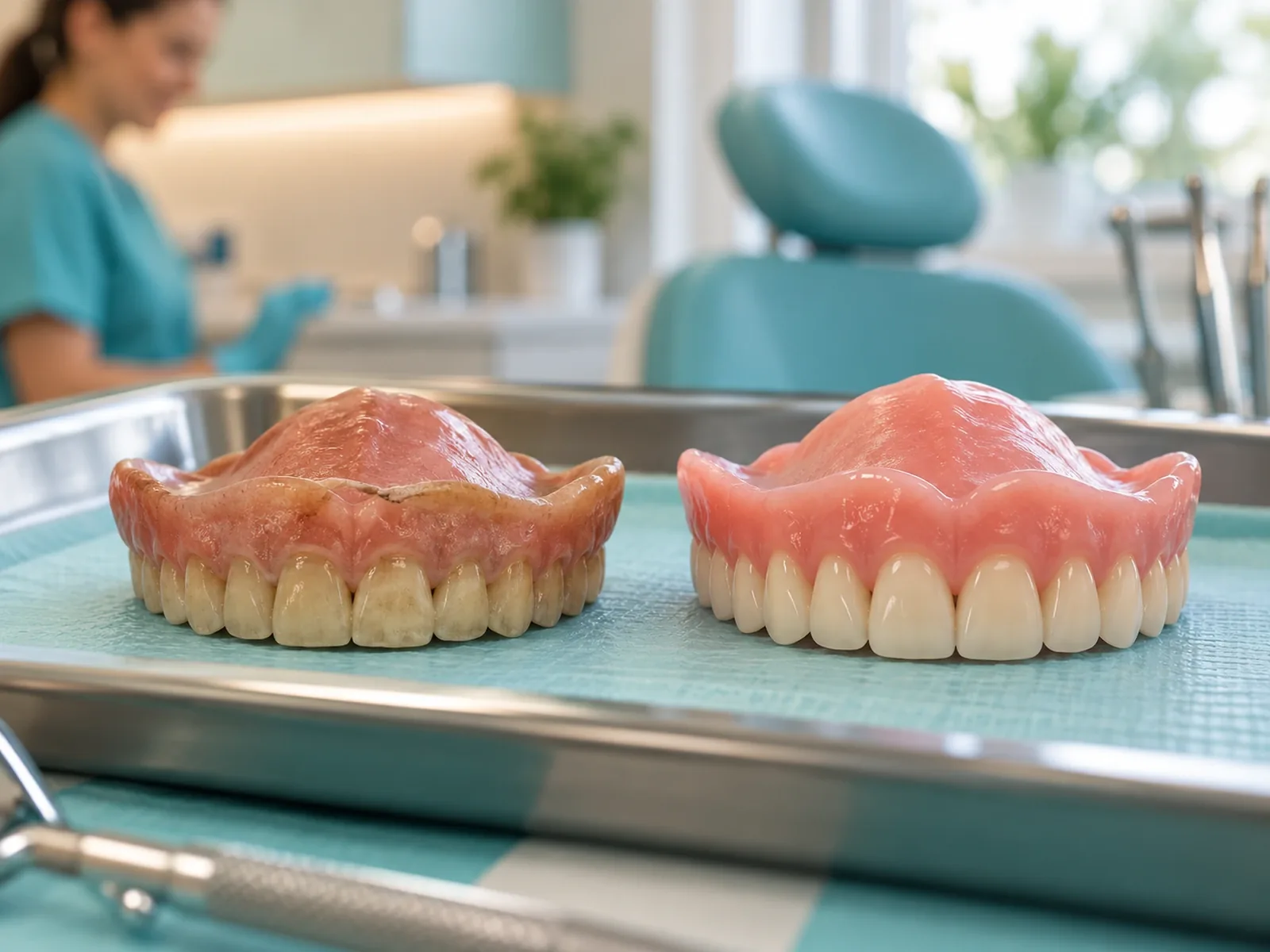
- The denture base. Cracks, previous repairs, thin areas or warping change whether a reline is worth doing.
- The teeth on the denture. Flat, worn teeth cannot chew well no matter how snug the base is.
- The bite. If the upper and lower teeth no longer meet evenly, the denture will keep moving even after a reline. The bite may need adjusting first, or the denture may be past that point.
- Your medical picture. Dry mouth from medications, for example, reduces the saliva film that helps a denture seal, and no reline fixes that on its own.
If several of these are a problem at once, we will say so and talk about replacing the denture instead. A reline on a denture with worn teeth and a poor bite rarely satisfies anyone.
Hard, soft and temporary relines
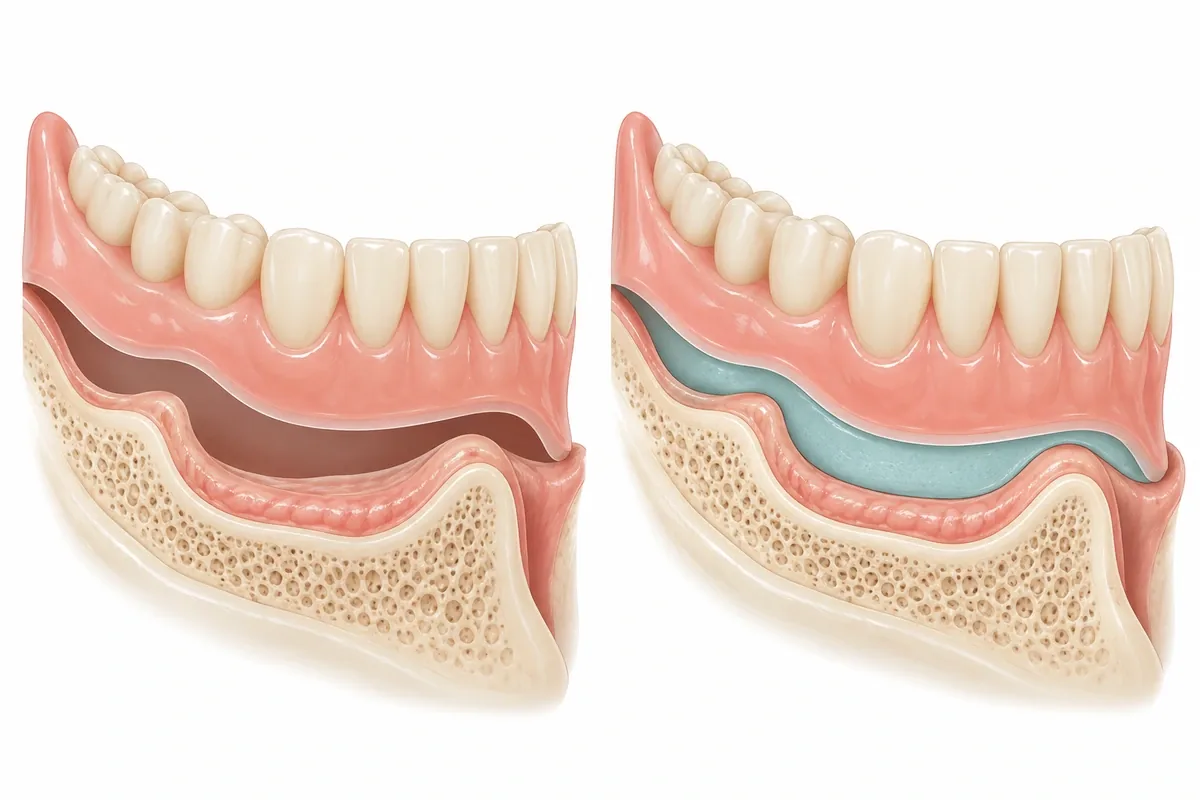
Not all relines are the same material or meant to last the same time.
| Type | What it is | Used when |
|---|---|---|
| Hard reline | New rigid acrylic bonded inside the base; durable and cleanable | The gums are healthy and stable and the denture is otherwise sound |
| Soft (resilient) reline | A cushioned layer inside the base | Thin, tender tissue or sharp bony ridges that cannot tolerate a hard base; needs periodic replacement |
| Temporary liner or tissue conditioner | A soft material placed short-term | Healing after extractions, or to let inflamed gums recover before a definitive reline |
Soft does not mean permanent. Resilient materials wear, stain and harbour deposits faster than hard acrylic, so a soft reline is a choice with ongoing maintenance, not a one-time fix. Ask which material is being proposed, how to clean it and when it should be checked.
What happens at the visit
A reline is a simple procedure from your side. The old fitting surface is prepared, an impression is taken inside your own denture while you close in your normal bite, and the new lining is processed to that impression. Some relines are completed in the office; others go to a lab, which means a short period without the denture. Ask about the arrangements when you book so you can plan around it.
Once the relined denture is seated, the borders and bite are checked and any pressure areas adjusted. A relined denture can feel fuller than you remember for a few days because it is now touching the gums everywhere again. That usually settles quickly; a sore spot that does not should be adjusted.
What a reline cannot change
A reline rebuilds the fit. It does not:
- Replace worn or chipped denture teeth.
- Correct a bite that has drifted, except in minor ways.
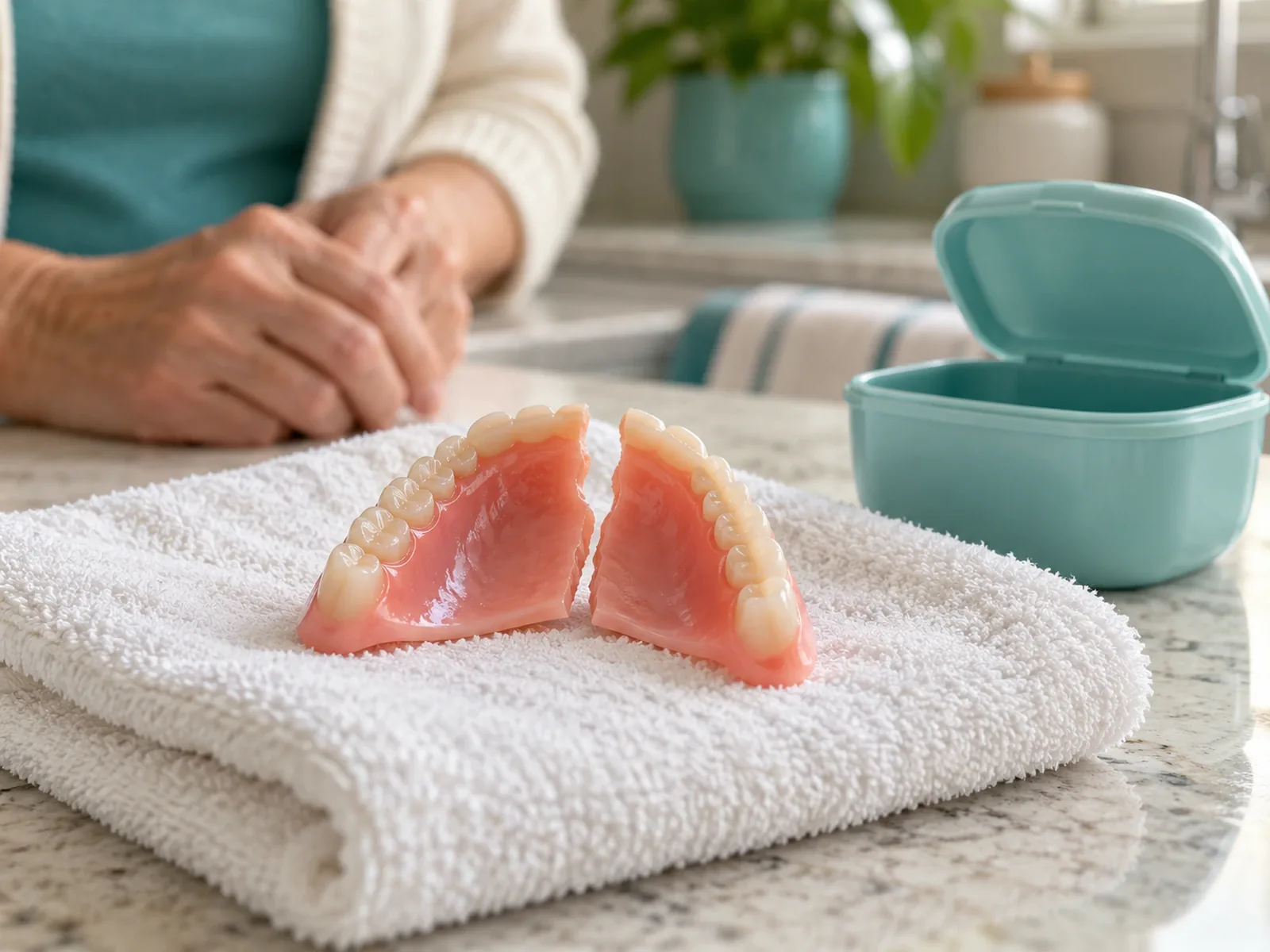
- Repair a cracked or warped base reliably on its own.
- Restore lost lip support or facial height if the teeth themselves are set too low.
- Provide the kind of retention that implants do.
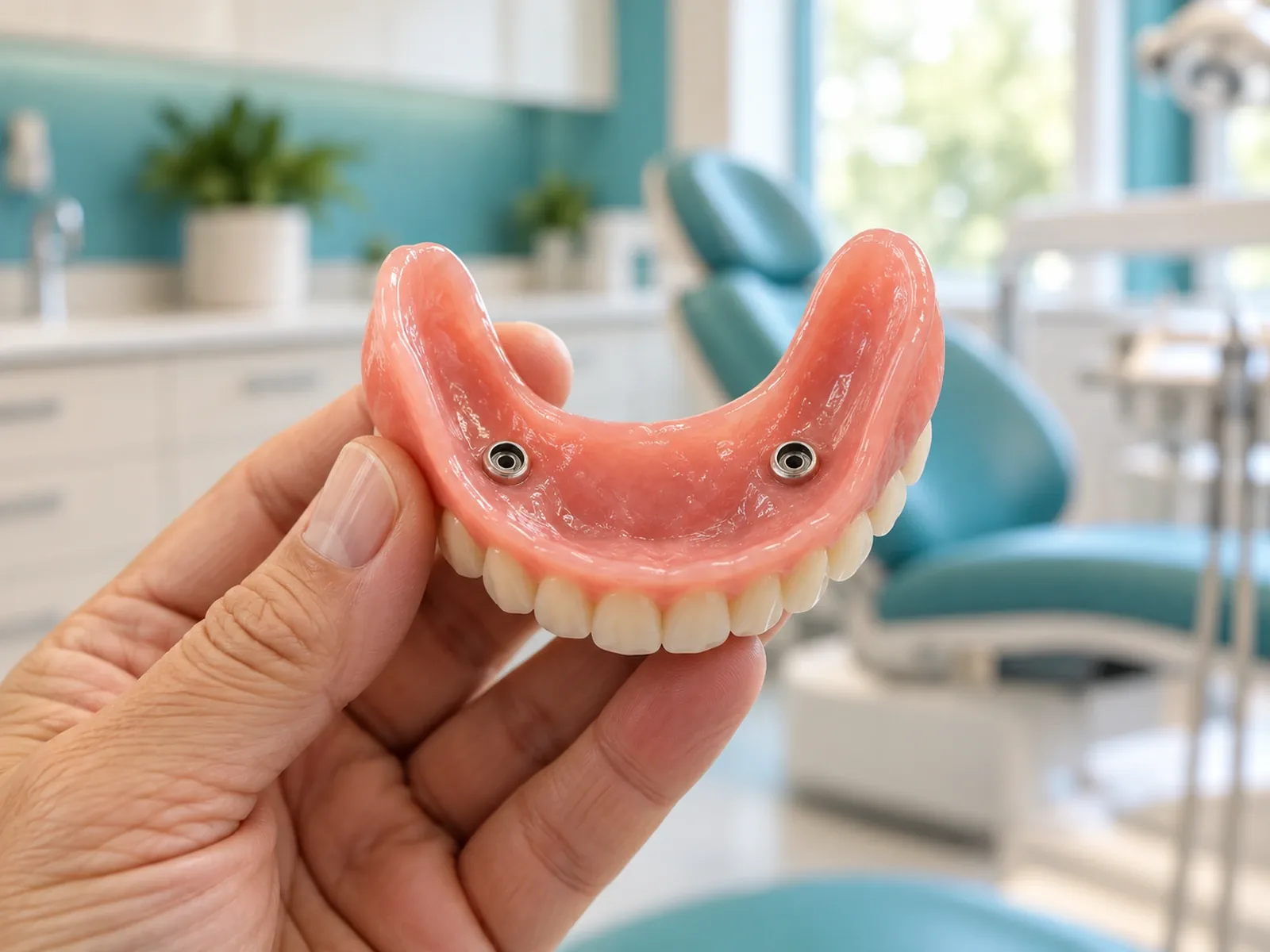
If the ridge has resorbed so much that a conventional denture simply has little to hold onto, which is common with long-worn lower dentures, a reline will help only so much. That is the point at which an implant-supported denture, where the denture snaps onto two or more implants, becomes a realistic conversation. It is a bigger step, but for the right person it solves a problem no reline can.
Why home reline kits backfire
Pharmacy reline kits put a layer of soft material inside your denture that cures to your gums in a few minutes. The problem is that they set wherever the denture happens to be sitting, often slightly off its correct position, and they change how it closes against the other arch. They also absorb odours, break down quickly and have to be ground out before a professional reline, which can thin the base. If your denture is loose, let us assess it rather than adding material at home.
What affects the cost
A reline costs considerably less than a new denture. The main variables are hard versus soft material, chairside versus lab processing, whether a tissue-conditioning stage is needed first, and whether a repair is done at the same time. Many dental plans cover relines with limits on frequency. See our insurance page for how we help you check.
Sources and further reading
General information, not a diagnosis. Read how we create and review our dental guides.