Dentures do not need replacing simply because they have reached a certain birthday. Some serve well for many years; others are in trouble within a few. What matters is whether the denture still does its job, whether the mouth under it is healthy, and whether the fixes you keep paying for are actually improving anything.
That last point is the heart of the decision. Repairs, relines and adjustments are the right answer when one thing is wrong. When several things are wrong at once, patching one of them leaves you with a denture that still does not work and a bill that could have gone toward a set that does.
This guide lays out the signs that point toward replacement, the situations where a smaller fix is still sensible, what a new denture lets you reconsider, and how to handle the insurance side. For the full range of denture types and services, start with our dentures overview.
Look at the whole denture, not one complaint
People usually come in with a single problem: a sore spot, a loose fit, a chipped tooth. The exam has to go wider, because denture problems travel together. Teeth that have worn flat change the bite. A changed bite makes the base rock. A rocking base cracks and rubs the gums. Fixing the crack alone does nothing for the wear or the bite.
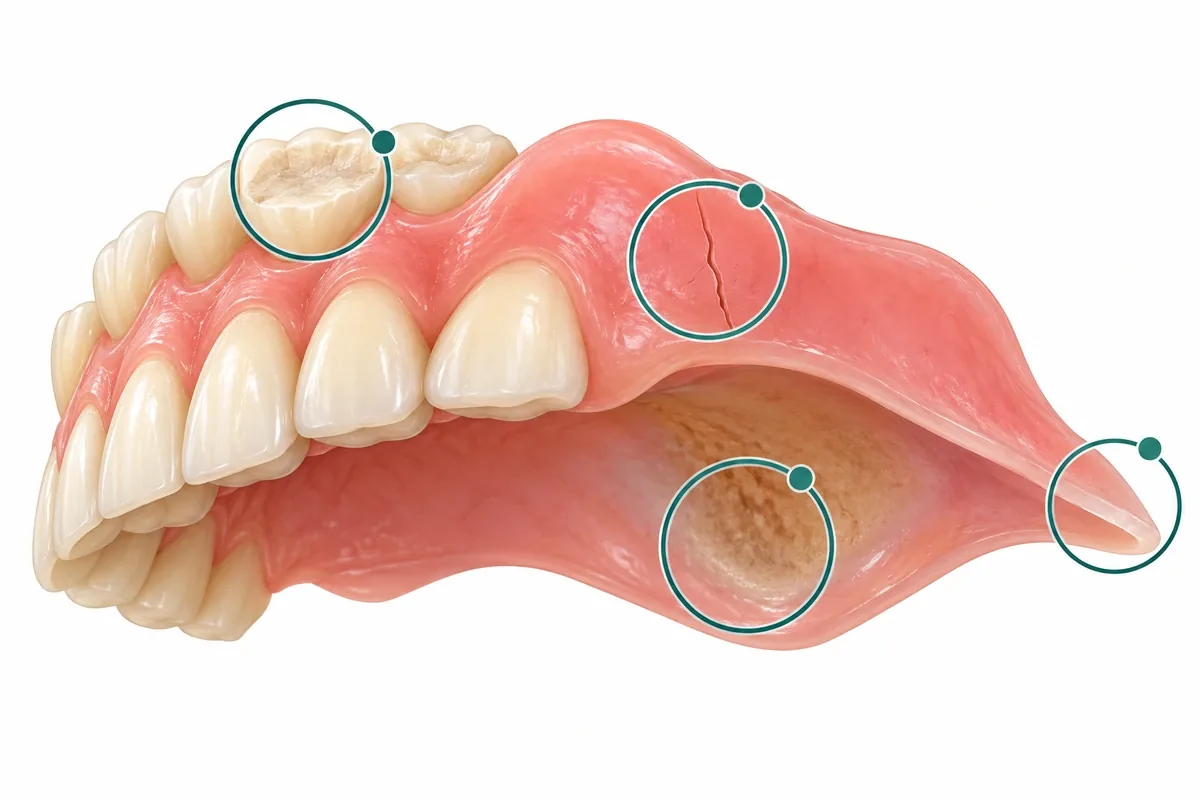
When you bring the denture to our Cleburne office, Dr. Zohdi looks at:
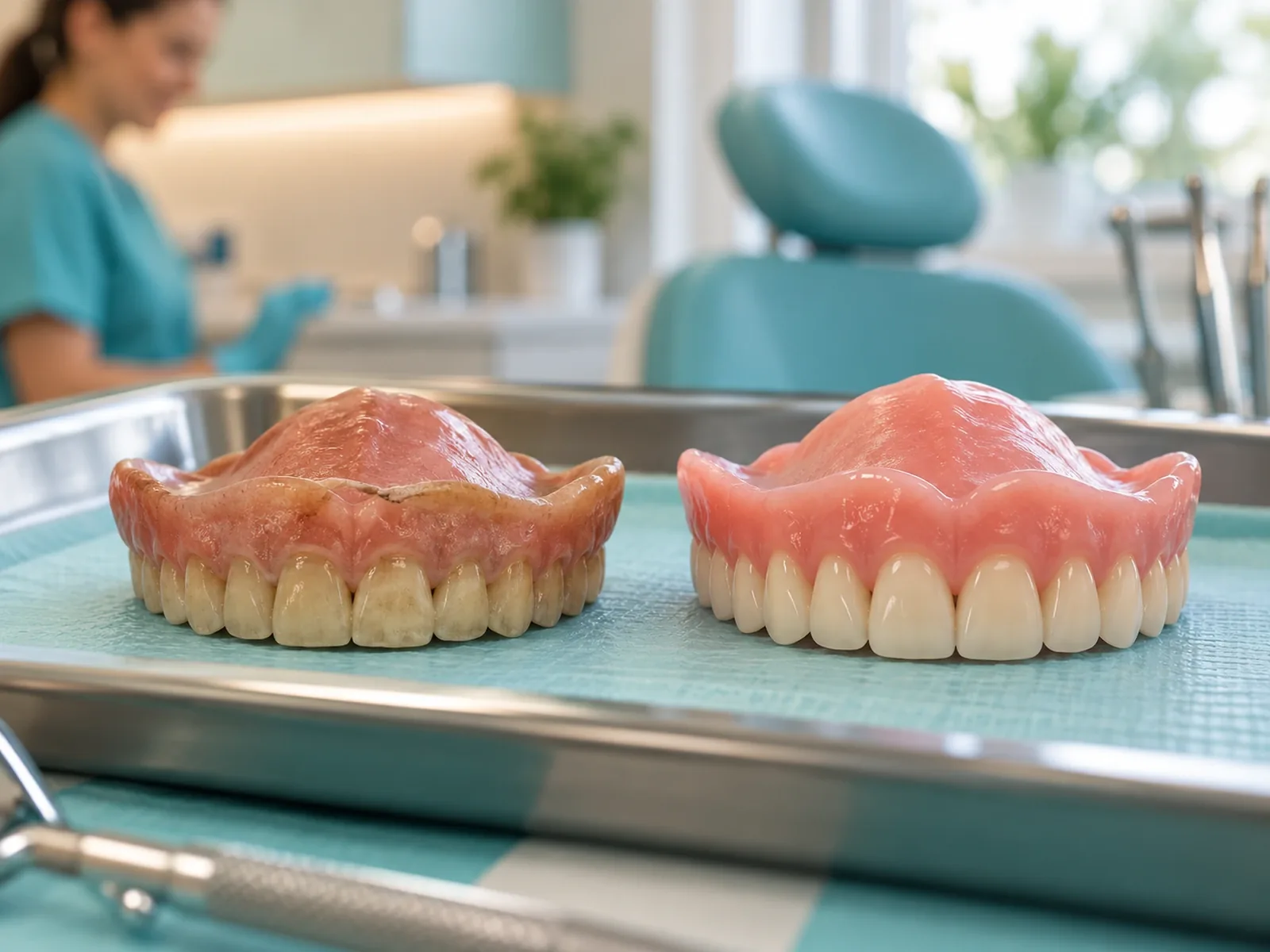
- The teeth. Are the chewing surfaces flat and shiny? Are front teeth chipped or shortened? Worn teeth chew poorly and let the jaws close too far.
- The base. Cracks, previous repairs, thin spots, warping and a rough or porous fitting surface that stains and holds odour.
- The fit. How much gap has opened between the base and the ridge, and whether a reline would close it reliably.
- The bite. Whether the upper and lower teeth meet evenly, and whether the face looks over-closed, with deepened lines at the corners of the mouth.
- The mouth. Red, swollen or folded tissue under the base, sore corners of the lips, and any patch that does not look like simple denture irritation.
That last check matters on its own. A persistent sore or a changed area of tissue should not be waited out while a new denture is made. It needs to be looked at, and sometimes screened, regardless of what happens to the denture.
When a smaller fix is still the right call
Replacement is not the default. If the denture is otherwise sound:
- A single damaged tooth or a clean fracture is a repair.
- A denture with good teeth and a good bite that has simply loosened is a reline.
- One sore spot with an otherwise good fit is a quick adjustment.
The useful question to ask about any proposed fix is: what will this change, and what will it leave unchanged? If the answer is that it solves the one thing bothering you and the rest of the denture is fine, a conservative option is the right one. If the answer is that it solves one of four problems, you are being offered a patch.
Signs that point toward replacement
Replacement moves to the front of the list when:
- The teeth are worn flat and chewing has become slow or inefficient.
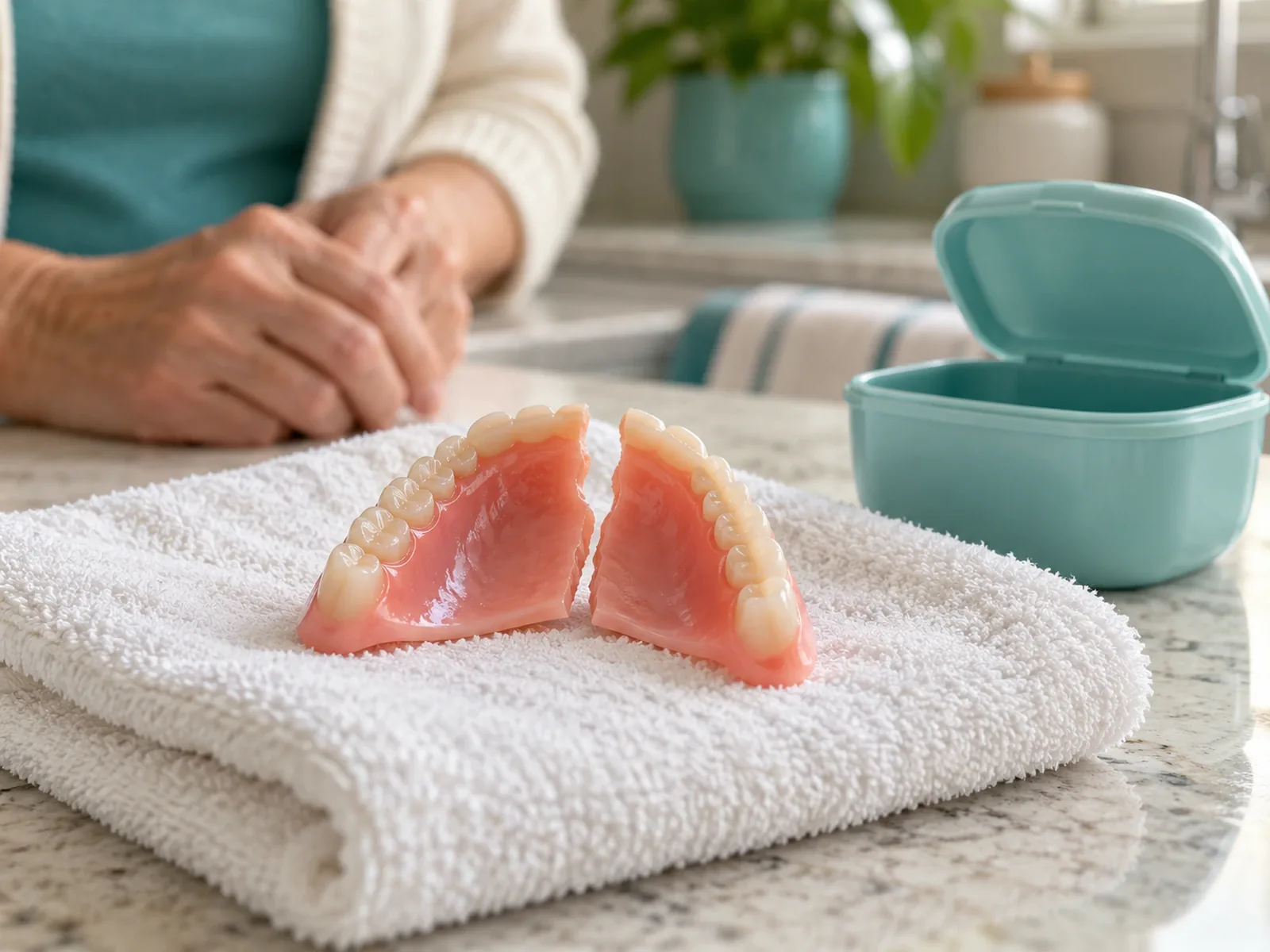
- The denture has broken more than once, or has several repairs already.
- The bite has collapsed: your chin and nose seem closer together, the corners of your mouth are cracked or sagging, or you have jaw discomfort.
- Relines no longer hold, or the base has been relined so often it has become thick and heavy.
- Sores keep coming back in different places despite adjustments.
- The denture is impossible to keep clean because the acrylic has become porous.
- Your remaining natural teeth have been lost and a partial no longer has the support it was designed around.
- You are unhappy with how the teeth look and a reline cannot change that.
None of these alone means the end of the denture. Two or three together usually do.
What a new denture lets you reconsider
Starting over is not only about fixing wear. It is a chance to revisit choices that were made years ago, sometimes under different circumstances:
- Tooth position and bite height. Restoring lost facial height can improve chewing and soften lines around the mouth.
- Appearance. Shade, shape, size and how much tooth shows when you speak can all be set fresh. Bring photographs of your natural smile if you have them.
- Lip and cheek support. A base shaped to today's ridge supports the face better than one that has been relined many times.
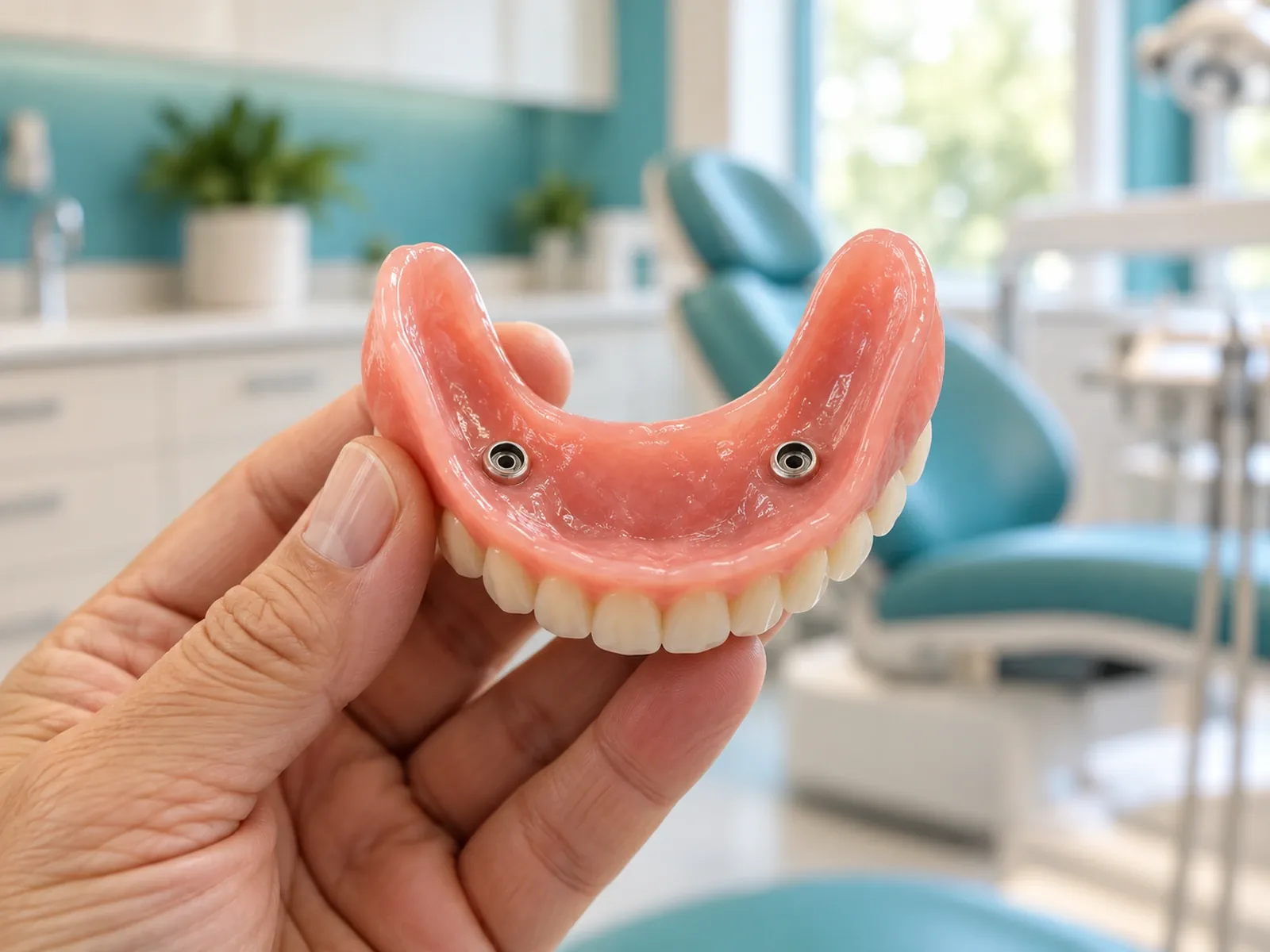
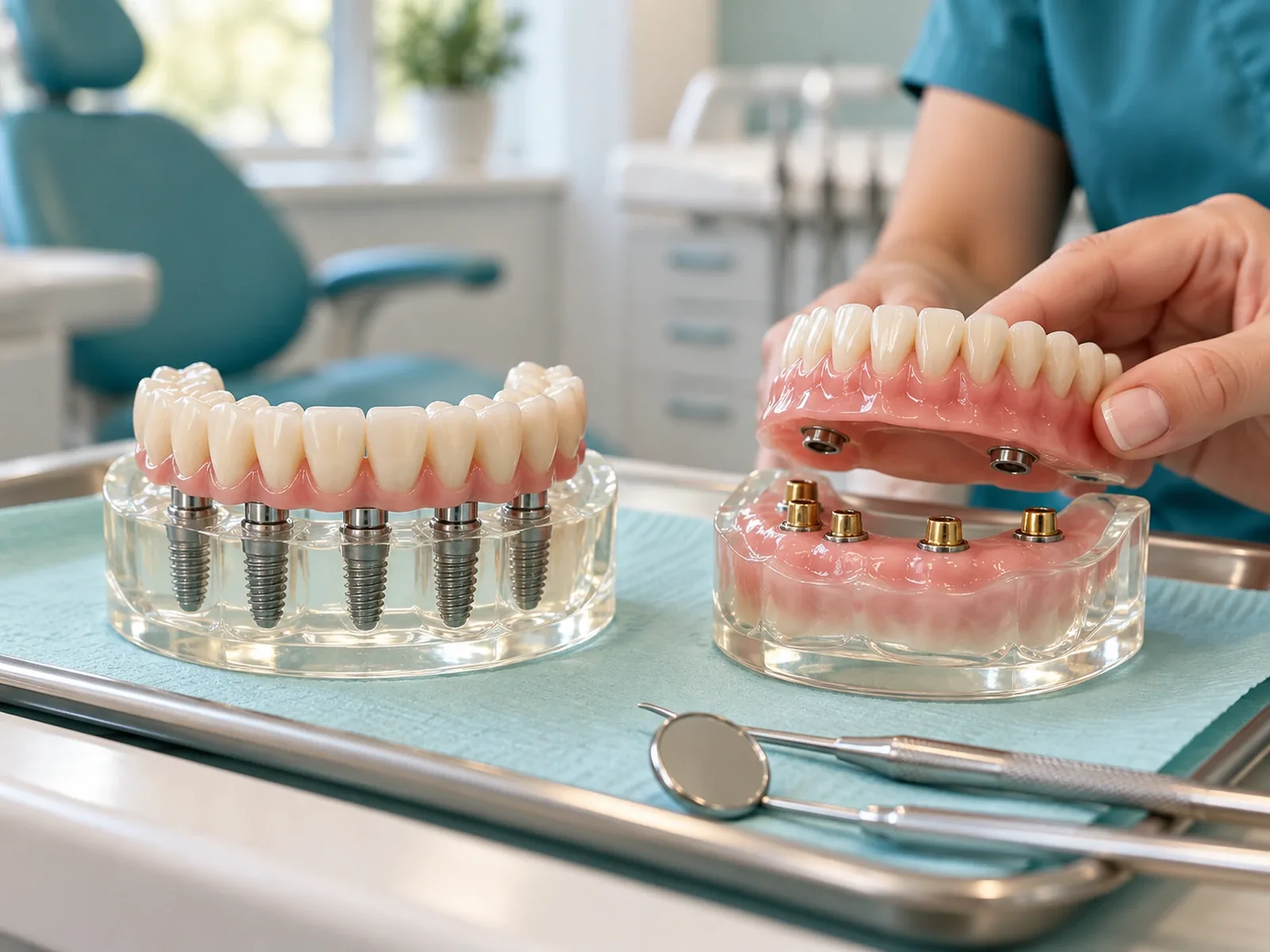
- How it is retained. If a loose lower denture has been the recurring problem, this is the moment to weigh an implant-supported denture or to understand fixed versus removable implant teeth. Implants add surgery, candidacy requirements and maintenance, and they are not mandatory just because a denture is being replaced. For some people, though, they end the cycle of relines.
Your old denture remains useful through all of this. It tells us what you have adapted to, what you like and what you want changed, and it can sometimes serve as a spare. Our complete dentures guide describes the visit sequence for a new set.
What to expect from a new denture
A new denture will not feel exactly like the old one, even when it is better. The shape, bite and tooth position are different, and your tongue and cheeks have spent years learning the old set. Expect a period of adaptation and a few adjustment visits, as described in our guide to getting used to new dentures. The goal is not to recreate the old denture; it is to give you one that works for the mouth you have now.
Cost and insurance
A new denture costs more than a repair or reline, but it is worth weighing against the running total of fixes on a denture that is past its best. The cost depends on whether it is a complete or partial denture, the quality of teeth and base, the number of try-in stages and whether implants are part of the plan.
Dental plans commonly cover a replacement denture only after a set number of years since the last one. That is a benefit rule, not a clinical judgement, and the two can disagree. Ask us for both the treatment reasoning and the coverage estimate, and see our insurance and financing pages for how we help patients plan around those limits.
Sources and further reading
General information, not a diagnosis. Read how we create and review our dental guides.