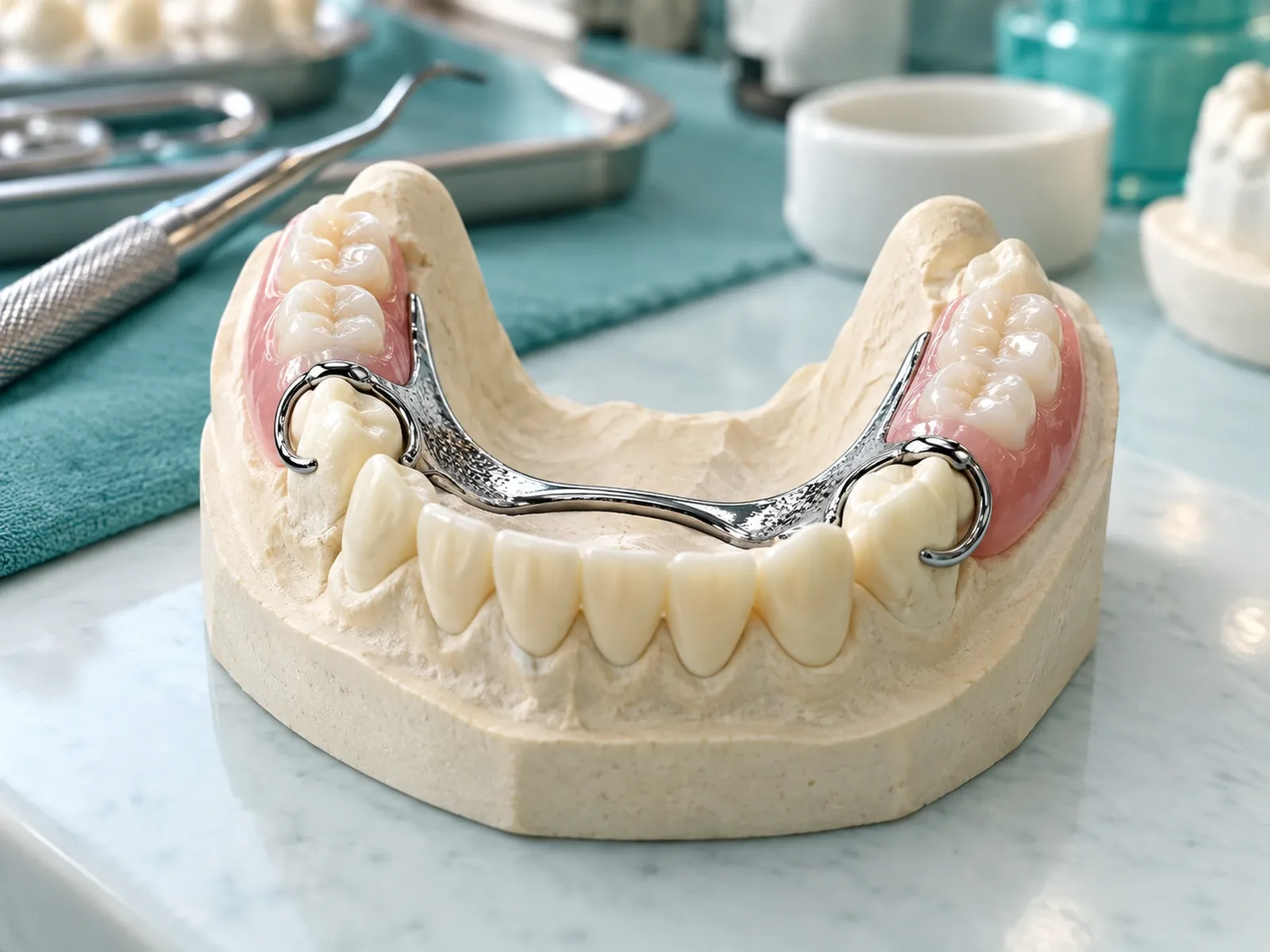
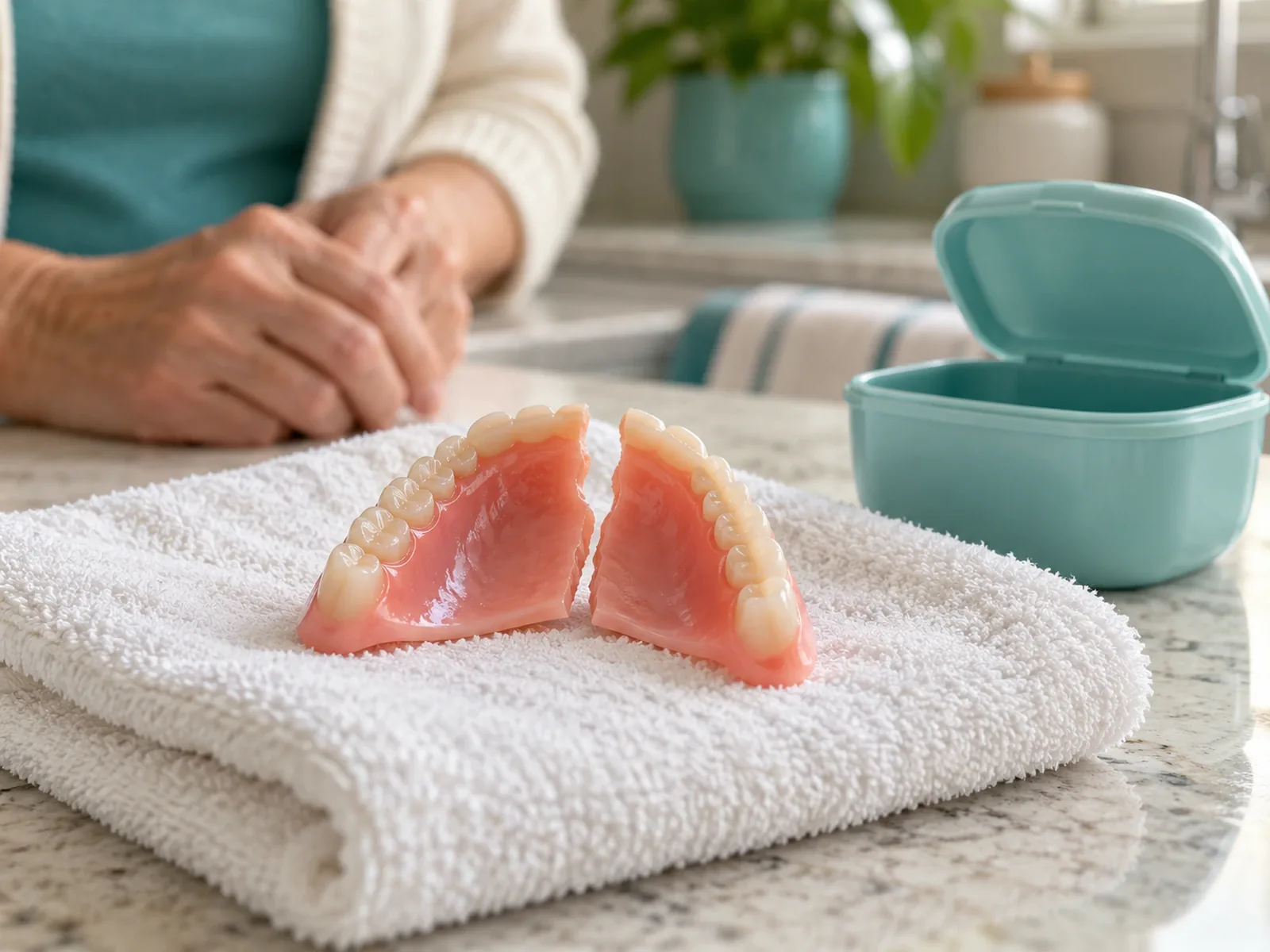
A broken denture stops you eating, talking and smiling the way you want to, often with no warning. The good news is that many breaks can be fixed. The important part is what you do in the first hour, because the wrong fix at home can turn a straightforward repair into a replacement.
Not every break has the same answer. A single tooth that has come off, a clean crack down the middle of the base and a snapped clasp are all different jobs. And a denture rarely breaks for no reason. A poor fit, a changed bite, a thin base or a drop onto a tile floor is usually behind it, and if that cause is ignored the repair tends to fail again.
This guide explains what to do right now, what we check before deciding on a repair, how repair compares with a reline or a new denture, and what to expect at our Cleburne office. Our main dentures page covers every denture service we offer.
What to do with a damaged denture right now
- Collect every piece, including any tooth that came off. Small fragments help the repair fit accurately.
- Rinse gently and keep the pieces dry in a container. Do not try to fit them back together repeatedly; rubbing the edges wears them down.
- Do not use glue. Household adhesives and super glue are not safe in the mouth, they soak into the acrylic, and they make a proper repair harder or impossible.
- Do not boil, microwave or bend the denture. Heat warps acrylic and flexible materials; the fit is lost for good.
- Do not file sharp edges yourself. If a broken edge is cutting your tongue or gum, stop wearing the denture and call us.
- Call (817) 641-6261 and describe the break: what came off, whether you can eat, and whether anything sharp or loose remains.
If you have an older denture, mention it. It may be a usable spare while the repair is done, but let us check it first rather than assuming it is safe to wear.
What affects whether a denture can be repaired
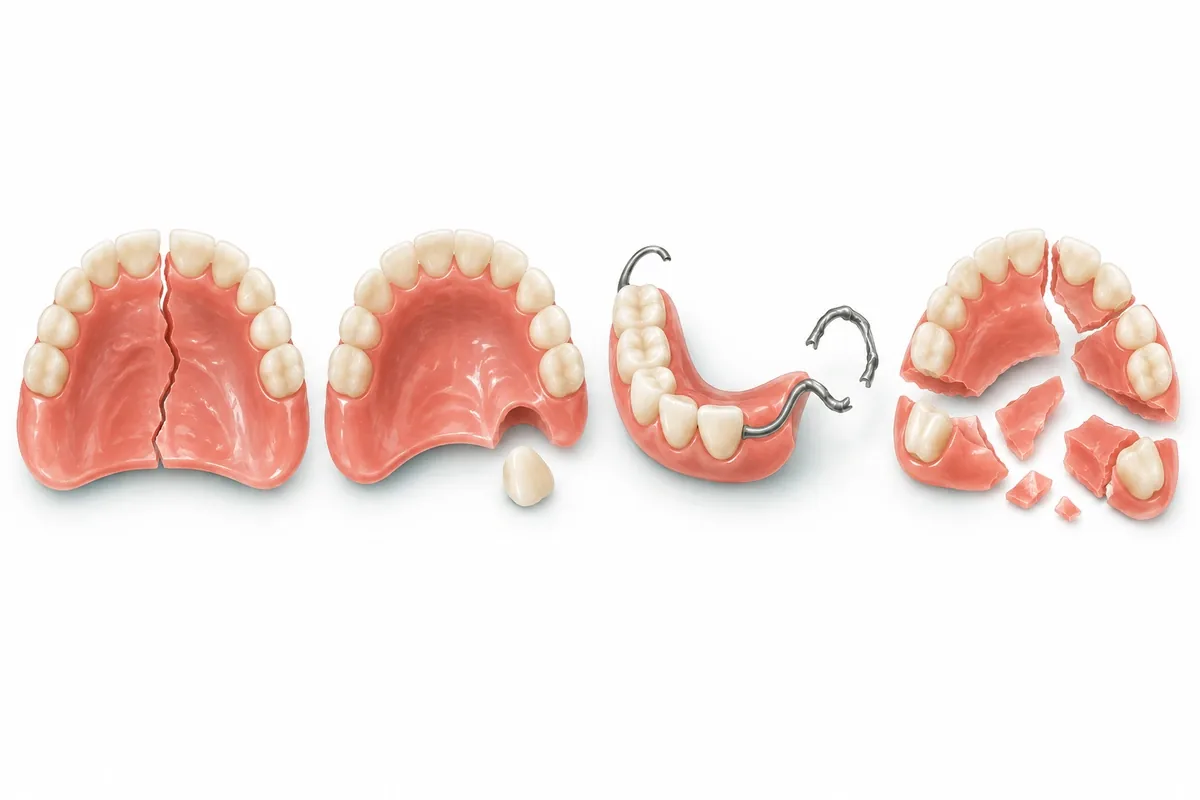
When you bring the denture in, Dr. Zohdi looks at three things: the break itself, the overall condition of the denture, and the mouth it fits.
The break. A clean fracture through the base can usually be rejoined with new acrylic. A tooth that has popped off can be re-bonded or replaced with a matching tooth. A broken wire clasp on a partial can often be replaced. A base shattered into several pieces, or a denture with fragments missing, has little to join and the repair is unlikely to be accurate or strong.
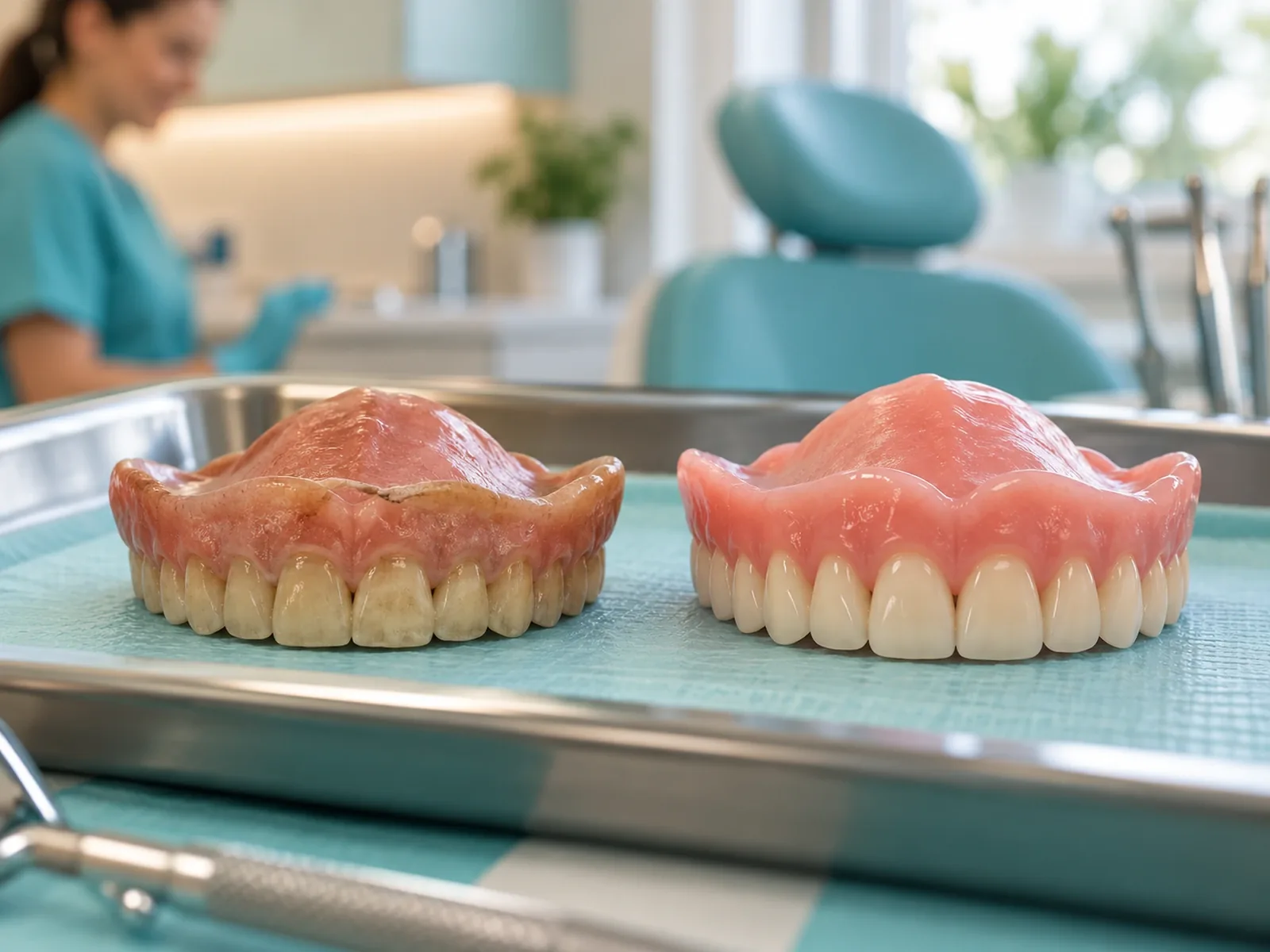
The denture. If the teeth are worn flat, the base has been repaired more than once, or the acrylic is thin and crazed, another repair may hold only briefly. A repair is only as strong as the material around it.
The mouth. This is the step people skip. A denture that no longer fits the gums flexes every time you bite, and acrylic that flexes eventually cracks. If the fit is the real problem, repairing the crack without a reline just sets up the next break.
Some repairs can be done quickly; others need laboratory work and take longer. Ask about the expected turnaround and whether you will be without the denture in the meantime, so you can plan.
Why dentures break
Knowing the cause changes the fix:
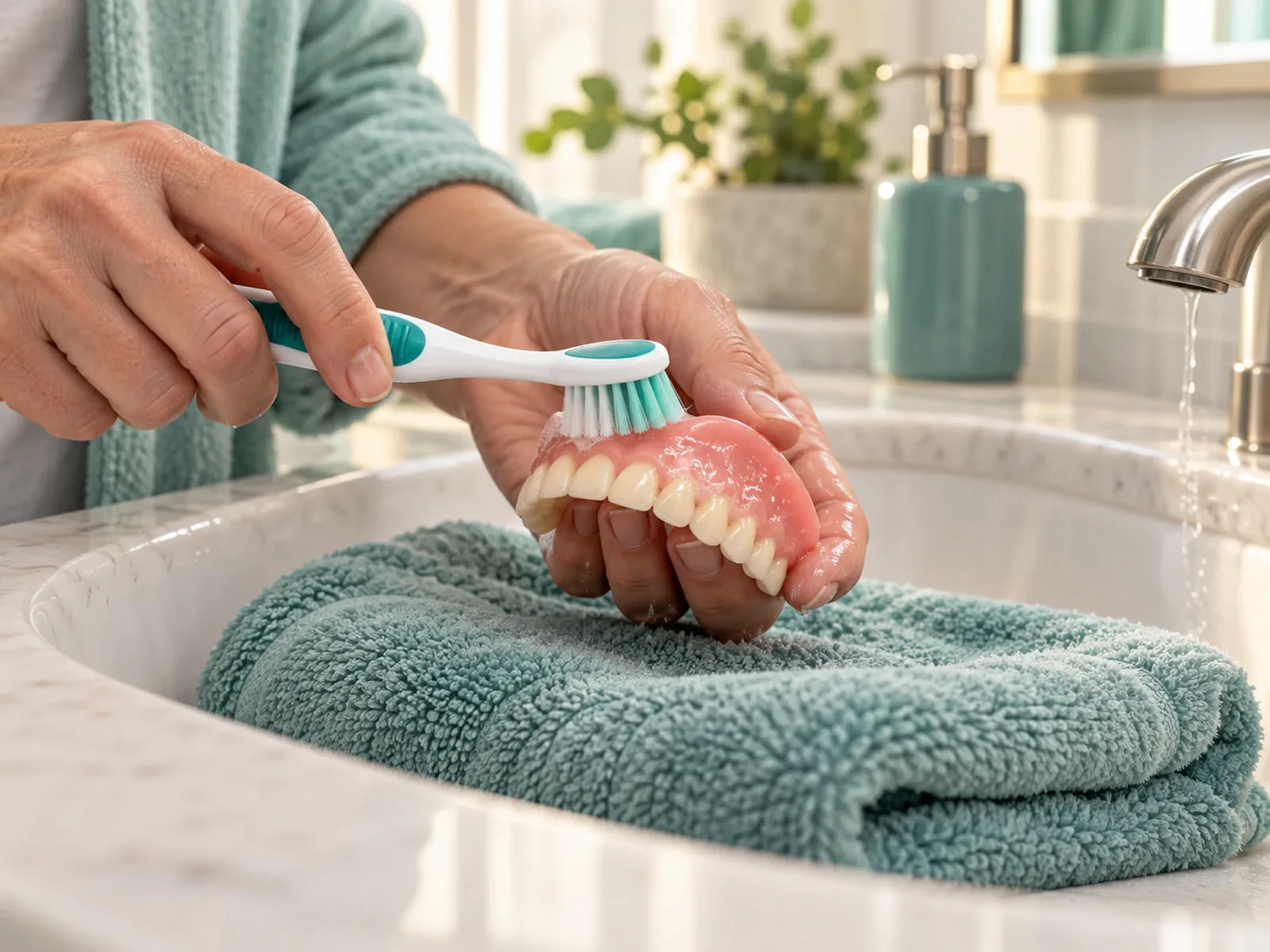
- A drop while cleaning is the most common accident. Clean the denture over a towel or a basin of water.
- A loose fit lets the base rock and flex. This is the usual reason for a crack down the midline of an upper denture.
- A changed bite after years of wear, or an opposing denture that has worn unevenly, concentrates force in one spot.
- Heavy clenching or grinding overloads denture teeth and bases just as it does natural teeth.
- Old or thin material simply fatigues. Acrylic also becomes brittle with age.
If your denture has broken more than once in the same place, treat that as a message rather than bad luck.
Repair, reline or replacement?
These three words get used loosely, but they mean different things, and choosing the wrong one wastes money.
| Option | What it does | Makes sense when |
|---|---|---|
| Repair | Rejoins or replaces a broken part | The break is clean, the denture is otherwise sound and it still fits |
| Reline | Replaces the fitting surface so the base matches the gums again | The denture is sound but loose, or has cracked because it flexes |
| Replacement | A new denture from new records | Teeth are worn, the base is damaged in several ways, the bite is off, or repairs keep failing |
Often the honest answer is a combination: a repair now so you have teeth, with a reline or a new denture planned for the near future. Ask which category your repair falls into so the estimate and your expectations match. Our guide on when to replace rather than repair covers the signs in more depth.
Repairs on partial dentures and implant dentures
Partials add their own repair questions. A bent or broken clasp can often be replaced; a cracked metal framework is much harder to fix and may mean a new partial. If a natural tooth has been removed, a replacement tooth can sometimes be added to the partial, depending on its design and remaining support. Flexible partials are difficult to repair or add to, which is one reason to ask about that before choosing one.
Implant-supported dentures have housings and attachment inserts inside the base. Worn inserts are a routine replacement, but a fracture around a housing needs assessment of the implant positions and the bite. Bring whatever information you have about the implant system and attachment type.
Preventing the next break
Most denture breaks are preventable. Clean over a soft surface, store the denture in water or a cleaning solution rather than letting it dry out, and keep up regular exams so a loose fit is caught before the base starts to flex. Our denture care guide covers cleaning products and handling. If you clench or grind, mention it; the bite can be adjusted to spread the load.
What affects the cost
A simple repair costs far less than a new denture, but it is not always the cheaper path if it fails in a month. The main factors are the type of break, whether lab work is needed, whether a reline is done at the same time, and the overall condition of the denture. Many dental plans cover repairs and relines separately from replacement, so see our insurance page for how we help you check.
Sources and further reading
General information, not a diagnosis. Read how we create and review our dental guides.